2004 F150 Heritage Vs Non Heritage
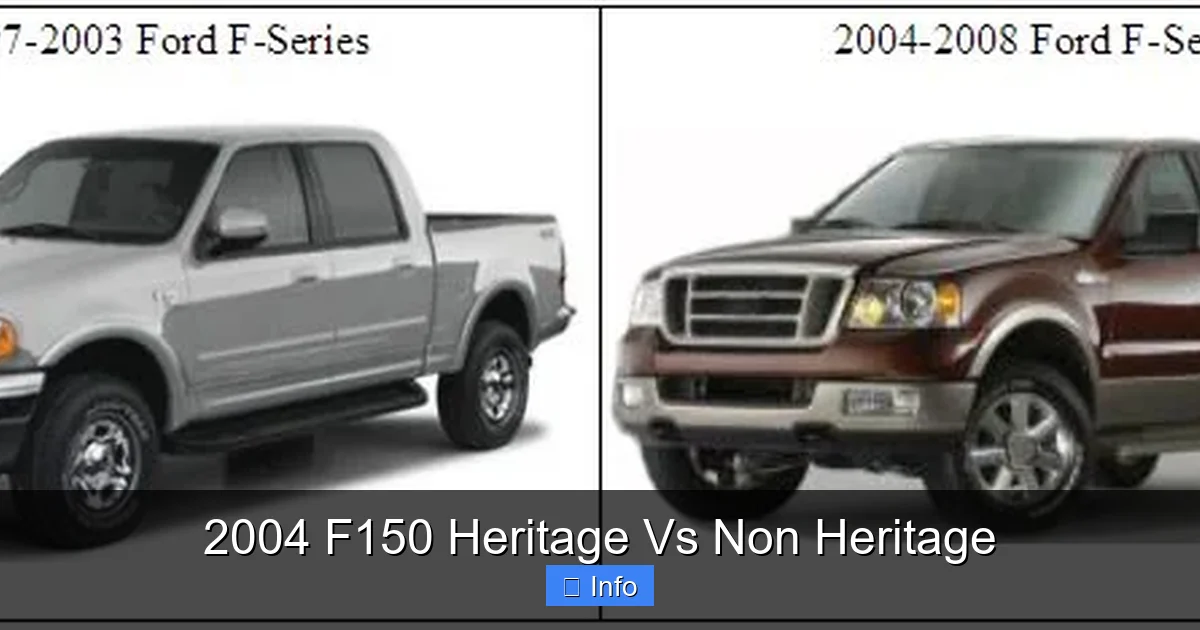
The 2004 F150 Heritage edition offers unique retro styling and exclusive trim touches that set it apart from the standard non‑Heritage trucks, while sharing the same core mechanics and engine options. Understanding these differences helps buyers decide whether the Heritage’s nostalgic look or the non‑Heritage’s broader availability better fits their needs and budget.
The 2004 Ford F150 marked the final year of the ninth‑generation lineup before a major redesign arrived for 2005. Ford offered a special Heritage edition that paid homage to the classic F‑Series trucks of the past. At first glance, the Heritage and the regular non‑Heritage F150 look very similar under the skin, but there are noticeable differences in appearance, available features, and market positioning. This article walks you through those distinctions in plain language so you can decide which version suits your lifestyle, budget, and taste.
We’ll start by explaining what makes the Heritage edition unique, then look at the standard non‑Heritage trucks. After that we’ll compare exterior and interior details, dive into the mechanical specs, discuss ownership costs and common issues, and finally talk about resale value and buying advice. By the end you’ll have a clear picture of whether the nostalgic flair of the Heritage is worth the extra attention—or if the broader choices of the non‑Heritage make more sense for you.
Key Takeaways
- Heritage styling: Distinctive two‑tone paint, heritage badging, and unique interior trim give the Heritage a classic look.
- Shared mechanics: Both Heritage and non‑Heritage models use the same 4.2L V6, 4.6L V8, and 5.4L V8 engines and transmissions.
- Trim levels: Heritage was offered mainly on XL and XLT trims, while non‑Heritage spanned XL, XLT, Lariat, and King Ranch.
- Price difference: Heritage models often command a slight premium due to their limited‑edition appeal.
- Maintenance parity: Routine service needs are identical, so parts like filters and spark plugs are interchangeable.
- Resale outlook: Heritage trucks tend to hold value better among collectors, but condition and mileage remain the biggest factors.
- Buying tip: Inspect for rust on the heritage‑specific badging and verify original paint if authenticity matters.
📑 Table of Contents
Understanding the Heritage Edition
The Heritage package was Ford’s way of celebrating the F‑Series’ long history. It was not a separate model but an appearance upgrade that could be added to certain trims. The goal was to give buyers a truck that looked like it came straight from the 1950s or 1960s while still delivering modern reliability and safety.
Exterior Styling Cues
Heritage models received a distinctive two‑tone paint scheme. The lower body was usually a darker shade—often black or dark gray—while the upper body and roof wore a lighter color like white, red, or blue. A chrome “Heritage” badge appeared on the front fenders, and the grille featured a unique insert with a retro Ford emblem. The wheels were often styled to resemble classic steelies, though alloy options were still available.
Interior Touches
Inside, the Heritage edition added special cloth or vinyl upholstery with contrasting stitching. The dashboard could include a wood‑grain accent panel on certain trims, and the steering wheel sometimes wore a vintage‑style horn cap. Floor mats bore the Heritage logo, and the instrument cluster featured a unique font for the speedometer and tachometer. These details were subtle but gave the cabin a noticeably different feel from the standard interior.
The Standard 2004 F150 (Non‑Heritage)
Non‑Heritage F150s covered the full range of trims that Ford offered that year. Buyers could choose from XL, XLT, Lariat, and the top‑tier King Ranch, each with its own set of standard and optional features. The non‑Heritage trucks were built for everyday work, towing, and family use without the retro styling cues.
Visual guide about 2004 F150 Heritage Vs Non Heritage
Image source: i.ytimg.com
Trim Levels Overview
The XL was the basic workhorse, featuring vinyl seats, rubber flooring, and a simple dashboard. XLT added cloth upholstery, chrome accents, and convenience items like power windows and door locks. Lariat brought leather‑trimmed seats, a premium audio system, and more sound insulation. The King Ranch, introduced in 2001, offered a distinctive western‑style interior with unique seat patterns, wood‑tone trim, and extra chrome.
Engine and Drivetrain Choices
All 2004 F150s, Heritage or not, shared the same powertrain lineup. The base engine was a 4.2‑liter V6 producing around 202 horsepower. A 4.6‑liter V8 delivered about 231 horsepower, and the top‑end 5.4‑liter V8 generated roughly 300 horsepower. Transmissions included a four‑speed automatic as standard, with a five‑speed manual available on certain V6 and V8 models. Four‑wheel drive was optional across the board.
Exterior and Interior Differences
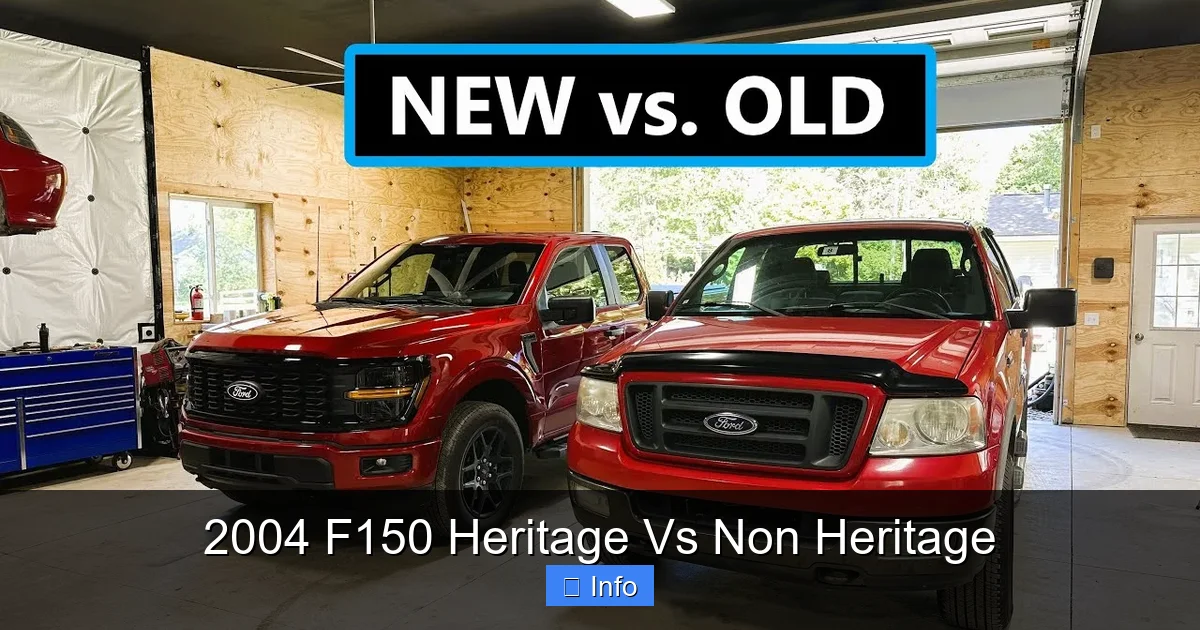
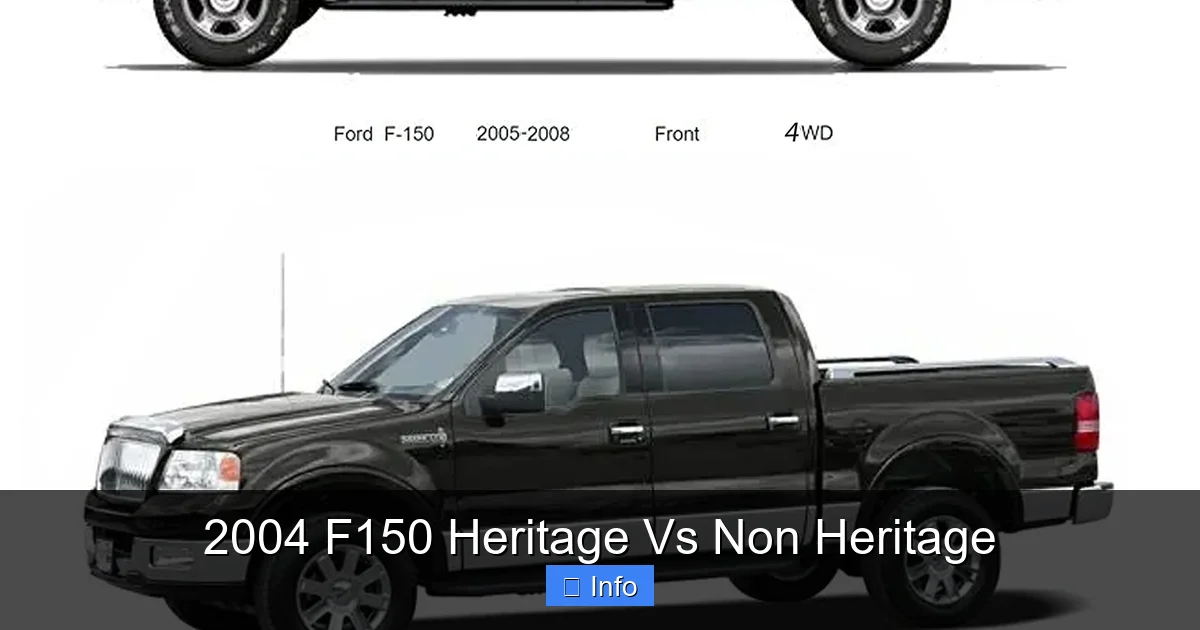
When you place a Heritage truck next to a non‑Heritage of the same trim and color, the differences become clear. The Heritage’s two‑tone paint is the most obvious visual cue. Even if the truck is a single color, the Heritage badge on the fenders and the unique grille insert set it apart. Wheel choices also varied; Heritage models often came with styled steel wheels that mimicked old‑school designs, while non‑Heritage trucks could have plain steel wheels or a wider selection of alloy designs.
Visual guide about 2004 F150 Heritage Vs Non Heritage
Image source: m.media-amazon.com
Side‑by‑Side Comparison
- Paint: Heritage – two‑tone with contrasting lower body; Non‑Heritage – usually single color (unless optional two‑tone was selected).
- Badging: Heritage – “Heritage” fender badges and retro grille emblem; Non‑Heritage – standard Ford badge only.
- Wheels: Heritage – often styled steel or heritage‑look alloys; Non‑Heritage – standard steel or various alloy options.
- Interior Trim: Heritage – contrasting stitching, wood‑grain accents (on Lariat/King Ranch), Heritage logo mats; Non‑Heritage – standard trim for the chosen level.
These visual differences do not affect how the truck drives, but they can influence pride of ownership and how the vehicle is perceived at shows or meets.
Mechanical Specifications and Performance
Under the skin, the Heritage and non‑Heritage are essentially identical. This means that performance, fuel economy, and towing capacity are the same for matching engine and drivetrain configurations. Knowing the specs helps you judge what the truck can do, regardless of its appearance package.
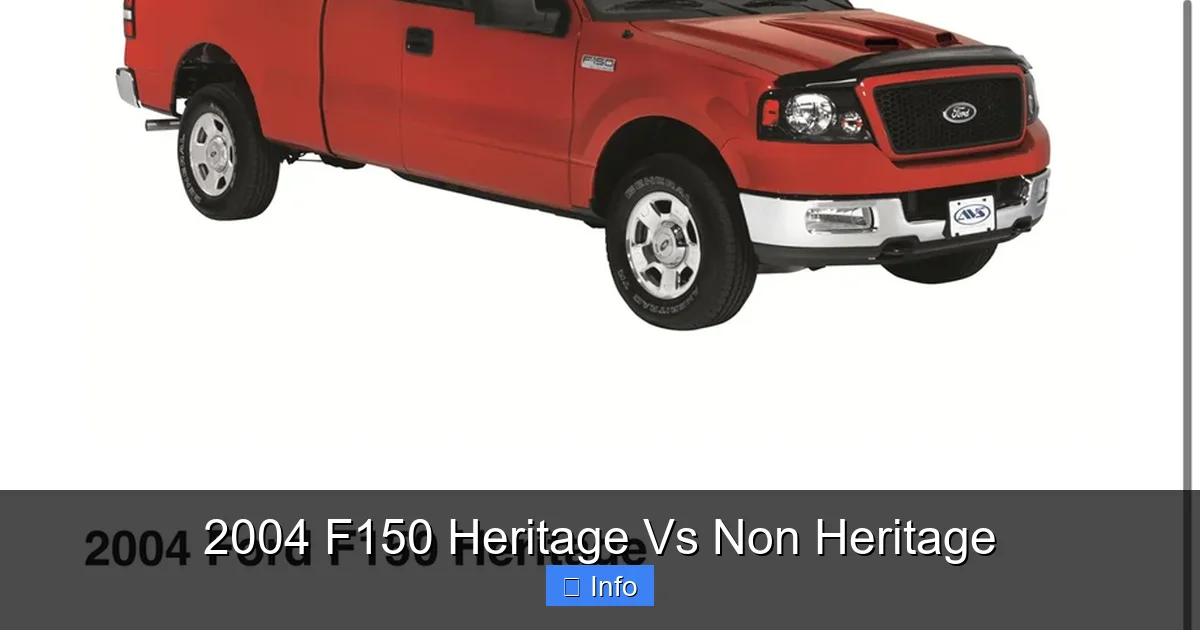
Visual guide about 2004 F150 Heritage Vs Non Heritage
Image source: cimg4.ibsrv.net
Engine Output and Fuel Economy
The 4.2L V6 offers decent fuel economy for a full‑size truck, averaging about 15‑18 mpg combined depending on driving habits and load. The 4.6L V8 provides a bit more power with a slight drop to roughly 13‑16 mpg combined. The 5.4L V8, while the strongest, averages around 10‑13 mpg combined. Real‑world numbers vary with terrain, payload, and whether the truck is equipped with four‑wheel drive.
Towing and Payload
Maximum towing capacity for the 2004 F150 ranges from about 5,000 pounds with the V6 to over 9,000 pounds with the 5.4L V8 when properly equipped. Payload capacity typically falls between 1,500 and 3,000 pounds. These figures are the same for Heritage and non‑Heritage models because the suspension, frame, and axle ratings do not change with the appearance package.
Driving Experience
Both versions ride on the same torsion‑bar front suspension and leaf‑spring rear setup. The steering is recirculating‑ball, giving a somewhat heavy feel at low speeds but solid feedback on the highway. Braking power comes from front disc and rear drum brakes on most models, with four‑wheel disc available on higher trims. Overall, the driving experience is dependable and straightforward, making the F150 a solid choice for daily driving or light‑duty work.
Ownership, Maintenance, and Common Issues
Owning a 2004 F150—whether Heritage or not—means dealing with a truck that is now two decades old. Routine maintenance is essential to keep it running smoothly, and knowing common trouble spots can save you time and money. The good news is that parts are still widely available, and many owners find these trucks to be reliable when cared for properly.
Routine Maintenance Tips
Regular oil changes every 5,000 miles using the recommended viscosity keep the engine healthy. Checking and replacing the best air filter for Ford F150 at least once a year helps maintain fuel economy and engine performance. Spark plugs should be inspected every 30,000 miles and replaced as needed; the best spark plugs for Ford F150 are a solid choice for both V6 and V8 engines. Using a reliable best OBD2 scanner for Ford F150 can help you read trouble codes quickly and stay on top of any emerging issues.
Common Problems to Watch For
Some owners report issues with the fuel pump relay, which can cause intermittent stalling. The EGR valve on the 5.4L V8 may become clogged, leading to rough idle or reduced power. Rust is a concern on older trucks, especially around the wheel wells, cab corners, and undercarriage; inspecting these areas regularly can prevent major corrosion. Transmission fluid should be checked and changed according to the schedule, as the four‑speed automatic can suffer from overheating if fluid is degraded.
Cost of Ownership
Because the Heritage and non‑Heritage share the same mechanicals, maintenance costs are nearly identical. Expect to spend roughly $800‑$1,200 per year on routine service, tires, and minor repairs if you do the work yourself. Professional shop rates will raise that number, but the F150’s simple design keeps labor times reasonable. Insurance costs tend to be modest for a truck of this age, especially if you keep coverage at liability‑only levels.
Value, Resale, and Buying Advice
When it comes to buying a 2004 F150, the Heritage edition often carries a small premium due to its limited‑edition appeal. However, the true value of any used truck depends more on condition, mileage, and maintenance history than on the appearance package. Understanding the market can help you negotiate a fair price and avoid overpaying for cosmetic features alone.
Market Trends and Pricing
As of 2024, a well‑maintained 2004 F150 XL with the V6 engine might list for $4,000‑$6,000. The same truck in XLT trim with the 4.6L V8 could range from $6,000‑$8,500. Heritage editions typically add $500‑$1,000 to those figures, assuming the two‑tone paint and badging are in good condition. Top‑trim Lariat or King Ranch models with the 5.4L V8 can reach $9,000‑$12,000 or more, especially if they have low mileage and a clean interior.
What to Look For When Buying
Start with a thorough visual inspection. Check the Heritage badging for signs of fading or replacement; authentic badges should have a consistent finish and proper alignment. Examine the two‑tone paint line for overspray or mismatched colors, which could indicate a repaint. Look under the truck for rust, especially on the frame rails and suspension components. Take the vehicle for a test drive and listen for any unusual noises from the engine, transmission, or differential. Finally, request service records to verify that oil changes, filter replacements, and spark plug services have been performed on schedule.
Final Recommendation
If you love the classic look and don’t mind spending a bit extra for the unique styling, the Heritage edition is a fun way to own a piece of Ford history. If your priority is utility, budget, or the widest selection of trims and options, a non‑Heritage F150 will serve you just as well mechanically. Either way, focus on the truck’s overall condition and maintenance history—those factors will determine your long‑term satisfaction far more than the badge on the fender.
Frequently Asked Questions
What is the main visual difference between the 2004 F150 Heritage and non‑Heritage models?
The Heritage edition features a two‑tone paint scheme with a contrasting lower body, plus distinctive “Heritage” fender badges and a retro‑style grille insert. Non‑Heritage trucks usually have a single‑color paint job and standard Ford badging unless a two‑tone option was added separately.
Do Heritage and non‑Heritage 2004 F150s have different engines or transmissions?
No. Both versions share the same engine choices—4.2L V6, 4.6L V8, and 5.4L V8—and the same transmission options, primarily a four‑speed automatic with a five‑speed manual available on some models. Mechanical specifications are identical.
Is the Heritage edition more expensive to maintain than a regular F150?
Maintenance costs are essentially the same because the Heritage package only changes appearance items like badges, paint, and interior trim. Routine service such as oil changes, filter replacements, and spark plug changes uses the same parts and intervals for both versions.
Are Heritage F150s better for resale value?
Heritage models can attract a modest premium among collectors who appreciate the retro styling, but resale value is still driven primarily by mileage, condition, and maintenance history. A well‑kept non‑Heritage truck may sell for similar or higher money if it is in better overall shape.
What should I check first when considering a used 2004 F150 Heritage?
Verify that the Heritage badging and two‑tone paint are original and not aftermarket additions. Inspect for rust on the frame, wheel wells, and undercarriage. Review service records to confirm regular maintenance, and take the truck for a test drive to listen for any engine or transmission issues.