
How Many Catalytic Converters Are in a Toyota Corolla

A Toyota Corolla usually has one catalytic converter, but some model years and engine setups can vary. If you want to know how many catalytic converters are in a Toyota Corolla, the safest answer is to check the exact year and trim. This guide explains where it is, why it matters, and what to do if it gets damaged or stolen.
How Many Catalytic Converters Are in a Toyota Corolla
If you have ever asked, how many catalytic converters are in a Toyota Corolla, you are not alone. It is a common question, and it matters for more than just curiosity. The answer can help if you are dealing with a check engine light, planning a repair, or trying to understand theft risk.
For most Toyota Corolla models, the answer is simple: one catalytic converter. That said, car design can change by model year, engine type, and country. So while one is the usual number, it is smart to confirm the exact setup on your Corolla.
In this guide, we will break it all down in plain language. We will cover what the catalytic converter does, where it is located, how to tell if yours is bad, and what to expect if you need a replacement. If you also want to learn about related Corolla topics, you may find our guide on how many spark plugs are in a Toyota Corolla useful too.
Key Takeaways
- Most Toyota Corolla models have one catalytic converter: That is the common setup for many Corolla years and trims.
- Some vehicles can have different exhaust layouts: A few engine or market versions may use a slightly different design.
- The catalytic converter helps cut emissions: It turns harmful exhaust gases into less harmful ones.
- Theft is a real issue: Corollas can be targeted because catalytic converters contain valuable metals.
- Replacement costs can vary a lot: OEM, aftermarket, and labor prices all affect the final bill.
- Check your exact model year: The answer to how many catalytic converters are in a Toyota Corolla can depend on the year and engine.
- Regular maintenance helps: Fixing engine issues early can protect the converter and extend its life.
📑 Table of Contents
What a Catalytic Converter Does
It cleans up exhaust
The catalytic converter is part of your Corolla’s exhaust system. Its job is to reduce harmful gases before they leave the tailpipe. It changes gases like carbon monoxide, nitrogen oxides, and hydrocarbons into less harmful substances.
This part is important because it helps your Corolla meet emissions rules. It also helps keep the air cleaner. Without it, your car would put out much more pollution.
It works with heat and chemistry
The catalytic converter uses a special honeycomb core coated with precious metals. As hot exhaust passes through, chemical reactions happen. These reactions break down bad gases and make the exhaust safer.
That is why the converter gets very hot during driving. It needs heat to do its job well. If the engine runs badly, the converter can be damaged over time.
How Many Catalytic Converters Are in a Toyota Corolla?
The usual answer is one
For most Toyota Corolla models, there is one catalytic converter. This is the standard setup on many small sedans with a four-cylinder engine. So if you are asking how many catalytic converters are in a Toyota Corolla, one is the number most owners will see.
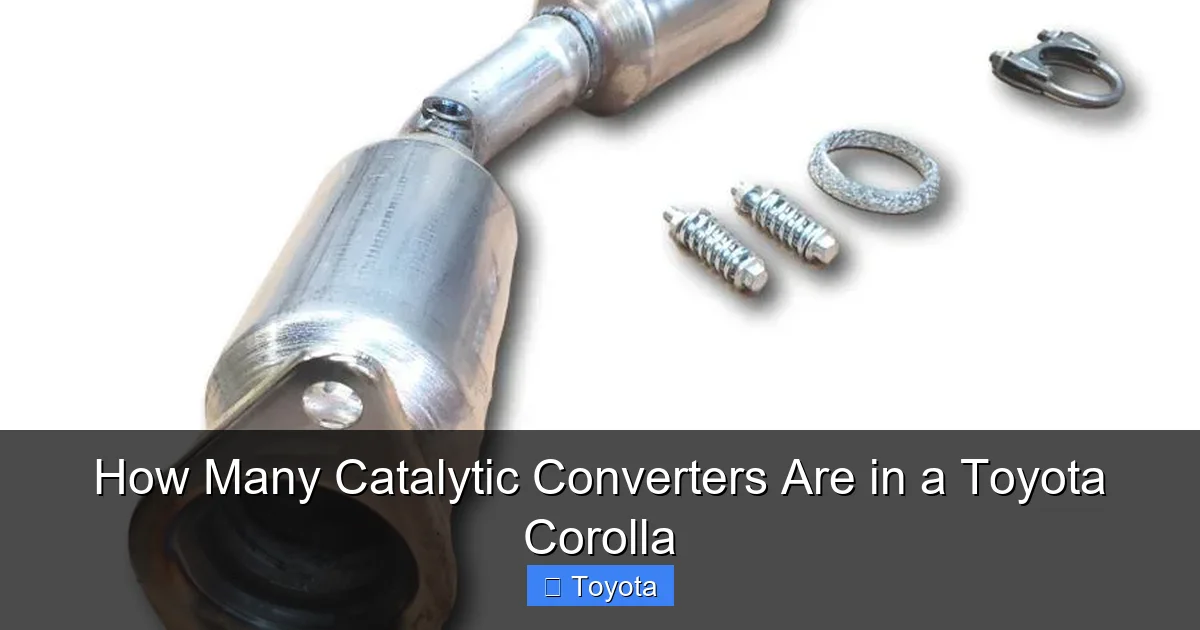
Visual guide about How Many Catalytic Converters Are in a Toyota Corolla
Image source: mufflerexpress.com
This is different from larger vehicles like trucks and SUVs, which may have two or more converters. For example, some Toyota trucks can have multiple units because they use larger engines and more complex exhaust layouts. If you are curious, you can compare this with our article on how many catalytic converters a Toyota Tacoma has.
Why some people get confused
Confusion often comes from the fact that some cars have more than one converter. In some vehicles, there may be a close-coupled converter near the engine and another one farther down the exhaust. That is less common on the Corolla, but it is a reason people ask the question.
Also, people sometimes count exhaust parts that are not actually catalytic converters. A resonator or muffler is not the same thing. So it helps to know what you are looking at.
Model year can matter
While one converter is the norm, exact details can change by year and market. A Corolla sold in one region may have a slightly different exhaust system from one sold in another. Hybrid versions and newer emissions setups can also differ in design.
That is why the best answer to how many catalytic converters are in a Toyota Corolla is often: usually one, but check the exact year and trim.
Where the Catalytic Converter Is Located
Usually under the car, near the engine
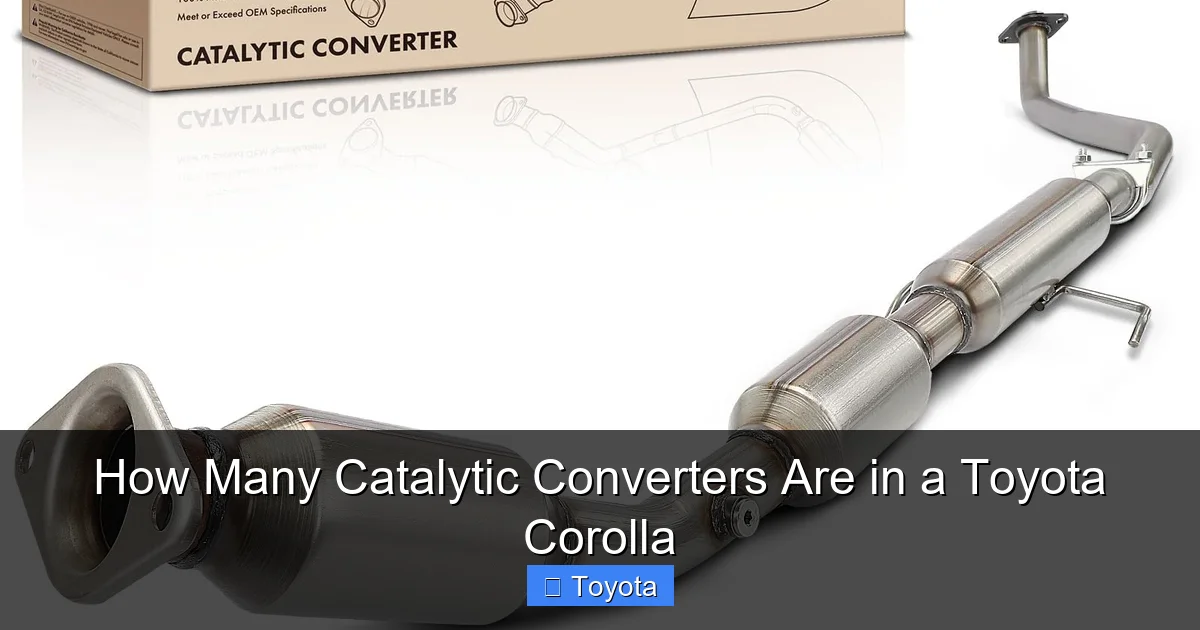
In many Corolla models, the catalytic converter sits along the exhaust pipe under the car. It is often close to the engine, because it needs to heat up fast after startup. Some versions may place it a bit farther back, but it is still part of the exhaust line.
Visual guide about How Many Catalytic Converters Are in a Toyota Corolla
Image source: m.media-amazon.com
If you crawl under the vehicle, you may see a metal canister shaped part in the exhaust path. That is often the converter. It is connected to the exhaust manifold on one side and the rest of the exhaust system on the other.
Why location matters
Location matters for a few reasons. First, it affects how fast the converter warms up. Second, it matters for theft risk, since converters that are easy to reach are easier to steal. Third, it matters for repair costs, because hard-to-reach parts take more labor to replace.
If your Corolla is parked outside often, it is worth knowing where this part sits. That can help you spot damage or theft sooner.
Signs Your Corolla Catalytic Converter May Be Bad
Check engine light
One of the most common signs is a check engine light. The car’s computer can detect if the converter is not working as it should. A scan tool may show codes related to catalyst efficiency.
If your check engine light comes on, do not guess. It could be the converter, but it could also be an oxygen sensor, misfire, or fuel issue. For more help with warning lights, see our guide on how to reset the check engine light on a Toyota Corolla.
Poor engine performance
A clogged converter can restrict exhaust flow. When that happens, your Corolla may feel weak, slow, or sluggish. It may also struggle to accelerate, especially at higher speeds.
Some drivers notice the car feels fine at first, then gets worse over time. That is a common pattern with exhaust restriction.
Bad smell or heat
A failing converter can create a strong sulfur smell, often like rotten eggs. You may also notice unusual heat under the car. In some cases, the converter can glow red if it is overheating badly.
If that happens, stop driving and get help. A hot converter can become a fire risk.
Rattling noise
If the inside of the converter breaks apart, you may hear a rattling sound. This can happen when the ceramic core cracks. The noise is often more noticeable when you start the car or tap the exhaust lightly.
That sound is a warning sign. It means the part may need repair or replacement soon.
Why Catalytic Converters Get Stolen
They contain valuable metals
Catalytic converters contain metals like platinum, palladium, and rhodium. These metals are worth a lot, which is why thieves target them. A Corolla may not be the biggest vehicle on the road, but it can still be a target if the converter is easy to reach.
Corollas can be vulnerable
Thieves like fast jobs. If a car sits high enough or is parked in a quiet area, the converter can be removed in minutes. That is why many owners use extra protection, especially if they park outside overnight.
Some owners install anti-theft shields or etching. Others park in well-lit places or use motion alarms. These steps do not make theft impossible, but they can help.
What to do if it is stolen
If you start your Corolla and hear a loud roaring sound, the converter may be gone. You may also see the car sitting lower or notice a cut section of exhaust. If that happens, do not drive far.
Contact your insurance company, file a police report, and have a repair shop inspect the car. If you want to avoid similar issues in other Toyota models, it can help to see how theft risk compares with larger vehicles like the Toyota 4Runner.
Replacement Costs and Repair Tips
Costs can vary a lot
Replacing a catalytic converter on a Toyota Corolla can be cheap or expensive, depending on the part and labor. OEM parts usually cost more. Aftermarket parts may cost less, but quality can vary. Labor can also change based on rust, location, and shop rates.
In some cases, a simple replacement is straightforward. In others, rusted bolts or damaged pipes make the job harder. That can raise the final bill.
Do not replace it too soon
It is tempting to blame the converter right away when a warning light appears. But that is not always the right move. A bad spark plug, faulty oxygen sensor, or engine misfire can damage the converter and trigger the same code.
So it is smart to diagnose the real cause first. Replacing the converter without fixing the root problem can waste money.
How to protect your new converter
Once you replace a catalytic converter, protect it. Keep up with oil changes, fix misfires fast, and use good fuel. A healthy engine helps the converter last longer.
Also, avoid short trips only if possible. Short drives can keep the exhaust from warming up fully. That can lead to more buildup over time.
How to Check Your Exact Corolla Model
Use the VIN or owner’s manual
If you want the exact answer to how many catalytic converters are in a Toyota Corolla, check your VIN and owner’s manual. These can help a dealer or repair shop identify the right exhaust layout for your car.
The VIN is the easiest way to get specific information. A parts catalog or Toyota dealer can match it to the correct system.
Ask a trusted mechanic
A good mechanic can look under the car and confirm the setup. They can also tell you whether the part is original, aftermarket, or previously replaced. This is helpful if you bought the car used and do not know its repair history.
Look at the emissions sticker
Some vehicles have an emissions label under the hood that lists emissions equipment. It may not give every detail, but it can help you confirm the car’s setup. This can be useful when comparing different trim levels or model years.
If you are also checking fuel range or other Corolla basics, you may like our article on how many miles you can drive after the gas light comes on in a Toyota Corolla.
Conclusion
So, how many catalytic converters are in a Toyota Corolla? For most Corolla models, the answer is one. That is the standard setup on many years and trims, though exact designs can vary a little by engine and market.
Knowing this helps you understand repairs, warning lights, and theft risk. It also helps you avoid confusion when someone talks about exhaust parts. If your Corolla is acting up, start with a proper diagnosis, not a guess. And if you are ever unsure, check the VIN, the owner’s manual, or a trusted mechanic.
In the end, the catalytic converter is a small part with a big job. Taking care of it can save money, reduce stress, and keep your Corolla running clean.
Frequently Asked Questions
Does every Toyota Corolla have one catalytic converter?
Most Toyota Corolla models do have one catalytic converter. However, exact setups can vary a little by model year, engine type, and market. If you need the exact answer for your car, check the VIN or ask a Toyota dealer.
Can a Toyota Corolla have two catalytic converters?
It is not common for a Corolla to have two catalytic converters, but some exhaust designs can differ. Most owners will only find one main converter. The best way to know for sure is to inspect the exhaust or look up the exact model year.
Where is the catalytic converter on a Toyota Corolla?
It is usually located under the car in the exhaust system, often near the engine. This helps it heat up fast and control emissions better. On some models, it may sit a little farther back in the exhaust line.
How do I know if my catalytic converter is bad?
Common signs include a check engine light, poor acceleration, rattling sounds, or a strong sulfur smell. A scan tool can help confirm the issue. Still, other engine problems can cause similar symptoms, so proper diagnosis matters.
Is catalytic converter theft common on Toyota Corollas?
Yes, it can happen. Catalytic converters contain valuable metals, so thieves may target cars that are easy to access. Parking in a safe area and adding anti-theft protection can help lower the risk.
How much does it cost to replace a Toyota Corolla catalytic converter?
The cost can vary widely based on the part and labor. OEM parts usually cost more, while aftermarket parts may be cheaper. Rust, location, and local shop rates can also change the final price.


