
What Should the Tire Pressure Be on a Hyundai Sonata
The right tire pressure for a Hyundai Sonata is usually listed on the driver’s door placard, and it is the best number to follow for your exact model and tire size. Keeping your Hyundai Sonata tire pressure correct helps with safety, ride comfort, fuel use, and tire life. If your tire pressure warning light comes on, check the tires when they are cold and adjust them to the recommended PSI.
What Should the Tire Pressure Be on a Hyundai Sonata
If you drive a Hyundai Sonata, tire pressure is one of those small things that makes a big difference. It affects how the car feels, how much fuel it uses, and how long your tires last. It also plays a big part in safety. That is why so many drivers ask, what should the tire pressure be on a Hyundai Sonata?
The short answer is simple: use the pressure listed on the tire placard inside the driver’s door jamb. That is the number Hyundai recommends for your exact car, trim, and tire size. For many Sonata models, the pressure is often around 33 to 35 PSI, but you should always check your own vehicle. The right answer can change with model year, wheel size, and tire type.
In this guide, we will break it all down in plain language. You will learn where to find the correct PSI, how to check it, what happens when pressure is too low or too high, and how often to inspect your tires. If you want a smooth ride and better tire life, this is worth a few minutes of your time.
Key Takeaways
- Point 1: The correct Hyundai Sonata tire pressure is found on the driver’s door sticker, not on the tire sidewall.
- Point 2: Most Hyundai Sonata models use a pressure range near 33 to 35 PSI, but the exact number can vary by year and trim.
- Point 3: Check tire pressure when the tires are cold for the most accurate reading.
- Point 4: Underinflated tires can hurt fuel economy, steering feel, and tire wear.
- Point 5: Overinflated tires can reduce grip, make the ride harsher, and wear the center of the tread faster.
- Point 6: The tire pressure monitoring system, or TPMS, warns you when pressure is too low, but it does not replace manual checks.
- Point 7: Always adjust tire pressure to match the car’s placard for your exact Hyundai Sonata setup.
📑 Table of Contents
- What Should the Tire Pressure Be on a Hyundai Sonata?
- How to Check Hyundai Sonata Tire Pressure the Right Way
- Why the Right Hyundai Sonata Tire Pressure Matters
- What Happens If Hyundai Sonata Tire Pressure Is Too Low or Too High?
- How Often Should You Check Hyundai Sonata Tire Pressure?
- Tips for Keeping Hyundai Sonata Tire Pressure in the Right Range
- Hyundai Sonata Tire Pressure by Season and Driving Style
- Conclusion
What Should the Tire Pressure Be on a Hyundai Sonata?
Start with the door placard
The best place to find the correct Hyundai Sonata tire pressure is the sticker on the driver’s side door jamb. Open the driver’s door and look near the latch area or along the frame. You should see a label with the recommended PSI for the front and rear tires.
This matters because the correct pressure is not one-size-fits-all. A base Sonata may use one setting, while a hybrid or a model with larger wheels may use another. The tire sidewall is not the right place to look for your target PSI. The sidewall shows the maximum safe pressure for that tire, not the ideal pressure for your Sonata.
Typical Hyundai Sonata tire pressure range
Many Hyundai Sonata models fall in the 33 to 35 PSI range when cold. Some trims may be a little different. For example, a Sonata with larger wheels or special tires may call for a slightly different number. That is why the sticker matters more than a guess.
If you do not see the placard or you are unsure, check the owner’s manual. You can also ask a Hyundai dealer or tire shop. But in most cases, the door sticker gives you the answer you need right away.
Why the exact PSI matters
When people ask, what should the tire pressure be on a Hyundai Sonata, they often want a quick number. But the exact PSI is important because it affects how the car handles. Too much or too little air changes the shape of the tire on the road. That can affect braking, cornering, and comfort.
Following the factory recommendation is the safest move. It is also the easiest way to keep your Sonata running as it should.
How to Check Hyundai Sonata Tire Pressure the Right Way
Use a quality tire gauge
You do not need fancy tools to check tire pressure. A simple digital or pencil-style gauge works fine. If you want the best accuracy, a digital gauge is a good choice. It is easy to read and quick to use.
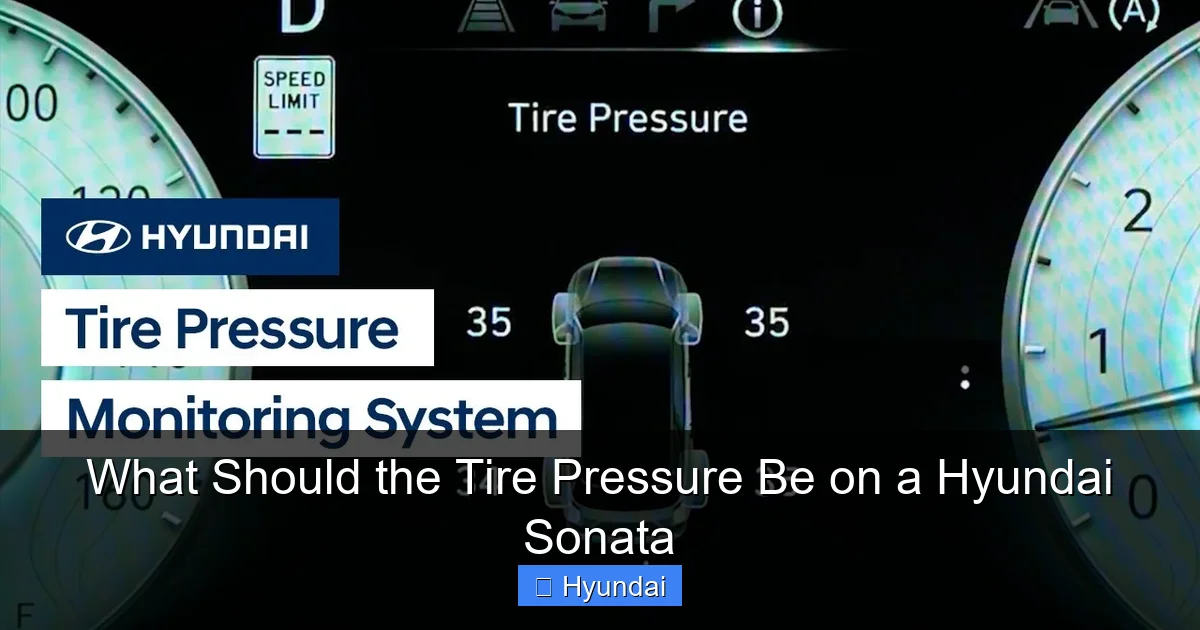
Visual guide about What Should the Tire Pressure Be on a Hyundai Sonata
Image source: i.ytimg.com
Check each tire one at a time. Remove the valve cap, press the gauge firmly onto the valve stem, and read the number. Write it down if needed so you can compare all four tires.
Check tires when they are cold
The most accurate reading comes when the tires are cold. That means the car has been parked for a few hours and has not been driven far. If you drive first, the air inside the tire warms up and expands. That can raise the reading a little.
If you must check after driving, try to do it before a long trip and understand the number may be slightly higher than normal. For the best result, check in the morning before driving anywhere.
Do not forget the spare
Some Sonata models may not include a full-size spare, but if your car has one, check it too. A spare tire that sits flat for months can lose air. If you ever need it, you want it ready. If your Sonata has a tire repair kit instead of a spare, keep that kit in good shape and follow the car’s manual.
If you also own other vehicles, it helps to learn their tire checks too. For example, our guide on how to check tire pressure on a 2021 Toyota Corolla shows the same basic process in a simple way.
Why the Right Hyundai Sonata Tire Pressure Matters
Better safety on the road
Proper tire pressure helps your tires keep a solid contact patch with the road. That means better grip when you turn, stop, or drive in rain. Low pressure can make the tire flex too much. High pressure can make the tire ride on a smaller part of the tread.
Both situations can reduce control. That is not something you want in a sudden stop or quick lane change.
Improved fuel economy
Underinflated tires create more rolling resistance. In simple terms, your engine has to work a little harder to move the car. That can lower fuel economy over time. If gas mileage matters to you, keeping the Hyundai Sonata tire pressure at the right level is an easy win.
It will not turn your Sonata into a hybrid miracle car, but it can help you avoid wasted fuel.
Longer tire life
Tires are not cheap. Incorrect pressure can wear them out faster than normal. Low pressure often wears the outer edges of the tread. High pressure often wears the center faster. Either way, you may need new tires sooner than expected.
That is why a quick pressure check can save money. It is a small habit that protects a big purchase.
Smoother ride and better comfort
Your Sonata is built for a comfortable drive. When tire pressure is correct, the ride usually feels smoother and more stable. Too much air can make the car feel stiff. Too little air can make it feel sloppy or soft in a bad way.
If your Sonata suddenly feels different on the road, tire pressure should be one of the first things you check.
What Happens If Hyundai Sonata Tire Pressure Is Too Low or Too High?
Signs of low tire pressure
Low tire pressure is common, especially when temperatures drop. You may notice the steering feels heavier, the car seems less responsive, or the tires look a little flat. The tire pressure warning light may also come on.
In cold weather, pressure can drop by about 1 PSI for every 10 degrees Fahrenheit. That means a tire that was fine in warm weather may become low after a cold snap. This is one reason many drivers see the warning light in the morning during winter.
Signs of overinflation
Too much air can also cause problems. The ride may feel harsh. The tires may make more noise. You may also notice the car does not grip the road as well over bumps or rough pavement.
Overinflation is not as common as underinflation, but it happens when people add air without checking the placard. Always aim for the recommended PSI, not the number molded on the tire sidewall.
Why the tire light can come on
The TPMS light is there to warn you when one or more tires are below the set threshold. It is a helpful system, but it is not perfect. It may not tell you the exact tire that is low, and it will not replace a manual check.
If the light comes on, do not ignore it. Check all four tires as soon as you can. If you are not sure whether the pressure is correct, compare it to the door sticker and adjust from there.
For more Hyundai warning-light help, you may also want to read about what the battery discharge warning means on a Hyundai. It is a different issue, but it is another good example of why dashboard alerts should never be ignored.
How Often Should You Check Hyundai Sonata Tire Pressure?
Check it at least once a month
A good rule is to check your Hyundai Sonata tire pressure once a month. That takes only a few minutes and can prevent a lot of trouble. If you drive a lot, check it more often.
Monthly checks are especially useful before a road trip, before winter, and after a big change in weather.
Check after temperature swings
Weather changes can affect tire pressure fast. A cold front, a heat wave, or a sudden drop in temperature can change the PSI enough to matter. If your Sonata seems to feel different after a weather shift, check the tires.
This is one of the easiest ways to stay ahead of tire problems. It is also a good habit for any car owner, not just Hyundai drivers.
Inspect tires during regular care
Make tire pressure part of your normal routine. Check it when you wash the car, fill the tank, or look at fluid levels. The more often you notice your tires, the easier it is to catch a slow leak or valve stem issue early.
If you want a simple example from another model, our article on the correct tire pressure for a Toyota Sienna shows how the same basic idea applies across brands: use the vehicle’s placard, not a guess.
Tips for Keeping Hyundai Sonata Tire Pressure in the Right Range
Use the same gauge each time
Tire gauges can vary a little. If you use the same gauge each time, your readings stay more consistent. That makes it easier to spot a real problem instead of a small tool difference.
Do not rely only on the TPMS light
The warning light is useful, but it usually comes on only after pressure has dropped enough to matter. By then, the tire may already be running below the ideal level. Manual checks help you catch small changes sooner.
Adjust pressure slowly
If a tire is low, add air in small steps. Check the pressure again after each fill. If you add too much, release a little air and recheck. It is easier to add more than to fix an overfilled tire.
Look for slow leaks
If one tire keeps losing air, it may have a nail, a damaged valve stem, or a bad bead seal. A slow leak is common and easy to miss. If you keep topping off the same tire every week or two, have it inspected.
Match the placard, not the sidewall
This is worth repeating because it is one of the biggest mistakes drivers make. The sidewall number is the tire’s maximum limit, not the best pressure for your Sonata. The door placard tells you what the car needs.
Hyundai Sonata Tire Pressure by Season and Driving Style
Winter driving
Cold weather lowers tire pressure. That is normal. In winter, check the tires more often and expect PSI to drop as temperatures fall. If the warning light comes on during a cold morning, do not panic. Check the tires and refill them to the recommended level.
Summer driving
Heat can raise tire pressure a little. That is why you should avoid letting air out of a tire that was checked after a long drive. Always aim for the cold reading whenever possible. Summer road trips are a good time to inspect your tires before you leave.
Heavy loads and long trips
If you carry extra passengers or cargo, your tires work harder. The Sonata placard often gives the correct pressure for normal use, and some models may list a separate load setting. If that applies to your car, follow the label or owner’s manual closely.
For most drivers, the standard placard setting is the answer. If you are unsure, do not guess. Check the manual or ask a tire professional.
Conclusion
So, what should the tire pressure be on a Hyundai Sonata? The best answer is the PSI listed on the driver’s door placard for your exact model. For many Sonata trims, that number is often around 33 to 35 PSI, but the exact setting can vary. That is why the sticker is always the final word.
Keeping your Hyundai Sonata tire pressure correct is one of the easiest ways to improve safety, save fuel, and extend tire life. It takes only a few minutes, but the payoff is real. Check your tires when they are cold, use a good gauge, and do not wait for the warning light to tell you something is wrong.
If you make tire checks a habit, your Sonata will thank you with a smoother ride and fewer surprises on the road.
Frequently Asked Questions
What is the normal tire pressure for a Hyundai Sonata?
Many Hyundai Sonata models use a tire pressure near 33 to 35 PSI, but the exact number depends on the year, trim, and tire size. Always check the driver’s door placard for the correct setting.
Should I inflate my Hyundai Sonata tires to the number on the tire sidewall?
No. The sidewall shows the maximum pressure the tire can hold, not the ideal pressure for your car. Use the placard inside the driver’s door instead.
Why does my Hyundai Sonata tire pressure light come on when it is cold?
Cold air makes tire pressure drop, so the light may come on during cold mornings. This is common in winter and usually means the tires need to be checked and adjusted.
How often should I check the tire pressure on my Hyundai Sonata?
Check it at least once a month and before long trips. It is also smart to check after a big temperature change or if the car starts to feel different on the road.
Can I drive my Hyundai Sonata with low tire pressure?
You can, but you should not drive for long with low pressure. It can hurt fuel economy, tire life, and handling. Fill the tires to the correct PSI as soon as possible.
What if one tire keeps losing pressure on my Hyundai Sonata?
That usually means there is a slow leak, like a nail, valve stem issue, or bead problem. Have the tire inspected by a shop so the leak can be found and repaired safely.


