
How Do You Turn on Rain Sensing Wipers Hyundai
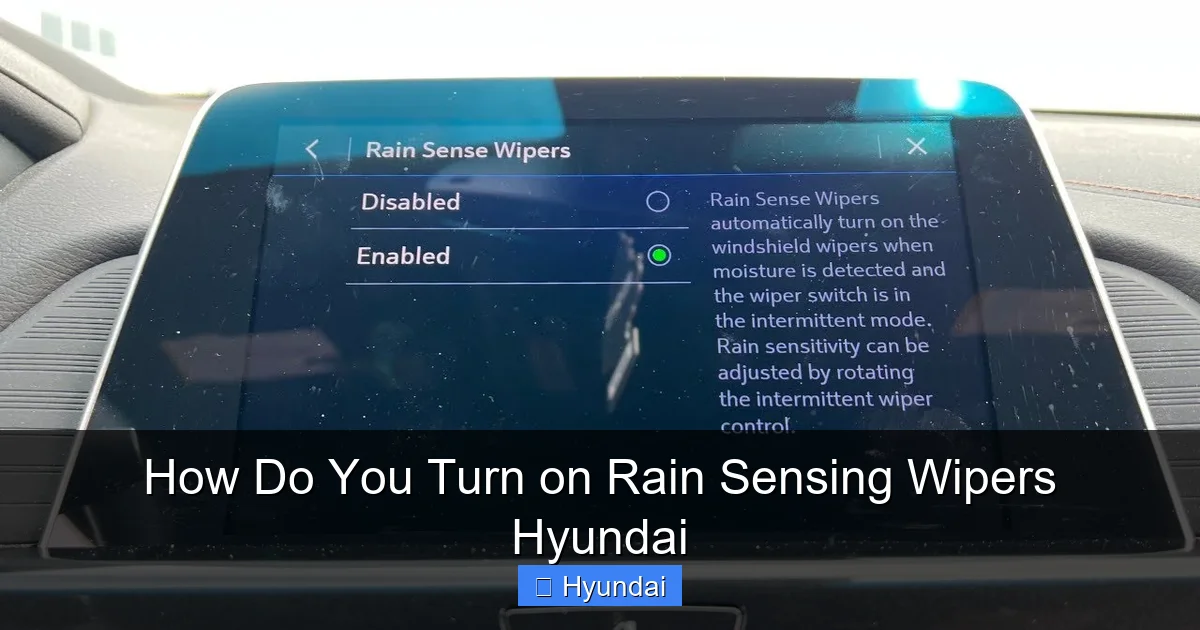
Rain sensing wipers on a Hyundai can make driving in wet weather much easier. This guide shows you how do you turn on rain sensing wipers Hyundai, how the system works, and what to do if it does not respond.
How Do You Turn on Rain Sensing Wipers Hyundai
If you have ever been caught in a sudden rain shower, you know how annoying it is to keep adjusting your wipers. That is where rain sensing wipers help. They can make driving feel smoother and safer because they react to moisture on the windshield for you.
But many Hyundai drivers still ask the same simple question: how do you turn on rain sensing wipers Hyundai? The answer is not hard, but it does depend on the model and trim. Some Hyundai vehicles have a true auto wiper setting. Others may not. And a few need one extra step before the sensor starts working.
In this guide, we will walk through the process in plain language. We will also cover how the system works, how to know if your Hyundai has it, and what to do if the wipers do not seem to respond the way they should.
Key Takeaways
- Point 1: Rain sensing wipers turn on by using the wiper stalk and setting it to the auto mode on compatible Hyundai models.
- Point 2: The rain sensor reads water on the windshield and changes wiper speed for you.
- Point 3: The system works best when the sensor area on the glass is clean and dry.
- Point 4: Not every Hyundai has rain sensing wipers, so it is smart to check your trim and owner’s manual.
- Point 5: If the wipers do not work right, simple fixes like cleaning the windshield or checking settings can help.
- Point 6: Manual control is still useful in heavy rain, snow, or when the sensor is blocked.
📑 Table of Contents
- What Rain Sensing Wipers Do
- How Do You Turn On Rain Sensing Wipers Hyundai
- How to Tell If Your Hyundai Has Rain Sensing Wipers
- Step-by-Step Guide to Using Rain Sensing Wipers
- Common Problems and Easy Fixes
- Tips for Getting the Best Performance
- When to Use Auto Mode and When Not To
- Hyundai Models and Feature Differences
- Conclusion
What Rain Sensing Wipers Do
How the system works
Rain sensing wipers use a small sensor near the top of the windshield. When drops of water land on the glass, the sensor notices the change. Then the car tells the wipers to move faster or slower based on how much rain it sees.
This is helpful because you do not have to keep turning the wiper speed up and down. The car does the work for you. That makes driving less distracting and more comfortable in changing weather.
Why Hyundai drivers like this feature
Rain sensing wipers are popular because they save time and effort. They also help keep your view clear without constant adjustment. If rain changes from light mist to heavy drops, the system can react fast.
That said, the feature is not magic. It works best when the windshield is clean and the sensor area is clear. It also may not react well to dirt, ice, or heavy snow.
How Do You Turn On Rain Sensing Wipers Hyundai
Look for the auto wiper setting
The most common answer to how do you turn on rain sensing wipers Hyundai is simple: set the wiper stalk to the Auto position. In many Hyundai models, this is found on the right-side stalk behind the steering wheel.
Visual guide about How Do You Turn on Rain Sensing Wipers Hyundai
Image source: i.ytimg.com
Usually, you move the stalk from OFF to AUTO. Once it is there, the rain sensor can begin working. If your model has a ring or dial on the stalk, you may also need to adjust the sensitivity.
Set the sensitivity if your model has it
Some Hyundai vehicles let you choose how sensitive the system should be. A higher setting means the wipers react faster to light rain. A lower setting means they wait a little longer before wiping.
If you are trying to figure out how do you turn on rain sensing wipers Hyundai, this step matters. If the setting is too low, the system may seem slow. If it is too high, the wipers may run too often.
Check your owner’s manual
Not every Hyundai uses the same control layout. That is why the owner’s manual is so useful. It can show you the exact stalk position, button, or menu setting for your model.
If you are unsure, this is the safest way to confirm how do you turn on rain sensing wipers Hyundai for your exact vehicle. A quick look can save a lot of guessing.
How to Tell If Your Hyundai Has Rain Sensing Wipers
Check the wiper stalk
Most Hyundai models with rain sensing wipers have an AUTO label on the wiper control stalk. If you see OFF, AUTO, INT, LO, and HI, that is a strong sign your vehicle has the feature or at least an auto setting.
Some stalks also have a small sensitivity ring or dial. That is another clue that the system may be rain sensing.
Look at the windshield area
The sensor is often mounted near the top center of the windshield, behind the rearview mirror area. It may look like a small box or lens.
If you want to know how do you turn on rain sensing wipers Hyundai, it helps to first find the sensor. If there is no sensor, your vehicle may not have the feature at all.
Check your trim level
Rain sensing wipers are often found on higher trims. Lower trims may have standard intermittent wipers instead. This is common across many Hyundai models.
If you are not sure, you can check the original window sticker, the vehicle brochure, or your online specs page. That will tell you whether the feature came with your trim.
Step-by-Step Guide to Using Rain Sensing Wipers
Step 1: Start the vehicle
Begin with the car on and ready to drive. On many Hyundai models, the feature will not work unless the ignition is on.
Step 2: Move the wiper stalk to AUTO
This is the main step for how do you turn on rain sensing wipers Hyundai. Move the stalk to the AUTO position. If there is a sensitivity dial, set it where you want it.
Step 3: Let the sensor detect rain
Once the system is active, wait for rain to hit the windshield. The wipers should begin moving on their own. Light rain may cause slow wipes. Heavier rain should make them move faster.
Step 4: Adjust as needed
If the wipers are too slow, raise the sensitivity. If they are wiping too much, lower it. Small changes can make a big difference.
Step 5: Switch to manual if needed
In very heavy rain, snow, or icy conditions, you may want full manual control. That is normal. Auto mode is helpful, but it is not always the best choice in every weather event.
Common Problems and Easy Fixes
The wipers do not turn on in rain
If you are still asking how do you turn on rain sensing wipers Hyundai and nothing happens, first check the stalk position. It may not be in AUTO. Also make sure the ignition is on and the windshield is wet enough for the sensor to detect moisture.
Sometimes the rain is too light for the sensor to react right away. This can make it seem like the system is not working when it really is just waiting for more water.
The sensor area is dirty
Dirt, dust, bugs, and wax can block the sensor. Clean the inside and outside of the windshield near the sensor area. Use a soft cloth and glass cleaner.
This is one of the most common reasons the system acts strange. A clean sensor is a happy sensor.
The windshield has ice or snow
Rain sensing wipers are not great at reading ice or snow. If the windshield is frozen, the sensor may not respond correctly. In that case, clear the glass first and use manual settings if needed.
The wipers move too often
If the wipers seem too sensitive, lower the setting. A small adjustment can stop the system from wiping too much during mist or light drizzle.
If you often deal with changing weather, it helps to learn the balance between auto mode and manual mode. That way, you get the best results without constant fuss.
Tips for Getting the Best Performance
Keep the glass clean
Clean windshield glass is one of the best ways to improve auto wiper performance. Use a good glass cleaner and wipe away film, dirt, and residue often.
Replace worn wiper blades
Old blades can smear water instead of clearing it. If your wipers skip, chatter, or leave streaks, it may be time for new blades. A good blade helps the sensor system work better because the windshield stays clearer.
If you like learning simple car care tasks, you may also find this guide useful: how to change windshield wipers on a Toyota Corolla. The model is different, but the idea behind fresh blades is the same.
Do not block the sensor
Do not place stickers, phone mounts, or other items near the sensor area. Even a small block can confuse the system.
Use the right mode for the weather
Auto mode is great for normal rain. Manual mode may be better for snow, road spray, or car wash use. The key is to switch modes when needed instead of forcing one setting all the time.
When to Use Auto Mode and When Not To
Best times for rain sensing wipers
Auto mode is ideal for light rain, sudden showers, and weather that changes often. It is also helpful on long drives because you do not have to keep touching the stalk.
Times to use manual control
Use manual control when the windshield is covered in snow, ice, mud, or heavy slush. Auto mode may not react the way you expect in those cases.
If you want to see how other vehicle features are handled in a simple way, you might also like how to turn on heated mirrors in a Toyota RAV4. It is a different feature, but it follows the same idea of using smart controls for bad weather.
Think of it as a helper, not a replacement
Rain sensing wipers are useful, but they do not replace driver awareness. Always keep an eye on the road and be ready to adjust settings when needed.
Hyundai Models and Feature Differences
Not every Hyundai is the same
One reason people ask how do you turn on rain sensing wipers Hyundai is that the controls can look different from model to model. A Tucson, Santa Fe, Elantra, Palisade, or Sonata may each have a slightly different stalk design or menu layout.
Some models make the feature obvious. Others hide it in a more basic-looking control setup. That is why checking your manual matters so much.
Trim level matters
Higher trims often include more comfort and convenience features. Rain sensing wipers are one of those features that may be standard on one trim and missing on another.
If your Hyundai does not have the feature, you may still have intermittent wipers. Those are useful too, but they do not adjust themselves based on rain.
Dealer help can save time
If you are still not sure, a Hyundai dealer or service center can confirm your setup. They can also show you the exact control on your vehicle in just a few minutes.
That is often the fastest answer to how do you turn on rain sensing wipers Hyundai if you cannot find the AUTO setting on your own.
Conclusion
So, how do you turn on rain sensing wipers Hyundai? In most cases, you simply move the wiper stalk to AUTO and adjust the sensitivity if your model has that option. After that, the sensor does the work by reading moisture on the windshield and changing wiper speed for you.
The system is simple once you know where to look. Still, it works best when the windshield is clean, the sensor area is clear, and the blades are in good shape. If the wipers do not seem to respond, check the setting, clean the glass, and review your owner’s manual.
Once you get used to it, rain sensing wipers can make wet-weather driving feel easier and less stressful. That is the real benefit. They help you stay focused on the road while the car handles one more small task for you.
Frequently Asked Questions
How do you turn on rain sensing wipers Hyundai?
Most Hyundai models use the wiper stalk behind the steering wheel. Move it to the AUTO position, then adjust sensitivity if your vehicle has that feature. If nothing happens, check the windshield sensor area and your owner’s manual.
Do all Hyundai vehicles have rain sensing wipers?
No, not all Hyundai vehicles have them. The feature often depends on the trim level and model year. Some vehicles only have standard intermittent wipers instead.
Why are my Hyundai rain sensing wipers not working?
The sensor may be dirty, the stalk may not be in AUTO, or the windshield may not have enough moisture yet. Ice, snow, and heavy dirt can also affect performance. Cleaning the glass often helps.
Can I adjust the sensitivity of Hyundai rain sensing wipers?
Yes, many Hyundai models let you change sensitivity with a dial or ring on the wiper stalk. A higher setting makes the wipers react sooner. A lower setting makes them wait longer.
Should I use auto wipers in snow?
Auto wipers are usually better for rain than snow. Snow and ice can block the sensor or make it react poorly. Manual control is often the better choice in winter weather.
Where is the rain sensor on a Hyundai?
It is usually near the top center of the windshield, behind the rearview mirror area. It may look like a small dark box or lens. If you cannot find it, your Hyundai may not have the feature.


