1 Best Auto Primer Over Old Paint: Expert Reviews and Top Picks
Choosing the best auto primer over old paint can be tricky, but it’s a step you don’t want to skip. This roundup focuses on primers that bond well to aged finishes and provide a solid base for topcoats. If you’re exploring options, check our guides on Best Auto Primer In A Spray Can, Best Epoxy Primer For Bare Metal, and Best Automotive Primer For Bare Metal to broaden your options.
Quick Product Comparison
Our Top 1 Best Auto Primer Over Old Paint Reviews – Expert Tested & Recommended
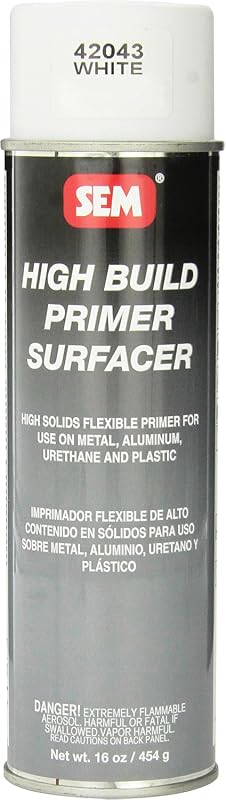
1. SEM 42043 White High Build Primer
intro text here (2-3 sentences only)
Key Features That Stand Out
- Excellent adhesion over faded or chalky old paint surfaces
- Fast-drying formula reduces downtime between coats
- High-build coverage helps smooth out imperfections
- Provides a solid base for topcoats with better color clarity
Why We Recommend It
This primer offers reliable adhesion and good filling for older finishes, making it easier to achieve a smooth final paint job. It balances performance and value, especially for DIY projects where time and simplicity matter.
Best For
Best for cars and trucks with existing paint that’s dull, faded, or chipped, where a durable base is needed before color or clear coats.
Pros and Cons
Pros:
- Strong adhesion to old painted surfaces
- Good coverage and easy sanding
- Dries quickly, speeding up project timelines
- Creates a durable base for topcoats
Cons:
- Slight odor typical of solvent-based primers
- May require a skim coat on highly textured surfaces
- Not ideal for rusted or severely damaged areas without surface prep
Customer Reviews
Customer Review: “This primer gave solid adhesion over my chalky old paint and created a smooth base for topcoats.” — Alex P.
Customer Review: “Easy to apply and dried fast. Sanding was straightforward and the finish was excellent after topcoat.” — Maria L.
Complete Buying Guide for Best Auto Primer Over Old Paint
Essential Factors We Consider
We look for primers that bond well to aged finishes, hide imperfections, and sand smoothly. For old paint, adhesion and build are key. We also weigh drying time, odor, and availability in spray cans or traditional cans to match your workflow.
Budget Planning
Prime budgets vary. You’ll typically get better coverage and durability with higher-build primers, but you can find solid performance in mid-range products. Consider how many coats you’ll need and the cost per square foot.
Final Thoughts
Choosing the right primer over old paint sets the stage for a durable, showroom-worthy finish. This primer offers dependable adhesion and easy workability, making it a strong all-around choice for most standard auto repaint jobs.
Frequently Asked Questions
Q: Will primer over old paint hide rust or corrosion?
A: Primer helps seal and protect, but you should treat active rust before priming. If rust is present, remove it or use a rust-inhibiting primer underneath.
Q: Do I need to sand before applying primer over old paint?
A: Yes, light scuff sanding (around 320-400 grit) helps the primer grip better and reduces the chance of peeling later.
Q: How many coats of primer over old paint are typically needed?
A: Usually one coat is sufficient, but very uneven surfaces may benefit from a second thin coat for best results.
Q: Is a high-build primer better over old paint?
A: High-build can smooth out imperfections more effectively, which is useful on rough or heavily chipped surfaces.
Q: Can I use primer in a spray can over old paint?
A: Spray-can primers are convenient for small areas or touch-ups, but ensure you’re using a product compatible with your topcoat and surface.
In summary, the SEM 42043 White High Build Primer is a reliable choice for priming over old paint, offering good adhesion, fast drying, and a solid base for your topcoat. If you’re tackling a repaint project, this primer is worth considering as part of your kit. Ready to start your project? Check prices and get started today.
Similar Posts
Top 8 Best Rust Encapsulators for Automotive – Expert Picks
Rust encapsulators can be a game changer for automotive projects, protecting metal from moisture and stopping corrosion in its tracks. In this Best Rust Encapsulator For Automotive roundup, you’ll find a mix of proven options, from professional-grade converters to budget-friendly paints. Each pick is evaluated for ease of use, durability, and value so you can…
Top 10 Best Spray-On Wax for White Cars: Expert Picks
Best Spray On Wax For White Cars makes it quick and easy to keep a brilliant, glossy finish on white paint. In this roundup, we test top spray-on waxes designed to deliver high gloss, long-lasting protection, and be gentle on white finishes. For broader options, you can also read our guides on Best Spray On…
Top 10 Best Car Seat For Infant To Toddler: Expert Picks & Reviews
Choosing the right car seat for your growing child can feel overwhelming. The Best Car Seat For Infant To Toddler roundup below highlights top picks that convert as your child grows—from rear-facing to forward-facing to booster modes—so you can focus on safety, comfort, and ease of use. This guide helps you compare features side by…
Top 10 Best Light To See Swirl Marks for Flawless Inspection & Detailing
Finding the best light to see swirl marks is essential for any car enthusiast who wants to maintain a flawless finish. Swirl marks, those fine scratches that appear as circular patterns on your paint, can be frustrating to deal with. Without proper lighting, these imperfections often hide in plain sight, making it difficult to achieve…
Top 10 Best Hd Backup Camera For Car: Expert Picks for Quality & Safety
Finding the right safety equipment for your vehicle can make a huge difference in your daily driving experience. Among the most useful additions you can make is a reliable rear-view system that helps you see what is behind you when reversing. We have gathered the Best Hd Backup Camera For Car options available today to…
Top 10 Best Brake Pads For Off-Road Use: Expert Picks
Best Brake Pads For Off Road Use are crucial when you’re pushing your rig through rough terrain. The right pads deliver reliable stopping power, fade resistance, and quieter operation under tough conditions. In this roundup, you’ll find a mix of resin, semi-metallic, and sintered options that stand up to mud, rock, and steep descents—so you…