
How Much Is Car Insurance for a 20 Year Old per Month
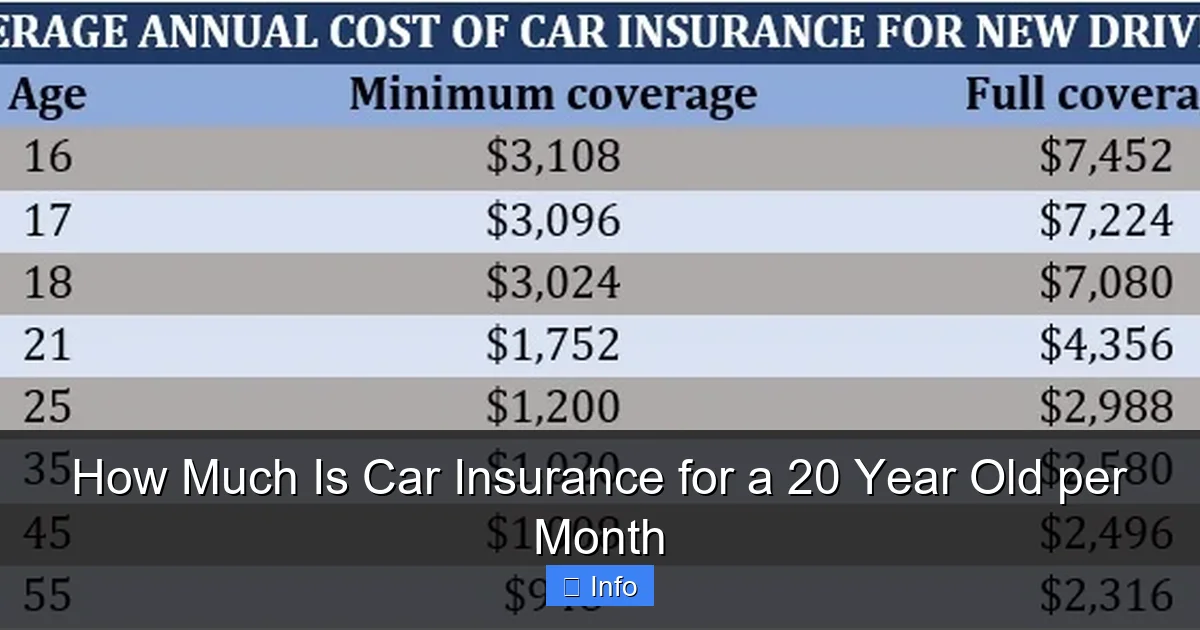
A 20-year-old may pay about $80 to $180 per month for basic liability and $200 to $400 for full coverage. Your exact cost depends on your state, car, record, and coverage. Compare at least three quotes to find the best price.
How Much Is Car Insurance for a 20 Year Old per Month
At 20, a car insurance quote can feel like a shock. A friend may pay far less than you. That does not mean you did anything wrong. Young drivers often face higher rates because insurers have less history to review.
Most 20-year-olds pay about $80 to $180 each month for basic liability. Full coverage often runs about $200 to $400. Your real quote may be lower or higher. State law, your ZIP code, your record, and your car all matter.
This guide explains what to expect. It also shows how to read a quote and lower the bill. Use these numbers as a guide. Get live quotes before you buy a policy.
Key Takeaways
- Typical cost: A 20-year-old may pay $80 to $180 per month for basic liability and $200 to $400 for full coverage.
- Many factors matter: Your state, ZIP code, car, mileage, record, and coverage all affect the price.
- Full coverage costs more: It adds protection for your own car, but it may not be needed for every vehicle.
- Quotes vary a lot: The same driver can get very different prices from different insurers.
- Discounts can help: Good student, safe driver, low mileage, bundling, and telematics discounts may lower the bill.
- Shop before you buy: Get an insurance quote before choosing a car, especially if it is new or expensive.
📑 Table of Contents
How Much Do 20-Year-Olds Usually Pay?
There is no one price for every driver. Insurers use many facts to set a rate. A broad monthly range for car insurance for a 20 year old per month is $80 to $400. Basic plans sit near the low end. Full coverage sits near the high end.
A useful price range
- Basic liability: About $80 to $180 each month. This pays for harm you cause to other people. It may not cover your own car.
- Full coverage: About $200 to $400 each month. This adds protection for your car after a crash, theft, fire, or storm.
- Common budget: Many young drivers plan for $250 to $300 each month. This is a safe starting point, not a quote.
These figures are estimates. Some states have lower average rates. Others are much higher. A clean driver in a rural area may pay less. A driver in a busy city may pay more.
Yearly cost and monthly bills
Ask for the yearly price, not just the monthly price. A $3,000 yearly policy costs $250 each month if you pay in full. If the insurer adds a $5 monthly fee, the bill becomes $255. Paying in full may save money. It may also be hard if cash is tight.
Compare the same coverage and term. A six-month policy at $1,200 is $200 each month. A six-month policy at $1,500 is $250 each month. Small differences add up over a year.
What the quote should include
Do not compare only the premium. Check liability limits, deductibles, rental cover, roadside help, and claim service. A cheap policy with low limits may leave you with a large bill. A slightly higher price may offer better value.
Why Is Insurance Higher at Age 20?
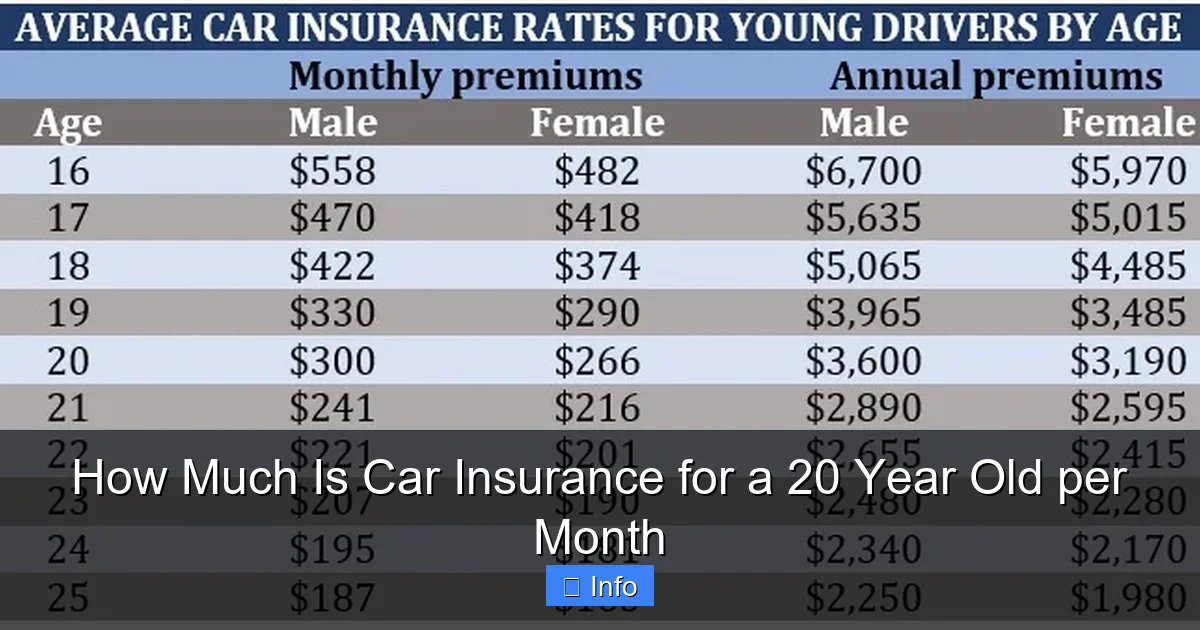
Insurers look at risk. They want to guess how likely you are to file a claim. Drivers under 25 have more crashes on average. Less time on the road is one reason.
Visual guide about How Much Is Car Insurance for a 20 Year Old per Month
Image source: cdn-res.keymedia.com
You have less driving history
A 45-year-old may have 25 years of safe driving. A 20-year-old may have only two. That short record gives the insurer less proof. Good grades and a clean record can help, but age still matters.
Your record has a big effect
One at-fault crash can raise a rate. A speeding ticket can do the same. The size of the jump depends on the company and state. This is why a cheap first quote can change after a claim.
Where and how you drive matters
City roads bring more traffic and theft. A long commute adds miles and risk. Parking on a street can also cost more than parking in a garage. Tell the insurer how you use the car. Do not guess the miles.
Your car can raise the price
A fast sports car costs more to repair. A new luxury car has costly parts. A small, safe used car may cost less to insure. The car’s value, repair cost, theft rate, and safety record all count.
Age is only one part of the price
A 20-year-old with a safe record may pay less than an older driver with tickets. A low-risk car can also help. Focus on the parts you can change.
What Coverage Should a 20-Year-Old Buy?
The cheapest policy is not always the best deal. You need enough cover to meet the law and protect your money. Start with liability, then add the parts that fit your car and budget.
Liability coverage
Liability coverage pays for injuries and damage you cause to others. It does not pay for your own car. Buy more than the state minimum if you can. A serious crash can cost far more than a low limit.
Full coverage
Full coverage usually means liability, collision, and comprehensive cover. Collision helps after a crash. Comprehensive helps with theft, fire, glass, and some weather damage. A lender may require both if you finance the car.
- Collision: Pays to repair or replace your car after a covered crash.
- Comprehensive: Pays for many non-crash losses, such as theft or hail.
- Uninsured motorist cover: Helps if another driver has no insurance.
- Medical payments cover: Helps with injury bills in states where it is offered.
Three sample budgets
These examples show how the same driver can see different prices. They are not quotes.
- Older car, basic cover: A 20-year-old with a paid-off compact car might pay $100 to $160 each month.
- Used car, full cover: A driver with a five-year-old sedan might pay $220 to $320 each month.
- New car, full cover: A driver with a new SUV might pay $300 to $450 each month.
When full coverage makes sense
Full cover can be worth it when the car has real value or a lender requires it. It may not be worth it for an old car with a low market price. If repairs would cost more than the car, think about the deductible and your savings.
Choose a deductible you can pay
A deductible is what you pay before insurance pays. If your deductible is $500 and repairs cost $2,000, you pay $500. The insurer may pay the rest, subject to the policy. A higher deductible can lower the premium, but only choose one you can afford.
What Changes Your Quote?
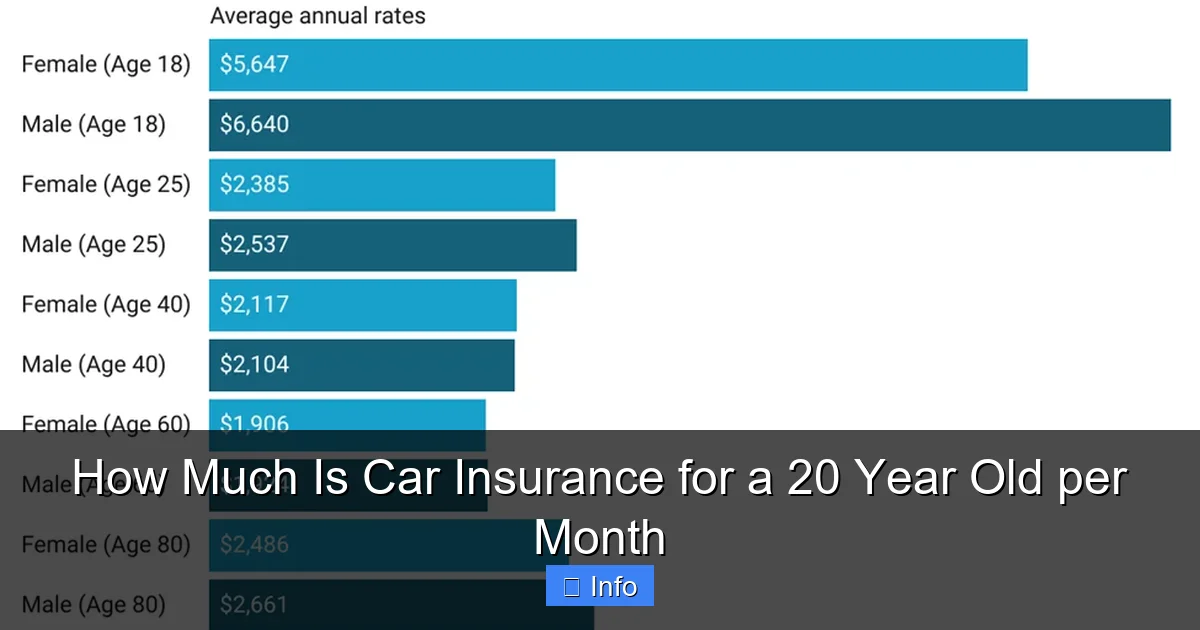
Two 20-year-olds can get very different prices. The difference is often due to facts you can change and facts you cannot.
Visual guide about How Much Is Car Insurance for a 20 Year Old per Month
Image source: forbes.com
Car value and repair cost
A costly car needs costly parts. A rare car may take longer to fix. A common, safe model may be cheaper to cover. If you are looking at a used RAV4, check its market value before you choose coverage. Our guide to what a 2015 Toyota RAV4 is worth can help you judge the purchase price.
Before buying a used Toyota, an inspection can reveal hidden faults. You can check how much a car inspection at Toyota costs before you set your car budget. A safe, reliable car may also help you avoid claims.
Location and use
Your ZIP code affects the rate. Insurers look at local crash and theft data. A rural driver may pay less than a city driver. A student who drives 4,000 miles a year may pay less than a worker who drives 18,000 miles.
Personal details
Some states let insurers use credit-based insurance scores. Others limit or ban the practice. Your gender may also matter where the law allows it. Student status, prior insurance, and continuous coverage can change the price too.
Driving and claims history
A clean record is one of the best ways to keep a rate down. One claim can affect several renewal dates. If you have a ticket, ask how long it stays on your record. Do not hide a claim or driver. Wrong facts can cause a policy problem later.
How to estimate total cost
Insurance is not the only cost. Add fuel, maintenance, registration, and repairs. A $250 policy is $3,000 a year. A $300 policy is $3,600. Put both figures in your budget before you choose a car.
How Can a 20-Year-Old Lower the Cost?
You may not control your age, but you can control many parts of the quote. Small changes can save a lot over a year.
Compare at least three quotes
Get quotes from three to five insurers. Use the same car, address, mileage, and coverage in each one. A low price may come from a high deductible or weak liability limits. Compare the full policy, not just the first number.
Ask about online, paperless, automatic payment, and pay-in-full discounts. One company may be cheap for a student. Another may be better for a driver with a clean record.
Look for discounts
- Good student: Many insurers offer a discount for strong grades.
- Driver training: A safety course may lower the rate.
- Telematics: An app can track safe driving, such as smooth braking and low speed.
- Bundling: Renters or another policy may bring a discount.
- Low mileage: Less driving can mean a lower price.
Choose the right car
Insurance is only one part of car ownership. A cheap purchase price does not always mean a cheap policy. Ask for an insurance quote before you buy. A sports car can cost much more to insure. For a clear example, see how much insurance for an Audi R8 costs.
Use a safe deductible
Raising a deductible from $500 to $1,000 may lower the premium. It also means you must have $1,000 ready after a loss. Do not choose a high deductible just to make the monthly price look good. Keep an emergency fund if you can.
Check family policy options
If you live at home, you may be able to stay on a parent’s policy. This can be cheaper when the car is owned and listed correctly. Never leave a regular driver off the policy to save money. That can lead to a denied claim or cancellation.
Avoid common mistakes
Do not give a false address, understate mileage, or leave out a driver. These errors can cause a claim dispute. Do not cancel an old policy before the new one starts. A gap in coverage can raise future rates.
How Should You Shop and When Will Rates Drop?
Shopping is simple when you use the same facts each time. Make a list before you call or go online.
A quote checklist
- Use your correct address and garaging place.
- Enter the real yearly mileage.
- List every regular driver.
- Choose the same liability limits.
- Ask about every discount.
- Read the deductible and exclusions.
Review the policy before you sign. Make sure the car’s VIN is correct. Check the payment dates and cancellation rules. Save a copy of the quote.
When can the price fall?
Rates often fall as you gain clean driving history. Some drivers see a drop after turning 21. A larger drop may come near age 25, but there is no promise. A safe record, more experience, and a lower-risk car can help at any age.
Review your policy every six to twelve months. Do not switch just because one ad shows a low price. Compare the same cover and service. The best policy is affordable and reliable when you need it.
A final check
Before you pay, read the proof of insurance and declarations page. Make sure your name, car, limits, and payment plan are correct. A small error can cause trouble later.
Bottom line
Car insurance for a 20 year old per month often costs about $80 to $400, depending on the plan. Start with the coverage you need. Then compare quotes, choose a safe car, and use discounts. A little time spent shopping can save hundreds of dollars each year.
Frequently Asked Questions
Is $100 a month good for a 20-year-old?
It can be a good price for basic liability, especially with a safe car. It may be low for full coverage. Compare limits and deductibles before deciding.
Can a 20-year-old get cheap car insurance?
Yes, cheap depends on your needs and location. A modest car, good grades, discounts, and a clean record can lower the cost. Always compare several quotes.
Should a 20-year-old buy full coverage?
Full coverage may make sense for a newer or financed car. For an old, paid-off car, liability may be enough if you can replace it. Check the car’s value first.
Why is my quote so high?
Your ZIP code, car, mileage, record, and coverage can raise the price. A high deductible or low liability limit may make a quote look cheaper. Ask the insurer what drove the rate up.
Does insurance go down when you turn 21?
It often can, but there is no guarantee. More clean driving history may help. Shop again at each renewal to see the new rate.
What is the best insurance company for a 20-year-old?
There is no single best company for every driver. Rates and service vary by state, car, and profile. Compare at least three insurers with the same coverage.


