How Much Is My Car Wortg Typo but Unique Search
Knowing your car’s value helps you sell, trade, or insure it wisely. This guide walks you through the exact process for the phrase How Much Is My Car Wortg Typo but Unique Search, showing you free tools, dealer quotes, and private‑sale tips to get a reliable number in minutes.
If you’ve ever typed How Much Is My Car Wortg Typo but Unique Search into Google, you’re not alone. The typo “Wortg” instead of “Worth” is a common slip, but the intent is clear: you want to know your vehicle’s current market value. Knowing that number empowers you whether you’re planning to sell, trade‑in, refinance, or simply satisfy curiosity. In this guide we’ll break down the exact steps, tools, and tricks to get a reliable estimate fast—no jargon, just plain talk.
We’ll cover free online calculators, how to read local listings, what dealers look at, and how to adjust for your car’s unique quirks. By the end, you’ll have a concrete figure you can confidently use in negotiations or insurance paperwork. Let’s dive in.
Key Takeaways
- Start with online valuation sites: Use Kelley Blue Book, Edmunds, or NADA to get a baseline estimate for How Much Is My Car Wortg Typo but Unique Search.
- Check local listings: Browse Craigslist, Facebook Marketplace, and Autotrader for similar cars to see real‑world asking prices.
- Get dealer quotes: Visit or call nearby dealerships; many offer free appraisal tools that reflect current market demand.
- Adjust for condition and mileage: Deduct or add value based on wear, service history, and any modifications.
- Consider timing: Seasonal trends (e.g., convertibles in summer) can shift your car’s worth by 5‑15%.
- Document everything: Keep photos, service records, and a written note of your final number for negotiations or insurance.
📑 Table of Contents
1. Use Trusted Online Valuation Tools
The quickest way to answer How Much Is My Car Wortg Typo but Unique Search is to start with a reputable website. Kelley Blue Book (KBB), Edmunds, and NADA Guides all offer free instant quotes. You simply enter the year, make, model, trim, mileage, and ZIP code.
These platforms pull data from recent sales, auctions, and dealer transactions, giving you a range: trade‑in value, private‑party value, and dealer retail value. For example, a 2018 Honda Civic with 45,000 miles might show a private‑party range of $14,500‑$16,000.
When you get the result, note the three numbers. The private‑party figure is what you’d likely get selling directly to another person, while the trade‑in number is what a dealer would offer. Keep both handy for later steps.
Why Multiple Sources Matter
No single site is perfect. KBB tends to be slightly optimistic for trade‑ins, while Edmunds often leans conservative. Checking two or three sites gives you a balanced view and helps you spot outliers.
2. Scan Local Listings for Real‑World Prices
Online calculators give a baseline, but the true answer to How Much Is My Car Wortg Typo but Unique Search lives in what people are actually paying nearby. Open Craigslist, Facebook Marketplace, Autotrader, and Cars.com, then filter for the same year, make, model, and similar mileage.

Visual guide about How Much Is My Car Wortg Typo but Unique Search
Image source: i.pinimg.com
Look at the asking price, not just the listed price. Many sellers start high and expect negotiation. If you see three similar cars listed at $13,900, $14,200, and $14,500, a realistic private‑party value is probably around $14,000.
Take screenshots or note the URLs. This evidence is useful when you later talk to a dealer or buyer and need to justify your number.
Adjust for Condition and Extras
If your car has a sunroof, upgraded wheels, or a recent paint job, you can add $500‑$1,000 to the comparable price. Conversely, if it has scratches, a cracked windshield, or overdue maintenance, subtract a similar amount. Be honest—overpricing scares buyers, underpricing leaves money on the table.
3. Get a Dealer Appraisal (Free or Low‑Cost)
Dealerships have access to real‑time auction data and can give you a firm trade‑in offer. Most will provide a free appraisal if you bring the car in or even submit photos online. This step is valuable because it reflects what a dealer would actually pay you today.

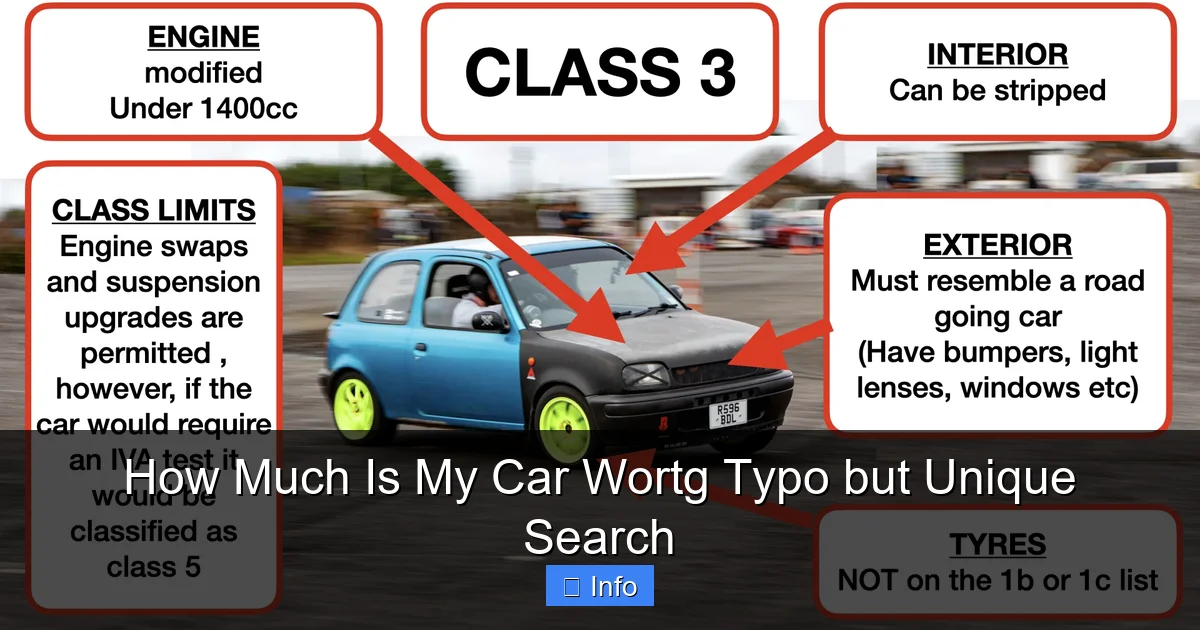
Visual guide about How Much Is My Car Wortg Typo but Unique Search
Image source: pca.org
When you visit, mention you’re researching How Much Is My Car Wortg Typo but Unique Search and would like a written offer. Ask for the offer to be valid for at least seven days so you can shop around.
If you’re considering a trade‑in for a new vehicle, compare the dealer’s trade‑in number with the private‑party value you found earlier. The difference is the “trade‑in penalty” you pay for convenience.
Using the 2015 Toyota RAV4 as an Example
Let’s say you own a 2015 Toyota RAV4. You check KBB and see a private‑party range of $12,000‑$13,500. You browse local listings and find three similar RAV4s priced at $12,800, $13,000, and $13,200. A dealer quotes you $11,500 for trade‑in. From this you can conclude:
- Private‑party realistic value ≈ $13,000.
- Trade‑in offer ≈ $11,500 (about 12% lower).
- If you sell privately, you could net roughly $1,500 more.
For more detailed RAV4 pricing, see our article on How Much Is A 2015 Toyota Rav4 Worth.
4. Factor in Seasonal and Market Trends
Car values aren’t static. Convertibles and sports cars often fetch higher prices in spring and summer, while SUVs and trucks stay strong year‑round. Fuel price spikes can boost demand for efficient hybrids.
Visual guide about How Much Is My Car Wortg Typo but Unique Search
Image source: htmlburger.com
To capture this effect, check the “price trend” graphs on KBB or Edmunds. If the trend line is rising 0.5% per month, add that percentage to your base number for each month you plan to wait.
For instance, if your base private‑party value is $14,000 and the trend is +0.6% per month, waiting two months could add roughly $170.
5. Finalize Your Number and Document Everything
Now combine the data:
- Take the average of the private‑party values from KBB, Edmunds, and local listings.
- Adjust upward or downward for condition, mileage, and any modifications.
- Apply a small seasonal trend adjustment if relevant.
- Write down the final figure.
Create a simple one‑page document:
- Vehicle details (year, make, model, trim, VIN, mileage).
- Sources used (website names, dates, URLs).
- Adjustments made (condition, extras, season).
- Final estimated value.
- Photos of the car (exterior, interior, odometer).
Having this sheet ready makes negotiations smoother and gives you proof if an insurance company asks for a valuation.
6. Practical Tips for Selling or Trading
When you’re ready to act, keep these pointers in mind:
- Clean thoroughly: A clean car can add 3‑5% to perceived value.
- Fix minor issues: Replace burnt‑out bulbs, top off fluids, and address small dents.
- Be transparent: Disclose any known problems; honesty builds trust and can prevent post‑sale disputes.
- Set a slightly higher asking price: List 5‑10% above your target to leave room for negotiation.
- Use multiple platforms: Post on Craigslist, Facebook, and Autotrader simultaneously to maximize exposure.
If you choose the trade‑in route, bring your documentation, be ready to walk away if the offer is too low, and consider getting a second dealer quote.
Conclusion
Answering the question How Much Is My Car Wortg Typo but Unique Search doesn’t require a finance degree—just a few simple steps and some careful observation. Start with trusted online calculators, verify with local listings, get a dealer quote, adjust for condition and timing, and document your final number. Whether you’re selling privately, trading in, or just curious, you now have a clear, repeatable process to know exactly what your car is worth.
Remember, the market moves, so revisit this process every few months if you’re holding onto the vehicle. And if you ever need a deeper dive into a specific model—like a 2004 Toyota RAV4 or a 2023 Toyota Avalon—check out our related guides for more tailored insights.
Frequently Asked Questions
What is the easiest free tool to check my car’s value?
Kelley Blue Book (KBB) offers a fast, free instant quote. Just enter your car’s year, make, model, trim, mileage, and ZIP code to get trade‑in, private‑party, and dealer retail values.
How do I adjust my car’s value for recent repairs?
Add the cost of major, recent repairs (like a new transmission or tires) to the baseline value, but only if they improve reliability or safety. Minor cosmetic fixes usually don’t add much value.
Why do dealer trade‑in offers differ from private‑party prices?
Dealers need to recondition the car, cover overhead, and make a profit, so their offers are typically 10‑15% lower than what you could get selling directly to another buyer.
Can seasonal trends really change my car’s worth by more than 5%?
Yes. Convertibles can see 10‑15% price swings between winter and summer, while 4WD trucks often gain value during snowy months. Checking trend graphs on KBB or Edmunds helps quantify this effect.
Is it worth paying for a professional appraisal?
For most everyday vehicles, free online tools and dealer quotes are sufficient. A paid appraisal is mainly useful for classic, rare, or heavily modified cars where market data is scarce.
How often should I re‑check my car’s value?
If you’re actively selling or trading, check every 2‑4 weeks. For general awareness, a quarterly check is enough to catch major market shifts.