
Top 10 Best Solar Car Kits For Classroom: Expert Review & Quality Guide
When it comes to bringing hands-on STEM learning into the classroom, finding the right solar car kits for classroom use can make a huge difference in student engagement. These kits transform abstract concepts like renewable energy, engineering design, and physics into tangible, build-it-yourself projects that students can see in action. Whether you are a teacher planning a unit on sustainability or a parent looking for educational activities at home, the right kit should be safe, durable, easy to assemble, and genuinely educational. In this roundup, I have tested and reviewed the top options available today, focusing on classroom suitability, value for money, and the quality of the learning experience each kit provides.
Quick Product Comparison
Our Top 10 Best Solar Car Kits For Classroom Reviews – Expert Tested & Recommended
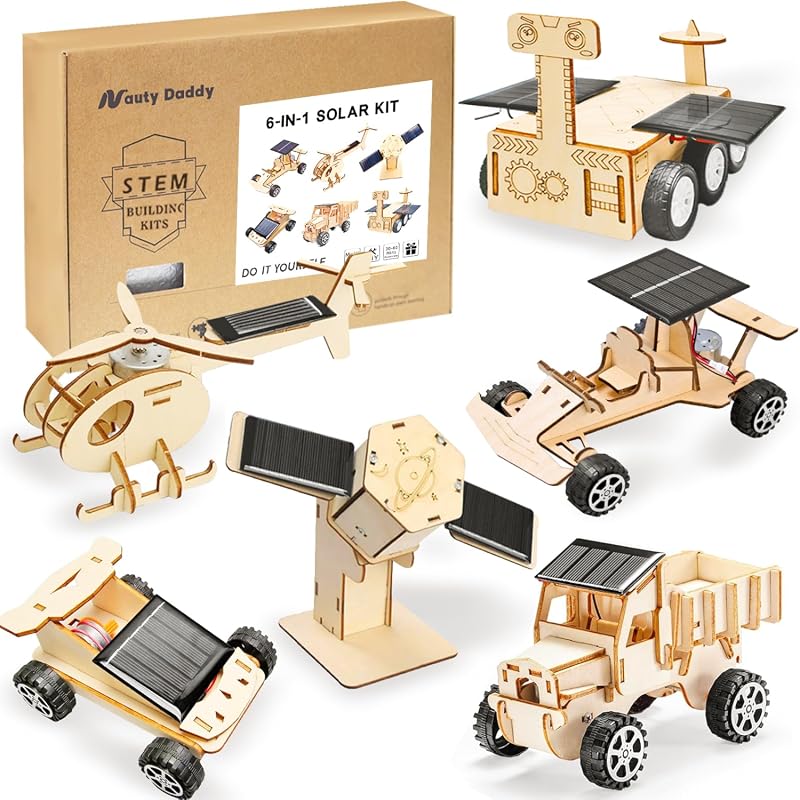
1. 6-in-1 Solar STEM Wooden Building Kit for Kids Ages 6-14
This 6-in-1 solar STEM wooden building kit stands out as our top pick for classroom use because it offers multiple build options in a single package. Students can construct a satellite, helicopter, and four different vehicle models, giving teachers plenty of flexibility for group activities. The wooden parts are sturdy and the assembly process encourages teamwork and problem-solving without requiring any special tools.
Key Features That Stand Out
- ✓ Includes 6 different models: satellite, helicopter, and 4 vehicle designs
- ✓ Real solar panels power each model, demonstrating renewable energy in action
- ✓ Wooden construction pieces are durable and safe for young hands
- ✓ No glue or tools required, making it ideal for classroom settings
- ✓ Combines engineering, physics, and sustainability concepts in one kit
Why We Recommend It
We recommend this kit because it delivers the best balance of variety, educational value, and ease of use. Teachers can run multiple projects throughout the week without needing to buy separate kits for each activity. The solar-powered movement gives students a clear visual of how sunlight converts to mechanical energy, which makes abstract science concepts much easier to grasp.
Best For
This kit is best for classrooms with students ages 6 to 14 who benefit from hands-on, multi-project learning experiences. It also works well for science fairs, after-school programs, and home learning environments where variety matters.
Pros and Cons
Pros:
- Multiple build options keep students engaged over time
- Solar-powered movement provides real-world renewable energy demonstration
- Durable wooden parts withstand repeated classroom use
- No additional tools or adhesives needed for assembly
Cons:
- Some younger students may need adult guidance for complex models
- Solar panels require direct sunlight for optimal performance
Customer Reviews
Customer Review: My students absolutely loved building these models. The solar panels actually work and the kids were amazed seeing the cars move in the sunlight. It made our renewable energy unit so much more engaging.
Customer Review: Great quality wooden pieces and clear instructions. I used this with my 4th grade class and everyone was able to complete at least two models. Highly recommend for any STEM classroom.
2. Solar Power STEM Kits for Kids Science Experiment Building Crafts Ages 8-12

Our editor’s choice for solar car kits for classroom settings goes to this 4-in-1 STEM kit that includes a solar-powered car, solar-powered fan, wind-powered car, and a wooden plane. Each toy is individually packaged, which makes it easy for teachers to distribute sets to small groups. The mix of solar and wind energy projects gives students a broader understanding of renewable power sources.
Key Features That Stand Out
- ✓ 4-in-1 kit with solar car, solar fan, wind car, and wooden plane
- ✓ Each project is individually packaged for easy group distribution
- ✓ Encourages family and classroom collaboration through hands-on building
- ✓ Designed for kids ages 8-12 with age-appropriate complexity
- ✓ Demonstrates multiple renewable energy concepts in one set
Why We Recommend It
We chose this kit as our editor’s pick because it covers more energy types than most single-focus kits. Students get to compare how solar power and wind power work differently, which sparks great classroom discussions. The individual packaging also makes classroom management much smoother when working with multiple groups at once.
Best For
This kit is best for upper elementary and middle school classrooms that want to explore multiple renewable energy sources. It also makes a thoughtful gift for young scientists who enjoy building and experimenting.
Pros and Cons
Pros:
- Multiple energy types covered in a single purchase
- Individually packaged projects simplify classroom organization
- Good balance of building challenge and achievable results
- Encourages collaborative learning between students and parents
Cons:
- Some assembly steps may be tricky for younger kids without help
- Wind-powered projects require a fan or breath source for testing
Customer Reviews
Customer Review: The variety in this kit is fantastic. My son built all four projects and was fascinated by how the solar panel powered the car and fan differently. Great educational value.
Customer Review: Used this in my classroom and the kids loved comparing the solar car to the wind car. The individual packaging made it easy to hand out. Will buy again next year.
3. 2-Pack Solar Car Kit – Build 2 Solar Powered Wooden STEM Cars

For teachers and parents on a budget, this 2-pack solar car kit offers incredible value without sacrificing educational quality. Each kit includes everything needed to build a wooden solar-powered car, and having two complete sets means students can work in pairs or compare results. The straightforward assembly process keeps the focus on learning rather than troubleshooting complicated instructions.
Key Features That Stand Out
- ✓ Includes 2 complete solar car kits for paired or comparative learning
- ✓ Real solar cells convert sunlight into motion, demonstrating energy conversion
- ✓ Designed specifically for classroom and group STEM projects
- ✓ No glue or soldering required, keeping assembly safe and simple
- ✓ Affordable price point makes it accessible for schools and families
Why We Recommend It
We recommend this kit as the best budget option because it delivers a complete solar car building experience at a price that schools can easily afford. The two-pack format is perfect for partner work, and students can race their cars against each other to see whose design performs best. It covers the core solar energy concept without unnecessary extras that drive up the cost.
Best For
This kit is best for budget-conscious classrooms, homeschool groups, and parents who want a focused solar energy project without a high price tag. It works well for students ages 8 and up who can follow step-by-step assembly instructions.
Pros and Cons
Pros:
- Two complete kits provide great value for the price
- Simple assembly keeps the focus on learning concepts
- Real solar panels demonstrate actual energy conversion
- Ideal for partner work and classroom competitions
Cons:
- Only one car model type per kit, less variety than multi-model sets
- Performance depends heavily on direct sunlight availability
Customer Reviews
Customer Review: Perfect for my classroom budget. The kids built two cars and had a race in the parking lot. They learned so much about solar power and had a blast doing it.
Customer Review: Easy to assemble and the instructions were clear. My daughter and her friend built both cars in an afternoon. Great introduction to renewable energy for kids.
4. 10-Pack Solar Car Kit – Build 10 Solar Powered Wooden STEM Cars

When you need to equip an entire class, this 10-pack solar car kit is a game-changer. It includes ten individual solar-powered car kits, giving every student in a typical classroom their own build project. Each car uses a real solar panel that responds to sunlight, so students get a genuine hands-on experience with renewable energy technology.
Key Features That Stand Out
- ✓ 10 individual solar car kits perfect for full classroom distribution
- ✓ Real solar panels provide authentic renewable energy demonstrations
- ✓ Pre-cut materials and no glue or soldering required for easy assembly
- ✓ Designed for educators, schools, and group STEM activities
- ✓ Cost-effective solution for large group learning environments
Why We Recommend It
We recommend this 10-pack for teachers who need to supply an entire class without breaking the budget. Every student gets their own kit, which eliminates sharing conflicts and lets each child take pride in their completed car. The no-glue, no-solder design keeps the project safe and manageable even with larger groups.
Best For
This kit is best for classroom teachers, science camp organizers, and group leaders who need to supply 10 or more students with individual build projects. It suits students ages 8 and older who can work independently or with minimal supervision.
Pros and Cons
Pros:
- Provides enough kits for a full classroom at one time
- Each student gets their own car to build and take home
- No messy adhesives or tools required for assembly
- Real solar power demonstration for authentic learning
Cons:
- Bulk packaging may require extra classroom storage space
- Individual car designs are similar, less variety for advanced students
Customer Reviews
Customer Review: I bought this for my entire 5th grade class and every single student was able to build their own car. The solar panels actually work and the kids were thrilled to see them move.
Customer Review: Great value for a classroom set. Assembly was straightforward and the instructions were easy enough for my students to follow with little help. Highly recommend for teachers.
5. STEM Kits for Kids 8-12 Science Projects Boy Birthday Gift
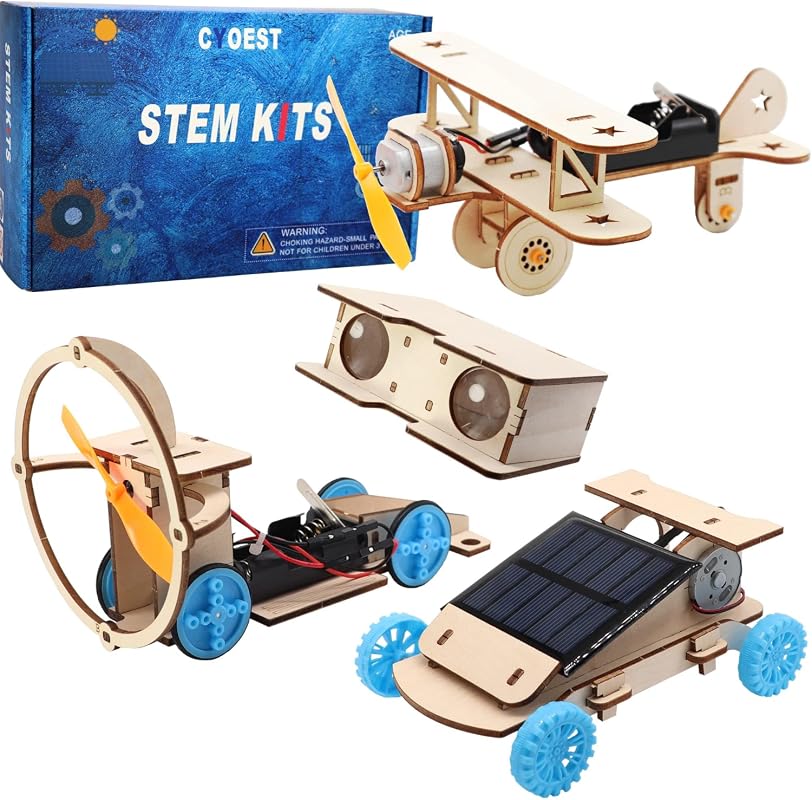
This STEM kit set brings together four different wooden build projects, including a solar-powered car, an electric biplane glider, a wooden binocular, and a wind-powered car. The variety makes it a great choice for classrooms that want to explore multiple engineering concepts without buying separate kits for each project. Best of all, assembly requires no welding or glue, so students can focus on the building process itself.
Key Features That Stand Out
- ✓ 4 different wooden STEM projects in one comprehensive kit
- ✓ Includes solar car, electric biplane glider, wooden binocular, and wind car
- ✓ No welding, glue, screws, or special tools needed for assembly
- ✓ Encourages imagination and hands-on problem-solving skills
- ✓ Solar panel powers the race car while wind and battery power other models
Why We Recommend It
We recommend this kit for its impressive variety and tool-free assembly. Students who finish one project quickly can move on to the next, keeping them engaged throughout the lesson. The mix of solar, wind, and battery-powered models also gives teachers a natural way to compare different energy sources in the same class period.
Best For
This kit is best for classrooms and families with kids ages 8 to 12 who enjoy diverse building challenges. It also makes a thoughtful birthday or holiday gift for young inventors who like to explore different types of projects.
Pros and Cons
Pros:
- Four distinct projects provide extended learning opportunities
- No tools or adhesives required makes assembly safe and simple
- Multiple energy sources demonstrated in a single kit
- Encourages creativity and independent problem-solving
Cons:
- Battery-powered components require separate batteries not included
- Some smaller parts may be tricky for younger hands to handle
Customer Reviews
Customer Review: My nephew received this as a birthday gift and spent the entire weekend building all four projects. The solar car was his favorite and he loved explaining how it worked to everyone.
Customer Review: Great variety and the no-glue design is a huge plus. My students were able to complete two projects in one class period. The binocular was a nice surprise addition.
6. DIY Remote Control Car and Solar Car STEM Kits Kids 8-10
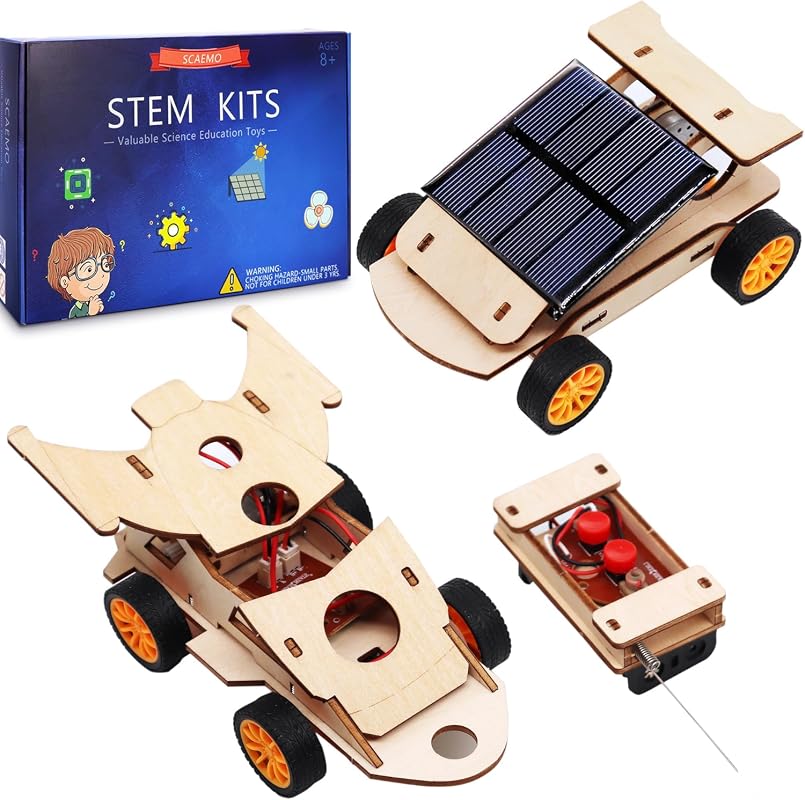
This unique kit gives students the chance to build both a solar-powered car and a remote control car, offering two very different engineering experiences in one package. The solar car teaches renewable energy concepts while the RC car introduces basic circuit diagrams and wireless control principles. Students can play with both cars indoors and outdoors, making it a versatile addition to any classroom or home learning setup.
Key Features That Stand Out
- ✓ Two distinct car styles: solar-powered and wireless remote control
- ✓ Build both cars yourself and learn about different engineering principles
- ✓ Solar panel demonstrates renewable energy while RC car teaches circuits
- ✓ Can be played indoors and outdoors for flexible learning environments
- ✓ Designed for kids ages 8-10 with accessible assembly complexity
Why We Recommend It
We recommend this kit for classrooms that want to go beyond basic solar projects and introduce students to broader engineering topics. The combination of solar and remote control builds keeps students interested and gives teachers a chance to discuss both renewable energy and basic electronics. It is a great way to show that engineering comes in many different forms.
Best For
This kit is best for curious students ages 8 to 10 who enjoy both building and playing with their creations. It works well in classrooms that have covered basic solar concepts and are ready to explore circuits and remote control technology.
Pros and Cons
Pros:
- Two different car builds provide double the learning value
- Introduces circuit diagrams and remote control concepts alongside solar power
- Both cars offer indoor and outdoor play options
- Engaging for students who like hands-on building and testing
Cons:
- Remote control car requires batteries not included in the kit
- More complex assembly may require additional adult guidance
Customer Reviews
Customer Review: My son was thrilled to build both cars. The solar car worked great in the sun and the remote control car was fun to drive around the house. He learned a lot about how each one works.
Customer Review: Excellent kit for introducing different types of engineering. My classroom used the solar car for our energy unit and the RC car for a separate circuits lesson. Very versatile.
7. Solar Energy Toys Solar Powered Tiny Mini Cars Educational Science Kits Black
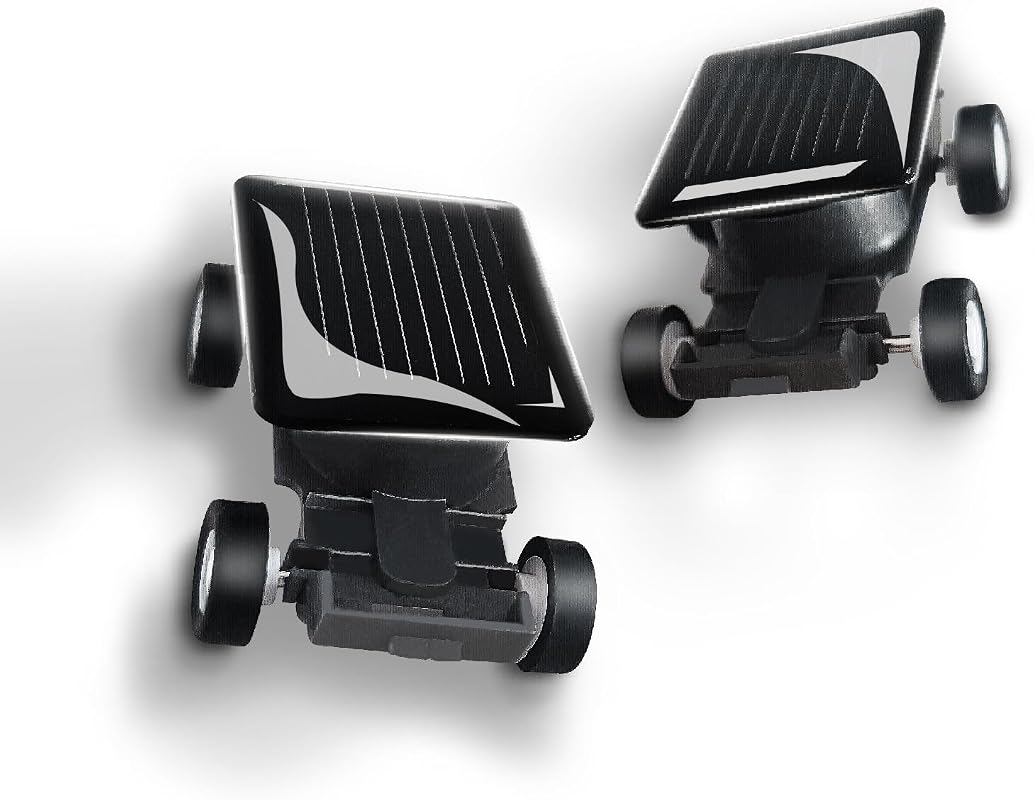
These tiny mini solar-powered cars are a simple yet effective way to introduce young students to renewable energy concepts. Each car comes with a solar panel that collects heat energy from the sun and converts it into electric energy to drive the motor. The compact size makes them easy to store and distribute, while the eco-friendly design reinforces the environmental benefits of solar power.
Key Features That Stand Out
- ✓ Tiny mini cars that run entirely on solar power without batteries
- ✓ Solar panels collect solar heat energy and convert it to electric motor power
- ✓ Made with non-toxic ABS materials for safe, eco-friendly learning
- ✓ Contributes to energy conservation concepts and reduced carbon footprint education
- ✓ Simple design makes them accessible for younger students and quick classroom demos
Why We Recommend It
We recommend these mini cars for teachers who need a quick, affordable, and safe solar energy demo that students can easily understand. The no-battery design eliminates the need for extra supplies, and the small size means every student can have their own car without taking up much desk space. They are perfect for short lessons or as a supplement to larger build projects.
Best For
This kit is best for younger students and classrooms that need a simple, low-cost introduction to solar power. It also works well as a take-home project or a quick classroom demonstration of renewable energy principles.
Pros and Cons
Pros:
- No batteries required, solar panels power the cars directly
- Compact size makes storage and distribution easy
- Non-toxic materials ensure safe use for young children
- Simple concept that is easy for beginners to understand
Cons:
- Mini size means less visibility for large classroom demonstrations
- Performance may vary significantly based on sunlight intensity
Customer Reviews
Customer Review: These little cars are perfect for my science class. The kids loved seeing them move in the sunlight and it was a great way to explain solar energy in a simple way.
Customer Review: Bought a set for my grandson and he was amazed that the car moved without any batteries. The quality is good and the concept is explained well for young kids.
8. STEM Kit for Kids Ages 8-14 Build 7 Models Solar and Motor Science Kit
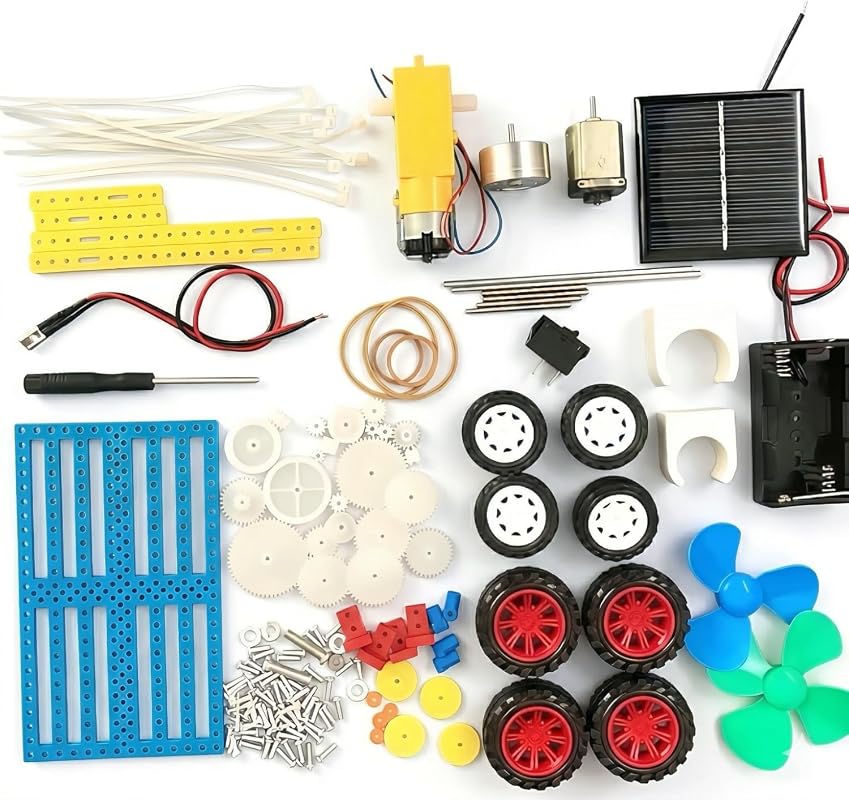
This comprehensive STEM kit lets students build seven different models, including a solar car, propeller fan, wind turbine, and generator. It is designed for kids ages 8 to 14 and provides a deep dive into renewable energy, motors, circuits, and gears. The kit builds one model at a time, which helps students focus on each project without feeling overwhelmed by too many parts at once.
Key Features That Stand Out
- ✓ 7-in-1 creative STEM projects including solar car, fan, wind turbine, and generator
- ✓ Hands-on learning covering renewable energy, motors, circuits, and gears
- ✓ Step-by-step 3D animated video instructions reduce frustration for beginners
- ✓ Clearly labeled parts make assembly easier for young builders
- ✓ Designed for kids ages 8-14 with age-appropriate complexity levels
Why We Recommend It
We recommend this kit for classrooms that want a more advanced and comprehensive STEM experience. The seven different models provide weeks of project material, and the 3D video instructions are a huge help for students who learn better visually. It covers a wide range of science concepts while keeping the building process manageable and fun.
Best For
This kit is best for older elementary and middle school students who are ready for more complex builds. It suits classrooms with access to video instructions and teachers who want a long-lasting project series.
Pros and Cons
Pros:
- Seven different models provide extensive learning opportunities
- 3D video instructions make assembly much easier to follow
- Covers multiple science topics beyond just solar power
- Clearly labeled parts reduce confusion during building
Cons:
- Building one model at a time means projects take longer to complete
- More parts to manage can be challenging for younger students
Customer Reviews
Customer Review: The 3D video instructions are a game changer. My daughter was able to build the solar car completely on her own and then moved on to the wind turbine. So many projects in one kit.
Customer Review: Used this with my 7th grade science class and the variety kept them engaged for weeks. The generator and wind turbine projects were especially popular. Great educational kit.
9. STEM Kit 3 DIY Car Projects Mousetrap Solar and Rubber Band Ages 8+
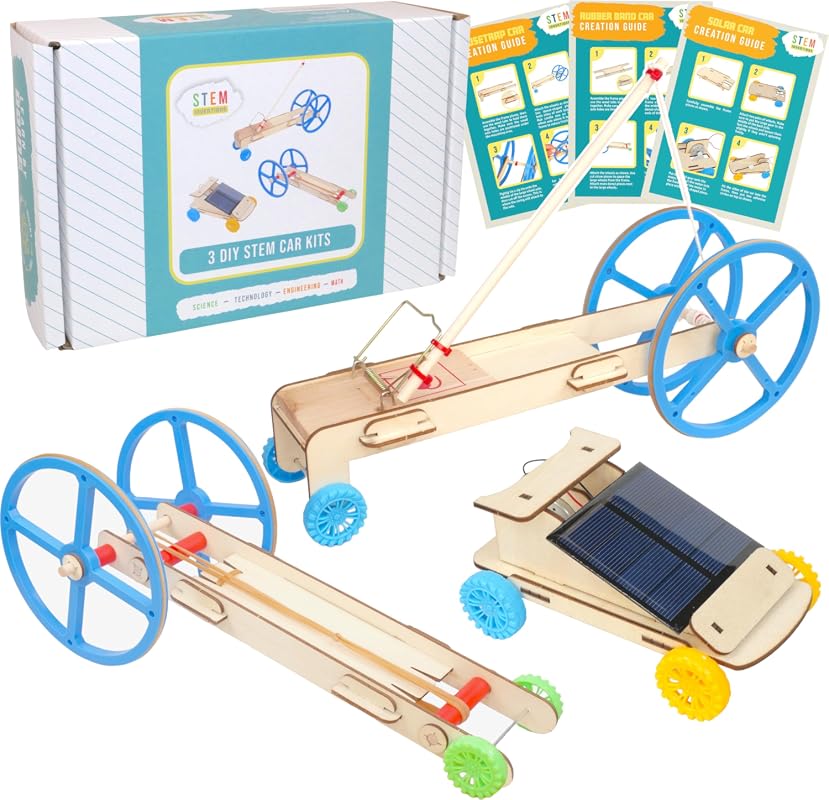
This unique STEM kit brings together three different car engineering projects in one package: a rubber band car, a solar-powered car, and a mousetrap car. Each project demonstrates a different energy concept, giving students a well-rounded understanding of how various power sources work. All materials for all three builds are included and pre-counted, so teachers do not need to gather additional supplies.
Key Features That Stand Out
- ✓ 3 distinct car engineering projects: rubber band, solar-powered, and mousetrap
- ✓ Each project applies different energy concepts for comprehensive learning
- ✓ All components for all 3 builds included and pre-counted
- ✓ No additional materials required, everything is in the box
- ✓ Covers rubber band energy, solar energy, and stored mechanical energy
Why We Recommend It
We recommend this kit for teachers who want to compare multiple energy types in a single unit. Students can see firsthand how rubber band energy, solar energy, and mechanical energy each power a car differently, which leads to rich classroom discussions. The pre-counted materials save teachers time and ensure every group has exactly what they need.
Best For
This kit is best for classrooms and science clubs with students ages 8 and up who are ready to explore different engineering approaches. It works especially well for units that compare energy sources and mechanical design.
Pros and Cons
Pros:
- Three different energy types covered in one affordable kit
- All materials included and pre-counted for easy classroom use
- Great for comparing and contrasting different power sources
- No extra supplies needed, saves teacher preparation time
Cons:
- Mousetrap component requires careful handling by younger students
- Some projects may require more space for testing and racing
Customer Reviews
Customer Review: The three different car projects kept my students engaged the entire week. They loved comparing how each car moved and which energy source was most efficient. Fantastic teaching tool.
Customer Review: Everything you need is in the box which is a huge time saver. My son built all three cars and learned so much about different types of energy. Highly recommend for curious kids.
10. 4 Individual STEM Kits Boys Solar Toys Car Building Crafts Project Age 8-13
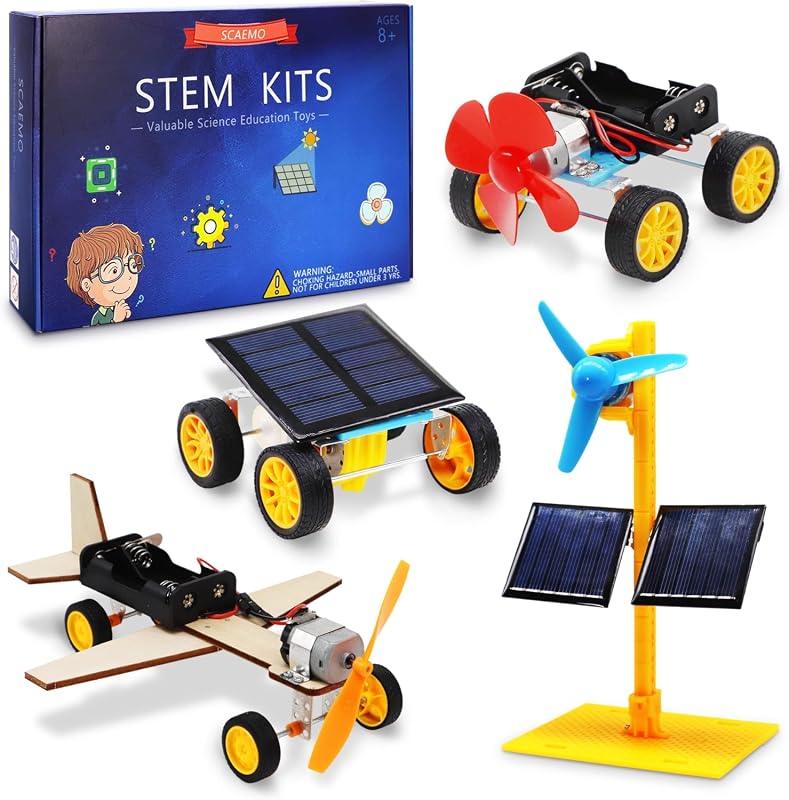
This set of four individual STEM kits gives students the opportunity to build a solar-powered car, a solar-powered fan, a wind-powered car, and a wooden plane. Each toy is individually packaged, making it easy to distribute and manage in a classroom setting. The variety of projects ensures that students stay engaged and can explore different aspects of renewable energy and engineering.
Key Features That Stand Out
- ✓ 4 individual STEM kits with solar car, solar fan, wind car, and wooden plane
- ✓ Each toy is individually packaged for easy classroom distribution
- ✓ Great for family STEM activities and parent-child collaborative building
- ✓ Designed for kids ages 8-13 with age-appropriate project complexity
- ✓ Suitable as a unique gift idea for young science enthusiasts
Why We Recommend It
We recommend this set for its balanced mix of projects and the convenience of individual packaging. Teachers can assign different kits to different groups and then have students share what they learned across projects. The solar and wind energy themes align well with modern science curricula, and the wooden plane adds a nice engineering design element.
Best For
This kit is best for classrooms, families, and gift-givers looking for a versatile set of STEM projects for kids ages 8 to 13. It works well for both structured classroom activities and informal home learning.
Pros and Cons
Pros:
- Four individually packaged kits simplify classroom organization
- Good mix of solar, wind, and mechanical building projects
- Encourages collaboration between parents and children
- Versatile enough for classroom, home, or gift use
Cons:
- Some projects may require additional materials like batteries
- Wooden plane project may be less engaging for students focused on vehicles
Customer Reviews
Customer Review: My kids loved having four different projects to work on. The solar fan was a hit and the wind car was fun to test outside. Great variety for the price.
Customer Review: Used these in my classroom and the individual packaging made it so easy to hand out. The students enjoyed comparing the solar car to the wind car results. Will buy again.
Complete Buying Guide for Best Solar Car Kits For Classroom
Essential Factors We Consider
When selecting the best solar car kits for classroom use, we look at several key factors that determine whether a kit will succeed in a real educational setting. First, safety is always our top priority. We favor kits that use non-toxic materials, avoid sharp edges, and do not require glue, soldering, or small parts that could be a choking hazard for younger students. Second, we evaluate the educational value. A great classroom kit should clearly demonstrate the science concept it promises, whether that is solar energy conversion, mechanical engineering, or circuit basics. Third, we consider ease of assembly. Teachers do not have hours to spend on complicated setups, so kits with clear instructions, labeled parts, and minimal required tools score higher in our reviews. Finally, we look at durability and reusability. Classroom kits get handled by many students, so sturdy wooden parts and reliable solar panels matter a lot for long-term value.
Budget Planning
Budget is often the biggest deciding factor for schools and parents. For small groups or home use, single kits or 2-packs offer a low-cost way to introduce solar concepts without a big financial commitment. If you are equipping an entire class, bulk packs like 10-packs or multi-kit sets usually provide the best per-student cost. It is also worth factoring in any additional supplies you might need, such as batteries for hybrid kits or replacement parts for future classes. We always recommend checking whether the kit includes everything needed for a complete lesson, because hidden costs can add up quickly. Planning ahead for your largest likely group size will help you avoid buying too little or overpaying for unnecessary extras.
Final Thoughts
Choosing the right solar car kits for classroom use comes down to matching the kit features with your students’ ages, your budget, and your learning goals. Some classrooms need a simple, affordable introduction to solar power, while others benefit from multi-model kits that explore several energy types at once. The kits we reviewed here cover a wide range of needs, from budget-friendly 2-packs to comprehensive 7-in-1 sets with video instructions. No matter which option you choose, the hands-on experience of building and testing a solar-powered vehicle will give your students a memorable lesson they will not forget.
Frequently Asked Questions
Q: What age group are solar car kits best suited for?
A: Most solar car kits are designed for students ages 8 and up, though some simpler wooden kits work well for ages 6 and older with adult supervision. The best choice depends on the complexity of the build and whether small parts or assembly steps require more mature motor skills. Always check the manufacturer’s age recommendation before purchasing for a specific classroom.
Q: Do solar car kits require direct sunlight to work?
A: Yes, most solar car kits rely on direct sunlight or very bright indoor light to power the motor effectively. The solar panels need enough light energy to generate the electricity that moves the car. For indoor classroom use, placing the cars near a sunny window or taking them outside for testing usually gives the best results.
Q: Can these kits be used for group projects in a classroom?
A: Absolutely. Many of the kits we reviewed are specifically designed for classroom and group use, with multi-packs and individually packaged projects that make distribution easy. Partner work and small group builds are common ways to use these kits, and some even include enough materials for an entire class to build simultaneously.
Q: Are replacement parts available if something breaks?
A: Replacement parts vary by kit and manufacturer. Some companies sell replacement solar panels or wooden pieces separately, while others do not offer individual parts. It is a good idea to check the seller’s policy on replacements before buying, especially if you plan to use the kit repeatedly across multiple school years.
Q: How long does it take students to build a solar car kit?
A: Build time depends on the complexity of the kit and the age of the students. Simpler kits can often be completed in 30 to 60 minutes, while more advanced multi-model kits may take several class periods. Kits with video instructions and clearly labeled parts tend to go faster because students spend less time figuring out where pieces go.
Choosing the right solar car kits for classroom learning does not have to be a complicated process. Whether you go with our top pick for variety, our editor’s choice for multi-energy exploration, or our best budget option for an affordable class set, each of these kits brings real educational value to your students. Take a moment to think about your classroom size, your budget, and the specific science concepts you want to teach, then pick the kit that fits those needs best. Your students will get hands-on experience with renewable energy, engineering design, and problem-solving — and they will actually enjoy the process. Ready to bring solar power into your classroom? Check the price on any of the kits above and start building something amazing with your students today.