Adjust Magnetic Ride Control
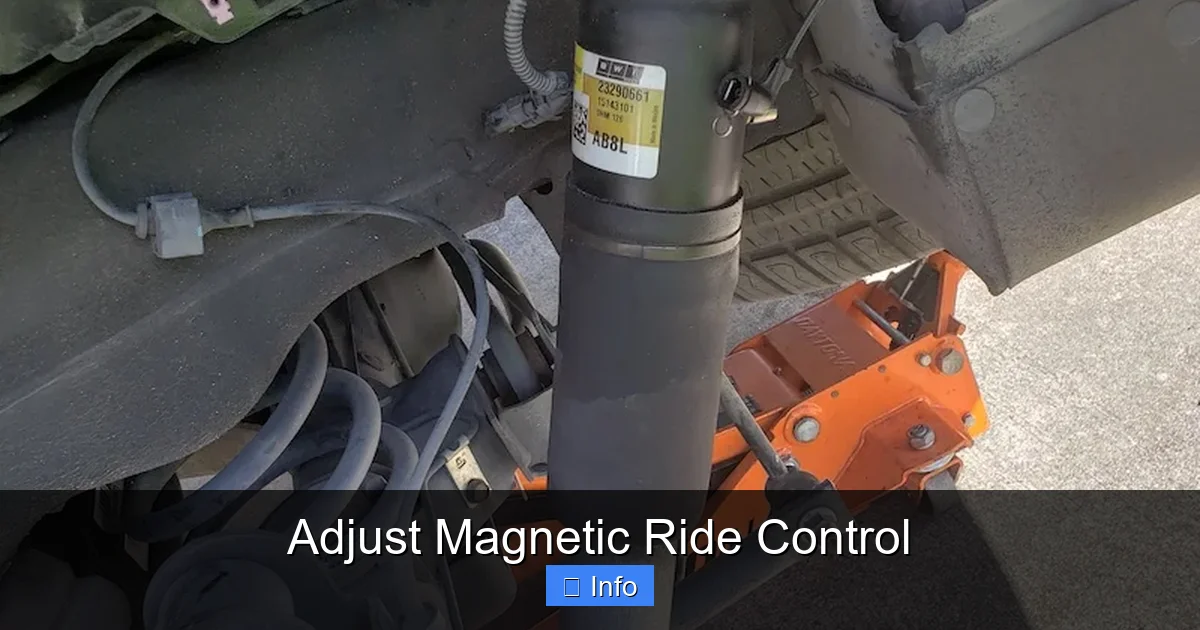
Adjusting Magnetic Ride Control can transform your vehicle’s ride quality, letting you fine‑tune stiffness for comfort or performance. Follow our guide to diagnose, prepare, and safely adjust the system for optimal handling.
Key Takeaways
- Understand the system: Magnetic Ride Control uses magnetorheological fluid to change shock stiffness in real time.
- Spot the signs: Uneven tire wear, excessive body roll, or a harsh ride often indicate the need to adjust Magnetic Ride Control.
- Gather the right tools: A diagnostic scanner, basic hand tools, and a service manual are essential for safe adjustments.
- Follow a step‑by‑step process: Access the control module, adjust settings via the software, and test drive to verify results.
- Maintain regularly: Check fluid levels, inspect sensors, and recalibrate after suspension work to keep Magnetic Ride Control performing.
- Use trusted resources: Learn how to tell if your Cadillac has Magnetic Ride Control, see coilover adjustment tips, and review coilover stiffness guides for related knowledge.
📑 Table of Contents
What Is Magnetic Ride Control?
Magnetic Ride Control (MRC) is an advanced suspension technology found in many modern vehicles, especially Cadillacs, Chevrolets, and some high‑performance models. Instead of traditional mechanical valves, MRC uses magnetorheological fluid inside the shocks. When a magnetic field is applied, the fluid’s viscosity changes almost instantly, allowing the damper to stiffen or soften on the fly. This gives drivers a smooth ride over bumps and tight control during cornering.
If you own a vehicle equipped with MRC, you might wonder how to Adjust Magnetic Ride Control to suit your driving style or road conditions. The good news is that the system is adjustable through the vehicle’s electronic control unit (ECU). By changing the gain or threshold settings, you can make the ride firmer for sporty driving or softer for comfort.
Before you start, it helps to confirm that your car actually has MRC. A quick way is to check the owner’s manual or look for the “Magnetic Ride Control” badge on the dash or suspension components. For a detailed guide, you can learn how to tell if your Cadillac has Magnetic Ride Control.
How Magnetic Ride Control Works
At the heart of each shock is a piston moving through magnetorheological fluid. This fluid contains tiny iron particles. When no magnetic field is present, the particles move freely, and the fluid stays relatively thin, offering a soft ride. When the ECU sends a current to the magnetic coils around the shock, the particles align, increasing the fluid’s viscosity and making the damper stiffer.
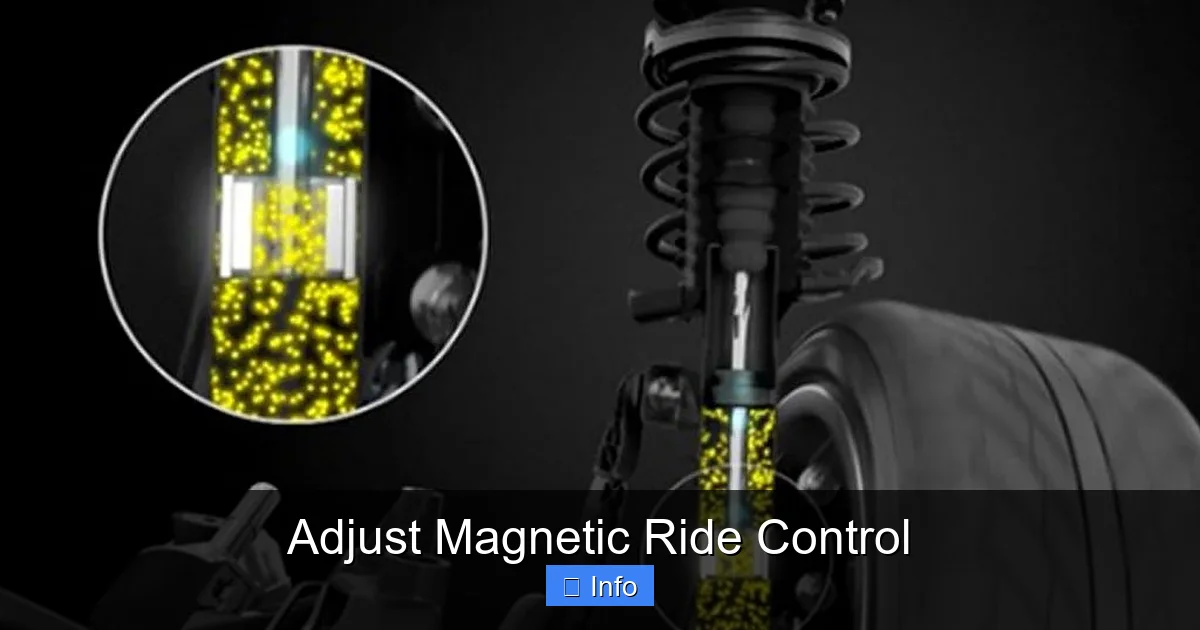
Visual guide about Adjust Magnetic Ride Control
Image source: d2hucwwplm5rxi.cloudfront.net
The ECU constantly reads data from wheel speed sensors, steering angle, brake pressure, and accelerometers. Based on this input, it adjusts the magnetic field strength up to 1,000 times per second. This rapid response is why MRC feels so responsive compared to older adaptive suspensions.
Understanding this operation helps you know what you are changing when you Adjust Magnetic Ride Control. You are not altering the mechanical parts; you are telling the ECU how aggressively to change the magnetic field for given driving conditions.
Signs You Need to Adjust Magnetic Ride Control
Even though MRC is self‑adjusting, there are times when the factory settings may not match your preferences or when components have aged. Here are common indicators that it’s time to Adjust Magnetic Ride Control:
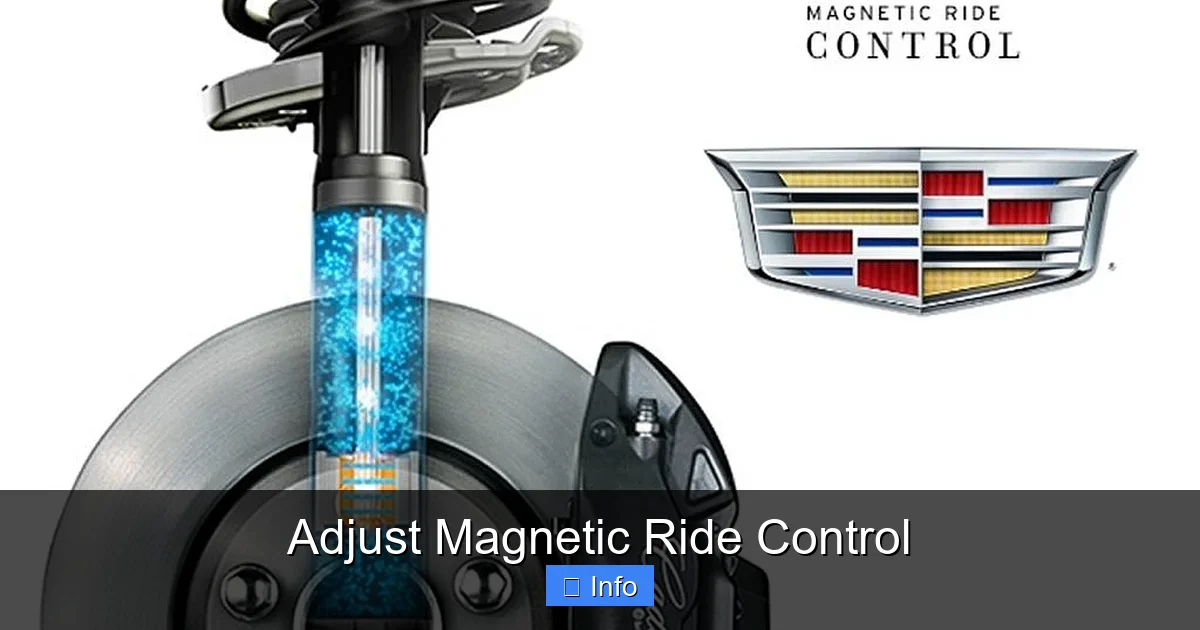
Visual guide about Adjust Magnetic Ride Control
Image source: d2hucwwplm5rxi.cloudfront.net
- Ride feels too harsh: You notice every bump and the cabin vibrates excessively.
- Excessive body roll: The vehicle leans heavily in corners, reducing confidence.
- Uneven tire wear: Inner or outer edges wear faster, suggesting the suspension is not loading the tires evenly.
- Dashboard warning: Some vehicles display a suspension fault or MRC service light.
- Aftermarket modifications: Installing different springs, sway bars, or wheels can shift the suspension’s baseline, requiring a recalibration.
If you experience any of these, a diagnostic scan can reveal the current gain values and help you decide how to Adjust Magnetic Ride Control for better balance.
Tools and Preparation for Adjusting Magnetic Ride Control
Adjusting MRC is mostly a software task, but you still need the right hardware to access the ECU safely. Here’s what you’ll need:
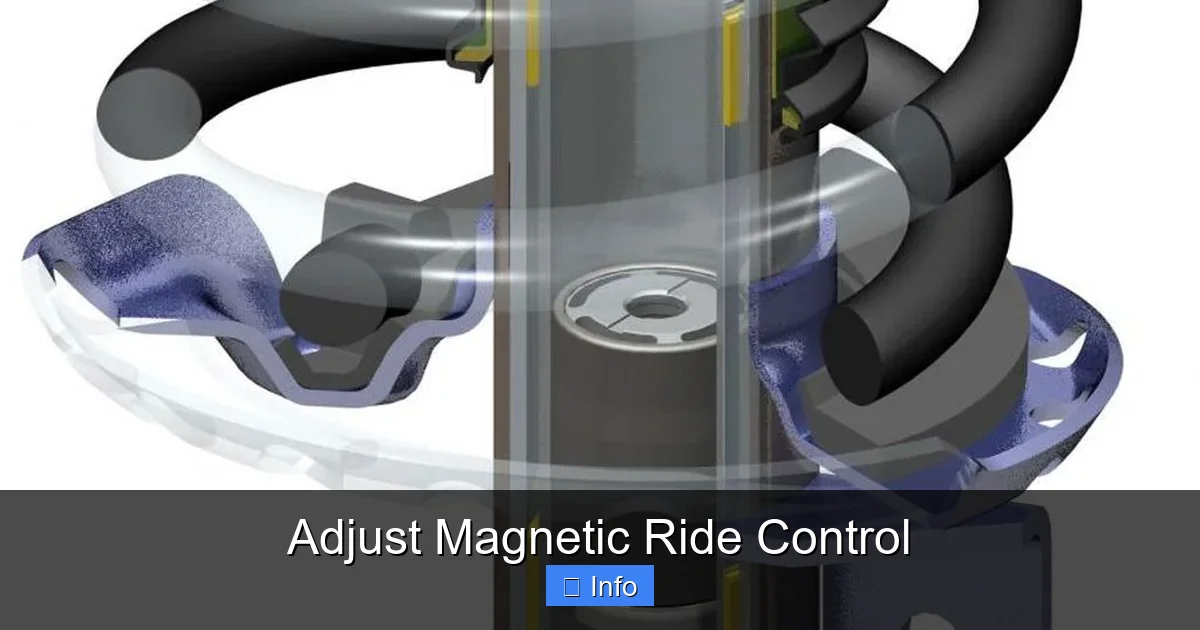
Visual guide about Adjust Magnetic Ride Control
Image source: editorial.pxcrush.net
- OBD‑II scanner with manufacturer‑specific capabilities: A generic code reader won’t show MRC parameters. Look for a scanner that can read GM, Cadillac, or Chevrolet suspension modules.
- Basic hand tools: Socket set, wrenches, and screwdrivers for removing any covers or accessing the diagnostic port.
- Service manual or wiring diagram: Helpful for locating the MRC module and understanding pinouts.
- Safety gear: Gloves and eye protection, especially if you need to work under the vehicle.
- Notebook or laptop: To record current settings before making changes.
Before you begin, park the vehicle on a level surface, engage the parking brake, and turn off the ignition. Disconnect the negative battery terminal for at least 10 minutes to clear any stored fault codes and prevent accidental airbag deployment.
If you’re also working on coilovers or other suspension components, you might find it useful to see how to adjust coilovers for a smooth ride or check out tips on adjusting coilover stiffness for complementary adjustments.
Step‑by‑Step Guide to Adjust Magnetic Ride Control
Now let’s walk through the actual process to Adjust Magnetic Ride Control. The exact menu names vary by model year, but the overall flow is similar.
1. Connect the Scanner
Plug the OBD‑II scanner into the diagnostic port, usually located under the steering column. Turn the ignition to the “ON” position (do not start the engine). Wait for the scanner to establish communication with the vehicle’s modules.
2. Access the Suspension/MRC Module
Navigate to the chassis or suspension section. Look for a menu labeled “Magnetic Ride Control,” “MRC,” “ECDC” (Electronically Controlled Damping Control), or “Shock Absorber Control.” Select it to view live data and adjustable parameters.
3. Record Current Settings
Note the existing gain values for front and rear shocks, as well as any threshold settings (e.g., comfort gain, sport gain). Having a baseline lets you revert if needed.
4. Adjust the Gains
Most systems let you increase or decrease the gain in small increments (often 1‑5%). For a firmer ride, raise the gain; for a softer ride, lower it. Make changes of no more than 5% at a time to avoid abrupt handling shifts.
Some vehicles offer preset modes like “Tour,” “Sport,” and “Track.” You can adjust the gain for each mode individually, giving you tailored settings for different driving scenarios.
5. Save and Exit
After entering the new values, confirm and save them. The scanner will usually prompt you to write the changes to the ECU. Exit the menu and turn off the ignition.
6. Test Drive
Reconnect the battery, start the engine, and take the vehicle for a short drive. Pay attention to how the suspension feels over bumps, in corners, and during braking. If the ride is still not right, repeat the process with smaller adjustments.
7. Verify No Fault Codes
After the test drive, rescan the vehicle to ensure no new suspension fault codes have appeared. Clear any codes if necessary and confirm the MRC module reports normal operation.
By following these steps, you can Adjust Magnetic Ride Control to match your preferences without needing mechanical changes.
Maintenance Tips and Troubleshooting
Keeping your Magnetic Ride Control system in top shape ensures that any adjustments you make remain effective. Here are some practical tips:
- Check fluid levels: While the magnetorheological fluid is sealed, leaks can occur if a shock is damaged. Inspect for oil spots around the shock bodies.
- Inspect sensors: Wheel speed and accelerometer sensors can become dirty or damaged. Clean them gently and verify their readings with a scanner.
- Recalibrate after suspension work: Whenever you replace springs, sway bars, or shocks, perform a MRC calibration via the scanner to align the new hardware with the ECU’s expectations.
- Stay updated: Manufacturers occasionally release ECU updates that improve MRC logic. Check with your dealer for any available TSBs (Technical Service Bulletins).
- Listen for noises: Clunking or grinding from a shock may indicate a failed valve or internal damage, which requires mechanical replacement rather than just an adjustment.
If you encounter persistent issues after you Adjust Magnetic Ride Control, consider these troubleshooting steps:
- Fault code C0050‑C0055: Usually points to a sensor issue. Check the corresponding wheel speed sensor.
- Fault code C0060‑C0065: Indicates a problem with the magnetic coil or driver circuit. Inspect wiring and connectors.
- No change in ride feel: Ensure you are adjusting the correct gain (front vs. rear) and that the vehicle is in the appropriate drive mode.
- Overly stiff ride despite low gain: May suggest a mechanical restriction, such as a seized shock or incorrect spring rate.
When in doubt, consult a professional technician familiar with GM’s Magnetic Ride Control system. They can perform a bench test on the shocks or replace faulty components.
Conclusion
Learning how to Adjust Magnetic Ride Control empowers you to tailor your vehicle’s ride quality to match your driving style, road conditions, or personal comfort preferences. By understanding how the system works, recognizing when adjustments are needed, gathering the right tools, and following a careful step‑by‑step process, you can achieve a noticeably better driving experience without costly mechanical modifications.
Remember to start with small changes, test drive thoroughly, and keep an eye on maintenance items like sensor health and fluid integrity. Use the linked resources to deepen your knowledge: learn how to tell if your Cadillac has Magnetic Ride Control, see how to adjust coilovers for a smooth ride, and check out tips on adjusting coilover stiffness for related suspension tuning.
With a bit of patience and the right approach, you’ll enjoy a ride that feels just right—whether you’re cruising on the highway, navigating city streets, or pushing the limits on a winding road.
Frequently Asked Questions
What does Magnetic Ride Control actually do?
Magnetic Ride Control changes the stiffness of your shocks in real time by altering the viscosity of magnetorheological fluid with a magnetic field. This lets the suspension soften for comfort or stiffen for performance instantly.
Can I Adjust Magnetic Ride Control without a dealer visit?
Yes, if you have an OBD‑II scanner that can access the suspension module, you can adjust the gain settings yourself. Just follow the safety steps and make small changes.
How often should I check or adjust my Magnetic Ride Control?
Check the system whenever you notice a change in ride quality, after installing new suspension parts, or during regular maintenance. Adjustments are only needed when the current settings no longer suit your preferences.
Will adjusting Magnetic Ride Control affect my warranty?
Making adjustments through the vehicle’s ECU using approved methods typically does not void the warranty. However, tampering with hardware or using unauthorized tools could risk coverage, so stick to software changes.
What are the risks of setting the gain too high?
Too high a gain can make the ride overly harsh, reduce tire grip on rough surfaces, and increase wear on suspension components. It may also trigger fault codes if the system detects abnormal behavior.
Is Magnetic Ride Control the same as adjustable coilovers?
No. Magnetic Ride Control is an electronic, real‑time system built into the shocks, while adjustable coilovers require manual changes to spring preload or damping via external knobs. Both aim to tune ride quality but work differently.