Personal Accident Cover in Car Insurance
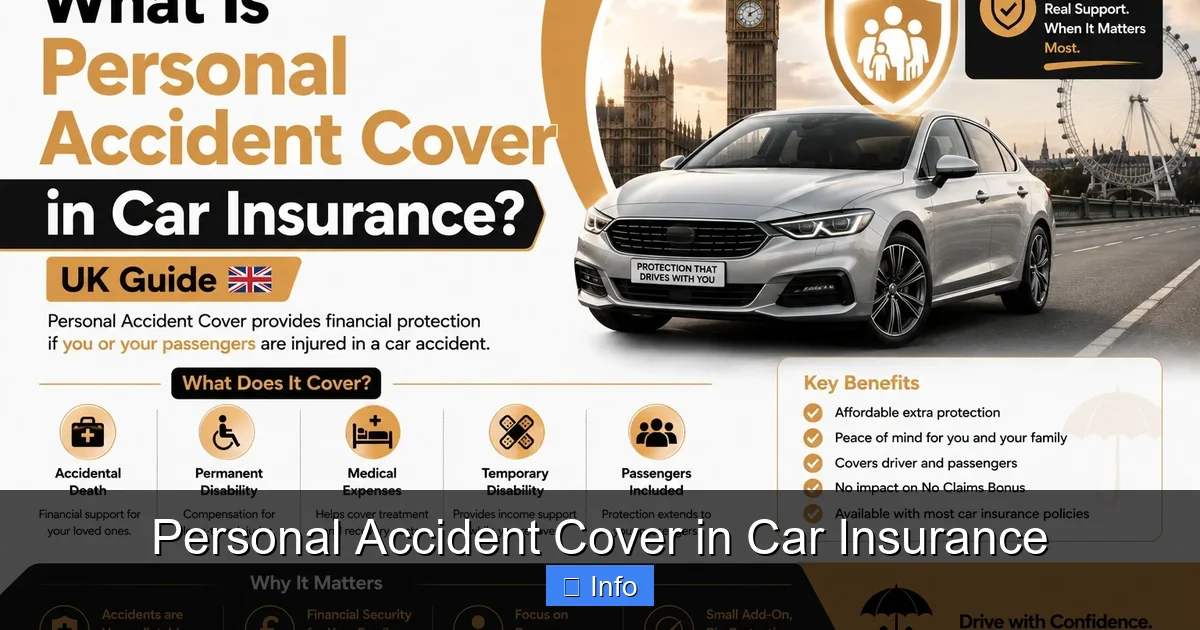
Personal accident cover in car insurance provides essential financial protection for you and your loved ones if an accident results in death or disability. This often-overlooked add-on ensures you’re not left vulnerable on the road.
Driving around town feels routine until a sudden bump, a harsh brake, or an unexpected collision changes everything. Most car owners focus heavily on protecting their vehicle’s bodywork and engine, but few pause to think about safeguarding themselves and their loved ones from the financial fallout of a personal injury. That’s where a vital add-on steps in, acting as a financial safety net when bodily injury strikes. In this guide, we’ll break down exactly what this add-on entails, who should seriously consider it, and how to pick a plan that gives you peace of mind without overpaying. By the end, you’ll feel confident spotting the right coverage and understanding why it’s more than just a fine-print detail, and why it’s a smart move for any responsible driver who spends many hours behind the wheel each month.
Many drivers assume their base policy already covers personal mishaps, but the truth is often different. Standard comprehensive or third-party plans focus on vehicle damage, theft, and third-party liability. They rarely extend a helping hand for accidental death, permanent disability, or even temporary incapacity. That gap is precisely what personal accident cover in car insurance is designed to fill, yet it remains overlooked in many policy documents. Think of it as a modest premium that buys you a lump-sum payout if the unthinkable happens, helping your loved ones manage medical bills, loan EMIs, or daily living costs while you recover—or worse, saying goodbye. Let’s dive in and demystify this crucial, yet frequently ignored, layer of protection, and discover how a few hundred rupees a year can buy peace of mind worth lakhs in potential claims, making it a high-value, low-cost addition to any comprehensive auto policy.
Key Takeaways
- Point 1: Personal accident cover is a standalone add-on that pays out a sum assured if you suffer accidental death or disability, separate from your main policy’s repair coverage.
- Point 2: It typically offers a lump-sum payout that can help cover medical expenses, loss of income, or final expenses for your family.
- Point 3: Not everyone needs the same coverage amount; consider your lifestyle, dependents, and existing life insurance before deciding on a sum insured.
- Point 4: Always read the exclusions carefully, as many policies skip coverage for accidents under alcohol influence, racing, or while violating traffic laws.
- Point 5: You can often enhance this cover with riders or pair it with other add-ons like zero depreciation for broader protection.
- Point 6: Filing a claim usually requires a death certificate, post-mortem report, or medical records, so keep documents ready in advance.
📑 Table of Contents
- What Is Personal Accident Cover In Car Insurance?
- Who Should Definitely Consider This Add-On?
- What Exactly Does Personal Accident Cover Protect?
- What Are The Common Exclusions And Limitations?
- How To Choose The Right Sum Insured And Pair With Other Add-Ons?
- Filing A Claim: Step-by-Step Process And Practical Tips
- Wrapping Up: Why Personal Accident Cover In Car Insurance Deserves A Spot In Your Policy
What Is Personal Accident Cover In Car Insurance?
Definition And Basic Framework
Personal accident cover in car insurance is an optional rider you can attach to your base auto policy. It doesn’t pay for scratches or dents; instead, it pays a pre-decided sum of money if you, or sometimes a named passenger, suffer an accident while inside or entering/exiting the insured vehicle. The payout usually kicks in for accidental death, permanent total disability, or sometimes temporary total disability, depending on the exact wording of your certificate. This distinction is vital because your regular comprehensive plan handles the car’s repair costs, not your bodily well-being. For example, if you slide off a highway and suffer a broken leg, the base policy fixes the car’s bumper, but the personal accident rider can step in to help cover the medical bills and any lost income during your recovery weeks. Another scenario: a passenger suffers a serious injury in a side-impact collision, and the rider’s payout can help cover hospitalization charges that health insurance might not fully cover, making the rider a useful backup layer for expenses health plans often leave unpaid. This dual-layer approach is what makes the rider so valuable for everyday drivers who want complete protection on the road.
How It Interacts With Your Main Policy
Your regular comprehensive or third-party plan handles the car’s repair costs, medical claims for third parties, and legal liabilities. However, this add-on operates separately, providing a fixed payout if you suffer a covered injury, without touching the vehicle repair benefits. The premium is a modest extra fee, typically a small percentage of your overall policy cost, but the financial safety net it creates can be life-changing in critical moments. For instance, a family facing a permanent disability claim can receive a lump sum that helps clear a home loan, modify the house for accessibility, and maintain monthly household expenses, all without touching their daily savings. In another case, a single professional might use the payout to cover EMIs on a car loan for six months while they heal, ensuring they don’t default on payments during a difficult recovery period.
Who Should Definitely Consider This Add-On?
For New And Inexperienced Drivers
If you’ve just gotten your license or rarely hit the highway, the risk of an accident might feel low, but statistics show the first few years are the highest-risk period, especially for new drivers who are still building confidence and experience on diverse road conditions. This add-on can be a smart, affordable shield during those formative driving years, especially if you don’t have a robust life insurance policy already in place. The premium is typically low compared to the financial peace of mind it provides, making it a smart first-add-on for many new car owners. Imagine a young professional who just bought their first car; a minor collision results in a temporary disability that sidelines their income for three months. Having this cover means they don’t have to dip into savings meant for rent or groceries during that gap, and can still meet EMI payments and household bills while they focus on recovery. Additionally, many young drivers are still establishing their emergency funds, so having this safety net prevents them from going into debt after an unexpected incident.
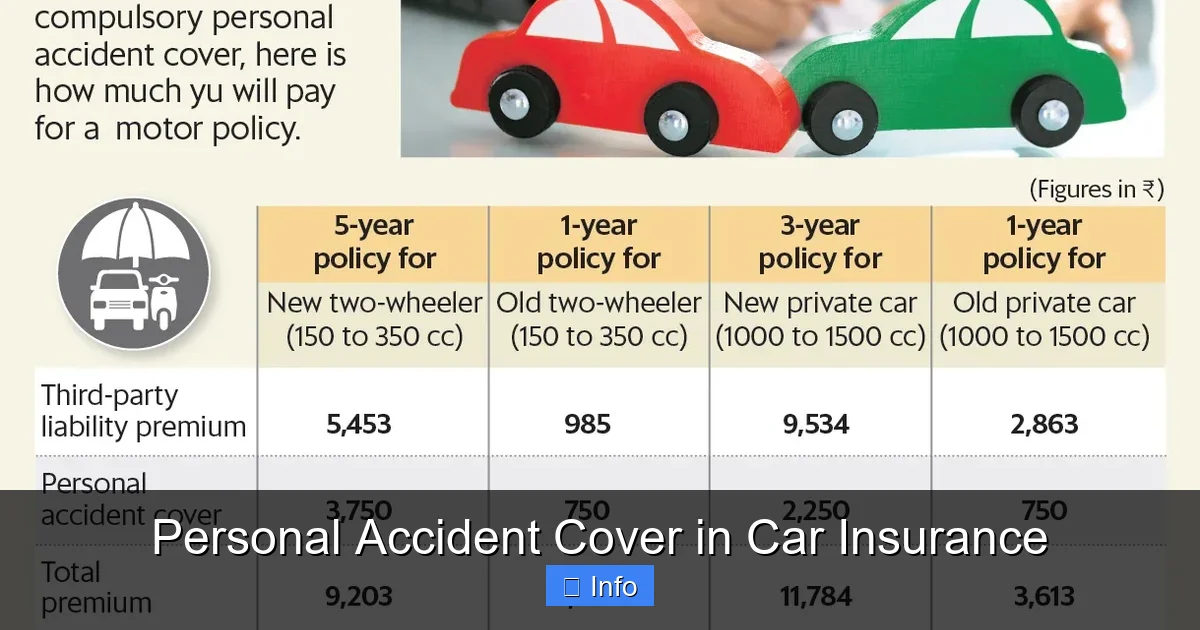
Visual guide about Personal Accident Cover in Car Insurance
Image source: images.livemint.com
For Families And Daily Commuters
Households with multiple dependents, daily office commutes, or long road trips benefit immensely from an extra layer of security. Imagine your family facing medical expenses or lost income because you were unable to work after a collision; the resulting financial strain could affect children’s education funds or monthly grocery budgets. This cover ensures a cash payout can help cover those gaps, giving your family breathing room without draining savings. It’s particularly valuable for those who are the sole earner, as the lump sum can help cover EMIs, school fees, and household expenses during a difficult recovery period. A stay-at-home parent who occasionally drives the family car also benefits, as the policy can be structured to cover named passengers, not just the primary policyholder, providing an extra safety net for the whole household. For families who rely on a single income stream, the rider can be the difference between keeping the home running and facing a financial crisis after a single unfortunate event.
What Exactly Does Personal Accident Cover Protect?
Accidental Death Benefit
The most straightforward benefit is a lump sum paid to your nominated nominee if you lose your life in a car-related accident. This amount can help clear outstanding loans, cover funeral costs, and provide a basic income replacement for your family. The payout amount is fixed when you buy the cover, typically ranging based on the sum insured you selected, and it’s often the primary reason people opt for this rider in the first place. Insurers usually offer slab-based sums, such as 5 lakhs, 10 lakhs, or higher, allowing you to choose a level that matches your family’s financial obligations and future goals. For example, a young family with a young child might select a 10-lakh sum to ensure the child’s education fund is protected, while a single professional might opt for 5 lakhs to cover a personal loan and daily living expenses for a year, giving them time to rebuild savings after the loss.
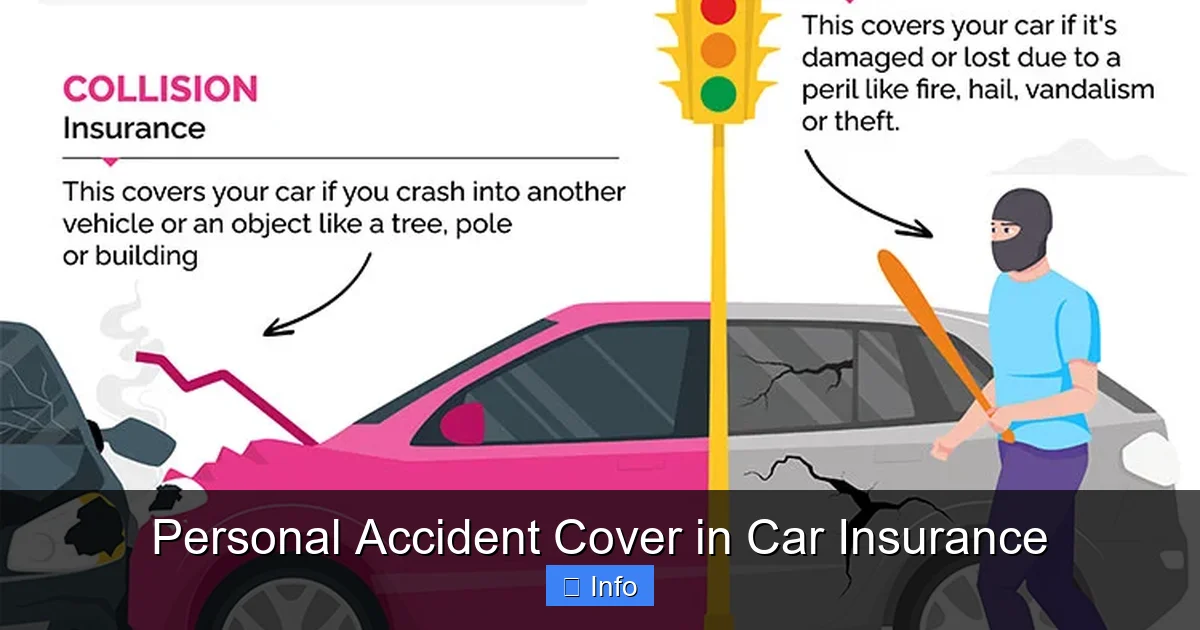
Visual guide about Personal Accident Cover in Car Insurance
Image source: s3.amazonaws.com
Permanent Total Disability Payout
If an accident leaves you with a permanent impairment—such as loss of a limb, permanent blindness, or severe paralysis—the policy pays out the agreed sum. This financial boost can be used for home modifications, assistive devices, or simply maintaining your household’s standard of living despite the changed circumstances. The exact percentage of disability required for a payout varies by policy, so always check the defined thresholds in your document. For instance, some policies pay out if you lose the use of both eyes or have a permanent loss of limb function above a certain percentage, while others have a more granular scale that pays partial amounts for partial disabilities. Additionally, the payout can be used to purchase adaptive equipment, pay for ongoing therapy sessions, or even fund a career change retraining program, making the benefit far more versatile than a one-time payout and supporting long-term quality of life adjustments.
Temporary Total Disability Compensation
Some policies also offer a weekly or monthly stipend if you’re temporarily unable to work due to accident injuries. While less common, this feature can bridge the income gap during recovery months, ensuring your EMIs and household expenses keep running while you focus on healing. It’s a handy feature for those who don’t have substantial sick-leave benefits from their employer, and it can be especially helpful for freelancers or self-employed individuals whose income stops the moment they’re unable to physically perform their work. The stipend amount is usually predetermined per week, and some insurers allow you to choose a coverage period of three, six, or twelve months, giving you flexibility based on your expected recovery timeline and helping you maintain cash flow during the months when work is impossible.
What Are The Common Exclusions And Limitations?
Situations Typically Not Covered
No policy is all-encompassing, and personal accident cover has its share of fine-print restrictions. Common exclusions include accidents occurring while under the influence of alcohol or drugs, participating in racing or speed contests, driving without a valid license, or using the vehicle for commercial purposes not declared in the policy. Being aware of these helps you avoid claim surprises later, and it ensures you’re not paying premiums for coverage that won’t pay out when you need it most. Additionally, many policies skip coverage if the accident happens while the vehicle is being used for ride-sharing services like Uber or Ola unless you’ve specifically declared and added that exposure to the policy paperwork. Some insurers also exclude accidents that occur while the policyholder is participating in motorsports, off-road racing, or using the vehicle for delivery services without proper commercial endorsement, so always disclose your usage style when purchasing the rider, and read the fine print carefully before assuming you’re fully protected.
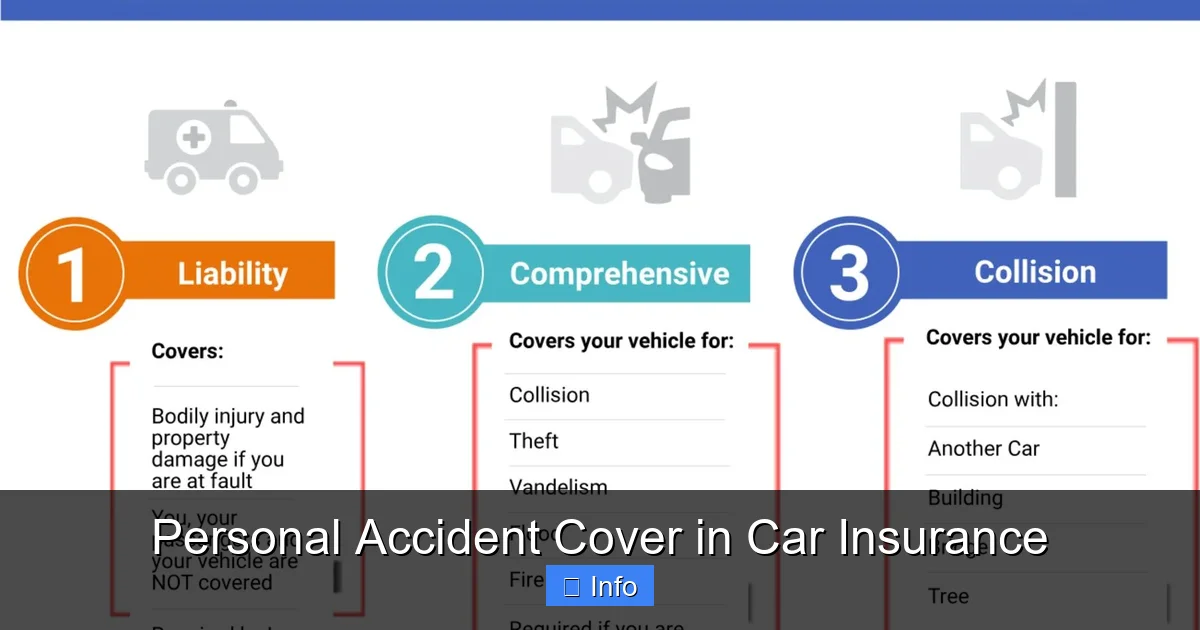
Visual guide about Personal Accident Cover in Car Insurance
Image source: carinsurancecomparison.com
Policy Fine Print Tips
Always read the “declaration of coverage” section carefully. Look for clauses about excluded activities, geographic limits, and age restrictions. If you frequently travel long distances or use your car for ride-sharing, declare those details upfront; otherwise, a claim could be denied on a technicality. When in doubt, ask your insurer to clarify any ambiguous wording before you sign on the dotted line, and keep a copy of the full policy wording for your records. It’s also wise to check if the cover extends to pillion riders or just the driver, as some policies have that distinction built into the certificate. Additionally, check whether the benefit reduces with age, as some policies have age caps that limit eligibility or payout amounts once you cross a certain birthday, and understand if the cover is renewable or if it terminates after a claim is paid out, so you can plan your coverage lifecycle wisely and avoid losing protection when you need it most.
How To Choose The Right Sum Insured And Pair With Other Add-Ons?
Calculating Your Coverage Needs
Picking the right sum insured under personal accident cover in car insurance isn’t about copying your friend’s number. Consider your current annual income, outstanding liabilities like home or car loans, and the number of people who depend on your earnings. A rule of thumb is to choose a cover that would replace at least 50-70% of your yearly income for a few years, plus enough to settle any major debts. Also factor in any existing life or health insurance you already hold, to avoid overlapping coverage or gaps. For example, if you already have a term life cover of 25 lakhs, you might opt for a smaller personal accident sum, say 5 lakhs, to complement rather than duplicate that protection. Additionally, think about your future financial goals, such as saving for a child’s education or planning for retirement, and choose a sum that provides a buffer without straining your current budget, ensuring the rider serves its purpose without becoming a financial burden.
Pairing With Zero Depreciation And Other Riders
Many insurers let you bundle this rider with other popular add-ons such as zero depreciation, engine protection, or return to invoice. For instance, you might want to check out the Hdfc Ergo Zero Depreciation Car Insurance options available to see how they complement each other. Combining these can create a comprehensive shield that handles both vehicle repair costs and personal bodily risks. However, bundling also means higher total premiums, so calculate the cost-benefit before adding every available rider. If you’re already invested in a zero depreciation plan, adding this cover can be a seamless way to round out your protection portfolio without doubling up on unnecessary benefits. Another common pairing is the return to invoice cover, which ensures you’re not left paying the difference between the car’s current market value and its insured declared value if it’s written off completely, giving you an extra layer of financial security on the vehicle side as well.
Filing A Claim: Step-by-Step Process And Practical Tips
Documentation You’ll Need
When the time comes to claim under personal accident cover, having the right papers ready speeds up the process immensely. Typically, you’ll need a certified death certificate or medical disability report, the original policy document, a copy of the FIR (First Information Report) if police were involved, and identity proofs. Some insurers also ask for post-mortem or medical board examination reports, so keep those handy. Making sure you have the right paperwork is easier when you know the documents required for car insurance in India list, which outlines the standard paperwork insurers request during claim settlement and can help you avoid the “missing document” rejection reason. Having these documents organized in a dedicated folder can shave days off the waiting time, and some insurers even allow digital submission through their portals, further accelerating the payout and reducing stress during an already difficult time.
Common Mistakes To Avoid
One of the biggest pitfalls is delaying the notification of the accident or claim intimation. Insurers usually have a strict window—often 24 to 48 hours—to notify them about an incident. Another mistake is providing incomplete or mismatched documentation, which can lead to outright rejection. Always double-check that the nominee details in the policy match your current wishes, and update them after major life changes like marriage or childbirth. Additionally, learning about the loss of personal belongings cover can help you understand the difference between protecting your person versus your possessions, ensuring you don’t over-insure in the wrong category and keeps your premiums focused on the protection you actually need. For example, if you already have a strong health policy, you might not need a high personal accident sum, and vice versa, keeping your total insurance spend optimized and targeted, so you’re not paying for overlap while leaving gaps in protection.
Beyond the technical details, real-world stories highlight why this add-on matters. Consider Mr. Sharma, a daily commuter in Mumbai who faced a sudden brake failure at a busy intersection; the resulting collision left him with a fractured wrist and several days off work. Thanks to his add-on, he received a lump-sum payout that covered his physiotherapy sessions and kept his monthly EMI payments current while he healed. Or take the case of Mrs. Patel, whose husband succumbed a fatal accident on a highway stretch; the add-on’s payout cleared their outstanding home loan and ensured their children’s school fees were paid for the next academic year, providing a financial cushion during a heart-wrenching time. These examples illustrate that the add-on is not just a policy clause, but a practical safeguard that can transform a crisis into a manageable situation, giving you and your family the space to breathe and recover without the added stress of immediate financial pressure.
Wrapping Up: Why Personal Accident Cover In Car Insurance Deserves A Spot In Your Policy
At the end of the day, personal accident cover in car insurance is about peace of mind wrapped in a simple, affordable add-on. It doesn’t matter how careful a driver you are; accidents are unpredictable, and the financial fallout can be steep. By proactively selecting a suitable sum insured, understanding the exclusions, and keeping your documentation organized, you ensure that you and your family are never left scrambling when the unexpected occurs. Pair it wisely with your existing add-ons, and you’ll have a well-rounded safety net that lets you focus on what truly matters—enjoying the ride, safely. Remember, the cost of the rider is often just a few hundred rupees annually, yet the potential payout can be many times that, making it a high-value, low-cost addition to any comprehensive auto policy and a smart investment for anyone who spends significant time on the road.
Frequently Asked Questions
What is personal accident cover in car insurance?
It is an optional rider that provides a lump-sum payout if you suffer accidental death or permanent disability while inside or entering your insured vehicle. The cover is separate from vehicle repair benefits and requires a modest extra premium.
Who should consider adding this cover to their policy?
New drivers, daily commuters, and families who rely on the policyholder’s income benefit most, as the payout can help cover living expenses, loan EMIs, and medical costs during recovery periods.
What does personal accident cover typically include?
The cover generally includes accidental death benefit, permanent total disability payout, and sometimes temporary total disability compensation, with payout amounts defined by the sum insured chosen at purchase.
Are there common exclusions to watch out for?
Yes, many policies exclude accidents occurring under the influence of alcohol or drugs, racing events, driving without a valid license, or using the vehicle for undeclared commercial activities.
How do you file a claim under personal accident cover?
You typically need to submit a certified death certificate or medical disability report, the original policy document, an FIR copy if police were involved, and identity proofs, with the exact requirements varying by insurer.
Can you bundle personal accident cover with other add-ons?
Yes, it can be paired with riders like zero depreciation, engine protection, or return to invoice, though you should calculate the total premium impact to ensure you’re not over-insuring for your needs.