A Car Runs 16 Km Using 1 Litre of Petrol
This car achieves an impressive fuel efficiency of 16 kilometers per liter of petrol, demonstrating exceptional mileage that can significantly reduce running costs for daily commuters. Understanding this fuel consumption rate helps drivers make informed decisions about vehicle selection and route planning to maximize savings.
Key Takeaways
- Calculate fuel costs: Multiply distance by current petrol price divided by 16 for accurate trip budgeting.
- Track consumption regularly: Monitor actual km/L to detect engine issues early and maintain peak efficiency.
- Compare to averages: 16 km/L exceeds many older vehicles but trails modern hybrids achieving 20+ km/L.
- Plan refueling stops: With 16 km/L range, schedule fills every 400-500 km for safety margin on long trips.
- Reduce idle time: Turn off engine during long stops to preserve your 16 km/L efficiency rating.
- Maintain tire pressure: Proper inflation can improve your 16 km/L by up to 3% instantly.
- Use cruise control: Steady highway speeds maximize the 16 km/L potential on long drives.
📑 Table of Contents
A Car Runs 16 Km Using 1 Litre of Petrol
Welcome to a friendly chat about something many of us wonder about – how far a litre of petrol really takes you. I still remember the first time I checked my fuel gauge and saw “empty” after a 16 km trip. It felt like a small adventure, but also a bit of a surprise. In this post we’ll break down what 16 km per litre means, why it happens, and how you can make the most of every drop of fuel. Let’s dive in and explore the world of mileage together.
Understanding 16 km per litre: What it means for you
Real‑world fuel consumption
When a car is advertised as doing 16 km on 1 litre, it sounds simple. In reality, many things affect that number. Think of it like a recipe – you need the right ingredients, the right temperature, and the right timing. The “ingredients” are your driving style, the road, and the car’s health. If you drive smoothly, keep the engine tuned, and avoid heavy traffic, you’ll see mileage close to the advertised figure. On the other hand, aggressive acceleration, frequent idling, and poor maintenance can drop it well below 16 km/l.
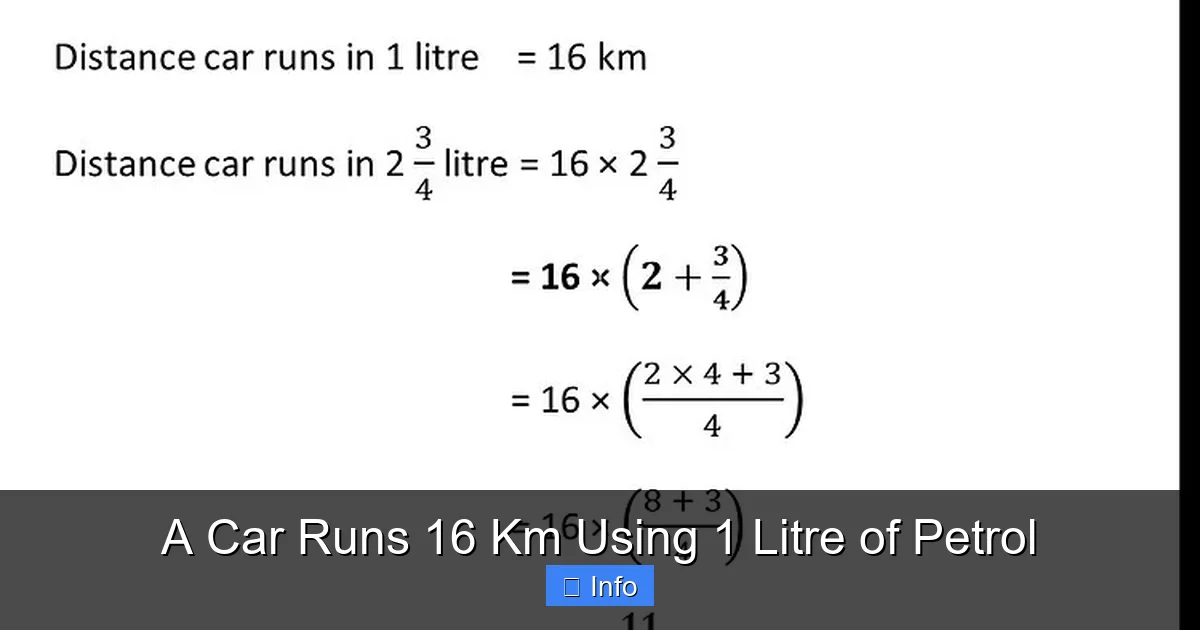
Visual guide about A Car Runs 16 Km Using 1 Litre of Petrol
Image source: cdn.teachoo.com
How manufacturers measure it
Car makers use a standardized test called the “combined cycle.” They drive a vehicle on a dynamometer that mimics city and highway conditions. The test is controlled, so the result is a best‑case estimate. Real life is messier – you have hills, wind, and sometimes even a pet that decides to sit on the gas pedal. So, while the 16 km/l figure is a useful benchmark, don’t be surprised if your daily average is a little lower or higher.
Factors that influence mileage
Driving habits
Your style behind the wheel is the biggest factor. Gentle acceleration and braking keep the engine in its sweet spot. Quick bursts of speed and sudden stops ask the engine to work harder, burning more fuel. I once tried a “smooth driving challenge” for a week and noticed my mileage improve by about 2 km/l. Small changes add up.
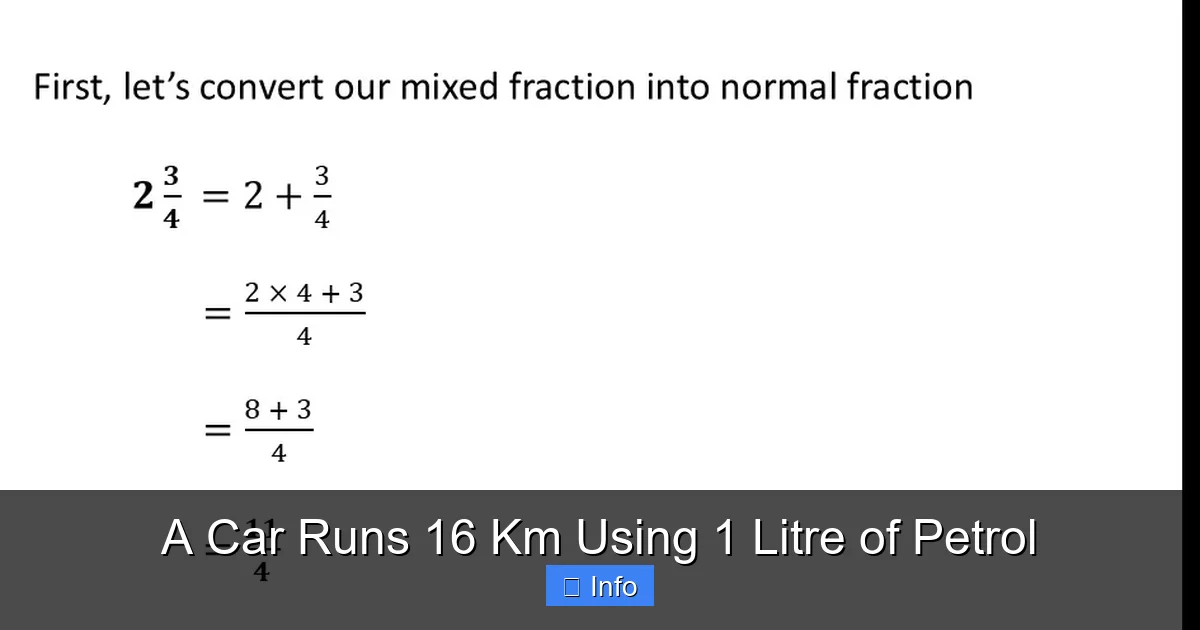
Visual guide about A Car Runs 16 Km Using 1 Litre of Petrol
Image source: cdn.teachoo.com
Vehicle maintenance
A well‑maintained car runs like a charm. Fresh oil reduces friction, clean air filters let the engine breathe, and properly inflated tyres roll with less resistance. Skipping regular service is like trying to run a marathon with a stone in your shoe – you’ll get tired faster and use more fuel. If you want a quick boost, using a good injector cleaner can help keep the fuel system clean. Check out this guide for some top picks.
Road and weather conditions
City traffic, stop‑and‑go patterns, and heavy loads all drag down mileage. Cold weather also makes the engine work harder until it warms up. Windy days or driving uphill force the engine to produce more power, which means more fuel. Knowing these factors helps you plan better – maybe combine errands into one trip or avoid peak traffic hours.
Tips to improve your car’s 16 km/l efficiency
Optimize your driving style
Start with gentle acceleration. Instead of flooring the pedal, ease into the gas. Keep a safe distance from the car ahead so you don’t need to brake often. Smooth braking also saves fuel. Try to maintain a steady speed on highways – it’s easier on the engine and the fuel tank.
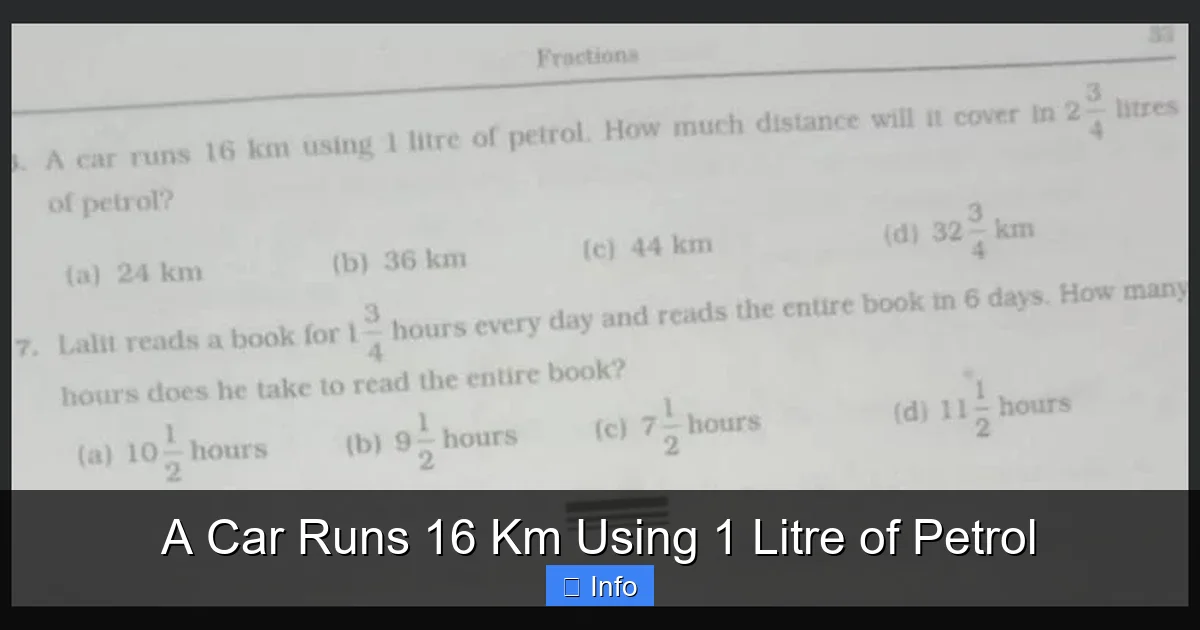
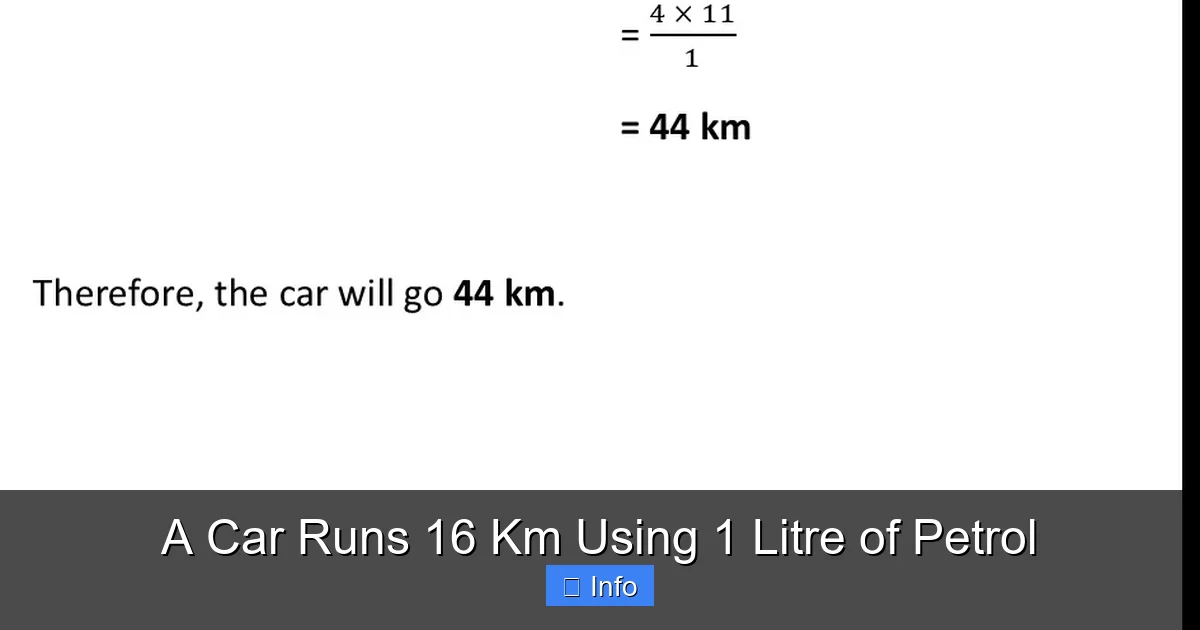
Visual guide about A Car Runs 16 Km Using 1 Litre of Petrol
Image source: classroom-notes.cdn.askfilo.com
Keep your car well‑maintained
Follow the service schedule in your owner’s manual. Replace oil and filters at the recommended intervals. Check tyre pressure weekly; under‑inflated tyres can lower mileage by up to 3 %. Also, remove unnecessary weight – roof racks, luggage, or heavy tools add load and burn extra fuel.
Choose the right fuel and accessories
Use the octane rating recommended by the manufacturer. Higher octane does not mean better mileage unless your engine needs it. Avoid idling for long periods; if you’re stopped for more than a minute, turn off the engine. Consider using fuel‑saving devices only if they are proven and not voiding your warranty.
Cost analysis and environmental impact
Daily expense breakdown
Assume you drive 80 km a day and your car averages 16 km/l. That means you’ll use 5 litres per day. If petrol costs ₹100 per litre, your daily fuel cost is ₹500. Over a month (30 days), that adds up to ₹15,000. Small improvements – like a 1 km/l gain – can save you about ₹300 a month.
Carbon footprint comparison
Every litre of petrol burned releases roughly 2.3 kg of CO₂. At 5 litres a day, you’re emitting about 11.5 kg of CO₂ daily, or 342 kg a month. Switching to a more efficient vehicle or using public transport can cut that dramatically. If you’re curious about alternatives, compare petrol and diesel options to see which fits your needs better.
Making the most of your mileage: practical examples and comparisons
Daily commute scenario
Imagine a 30 km round‑trip to work. At 16 km/l you need 1.875 litres each day. If you improve to 18 km/l, you save 0.125 litres per day – that’s 3.75 litres a month. Over a year, that’s about 45 litres saved, which is roughly ₹4,500 at ₹100 per litre.
Long‑distance trip planning
Planning a 500 km road trip? At 16 km/l you’ll need about 31.25 litres. If you stick to highway speeds and keep your speed around 90 km/h, you might squeeze out a couple more kilometres per litre. Pack light, use cruise control, and avoid peak heat to keep the engine efficient.
Comparison with other vehicles
Many modern hybrids claim 20–25 km/l, while some diesel cars can reach 18–20 km/l. However, hybrids also bring maintenance costs and battery concerns. If you’re thinking about making the switch, it helps to know the disadvantages of a hybrid car so you can decide what’s truly right for you.
| Vehicle Type | Average Mileage (km/l) | Daily Fuel Cost (₹) for 80 km | Monthly CO₂ (kg) for 80 km/day |
|---|---|---|---|
| Petrol (16 km/l) | 16 | ₹500 | 342 |
| Diesel (18 km/l) | 18 | ₹444 | 303 |
| Hybrid (22 km/l) | 22 | ₹363 | 250 |
Conclusion
Reaching 16 km per litre is a solid baseline for most petrol cars, but it’s not set in stone. By tweaking how you drive, keeping your car in top shape, and being smart about fuel choices, you can push that number higher and save both money and the planet. Remember, every litre saved is a small win for your wallet and the environment. So next time you fill up, think of it as an investment in smoother roads and fewer stops at the pump. Happy driving!
Frequently Asked Questions
A car runs 16 km using 1 litre of petrol — how is this mileage calculated?
This mileage is calculated by dividing the total distance travelled by the amount of petrol consumed over that distance. For example, if a car covers 16 km after burning exactly 1 litre, its fuel efficiency is rated at 16 kmpl. This figure helps buyers compare different vehicles and estimate running costs accurately.
What does 16 km per litre mean for fuel efficiency?
The statement “a car runs 16 km using 1 litre of petrol” describes a mileage of 16 kmpl, which measures how efficiently the engine consumes fuel. Higher kmpl values indicate better fuel economy, meaning the car can travel farther while using less petrol. This efficiency typically translates to lower fuel expenses and reduced environmental impact over time.
Is 16 kmpl considered good mileage for a car?
Whether 16 km per litre is good depends on the vehicle type, engine size, and typical driving conditions. For compact petrol cars, 16 kmpl is generally regarded as solid fuel efficiency, especially in mixed city-highway traffic. Larger vehicles or aggressive driving styles may achieve lower mileage, while well-maintained engines can often exceed this benchmark.
How much petrol does a car consume to travel 16 km?
To travel 16 km, a car with this efficiency rating uses exactly 1 litre of petrol, as the ratio suggests. If the distance increases proportionally, fuel consumption rises accordingly—for instance, 32 km would require about 2 litres. Drivers can use this simple ratio to estimate trip costs and plan fuel stops more effectively.
Can a car running 16 km on 1 litre of petrol save fuel costs?
Yes, a vehicle that achieves 16 kmpl can significantly reduce monthly fuel expenses compared to lower-mileage cars. Over 1,000 km of driving, such a car would consume roughly 62.5 litres of petrol, costing considerably less than a vehicle with 10 kmpl efficiency. Maintaining proper tyre pressure, regular servicing, and smooth driving habits can help sustain or even improve this mileage.
What factors affect a car’s ability to run 16 km per litre?
Several factors influence whether a car can consistently achieve 16 km using 1 litre of petrol, including engine condition, driving style, and vehicle maintenance. Aggressive acceleration, frequent idling, and under-inflated tyres typically lower fuel efficiency, while steady speeds, regular tune-ups, and aerodynamic improvements help maintain or surpass this mileage target. External factors like road quality and weather also play a role in real-world performance.