
Car Dashboard Symbols and Meanings Pdf
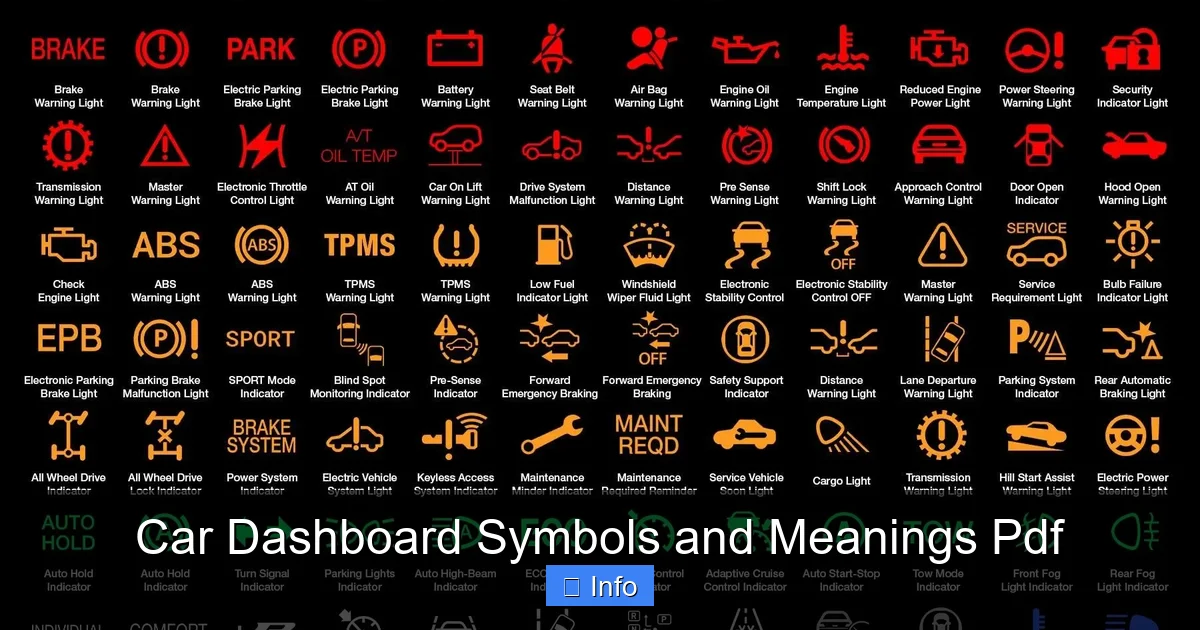
Understanding your vehicle’s dashboard symbols is essential for every driver to ensure safety and prevent costly repairs. This guide provides a deep dive into common warning lights and offers a downloadable car dashboard symbols and meanings pdf resource for your convenience.
Have you ever been driving down a peaceful highway when suddenly, a bright orange light pops up on your dashboard? Your heart might skip a beat. You start wondering, “Is my car about to explode? Do I need to pull over right now?” Don’t panic! You are definitely not alone. Every driver, from beginners to pros, has felt that sudden flash of anxiety when a mysterious icon appears.
The dashboard is essentially your car’s way of talking to you. It uses a language of symbols to tell you how the engine is feeling, how much fuel you have left, and if something is wrong with your brakes. While it might look like a bunch of random shapes, these icons are highly standardized. If you can learn to read them, you can prevent many car problems before they become huge, expensive headaches.
In this guide, we are going to break down everything you need to know. We will discuss the different colors, the most common symbols, and why having a car dashboard symbols and meanings pdf handy is a great idea for any car owner. By the end of this article, you will feel much more confident the next time your dashboard decides to start “talking” to you.
Key Takeaways
- Color Coding Matters: Red means stop immediately, yellow means check soon, and green/blue are just informational.
- Safety First: Never ignore a red warning light as it often indicates a serious mechanical or safety failure.
- PDF Utility: Keeping a car dashboard symbols and meanings pdf on your phone can save you during roadside emergencies.
- Common Symbols: Most drivers should focus on understanding oil, engine, brake, and battery icons.
- Proactive Maintenance: Recognizing symbols early can help you avoid expensive repairs like engine overhauls.
📑 Table of Contents
Understanding the Language of Colors
Before we dive into specific shapes, we need to talk about color. Car manufacturers use a color-coded system to tell you how urgent a problem is. It is very similar to a traffic light. If you understand the colors, you already know half of what the symbol is trying to tell you.
Red: The Emergency Zone
When a red symbol lights up, it is a serious warning. Red lights usually mean there is a critical issue that could cause immediate damage to your vehicle or pose a safety risk to you. If you see a red light, you should pull over to a safe location as soon as possible. Common red lights include the oil pressure light, the brake system warning, and the engine temperature warning. Ignoring these can lead to a total engine failure or even an accident.
Yellow or Orange: The Caution Zone
Yellow or orange lights are “warning” lights. They are not necessarily an emergency, but they do mean something needs your attention soon. Think of this as a “check engine” or “maintenance required” signal. For example, if your tire pressure light comes on, you don’t need to stop mid-highway, but you should find a gas station to check your air levels shortly. It is a way of saying, “Hey, something is slightly off; please look into this before it becomes a red light problem.”
Green or Blue: The Information Zone
Green and blue lights are purely informational. They are not warnings at all. They simply let you know that a certain system is currently active. For instance, if your high beams are on, you might see a blue light. If your cruise control is engaged, you might see a green icon. These are helpful to know so you don’t accidentally leave your lights on, but they never indicate a problem with the car.
Common Critical Symbols You Must Know
While there are dozens of symbols, a handful appear much more frequently than others. Knowing these by heart can make a huge difference during a stressful drive. If you are worried about your car’s appearance after a mechanical issue, you might eventually look for the best car body work and paint to make it look new again, but first, you must address these mechanical warnings.

Visual guide about Car Dashboard Symbols and Meanings Pdf
Image source: i.pinimg.com
The Check Engine Light
This is perhaps the most famous (and feared) symbol. It usually looks like a small engine outline. This light is connected to your car’s computer system. It can trigger for something tiny, like a loose gas cap, or something major, like a faulty oxygen sensor or catalytic converter. If it stays on or flashes, you should get a diagnostic test done immediately.
Oil Pressure Warning
This symbol looks like an old-fashioned oil can with a drip coming out of it. This is a high-priority red light. It means your engine is not receiving enough oil pressure to lubricate the moving parts. If you keep driving, your engine could literally seize up and stop working forever. If this light comes on, pull over and turn off the engine immediately.
Brake System Warning
This icon often looks like a circle with an exclamation point inside or the word “BRAKE.” It can mean several things: your parking brake is still engaged, your brake fluid is low, or there is a significant issue with the braking system itself. If you feel the brakes are soft or unresponsive while this light is on, do not continue driving.
Battery/Charging System Light
A battery icon usually indicates that the car’s charging system is not working correctly. This doesn’t always mean your battery is dead, but it might mean the alternator is failing. If this light stays on, your car will eventually lose all electrical power, including the ability to run the engine, leaving you stranded.
Safety and Maintenance Symbols
Beyond the engine and oil, your car also monitors safety features like airbags, stability control, and tires. Keeping track of these is vital for your personal safety on the road.
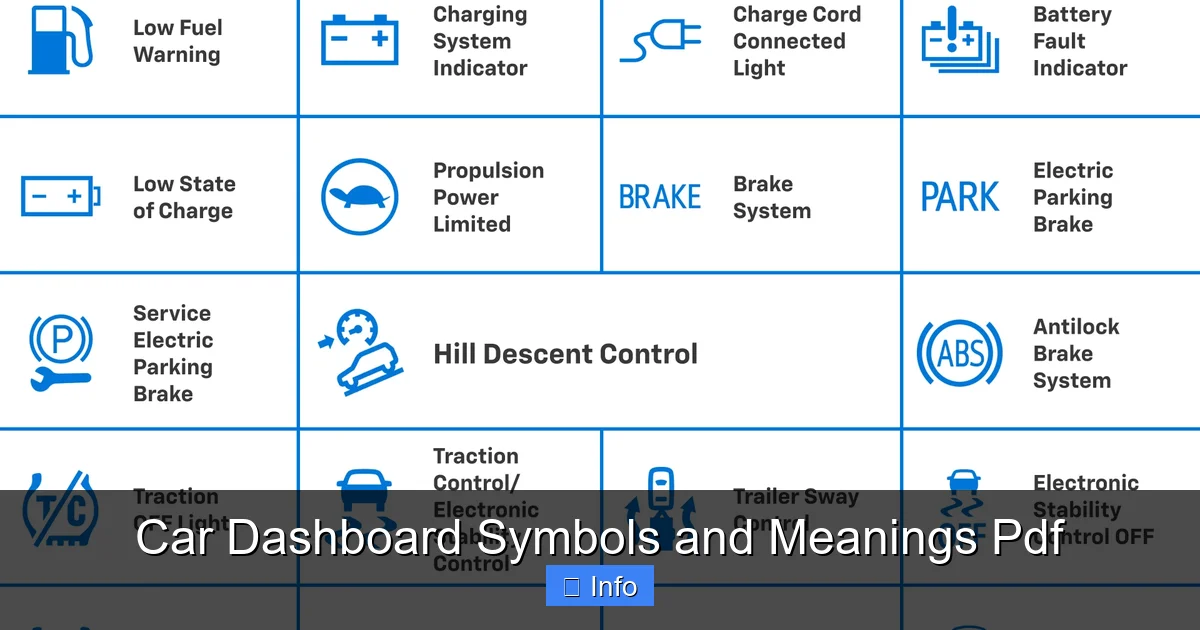
Visual guide about Car Dashboard Symbols and Meanings Pdf
Image source: bomninchevroletwestkendall.com
Tire Pressure Monitoring System (TPMS)
This symbol looks like a horseshoe with an exclamation point in the middle. It tells you that one or more of your tires has low air pressure. Driving on under-inflated tires can reduce your fuel economy and make your car harder to control. It is also a good idea to check your car wheel alignment and balancing near me if you notice the car pulling to one side alongside this light.
Airbag Warning Light
If the symbol that looks like a person sitting with a large circle in front of them lights up, your Supplemental Restraint System (SRS) has a fault. This means your airbags might not deploy in the event of a crash. This is a major safety concern and should be inspected by a professional right away.
ABS Light
ABS stands for Anti-lock Braking System. If this light comes on, your brakes will still work, but the anti-lock feature might not. This means in an emergency stop, your wheels might lock up, causing you to skid. It is much safer to have this fixed before you actually need to perform an emergency maneuver.
Why You Should Keep a Car Dashboard Symbols and Meanings PDF
In the digital age, having physical manuals is becoming less common. Most people rely on their smartphone. However, having a dedicated car dashboard symbols and meanings pdf saved directly to your phone’s files is a lifesaver. Here is why:
- Offline Access: If you are in a remote area with no cell service and a light comes on, you won’t be able to Google the answer. A PDF is stored locally on your device and works anywhere.
- Quick Reference: Instead of scrolling through endless blog posts or forum threads, a PDF allows you to quickly search for a specific icon.
- Clarity: A good PDF guide will have clear, high-resolution images of every symbol, making it easy to match what you see on your dash with the guide.
- Peace of Mind: Knowing you have the answers in your pocket reduces the anxiety that comes with unexpected car trouble.
You can easily create your own by finding a reliable guide online and selecting “Print to PDF.” Keep it in a folder named “Car Info” so you can find it in seconds during an emergency.
Practical Tips for Dealing with Dashboard Lights
So, the light is on. What do you do? Follow these steps to stay calm and handle the situation like a pro.
Step 1: Identify the Color
Is it red, yellow, or green? This is your first and most important decision-making factor. If it is red, find a safe place to stop. If it is yellow, you can usually continue to your destination or a nearby mechanic, but don’t ignore it.
Step 2: Check Your Immediate Surroundings
If a warning light comes on, check for other signs of trouble. Is the engine making a weird noise? Is there a strange smell? Is the car vibrating? This information will be very helpful when you talk to a mechanic.
Step 3: Consult Your PDF or Manual
Open your car dashboard symbols and meanings pdf. Match the icon to the description. This will tell you if the issue is something you can fix yourself (like adding washer fluid) or if you need a tow truck.
Step 4: Don’t Be Afraid to Ask for Help
If you are unsure, call roadside assistance. It is much cheaper to pay for a tow than it is to pay for a brand-new engine because you kept driving with a red oil light on. If you are looking to upgrade your car’s technology to help with visibility or safety, you might consider looking for the best front and rear car camera to assist with overall awareness.
Conclusion
Your car’s dashboard is not your enemy; it is your most important diagnostic tool. Those little icons and lights are designed to keep you safe and protect your vehicle from expensive, preventable damage. By learning the color-coding system and recognizing the most common symbols, you transform from a confused driver into an informed car owner.
Remember: Red means stop, yellow means check, and green means go. Keep a car dashboard symbols and meanings pdf on your phone, stay proactive with your maintenance, and never ignore a warning sign. A little bit of knowledge goes a long way in ensuring your journeys are smooth, safe, and stress-free. Happy driving!
Frequently Asked Questions
What should I do if a red light comes on while driving?
If a red light appears, you should safely pull over to the side of the road as soon as possible and turn off the engine. Red lights indicate serious issues that could cause immediate damage or safety risks. Do not continue driving until you have identified the problem.
Can I ignore a yellow dashboard light?
You should not ignore yellow lights, but they are generally not immediate emergencies. A yellow light means the car has detected a fault that needs attention soon, such as low tire pressure or an engine sensor issue. Address it as soon as it is convenient to prevent it from turning into a red light.
Why does my check engine light flash instead of staying solid?
A flashing check engine light is much more serious than a solid one. A flashing light usually indicates a severe engine misfire that could damage your catalytic converter or other engine components. You should stop driving as soon as it is safe to do so.
Will a dashboard light always mean my car is broken?
Not necessarily. Some lights, like the high beam or cruise control indicators, are simply informational. However, if the light is yellow or red, it does indicate that a system is not functioning within its normal parameters and requires attention.
How can I find out exactly what a symbol means?
The best way is to consult your vehicle’s owner’s manual, which is specifically tailored to your car model. Alternatively, you can use a car dashboard symbols and meanings pdf guide or use an OBD-II scanner to read the specific error codes stored in your car’s computer.
Is it worth getting a professional to check a yellow light?
Yes, it is highly recommended. Even if the car feels like it is driving normally, a yellow light means the computer has detected a problem. Catching a small issue early via a professional diagnostic can save you hundreds or even thousands of dollars in repairs later.


