
Karnavati Car Air Conditioners Pvt Ltd
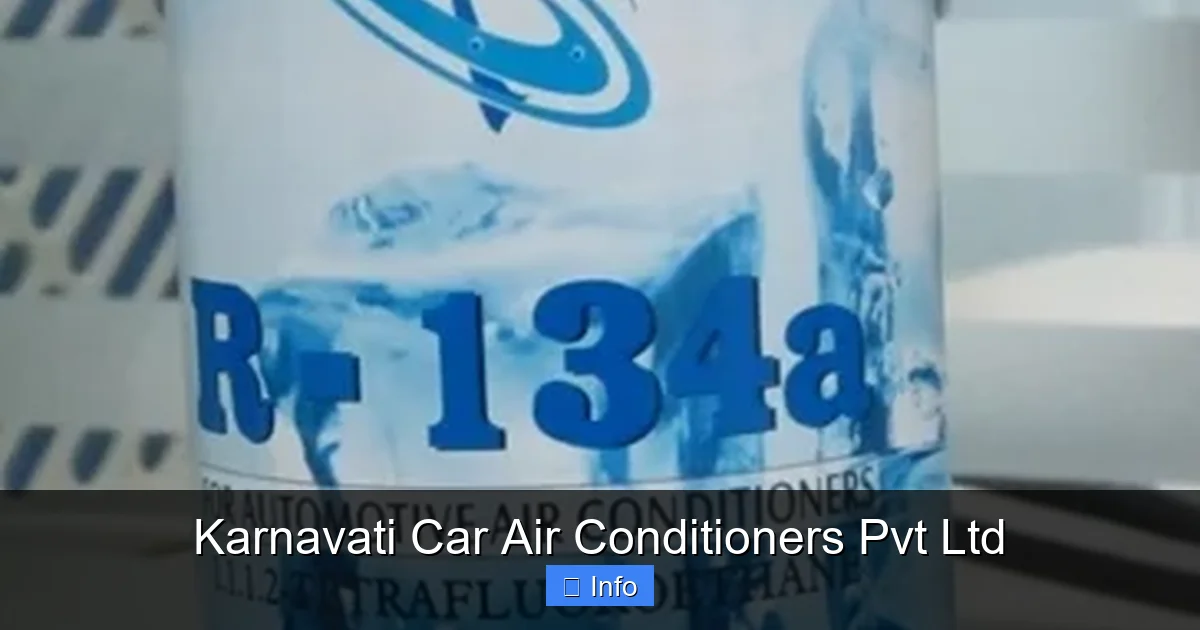
Karnavati Car Air Conditioners Pvt Ltd stands as a prominent player in India’s automotive climate control industry, specializing in manufacturing and supplying high-quality air conditioning systems for various vehicle segments. With decades of experience, the company has built a reputation for innovation, reliability, and customer-centric solutions that keep drivers comfortable across diverse Indian weather conditions.
When the summer sun beats down on Indian roads, there is one thing every driver craves – a blast of cool, refreshing air. Behind that comfort lies a complex world of engineering, innovation, and manufacturing expertise. Karnavati Car Air Conditioners Pvt Ltd has been at the forefront of this industry for years, quietly ensuring that millions of journeys remain comfortable regardless of the weather outside. Whether you are stuck in Mumbai traffic during May or cruising on a highway in Rajasthan, the chances are high that their technology is keeping you cool.
The story of automotive air conditioning in India has evolved dramatically over the past few decades. What was once a luxury feature reserved for premium vehicles has become a standard expectation across all segments. This transformation did not happen by accident. It required manufacturers who understood the unique challenges of the Indian climate, the dust, the vibration, the extreme temperatures, and the cost sensitivity of the market. Karnavati Car Air Conditioners Pvt Ltd recognized these challenges early and built their entire approach around solving them.
Key Takeaways
- Industry Leadership: Karnavati Car Air Conditioners Pvt Ltd has established itself as a trusted name in automotive HVAC solutions with extensive market presence across India
- Comprehensive Product Range: The company offers complete AC systems, components, and aftermarket solutions for passenger cars, commercial vehicles, and off-highway applications
- Manufacturing Excellence: State-of-the-art production facilities ensure quality compliance with international standards and automotive industry requirements
- R&D Focus: Continuous investment in research and development drives innovation in energy efficiency, refrigerant technology, and smart climate control systems
- Nationwide Service Network: Extensive dealer and service network provides installation, maintenance, and repair support across major Indian cities
- OEM Partnerships: Strong relationships with major automobile manufacturers as a preferred supplier for factory-fitted AC systems
- Sustainability Commitment: Adoption of eco-friendly refrigerants and energy-efficient technologies aligns with global environmental standards
📑 Table of Contents
- The Journey from Components to Complete Systems
- Product Portfolio Designed for Indian Conditions
- Manufacturing Excellence and Quality Systems
- Research and Development Driving Innovation
- Aftermarket Presence and Service Network
- Sustainability and Corporate Responsibility
- The Road Ahead: Future Trends and Strategic Direction
- Conclusion
The Journey from Components to Complete Systems
Every major manufacturer starts somewhere. For this company, the journey began with a focus on core components – compressors, condensers, evaporators, and the intricate network of hoses and valves that make an AC system function. Mastering these individual parts gave them a deep understanding of how each element affects overall performance. This component-level expertise eventually became the foundation for designing complete, integrated systems.
Early Days and Market Entry
The Indian automotive market of the 1990s and early 2000s was vastly different from today. Joint ventures were just beginning to flourish. Localization was a buzzword but also a necessity driven by government policies. Karnavati Car Air Conditioners Pvt Ltd positioned itself strategically during this period. They understood that to survive and thrive, they needed to offer quality that matched international standards while maintaining cost structures that worked for Indian OEMs.
Their early contracts involved supplying components to larger assembly operations. This phase was crucial. It taught them about automotive quality systems – the rigorous testing, the documentation, the traceability requirements, and the zero-defect mindset that car manufacturers demand. They learned that a failed AC component is not just a warranty claim. It is a breakdown on a highway. It is a family stranded in heat. It is a reputation damaged.
Transition to System Integration
As their component quality gained recognition, the natural progression was system integration. Instead of just supplying a compressor or a condenser, they began designing complete AC packages tailored to specific vehicle platforms. This shift required new capabilities – thermal simulation software, climate chamber testing, vibration rigs, and a deeper understanding of vehicle architecture.
System integration also meant working closely with OEM engineering teams during the vehicle development phase. The AC system is not an afterthought. It interacts with the engine cooling system, the electrical architecture, the cabin insulation, the dashboard design, and even the aerodynamics. Getting involved early in the design cycle allowed Karnavati Car Air Conditioners Pvt Ltd to optimize packaging, reduce weight, improve efficiency, and ensure seamless integration.
Product Portfolio Designed for Indian Conditions
One size does not fit all in automotive climate control. A compact hatchback navigating Delhi streets has vastly different requirements from a long-haul truck crossing the Deccan plateau or an SUV tackling Ladakh passes. The product portfolio reflects this diversity with solutions engineered for specific applications.
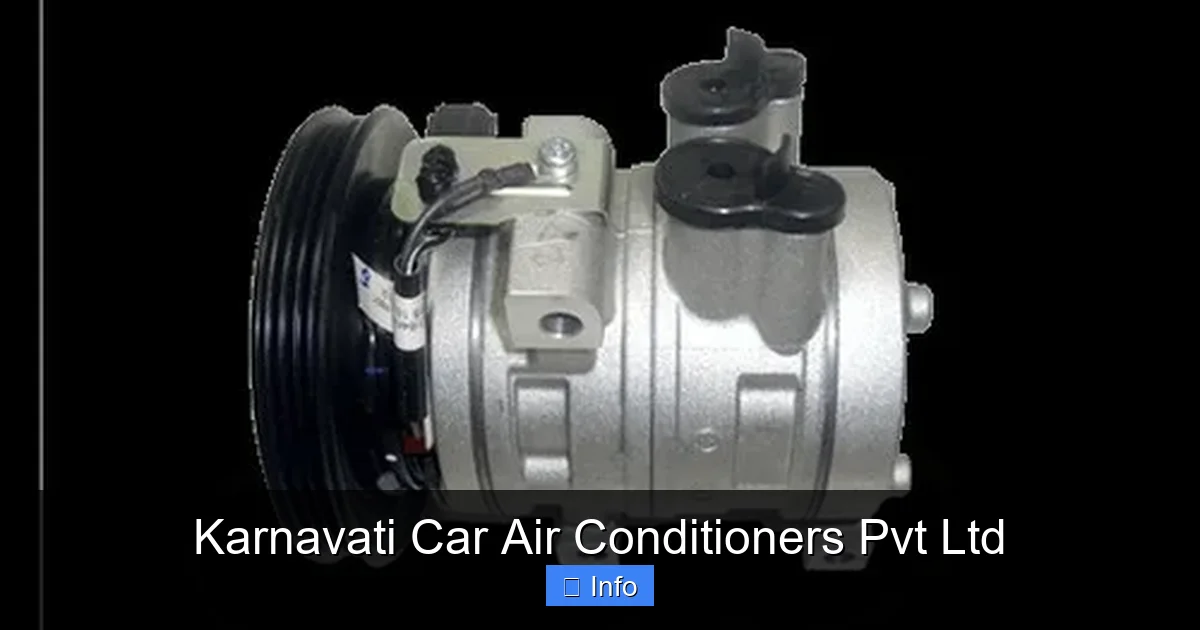
Visual guide about Karnavati Car Air Conditioners Pvt Ltd
Image source: tiimg.tistatic.com
Passenger Vehicle Systems
The passenger car segment demands a delicate balance. Customers want rapid cool-down, consistent temperature maintenance, low noise, minimal fuel impact, and reliability that lasts the vehicle lifetime. The company’s passenger vehicle systems address these through variable displacement compressors that adjust cooling capacity based on demand, microchannel condensers that maximize heat rejection in minimal space, and smart control algorithms that learn user preferences.
Modern systems also integrate with vehicle networks. They communicate with the engine ECU to manage compressor load during acceleration, with the body control module for automatic climate functions, and with infotainment systems for user interface. This level of integration requires sophisticated software development capabilities alongside traditional hardware expertise.
Commercial Vehicle Solutions
Truck and bus AC systems face a different set of challenges. The cabins are larger. The duty cycles are brutal – engines running for days, vibration levels that would destroy passenger car components in weeks, and maintenance intervals measured in months rather than years. Drivers sleep in these cabins. Their rest quality directly impacts road safety.
The commercial vehicle range features heavy-duty compressors with enhanced bearing designs, condensers with protective coatings against road debris and corrosion, and control systems that can operate reliably on fluctuating electrical systems. There is also a growing focus on electric compressor technology for hybrid and electric commercial vehicles, where engine-driven compressors are not an option.
Off-Highway and Specialty Applications
Construction equipment, agricultural tractors, and mining vehicles operate in environments that would be considered extreme by any standard. Dust ingress is a constant threat. Ambient temperatures can exceed fifty degrees Celsius. The machines themselves generate enormous heat. Operator cabins are often compact with large glass areas creating greenhouse effects.
For these applications, Karnavati Car Air Conditioners Pvt Ltd develops systems with enhanced filtration, pressurized cabins to keep dust out, and oversized heat exchangers that maintain performance even when clogged with debris. The controls are simplified for gloved-hand operation. The components are designed for field serviceability with minimal specialized tools.
Manufacturing Excellence and Quality Systems
In the automotive world, quality is not a department. It is a culture. The manufacturing facilities reflect this philosophy through every process, from incoming material inspection to final shipment authorization.
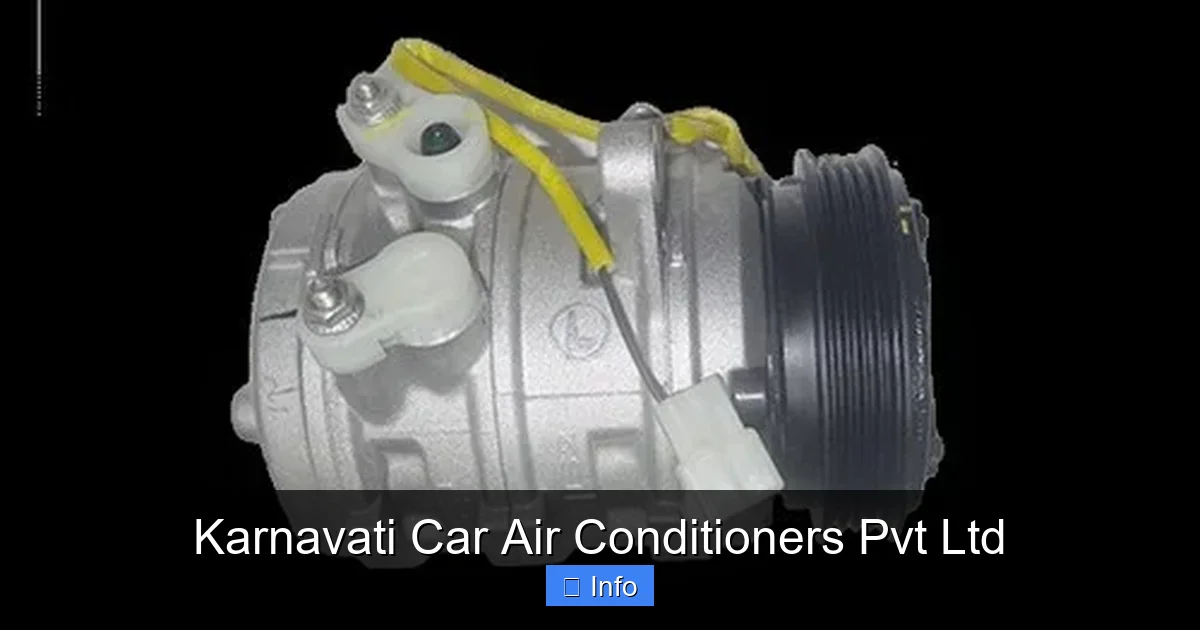
Visual guide about Karnavati Car Air Conditioners Pvt Ltd
Image source: tiimg.tistatic.com
Production Infrastructure
The production facilities combine automated precision with skilled human oversight. Robotic brazing cells ensure consistent joint quality on heat exchangers. Automated assembly lines for compressors maintain micron-level tolerances. Clean rooms for critical sub-assemblies prevent contamination that could cause field failures years later. The layout follows lean principles – minimal work-in-progress, visual management, and continuous flow.
Capacity planning is dynamic. The automotive market is cyclical. Model changes happen on fixed schedules. The manufacturing system must flex up and down without compromising quality or delivery. This requires cross-trained operators, modular equipment, and strong supplier partnerships that can match the flexibility.
Testing and Validation Protocols
Every design undergoes a gauntlet of tests before production approval. Thermal wind tunnel testing simulates real-world conditions – solar load, humidity, ambient temperature, vehicle speed. Vibration testing replicates years of road input in accelerated timeframes. Corrosion chambers spray salt fog for thousands of hours. Electrical testing covers EMC compliance, voltage spikes, and reverse polarity protection.
Durability testing runs compressors and complete systems for thousands of continuous hours. Life cycle testing subjects components to thermal cycling from minus forty to plus one hundred twenty degrees Celsius. The test data feeds back into design improvements and validates warranty predictions. This rigorous approach is why Karnavati Car Air Conditioners Pvt Ltd has earned the trust of demanding OEM customers.
Quality Management Systems
Certifications tell part of the story – IATF 16949 for automotive quality, ISO 14001 for environmental management, ISO 45001 for occupational health and safety. But the real quality system lives in daily practices. Layered process audits. Statistical process control on critical characteristics. Error-proofing devices on assembly stations. Traceability systems that can identify every component in a finished system back to its raw material batch.
Supplier quality management is equally rigorous. Key suppliers undergo regular audits. Incoming inspection uses sampling plans based on risk assessment. Supplier corrective actions are tracked to closure. The goal is preventing defects rather than detecting them. This proactive approach reduces costs for everyone in the supply chain.
Research and Development Driving Innovation
Standing still in automotive technology means moving backward. The R&D investment reflects a commitment to staying ahead of regulatory changes, customer expectations, and competitive pressures.
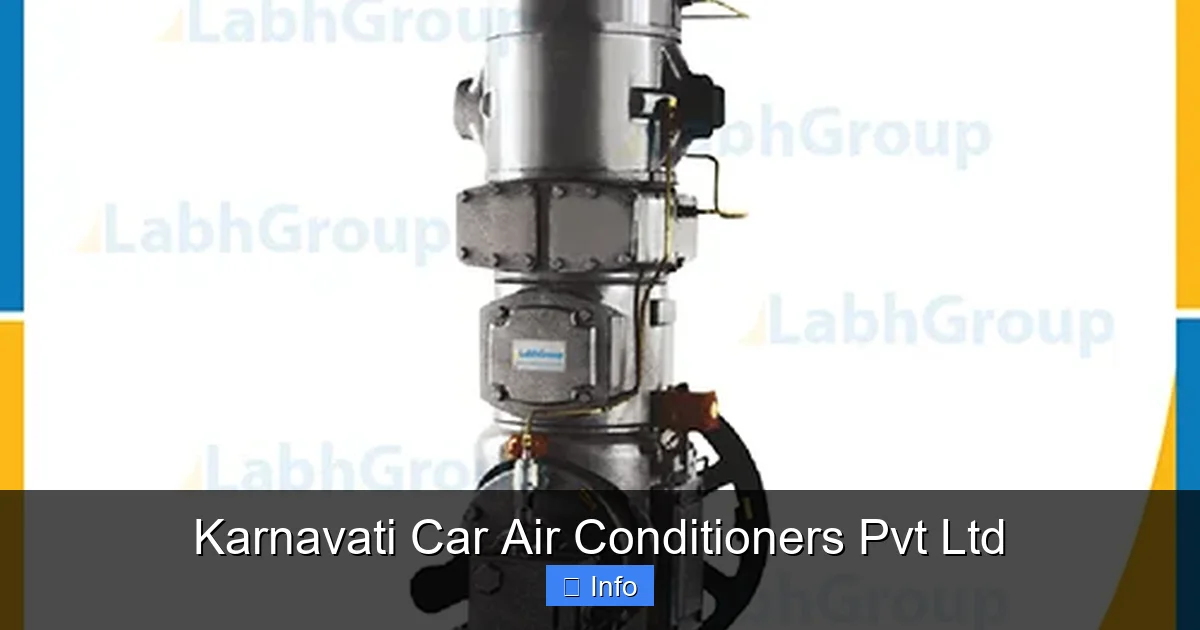
Visual guide about Karnavati Car Air Conditioners Pvt Ltd
Image source: cpimg.tistatic.com
Refrigerant Transition Leadership
The global phase-down of high-GWP refrigerants has been a major industry disruptor. The transition from R-134a to R-1234yf and CO2 systems requires more than just changing the fluid. It demands new compressor designs, different heat exchanger architectures, updated service procedures, and revised safety standards. Karnavati Car Air Conditioners Pvt Ltd invested early in this transition, developing expertise that now positions them as a go-to partner for OEMs navigating the change.
R-1234yf systems operate at higher pressures. They require different sealing materials. The compressors need redesigned valve plates. The heat exchangers need thicker walls. The service equipment is completely different. Getting all these elements right simultaneously is a systems engineering challenge that the R&D team has mastered through extensive testing and field validation.
Electrification and Thermal Management
Electric vehicles have rewritten the thermal management rulebook. No engine waste heat for cabin warming. Battery temperature must be maintained in a narrow window for performance and longevity. Power electronics generate heat that can be recovered. The AC system becomes a heat pump – moving heat from where it is not wanted to where it is needed.
The company’s heat pump systems for EVs integrate battery thermal management, cabin conditioning, and power electronics cooling into a single intelligent system. This integration reduces weight, cost, and complexity while maximizing range – the ultimate EV metric. The control algorithms balance competing demands in real-time, predicting needs based on navigation data, driving style, and ambient conditions.
Smart and Connected Features
The modern AC system is becoming a sensor platform. Cabin air quality sensors detect PM2.5, CO2, and VOCs, automatically activating recirculation or fresh air modes. Occupancy sensors adjust airflow to occupied zones only. Predictive algorithms pre-condition the cabin before the driver enters based on smartphone connectivity. Over-the-air updates refine control strategies throughout the vehicle life.
These features require expertise beyond traditional thermal engineering – embedded software, cybersecurity, cloud connectivity, and data analytics. The R&D organization has expanded to include these capabilities, often through partnerships with technology specialists while maintaining core system integration in-house.
Aftermarket Presence and Service Network
The relationship with a vehicle does not end at the factory gate. The aftermarket business ensures that the cooling performance lasts throughout the vehicle life, which in India can exceed fifteen or twenty years.
Genuine Parts Availability
A failed AC component in a ten-year-old vehicle should not mean a visit to the scrapyard. The genuine parts program ensures availability of compressors, condensers, evaporators, expansion valves, and control modules for legacy models. The parts are manufactured to the same specifications as original equipment, not compromised for the aftermarket price point.
Packaging includes installation kits with O-rings, lubricant, and detailed instructions. QR codes on packaging link to installation videos. This attention to the installer experience reduces comebacks and protects the brand reputation. The parts distribution network reaches tier-two and tier-three cities where older vehicles are more prevalent.
Service Training and Certification
Modern AC systems require specialized knowledge for diagnosis and repair. The company runs technical training programs for independent workshops, authorized service centers, and vocational institutes. The curriculum covers refrigerant handling certification, electronic diagnosis, compressor overhaul procedures, and retrofit guidelines for older vehicles.
Certified technicians receive access to technical bulletins, wiring diagrams, and diagnostic software updates. This ecosystem approach ensures that when a customer walks into a workshop, the technician can fix it right the first time. The training programs also create a pipeline of skilled talent for the industry.
Retrofit Solutions for Legacy Vehicles
Millions of older vehicles still run on R-12 or R-134a systems. As refrigerants become scarce and expensive, retrofit solutions become essential. The engineering team has developed validated retrofit kits that include compatible compressors, modified heat exchangers, new barrier hoses, and the correct refrigerant charge. These kits are tested for performance equivalence and durability, not just regulatory compliance.
Sustainability and Corporate Responsibility
Environmental responsibility in the AC industry goes beyond regulatory compliance. It is embedded in product design, manufacturing processes, and end-of-life considerations.
Green Manufacturing Practices
The manufacturing facilities have implemented comprehensive environmental management. Solar rooftop installations offset a significant portion of electricity consumption. Rainwater harvesting reduces municipal water demand. Zero liquid discharge systems treat and recycle process water. Hazardous waste – used oils, solvents, refrigerants – is tracked and disposed through authorized channels with documentation.
Energy efficiency projects are continuous – variable frequency drives on motors, LED lighting conversion, compressed air leak elimination, heat recovery from compressor testing. The facilities target carbon neutrality through a combination of reduction, renewable energy, and verified offsets. These initiatives also reduce operating costs, creating a virtuous cycle.
Product Lifecycle Thinking
Design for environment starts at the concept stage. Material selection avoids substances of concern even before regulations mandate it. Components are designed for disassembly and recycling. Refrigerant charge is minimized through efficient heat exchanger design. The goal is reducing the total environmental footprint across the product life – manufacturing, use phase, and end-of-life.
Life cycle assessment tools quantify the impact of design choices. A slightly heavier condenser that lasts twice as long may have lower total impact than a lighter one that fails early. These trade-offs require data, not intuition. The sustainability team works alongside design engineers from day one of every project.
Community Engagement
Corporate social responsibility focuses on education, skill development, and environmental conservation in communities around manufacturing locations. Technical scholarships support students from underprivileged backgrounds pursuing automotive engineering. Vocational training centers provide employable skills in AC service and repair. Tree plantation drives and water body restoration projects improve the local environment.
Employee volunteering programs encourage participation during work hours. The company matches employee donations to approved causes. This culture of giving back strengthens community relationships and employee pride. It also builds a positive brand image that resonates with customers and partners.
The Road Ahead: Future Trends and Strategic Direction
The automotive industry is in the midst of its most profound transformation in a century. Electrification, connectivity, autonomy, and shared mobility are reshaping every aspect of vehicle design. Climate control systems are at the intersection of several of these trends.
Preparing for Autonomous Vehicles
Autonomous vehicles change the cabin from a driver-centric space to a passenger-centric lounge. Occupants may face different directions. They may work, sleep, or socialize. The climate system must provide individualized comfort zones with precise temperature, humidity, and airflow control for each seat. Air quality becomes even more critical when occupants cannot open windows.
The company is developing multi-zone systems with advanced air distribution architectures. Individual diffusers with motorized vanes. Seat-integrated heating and cooling. Radiant panels for silent comfort. Purification systems that exceed HEPA standards. These technologies are being validated today for the vehicles of tomorrow.
Digital Twin and Predictive Maintenance
Connected vehicles generate continuous data streams. AC system parameters – pressures, temperatures, currents, cycle times – can be monitored in real-time. Digital twin models compare actual performance against expected baselines. Anomalies trigger predictive maintenance alerts before failures occur. Fleet operators can schedule service during planned downtime.
This capability requires embedding sensors and communication modules in production systems. It requires cloud infrastructure for data ingestion and analytics. It requires algorithms trained on massive datasets of normal and fault conditions. Karnavati Car Air Conditioners Pvt Ltd is building these capabilities through strategic technology partnerships and internal data science teams.
Global Expansion Strategy
While the domestic market remains the core focus, global opportunities are emerging. Indian manufacturing cost competitiveness combined with proven quality makes an attractive proposition for international OEMs. The company is pursuing export opportunities for both components and complete systems, initially targeting developing markets with similar climatic conditions and cost sensitivities.
Global expansion requires additional certifications – E-mark for Europe, SAE compliance for North America, specific country homologations. It demands multilingual technical support. It needs logistics networks that can deliver just-in-time to overseas assembly plants. The groundwork for these capabilities is being laid systematically.
Conclusion
The story of Karnavati Car Air Conditioners Pvt Ltd is fundamentally a story of adaptation and persistence. From component supplier to system integrator. From mechanical systems to mechatronic solutions. From fossil-fuel vehicles to electric platforms. Each transition required new capabilities, new mindsets, and new investments. The company navigated these changes by staying close to customer needs, investing in core technologies, and maintaining an unwavering focus on quality.
For the vehicle owner, the result is invisible comfort – the cool breeze on a hot day, the clear windshield on a humid morning, the warm cabin on a winter night. For the OEM partner, the result is a reliable system that integrates seamlessly, meets cost targets, and supports their brand promise. For the industry, the result is a domestic manufacturer that has proven Indian engineering can compete globally on technology, quality, and innovation.
As the mobility landscape continues to evolve, one constant remains – people will always need thermal comfort in their vehicles. The form may change. The technology will advance. But the fundamental need persists. Companies that understand this deeply, that combine engineering rigor with market insight, will continue to thrive. Karnavati Car Air Conditioners Pvt Ltd has demonstrated this understanding for decades and appears well-positioned for the decades ahead.
Frequently Asked Questions
What products does Karnavati Car Air Conditioners Pvt Ltd manufacture?
Karnavati Car Air Conditioners Pvt Ltd manufactures complete automotive AC systems including compressors, condensers, evaporators, expansion valves, and control modules for passenger cars, commercial vehicles, and off-highway applications.
Does the company supply to original equipment manufacturers (OEMs)?
Yes, the company has established partnerships with major automobile manufacturers as a preferred supplier for factory-fitted air conditioning systems across various vehicle platforms.
What refrigerant technologies does the company work with?
The company works with both traditional R-134a and newer low-GWP refrigerants including R-1234yf and CO2 systems, with expertise in heat pump technology for electric vehicles.
Is there an aftermarket service network for older vehicles?
Yes, the company maintains a genuine parts distribution network and certified technician training programs to support vehicles throughout their lifecycle, including retrofit solutions for legacy refrigerant systems.
Where are the manufacturing facilities located?
The company operates state-of-the-art manufacturing facilities in India with automated production lines, clean rooms, and comprehensive testing laboratories including thermal wind tunnels and vibration test rigs.
What quality certifications does the company hold?
The company holds IATF 16949 for automotive quality management, ISO 14001 for environmental management, and ISO 45001 for occupational health and safety, along with various product-specific certifications.


