Top 4 Best Power Stations for RVs: Expert Picks

Finding the Best Power Station For RV can dramatically improve comfort on the road, letting you run essentials like refrigeration, climate control, and charging circuits even when you’re off-grid. This roundup compares top options for RV use, balancing capacity, weight, and charging speed so you can pick the right mix for your camping style. Whether you’re a weekend warrior or full-time traveler, the right power station keeps you powered without noisy generators or frequent hookups.
Quick Product Comparison
1. Jackery HomePower 3600 Plus Power Station
★★★★★ 4.8/5
intro text here (2-3 sentences only)
Key Features That Stand Out
- ✓ 3584Wh capacity and 3600W AC output for heavy-duty RV use
- ✓ Solar-ready with plug-and-play panels for off-grid weekends
- ✓ Durable battery system designed for high-temp environments
- ✓ Easy plug-and-play setup ideal for quick RV deployments
Why We Recommend It
We recommend it for RVers who want dependable, high-capacity power without managing multiple adapters. Its robust output covers climate control, cooking, and essential appliances on longer trips.
Best For
Best for full-day trips and weekends where you need reliable power without campsite hookups.
Pros and Cons
Pros:
- ✓ High capacity and strong AC output
- ✓ Solid build and safety features
- ✓ Solar-ready and easy to expand with panels
- ✓ Reliable performance for standard RV needs
Cons:
- ✓ Heavy and less portable
- ✓ Higher price point
- ✓ Solar charging depends on sunlight conditions
Customer Reviews
Customer Review: “This power station kept our fridge running and lights bright through a weekend camping trip. Very impressed with the stability.”
Customer Review: “It’s a bit heavy to move, but the performance makes up for it. Recharged well with sun, though it takes time on cloudy days.”
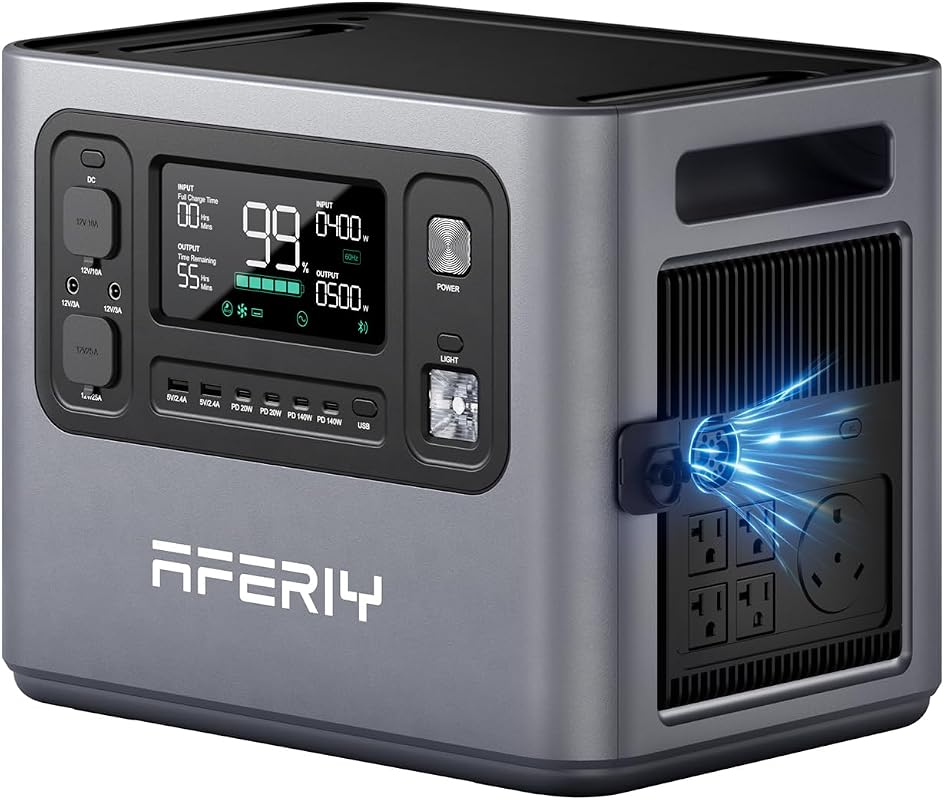
2. AFERIY P280 Portable Power Station
2. AFERIY P280 Portable Power Station
★★★★☆ 4.6/5
intro text here (2-3 sentences only)
Key Features That Stand Out
- ✓ 2048Wh LFP battery capacity for solid endurance
- ✓ Dual PV inputs for flexible solar charging
- ✓ 1800W AC input and 1200W PV input for fast recharge
- ✓ Expandable capacity with extra batteries up to 10.24kWh
Why We Recommend It
Ideal for RV users who want quick recharging and scalable power. The dual solar inputs and expandability make it easy to tailor for longer stays off-grid.
Best For
Best for weekend trips and mid-length stays where fast recharge and future expansion matter.
Pros and Cons
Pros:
- ✓ Fast dual-input charging options
- ✓ Manageable weight for a high-capacity unit
- ✓ Expandable with additional batteries
Cons:
- ✓ Higher price at base configuration
- ✓ Battery expansion adds to total system weight
Customer Reviews
Customer Review: “We used this on a week-long trip and the fridge stayed cold with room to charge devices at night.”
Customer Review: “Solar setup was straightforward, and expanding capacity later seems practical.”
3. AFERIY 4096Wh Portable Power Station with P280 generator and one extra battery pack
3. AFERIY 4096Wh Portable Power Station with P280 generator and one extra battery pack

★★★★☆ 4.5/5
intro text here (2-3 sentences only)
Key Features That Stand Out
- ✓ 4096Wh capacity with P280 generator expansion
- ✓ Extra battery pack included for immediate back-up
- ✓ Fast recharge with dual inputs (AC and PV)
- ✓ Strong for extended off-grid RV stays
Why We Recommend It
Great value for high-capacity power with optional expansion. It suits RVers who want ample, flexible power without juggling multiple devices.
Best For
Best for budget-conscious buyers who still crave substantial backup power for longer RV trips.
Pros and Cons
Pros:
- ✓ Excellent capacity for the price
- ✓ Includes an extra battery for immediate expansion
- ✓ Fast dual-input charging
Cons:
- ✓ Heavy and large form factor
- ✓ More complex setup with expansion
Customer Reviews
Customer Review: “The extra battery pack really extended our camping fridge run time during a multi-day trip.”
Customer Review: “Solid performance for the price; recharge is quick when using both AC and solar.”
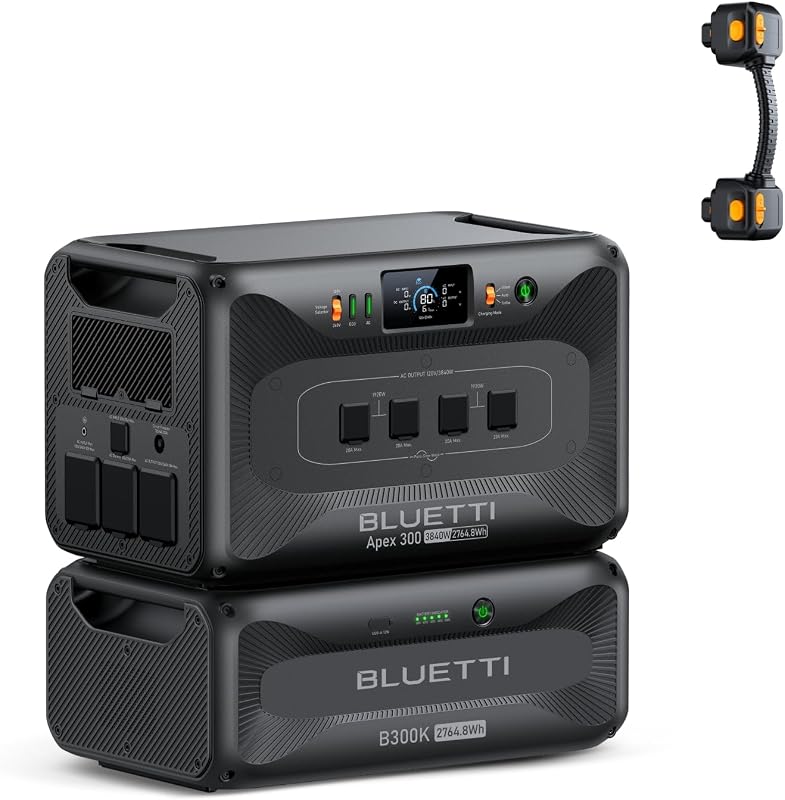
4. BLUETTI Apex 300 Portable Power Station with B300K expansion battery, 5529.6Wh total capacity
4. BLUETTI Apex 300 Portable Power Station with B300K expansion battery, 5529.6Wh total capacity
★★★★★ 4.7/5
intro text here (2-3 sentences only)
Key Features That Stand Out
- ✓ 5529.6Wh total capacity with B300K expansion
- ✓ 120V/240V dual-output capability for campers and appliances
- ✓ Multiple AC outputs for running ovens, HVAC, and more
- ✓ Scales up with expansion battery for long off-grid stays
Why We Recommend It
Best for campers who need abundant power and versatility. The Apex 300’s expansion path means you can scale up as your RV adventures grow.
Best For
Best for large RVs or long boondocking sessions where you’ll run multiple high-wattage devices.
Pros and Cons
Pros:
- ✓ Extremely high capacity with expansion
- ✓ Flexible 120V/240V outputs
- ✓ Direct plug-and-play with B300K
Cons:
- ✓ Very heavy and pricey
- ✓ Large footprint may require dedicated storage
Customer Reviews
Customer Review: “The Apex 300 handled our RV AC and fridge easily for several days off-grid.”
Customer Review: “Expansion battery makes this a future-proof choice for longer trips.”
Complete Buying Guide for Best Power Station For Rv
Essential Factors We Consider
When choosing a power station for RV life, we weigh capacity, weight, charging speed, solar compatibility, and the variety of outlets. A higher capacity is great for long stretches off-grid, but it comes with more weight. Consider how much you’ll run at once (fridge, heater, microwave, and devices) to pick a model with enough continuous wattage and surge capacity. Solar input flexibility and expandability help future-proof your setup.
Budget Planning
High-capacity units with expansion options cost more, but they save on generator use and campsite fees over time. Decide your monthly travel pattern and calculate how many days you’ll be off-grid between hookups to choose a balance of upfront cost and long-term value. Don’t forget to include solar panel costs if you plan to go fully off-grid.
Final Thoughts
The right power station for your RV depends on how you camp. If you want a strong all-rounder, consider a model like the Jackery HomePower 3600 Plus for reliable daily use. If you need flexible charging and future expansion, look at AFERIY P280 or BLUETTI Apex 300. Align your choice with your travel style, weight tolerance, and how often you’ll rely on off-grid power.
Frequently Asked Questions
Q: Do I need solar panels with a power station for RV use?
A: Not always, but solar panels can dramatically extend off-grid time. A station with multiple input options makes solar charging convenient, and expansions are helpful for longer trips.
Q: How many watts do I typically need for RV use?
A: For a basics setup—refrigerator, lighting, and device charging—you’ll want 1000–2000W continuous with a higher surge capacity. If you run an air conditioner or microwave, you’ll benefit from 3000W+ systems.
Q: Are these power stations safe for RVs?
A: Yes, when used as directed. Look for models with built-in protection features, battery management systems, and reputable safety standards.
Q: Can I run HVAC or a microwave off a power station?
A: Some high-capacity models can handle HVAC and microwaves for short periods, but continuous use may require a larger system or generator backup depending on wattage.
Q: How do I choose between capacity and portability?
A: If you’re mobile and travel light, portability matters. If you boondock often or travel with multiple appliances, prioritizing capacity and expansion options makes sense.
Ready to upgrade your RV power setup? Explore the top picks above, compare prices using the Check Price on Amazon buttons, and use the internal links to explore related guides like our Best Power Station For Overlanding, Best Portable Power Station For Van Life, Best House Battery For RV, and our guide on Best Inverter Generators For RV to round out your setup.
In short, the Best Power Station For RV you choose should match how you camp, how long you stay off-grid, and how much weight you’re willing to carry. With the right model, you’ll enjoy more comfort, fewer compromises, and a smoother journey on the open road.