
Portable Nitrogen Air Pump for Car
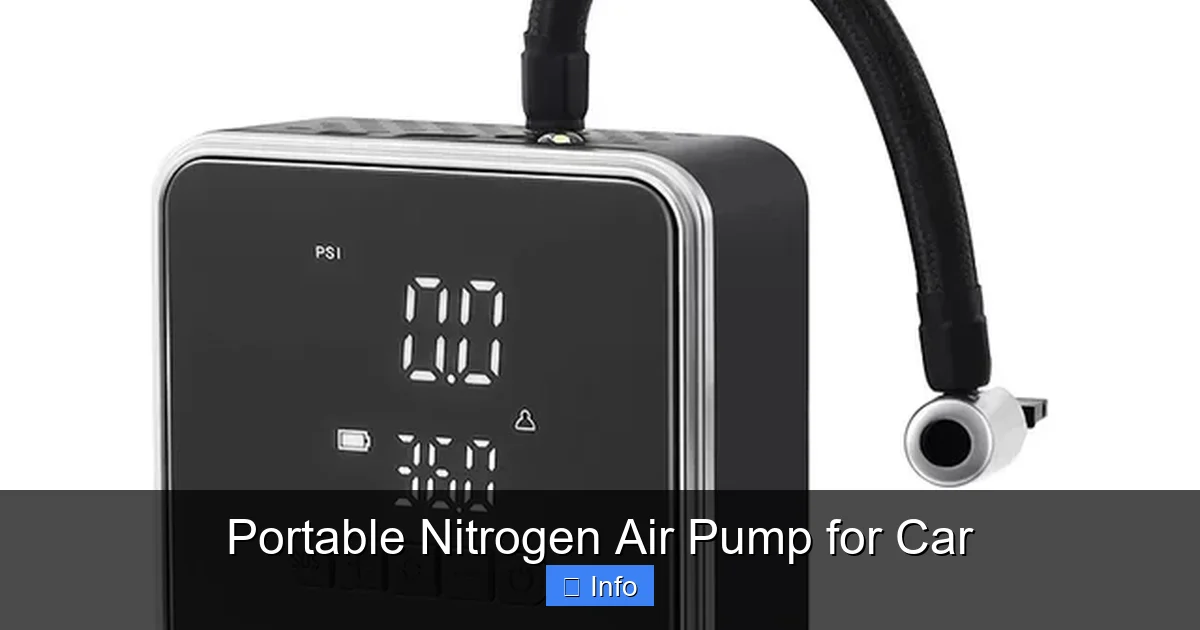
A portable nitrogen air pump for car is a compact inflator that fills your tires with nitrogen instead of regular air. It plugs into your 12V socket or charges by USB, and most models shut off automatically at your set pressure. The result is slower pressure loss, fewer cold-morning top-ups, and cleaner wheels. It will not fix a real leak, but for daily drivers it is a cheap and handy upgrade.
Have you ever walked out to your car on a cold morning and found a tire looking a little flat? It happens to almost everyone. Tires lose air slowly over time, and cold weather makes it worse. That simple annoyance is why so many drivers now keep a portable nitrogen air pump for car in the trunk.
These little machines are not complicated. Most are about the size of a lunch box. You plug one into your car’s 12V socket, set your target pressure, and it fills the tire for you. Some run off a battery you charge at home. Either way, you skip the line at the gas station and the mystery of whether their pump gauge is even accurate.
But here is the honest question: is nitrogen worth it, or is it just a fancy label? Let’s dig into how a portable nitrogen air pump for car tires actually works, what it does well, and what to check before you spend your money.
Key Takeaways
- What it does: A portable nitrogen air pump for car tires inflates tires using nitrogen, either from a small built-in membrane generator or a nitrogen cartridge, so pressure holds steadier than with plain air.
- Main benefit: Nitrogen leaks through rubber more slowly than oxygen, so you check and top up your tires less often, especially when seasons change.
- Realistic expectations: Regular air is already about 78% nitrogen, so the gains are real but modest. Do not expect magic fuel savings.
- Key features: Look for a 100 PSI plus range, digital readout, auto shut-off, a metal or copper coil motor, and a bright work light.
- Power matters: 12V socket models run the longest. Rechargeable and USB-C models are easier to carry but have shorter run times.
- Best use cases: Road trips, cold climates, track days, RVs, trucks, and anyone tired of hunting for a working gas station pump.
- Not a repair tool: If a tire keeps losing air, get it patched. A pump only masks the problem.
📑 Table of Contents
What Is a Portable Nitrogen Air Pump for Car Tires?
A portable nitrogen air pump is a small inflator designed to fill tires with nitrogen gas. It looks a lot like a regular 12V tire inflator. The difference is on the inside. Instead of pushing plain atmospheric air straight into the tire, it either separates nitrogen out of the air or draws from a nitrogen source.
How It Actually Makes Nitrogen
Most consumer units use a membrane separator. Air goes in, and a thin membrane filter lets nitrogen pass through while blocking most of the oxygen and moisture. What reaches your tire is usually around 90 to 95 percent pure nitrogen. A few cheaper models skip the membrane and just use a nitrogen cartridge, which gives higher purity but costs more per fill.
Some budget products on marketplace sites are simply regular compressors with “nitrogen” printed on the box. If a unit has no filter, no membrane, and no cartridge, it is probably just pumping ordinary air. Worth knowing before you buy.
How It Differs From a Regular Air Pump
A standard inflator moves air from outside into the tire. Nitrogen units do the same job but with a different gas mix. In practice, the biggest difference you will notice is how long your pressure holds, not how fast the tire fills. Fill times are similar. Both need a few minutes per tire.
If you mostly want a fast, simple inflator and do not care about the gas, a well-reviewed portable tire inflator for car will do the job for less money.
Why Drivers Choose Nitrogen
Nitrogen has a few real advantages. They are not huge, but they add up over a year of driving.
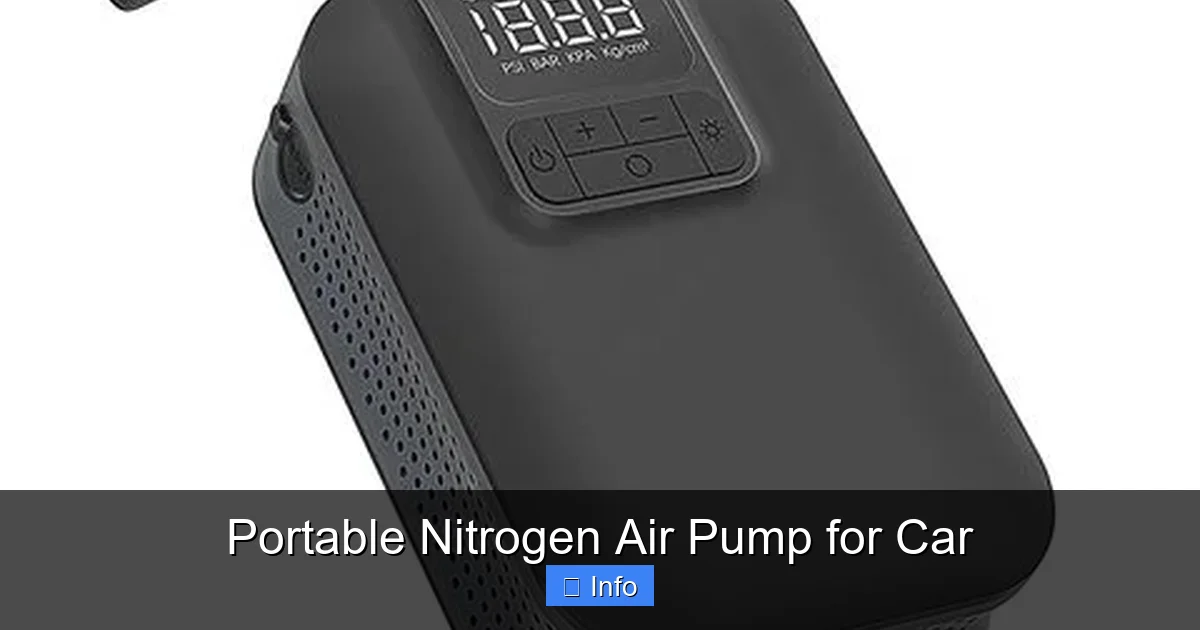
Visual guide about Portable Nitrogen Air Pump for Car
Image source: p.globalsources.com
More Stable Tire Pressure
Nitrogen molecules are bigger than oxygen molecules. They seep through tire rubber more slowly. That means your pressure drops less between checks. Drivers in places with big temperature swings notice this most. A tire set at 32 PSI in summer might sit at 30 PSI after a cold snap instead of 27.
Less Moisture Inside the Tire
Compressed air from a shop pump often carries water vapor. That moisture causes bigger pressure swings when the temperature changes, and it can slowly corrode the inside of a wheel. Nitrogen generators strip most of that moisture out. Your pressure readings become more predictable, and alloy wheels stay cleaner.
Cleaner Wheels and Slower Aging
Oxygen and moisture inside a tire speed up rubber breakdown. Pure nitrogen is dry and inert, so tires age a little more gracefully. You will also see less of that brownish film that builds up inside the tire and on the wheel. This matters more for tires that sit for long stretches, like on a trailer or a classic car.
Marginal Fuel Savings
Correctly inflated tires roll with less resistance, which helps fuel economy. Nitrogen does not add extra savings beyond that. If your tires were already at the right pressure, switching gas will not change your mileage much. Anyone promising big numbers is overselling.
How to Use a Portable Nitrogen Air Pump for Car Tires
Setup takes about a minute once you have done it a few times. Here is the routine that works.
Step by Step
- Check cold pressure first. Park, let the tires cool, and look up the correct PSI on the sticker inside your driver’s door. Do not use the number on the tire sidewall. That is a maximum, not a target.
- Connect the power. Plug into the 12V socket, or switch on the battery pack if your model is cordless.
- Attach the hose. Screw the chuck firmly onto the valve stem. A loose connection is the most common cause of bad readings.
- Set your target. Use the buttons to dial in your PSI, then press start. Good units shut off on their own.
- Repeat and verify. Do all four tires, plus the spare if you have one. Recheck with your own gauge to be sure.
Tips That Make a Difference
Work in the shade when you can. Hot pavement warms the tire and throws off your reading. Also, give the pump a rest between tires. Small motors heat up fast, and running one hot shortens its life. If your model needs a nitrogen cartridge, carry a spare in the glove box.
For a unit that runs straight off your lighter socket without a battery to manage, look at a solid 12V air pump for car tires. Those tend to have longer run times and simpler operation.
What to Look For When Buying
Not all nitrogen pumps are built the same. A few specs separate the good ones from the frustrating ones.
Pressure Range and Accuracy
Passenger cars rarely need more than 36 PSI. Trucks and SUVs sometimes want 50 to 80. Look for a unit rated to at least 100 PSI so you have headroom. Accuracy matters more than range, so read reviews that mention real gauge comparisons.
Auto Shut-Off and Presets
This feature is worth paying for. The pump stops at your set pressure, so you do not walk away and come back to an overinflated tire. Preset buttons for car, SUV, and truck save time if you switch between vehicles.
Power Source
Three options exist. 12V corded models are the most reliable and least expensive. Rechargeable battery models are easier to carry and work anywhere. USB-C models are the most compact but slowest, and best for small top-ups rather than fully flat tires.
Build Quality and Extras
A metal or copper coil motor handles heat better than plastic. A backlit digital screen helps at night. An LED work light is genuinely useful on a dark roadside. A long hose saves you from crouching in awkward positions. If you want a model with a clear readout and easy controls, a good digital air compressor for car covers all of that in one package.
Nitrogen Versus Regular Air: Cost and Reality
Let’s talk money, because this is where expectations need adjusting.
The Real Cost of Nitrogen
Shop nitrogen fills used to cost five to ten dollars per tire, and some dealers offered free fills to upsell tire packages. A portable unit flips that math. You pay once for the pump and then fill for free. For a driver who tops up monthly, the device often pays for itself within the first year.
What Nitrogen Cannot Do
Nitrogen will not fix a puncture, a bad valve stem, or a cracked rim. If a tire keeps going soft, no gas will solve it. Also, you can always mix regular air into a nitrogen-filled tire in an emergency. It lowers purity slightly and does no harm. Do not let anyone tell you otherwise.
Is It Worth It for You?
Yes, if you live somewhere with cold winters, drive long distances, own an older car that seeps air, or simply hate gas station pumps. Less clear-cut if your tires hold pressure well and a free air hose sits a block from your house.
Care, Storage, and Mistakes to Avoid
A pump lasts years with basic care. A few habits make the difference.
Common Mistakes
- Using the sidewall number instead of the door sticker PSI.
- Checking pressure right after a highway drive, when tires are hot.
- Running the motor nonstop on a fully flat tire and overheating it.
- Forgetting the spare tire, which loses air just like the others.
- Storing the pump loose in the trunk where it slides around and breaks.
Storage and Upkeep
Keep the unit in a bag or case. Cold garages are fine, but avoid leaving it on the dashboard in summer heat. Wipe the chuck clean so grit does not jam the valve. Recharge battery models every couple of months so they do not sit dead. Check the hose for cracks once a season.
One more thing worth saying: a pump is only half of roadside readiness. Keeping a jump starter and a small kit together means one bag handles most common problems. If you want a unit built for repeated hard use, an emergency air pump for car is a smart pick.
Final Thoughts
A portable nitrogen air pump for car tires is one of those small upgrades you appreciate more than you expect. It saves trips, gives you accurate readings, and keeps your pressure steadier through the seasons. It will not transform your car or your fuel bill. But it removes a small, recurring headache, and that is often worth the price on its own.
Buy for your real needs. Match the pressure range to your vehicle, pick a power source that fits your habits, and insist on auto shut-off. Do that, and the pump will quietly earn its spot in your trunk for years.
Frequently Asked Questions
Do I need a special tire for nitrogen?
No. Any standard passenger, truck, or trailer tire works fine with nitrogen. The valve stem is the same, and no modification is needed. Just check your door sticker for the correct pressure.
Can I mix nitrogen and regular air in the same tire?
Yes, and it is completely safe. Mixing lowers the nitrogen purity a little, so you lose some of the stability benefit. If you are stranded and only a regular air pump is available, use it without worry.
How long does nitrogen stay in a tire?
Nitrogen leaks out through rubber far more slowly than oxygen, so a properly filled tire can hold pressure for months. Most drivers still check monthly, since punctures and valve leaks affect any gas the same way.
Are cheap portable nitrogen pumps actually making nitrogen?
Many budget models are ordinary compressors with nitrogen branding. A real unit uses a membrane separator or a nitrogen cartridge. If the product lists no filter, membrane, or cartridge, assume it is just pumping regular air.
How long does it take to fill a car tire?
Expect three to six minutes per tire from near empty to full, depending on the pump’s motor and the pressure you need. Small rechargeable units take longer than 12V corded models. Let the motor cool between tires.
Is nitrogen worth the extra cost over a regular inflator?
It depends on your driving. Cold climates, long trips, older cars that seep air, and infrequent pressure checks all make nitrogen more valuable. If your tires hold air well and free air is nearby, a standard inflator is enough.


