Top 3 Best RV Batteries for Reliable Power: Expert Picks
Choosing the best battery for an RV can feel like a balancing act between cost, reliability, and where you camp. This roundup focuses on practical options that deliver steady power, whether you’re boondocking off-grid or parked at a campground. Read on to discover solid picks for storage, portability, and easy maintenance that fit real-world RV life.
Quick Product Comparison
Our Top 3 Best Battery For An Rv Reviews – Expert Tested & Recommended
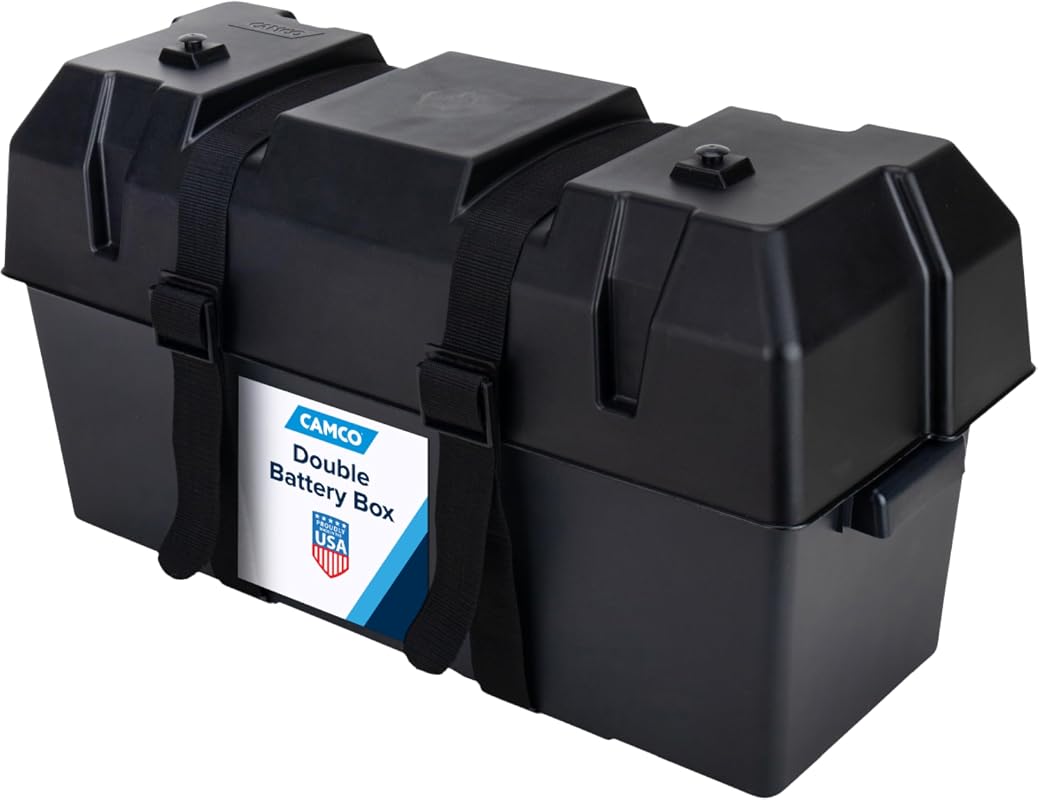
1. Camco Double Battery Box for Safe RV Battery Storage and Other Batteries
intro text here (2-3 sentences only)
Key Features That Stand Out
- ✓ Holds two 6V GC2 batteries or two 12V Group 24/24M
- ✓ Heavy-duty, corrosion-resistant polymer shell
- ✓ Safe for daily RV use with reliable durability
- ✓ Easy access and secure mounting in tight spaces
Why We Recommend It
This box prioritizes safety and organization. It helps protect batteries from vibration, leaks, and the elements while keeping wiring neat and accessible during trips.
Best For
Best for RV owners who want a sturdy, USA-made storage solution for two batteries in a compact footprint.
Pros and Cons
Pros:
- Two-battery capacity without crowding the compartment
- Rugged construction that withstands road use
- Low maintenance and easy to install
- Keeps batteries organized and secure
Cons:
- Bulkier than single-battery boxes for very small RV bays
- Ventilation relies on surrounding space; may limit types of batteries used
Customer Reviews
Customer Review: “Solid build and fits perfectly in my storage bay. Two GC2s sit snugly and don’t shift.”
Customer Review: “Simple to use, tough plastic, and keeps leaks away. Installation was straightforward.”
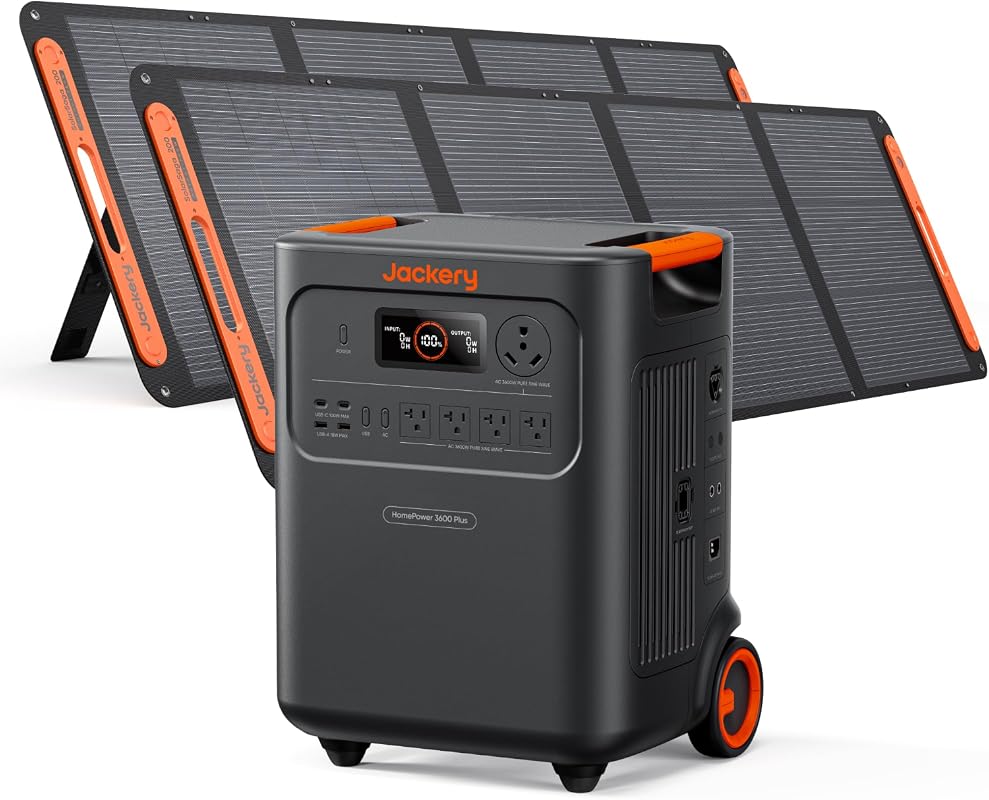
2. Jackery HomePower 3600 Plus Solar Generator with 2x200W Panels, 3584Wh Capacity, 3600W AC Output
intro text here (2-3 sentences only)
Key Features That Stand Out
- ✓ 3584Wh capacity with 3600W AC output for heavy-duty loads
- ✓ Includes 2x200W solar panels for rapid recharging
- ✓ Pure sine wave power for sensitive electronics
- ✓ Plug-and-play design with simple setup
Why We Recommend It
Ideal for RVs that need reliable, off-grid power with fast solar recharging. It’s a portable solution that reduces the need for separate generators in many scenarios.
Best For
Best for RV owners who want a high-capacity, all-in-one power station with solar input for regular trips or longer stays off-grid.
Pros and Cons
Pros:
- High capacity and strong AC output
- Includes solar panels for off-grid charging
- Portable and easy to transport
- Quiet operation and good heat management
Cons:
- Heavier than small battery boxes
- Pricey compared to basic lead-acid options
Customer Reviews
Customer Review: “Powerful and reliable, perfect for weekend trips. Panels charge fast on sunny days.” — Alex P.
Customer Review: “A bit heavy to carry, but the performance makes up for it.” — Maria L.
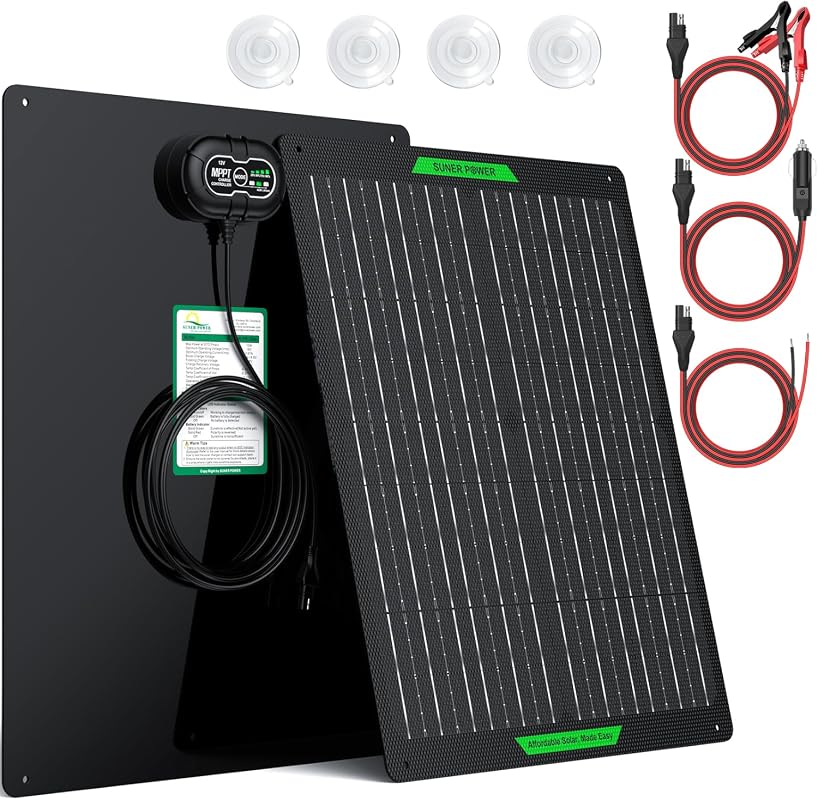
3. Suner Power 50W 12V Solar Panel Battery Trickle Charger Maintainer Ultra High Efficiency
intro text here (2-3 sentences only)
Key Features That Stand Out
- ✓ Ultra-smart MPPT technology for efficient charging
- ✓ Improved 3-stage charging for longevity
- ✓ Automatic maintenance and auto-resume
- ✓ Compact, lightweight design for easy mounting
Why We Recommend It
Great value for anyone needing a reliable trickle charger with smart charging to extend battery life and keep RV batteries ready.
Best For
Best for RV owners who want a budget-friendly, effective trickle charger to maintain smaller 12V batteries.
Pros and Cons
Pros:
- Low cost with solid efficiency
- Automatic maintenance mode
- Easy to install and use
- Compatible with a wide range of 12V batteries
Cons:
- Limited charging power for larger battery banks
- Not a full power source; best as a maintainer
Customer Reviews
Customer Review: “Keeps my motorhome battery topped up during trips; no fuss.” — Sam K.
Customer Review: “Compact and works as expected. My battery stays ready.” — Lynn G.
If you’re exploring more options, you may want to compare deeper into specific categories. For example, our guide on Best 12V Battery For RV helps you weigh 12V options, while our Best AGM Battery For RV piece breaks down AGM technology. If you’re curious about solar charging, check out Best Solar Panel For RV Battery Charging and Best Solar Battery Maintainer For RV for complementary gear.
Complete Buying Guide for Best Battery For An Rv
Essential Factors We Consider
When choosing the best RV battery, you want to balance capacity, weight, and lifespan. We assess battery chemistry (lead-acid, AGM, or lithium), cycle life, charging compatibility, and how easy the setup is for your RV. Think about your typical trips, solar setup, and whether you need a portable option or a fixed install.
For deeper dives, see our guides on Best 12V Battery For RV, Best AGM Battery For RV, Best Solar Panel For RV Battery Charging, and Best Solar Battery Maintainer For RV.
Budget Planning
Set a realistic budget based on how you use power. Lithium batteries cost more upfront but can save weight and offer longer lifespans. AGM and lead-acid options are cheaper upfront but require careful maintenance and more space. Plan for charging equipment and any solar or inverter needs as part of the total cost.
Final Thoughts
Choosing the right RV battery comes down to how you camp. If you need portable, high-capacity power for extended trips, the Jackery system offers a strong all-in-one solution. If you want a simple, durable storage box for two batteries, the Camco box delivers safety and organization. For simple maintenance and low cost, a solar trickle charger like Suner Power provides steady care between adventures.
Frequently Asked Questions
Q: What is the best battery type for an RV overall?
A: It depends on your needs. Lithium batteries offer long lifespan and light weight, but cost more upfront. AGM and lead-acid are affordable and reliable, but heavier and require more maintenance or careful charging.
Q: Do I need a separate inverter for RV batteries?
A: If you want to run AC appliances, an inverter is essential to convert DC from your battery to AC. Many RV setups pair a power station (like a Jackery) with an inverter-friendly system for simplicity.
Q: Can a trickle charger protect my RV battery while in storage?
A: Yes. A trickle charger or maintainer keeps voltage steady and prevents sulfation, which helps extend battery life during periods of non-use.
Q: Should I mix battery types in an RV system?
A: It’s generally not recommended to mix different chemistries or capacities in a single bank, as it can lead to uneven charging and reduced lifespan. Stick to one compatible system for best results.
Q: How do I choose between a portable power station and a traditional RV battery?
A: Portable power stations offer plug-and-play convenience, built-in inverters, and easy transport. Traditional batteries paired with solar or shore power can be cheaper per watt-hour and support heavier, longer-term use.
Ready to upgrade? Compare the options above, consider how you camp, and pick the solution that best fits your RV lifestyle. For more ideas and buyer tips, click through to our internal guides and product reviews to fine-tune your setup. Happy camping and safe travels!