Top 10 Best Battery Monitors for RV: Expert Picks & Reviews
Getting a reliable battery monitor is the secret to hassle-free RV living. A good monitor helps you see exactly how much power you have left, how fast you’re drawing it, and when it’s time to recharge. This Best Battery Monitor For RV roundup covers top picks that fit different setups—from small 12V systems to larger multi-battery banks—so you can choose the right tool for your road-ready home on wheels.
Quick Product Comparison
Our Top 10 Best Battery Monitor For Rv Reviews – Expert Tested & Recommended
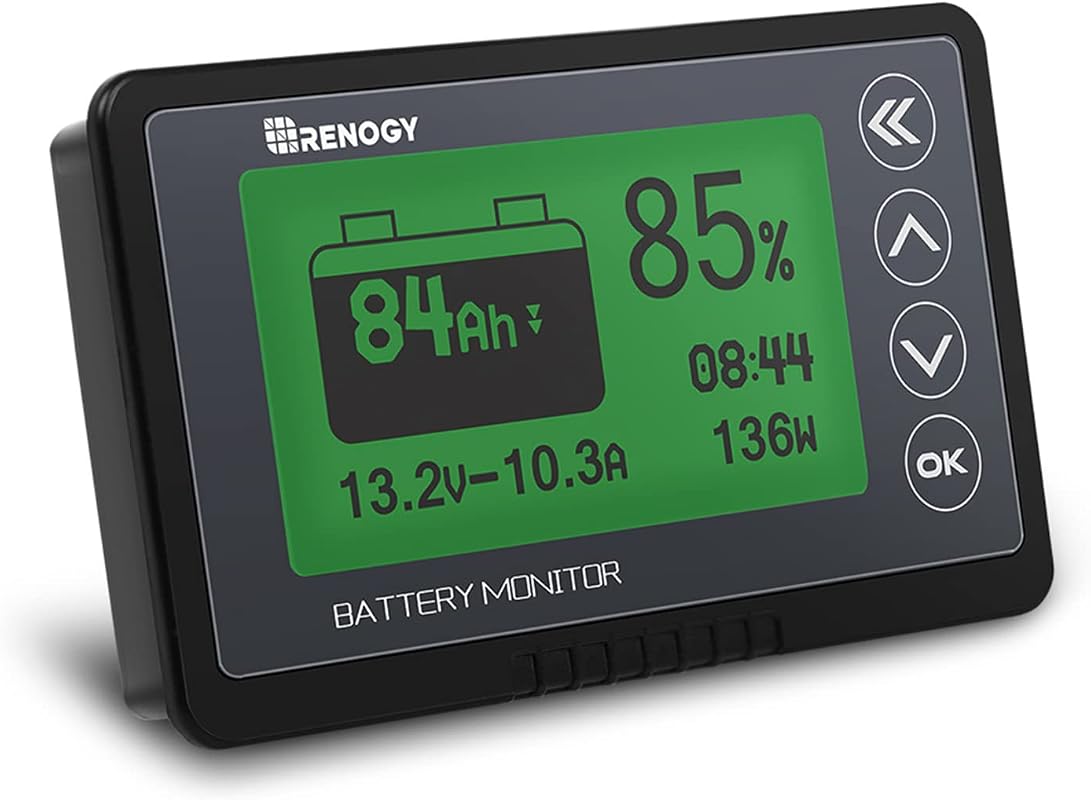
1. Renogy 500A Battery Monitor with Shunt
intro text here (2-3 sentences only)
Key Features That Stand Out
- ✓ 1% accuracy with a shunt design for precise current and voltage readings
- ✓ Compatible with Lead Acid, LiFePO4, and other chemistries
- ✓ Built-in alarms for high/low voltage to protect battery health
Why We Recommend It
We value the Renogy monitor for its accuracy, durability, and broad battery compatibility. It’s a solid choice for RVs that run on diverse battery chemistries and want reliable alerts.
Best For
Best for larger RV battery banks and off-grid setups that require precise SOC and current tracking.
Pros and Cons
Pros:
- High accuracy with real-time data
- Durable build suitable for mobile environments
- Supports multiple battery types
Cons:
- Shunt-based setup requires correct wiring
- Display may be less intuitive for beginners
Customer Reviews
Customer Review: “Installed this in my RV and the readings are spot on. Battery life improved after I started using the alarm features.”
Customer Review: “Solid performance, a bit technical to wire, but the results are worth it.”
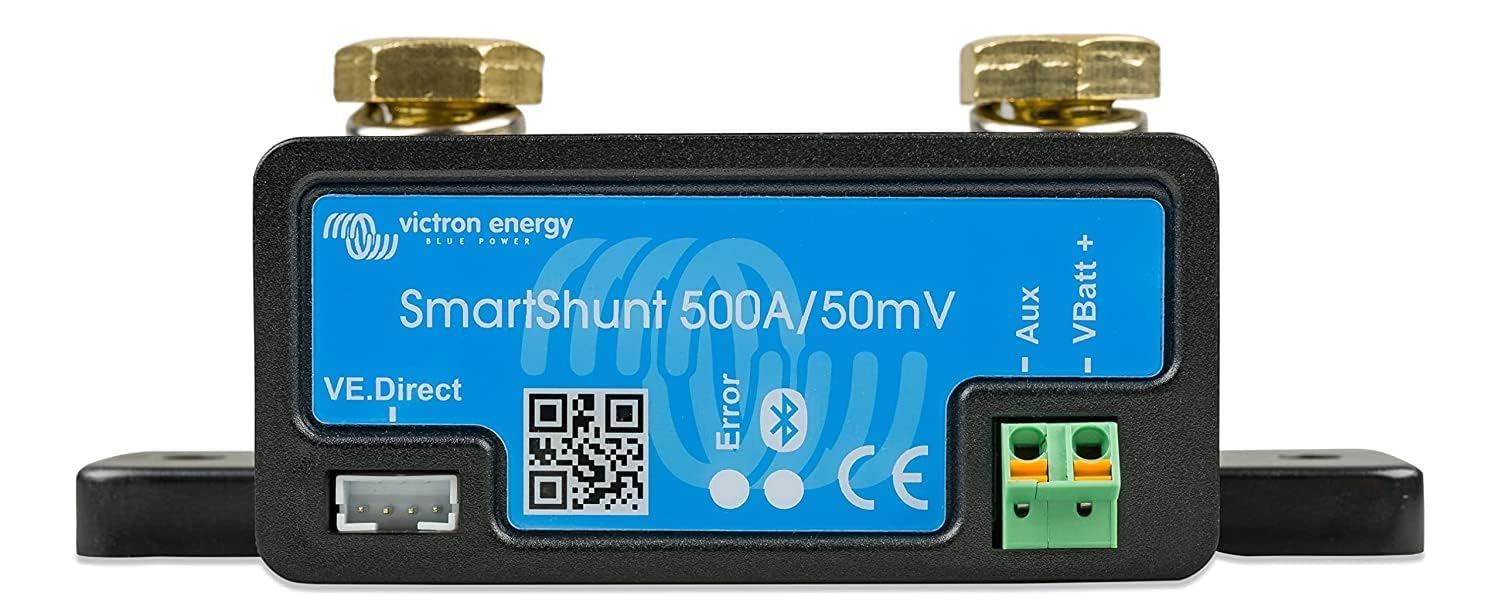
2. Victron Energy Smart Battery Shunt Monitor
intro text here (2-3 sentences only)
Key Features That Stand Out
- ✓ All-in-one monitoring with in-app insights
- ✓ Bluetooth connectivity for mobile monitoring
- ✓ Precise shunt technology for accurate data
Why We Recommend It
Victron’s SmartShunt makes battery monitoring seamless via the app, which is ideal if you want to track usage on the go from your phone.
Best For
Best for RV owners who want a compact, wireless monitor that pairs with a phone.
Pros and Cons
Pros:
- In-app data and Bluetooth streaming
- Low-profile equipment that fits in tight spaces
- Accurate current and voltage reporting
Cons:
- Requires a smartphone for full experience
- Higher upfront cost than basic meters
Customer Reviews
Customer Review: “The Bluetooth app is convenient, and readings have been consistently reliable.”
Customer Review: “Great for keeping an eye on SOC while off-grid.”
3. Victron Energy BMV-712 Smart Battery Monitor
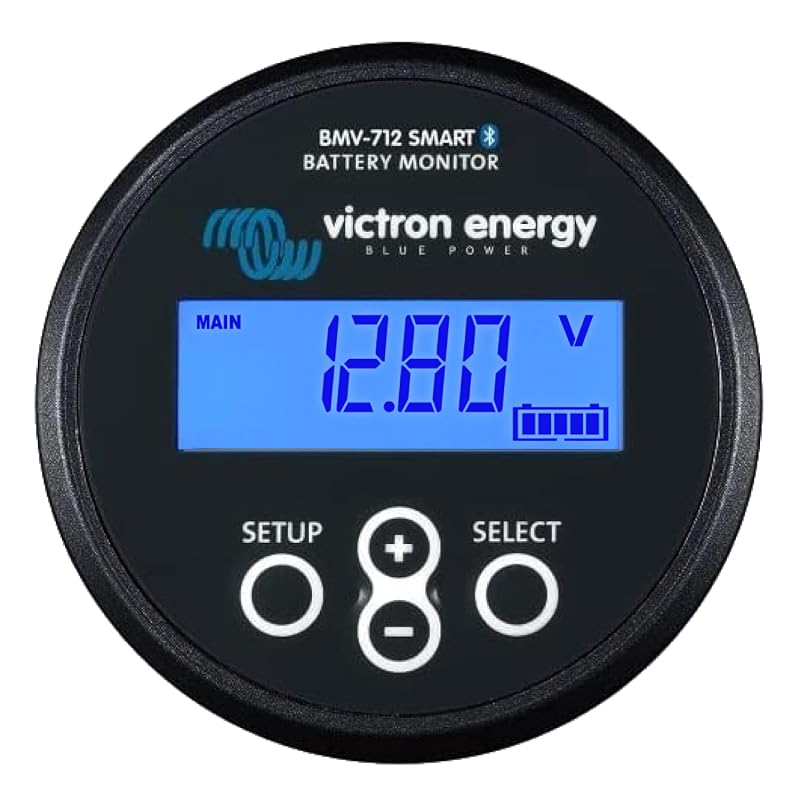
intro text here (2-3 sentences only)
Key Features That Stand Out
- ✓ Bluetooth + memory of multiple parameters
- ✓ Optional temperature input for better battery protection
- ✓ Programmable alarms for high/low voltage
Why We Recommend It
With strong customization and Bluetooth data access, the BMV-712 is a versatile pick for RVs needing in-depth battery stats.
Best For
Best for tech-minded RV owners who want deep data and app integration.
Pros and Cons
Pros:
- Comprehensive monitoring data
- Bluetooth connectivity for remote viewing
- Flexible configuration options
Cons:
- Setup can be intricate for beginners
- More expensive than basic display units
Customer Reviews
Customer Review: “Bluetooth app is excellent for keeping an eye on SOC while on the road.”
Customer Review: “Very accurate measurements, but wiring takes patience.”
4. AILI TR16 Shunt Battery Monitor SOC Display

intro text here (2-3 sentences only)
Key Features That Stand Out
- ✓ SOC display with real-time status
- ✓ 8V–120V range supports common RV systems
- ✓ Clear backlit LCD for easy viewing in any light
Why We Recommend It
Great for users who want SOC data and a robust range in a single unit, with straightforward DIY installation.
Best For
Best for LiFePO4 and mixed battery chemistries needing SOC readouts.
Pros and Cons
Pros:
- Clear SOC readouts
- Wide voltage support
- Backlit display for night use
Cons:
- Some users report steep learning curve
- Display sizing can vary by model choice
Customer Reviews
Customer Review: “Solid SOC data with decent battery compatibility.”
Customer Review: “Installation is doable, app isn’t required but helpful.”
5. LiTime 500A M8 Battery Monitor
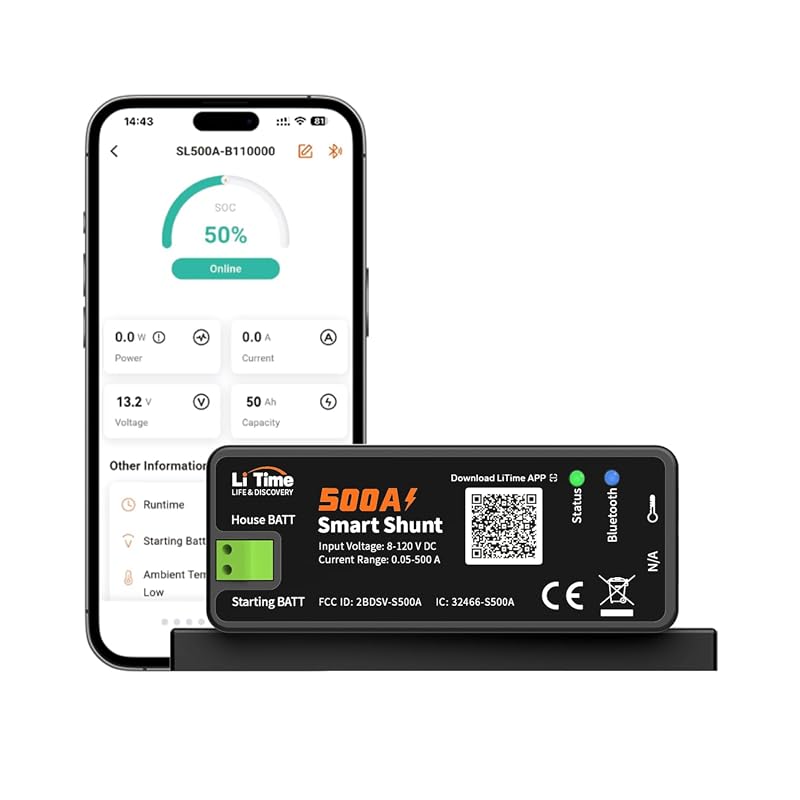
intro text here (2-3 sentences only)
Key Features That Stand Out
- ✓ Bluetooth app monitoring
- ✓ Alerts for abnormal battery conditions
- ✓ Historical data tracking
Why We Recommend It
Excellent value with strong app-based insights and a solid shunt design.
Best For
Best for RVers who want wireless monitoring and alerting on the go.
Pros and Cons
Pros:
- Wireless monitoring
- Clear data visualization
- Reasonable price point
Cons:
- App requires setup
- Bluetooth range may vary
Customer Reviews
Customer Review: “Works well with my LiFePO4 setup and the app is handy.”
Customer Review: “Simple to wire, but the screen could be larger.”
3. Victron Energy BMV-712 Smart Battery Monitor
intro text here (2-3 sentences only)
Key Features That Stand Out
- ✓ Comprehensive monitoring with multiple inputs
- ✓ Built-in Bluetooth for easy data access
- ✓ Optional programmable alarms
Why We Recommend It
The BMV-712 is a versatile, well-supported choice with strong app integration for keep tracking your battery health on the go.
Best For
Best for RVs needing in-depth battery stats and flexible configuration.
Pros and Cons
Pros:
- Robust monitoring features
- Bluetooth connectivity
- Programmable alarms
Cons:
- More complex setup for new users
- Relatively higher price
Customer Reviews
Customer Review: “Excellent tool for nerds like me who want every metric.”
Customer Review: “Very accurate readings, app is decent.”
4. AILI TR16 Shunt Battery Monitor SOC Display

intro text here (2-3 sentences only)
Key Features That Stand Out
- ✓ SoC readout and real-time status
- ✓ 8–120V operation range
- ✓ Low standby draw for energy efficiency
Why We Recommend It
Strong value with an SOC focus and broad voltage support for varied RV systems.
Best For
Best for RV owners who want SOC data without extra bells and whistles.
Pros and Cons
Pros:
- Good SOC monitoring
- Wide voltage range
- Readable display
Cons:
- Basic feature set compared to premium models
- Wiring can be fiddly
Customer Reviews
Customer Review: “SOC data helps me plan moves during camping trips.”
Customer Review: “Installation was straightforward enough for a DIYer.”
5. BINTA 500A Battery Monitor with Shunt
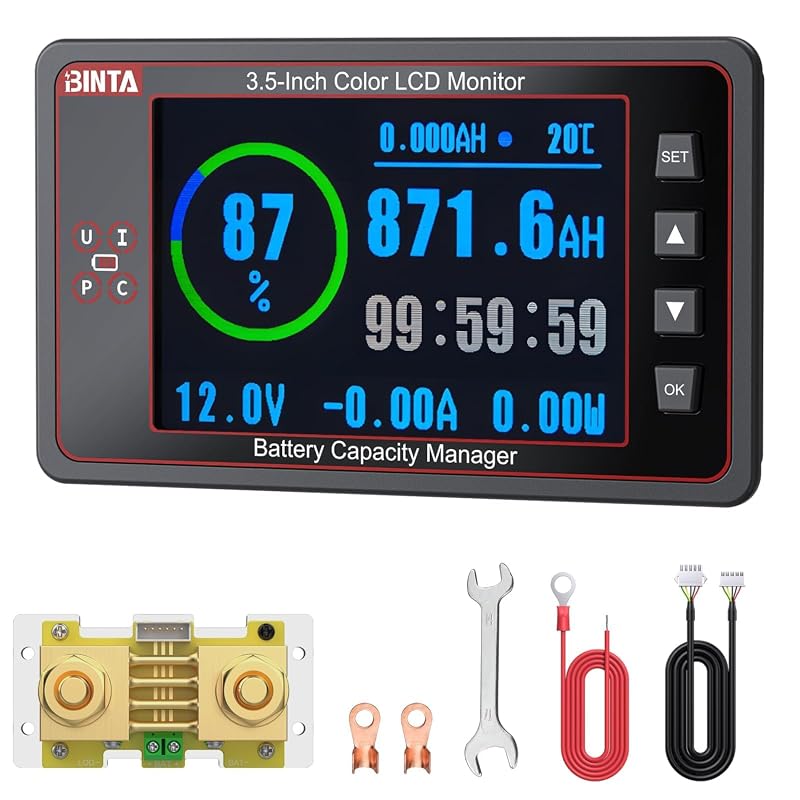
intro text here (2-3 sentences only)
Key Features That Stand Out
- ✓ Real-time data display
- ✓ 3.5-inch color LCD
- ✓ Backlit display for easy reading
Why We Recommend It
Excellent balance of display quality and data depth for RV dashboards.
Best For
Best for RVers who want a clear, bright display and robust data metrics.
Pros and Cons
Pros:
- Vivid backlit LCD
- Strong data capabilities
- Wide voltage coverage
Cons:
- Display size may be large for compact dashboards
- Higher price than basic displays
Customer Reviews
Customer Review: “Bright screen and accurate readings; highly recommended.”
Customer Review: “Took a bit to learn all features, but now it’s essential.”
6. Generic 300A Battery Monitor TFT

intro text here (2-3 sentences only)
Key Features That Stand Out
- ✓ 2.4-inch TFT LCD display
- ✓ 0-300A current range
- ✓ High-precision coulomb counting
Why We Recommend It
Ideal as a budget-friendly TFT monitor with decent accuracy for RV basics.
Best For
Best for simple setups or as a starter monitor.
Pros and Cons
Pros:
- Compact display
- Affordable
- Easy to install
Cons:
- Limited advanced features
- Lower resolution compared to premium models
Customer Reviews
Customer Review: “Cheap and cheerful; works for basic monitoring.”
Customer Review: “Good for DIY projects with RV batteries.”
7. BINTA 500A Battery Monitor with Shunt
intro text here (2-3 sentences only)
Key Features That Stand Out
- ✓ Real-time data
- ✓ Crisp 3.5-inch color display
- ✓ Current, voltage, power, and temperature readouts
Why We Recommend It
Great for RVs needing a larger screen and easy readability in daylight or night driving.
Best For
Best for RVers who want clear battery data at a glance.
Pros and Cons
Pros:
- Bright display
- Accurate, real-time data
- Solid build
Cons:
- Screen size may be large for tiny cockpits
- Moderate learning curve
Customer Reviews
Customer Review: “The display is fantastic in daylight and at night.”
Customer Review: “Solid performance; wiring was a tad tricky.”
6. Generic 300A Battery Monitor TFT
intro text here (2-3 sentences only)
Key Features That Stand Out
- ✓ High-precision counting
- ✓ Real-time SOC and voltage
- ✓ 0-300V monitoring range
Why We Recommend It
Solid budget option with good core functionality for RV setups on a tight budget.
Best For
Best for budget-conscious RVers who still want reliable monitoring.
Pros and Cons
Pros:
- Affordable
- Reasonable accuracy
- Compact footprint
Cons:
- Basic features compared to premium models
- Display quality varies by model
Customer Reviews
Customer Review: “Great value for the features you get.”
Customer Review: “Installation was straightforward; results are reliable.”
7. ANCEL BM300 12V Battery Monitor
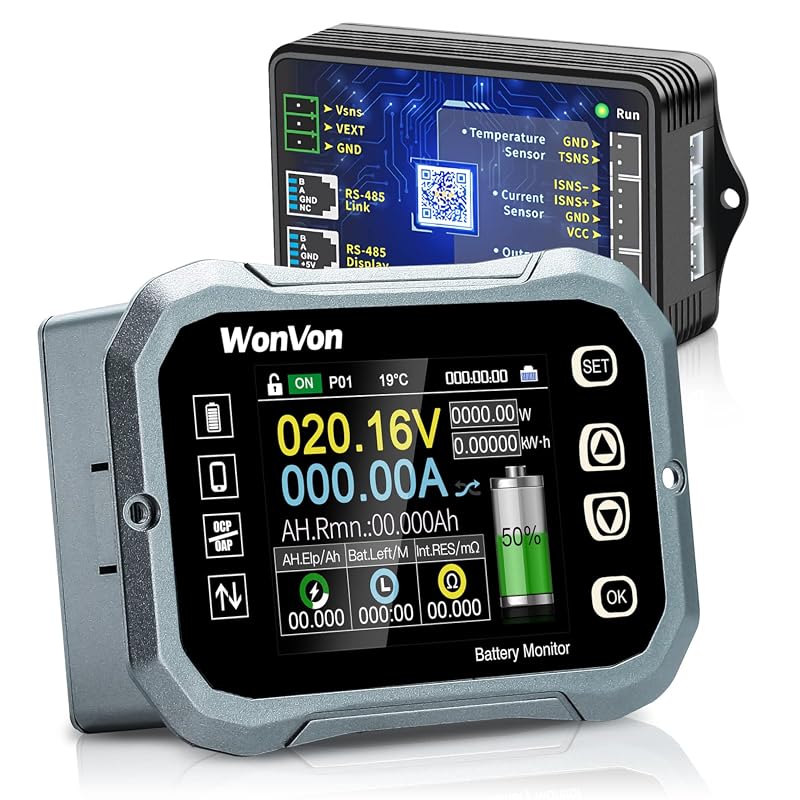
intro text here (2-3 sentences only)
Key Features That Stand Out
- ✓ Bluetooth connectivity
- ✓ Alarm tests for charging and cranking
- ✓ Compact, portable design
Why We Recommend It
Compact and feature-rich, great for smaller RV setups or second battery banks.
Best For
Best for compact rigs where space is a premium.
Pros and Cons
Pros:
- Portable
- Easy to install
- Bluetooth access
Cons:
- Limited display size
- Fewer advanced alerts
Customer Reviews
Customer Review: “Tiny but powerful for the price.”
Customer Review: “App is usable and battery stats are solid.”
9. ANCEL BM300 12V Battery Monitor
intro text here (2-3 sentences only)
Key Features That Stand Out
- ✓ Bluetooth remote monitoring
- ✓ Alarm for cranking and charging health
- ✓ Compact, portable design
Why We Recommend It
Solid option for keeping an eye on crucial battery health metrics on the road.
Best For
Best for RVers who want a small, capable monitor with Bluetooth access.
Pros and Cons
Pros:
- Bluetooth connectivity
- Compact footprint
- Reasonable feature set
Cons:
- Not the most feature-dense model
- Display could be brighter
Customer Reviews
Customer Review: “Reliable data; easy to use once you get the hang of it.”
Customer Review: “Perfect for my small dual-battery setup.”
10. DC Multifunction Battery Monitor with Shunt
intro text here (2-3 sentences only)
Key Features That Stand Out
- ✓ 9 measurement functions
- ✓ 0-200V range with high/low thresholds
- ✓ 360° viewing LCD with backlight
Why We Recommend It
Excellent option for those who want a feature-rich, all-in-one monitor with large display and wide voltage support.
Best For
Best for RVs with high monitoring needs and DIY installation comfort.
Pros and Cons
Pros:
- Broad measurement capabilities
- Clear LCD with backlight
- Good for large battery banks
Cons:
- Higher complexity to install
- May require more wiring work
Customer Reviews
Customer Review: “All-in-one display with lots of data; a bit tricky to wire.”
Customer Review: “Works as advertised; nice for a big battery bank.”
Complete buying guide and how to pick the right monitor for your RV setup. If you’re balancing solar, inverters, and a multi-bank system, you may also want to explore our guides on Best Solar Panel For RV Battery Charging and Top 7 Best Battery For RV Solar. For a focus on AGM options, see our Top 7 Best AGM Battery For RV guide.
Complete Buying Guide for Best Battery Monitor For Rv
Essential Factors We Consider
We look at accuracy, ease of installation, and how well a monitor fits RV electrical setups. A good monitor should handle your battery type, display SOC clearly, and provide alerts to prevent deep discharge. Consider whether you need Bluetooth/app access or a standalone display, and check compatibility with your battery bank.
Budget Planning
Prices vary from simple displays to feature-rich shunts. Plan for the number of batteries, the voltage range, and any future expansion (like adding solar or more banks). It’s often worth investing a bit more for better reliability and longer-term support.
Final Thoughts
Choosing the right battery monitor for your RV means balancing budget with the features you actually need. A model with accurate SOC, clear readings, and reliable alarms will save you time, extend battery life, and keep your road trips worry-free.
Frequently Asked Questions
Q: What is a battery monitor and why do I need one for my RV?
A: A battery monitor tracks voltage, current, and state of charge to help you manage power in an RV. It prevents deep discharge, helps you optimize charging, and can warn you about battery health issues before they cause problems.
Q: Do I need a shunt-based monitor or is a simple meter enough?
A: Shunt-based monitors are more accurate for real-time current measurement and SOC. Simple meters may read voltage only and miss charging/discharging nuances in multi-battery RV systems.
Q: Can I install these monitors myself?
A: Many monitors are DIY-friendly, especially the display-only units. Shunt-based systems require careful wiring and following the manufacturer’s instructions; if in doubt, consult a professional.
Q: Will a battery monitor help with solar charging?
A: Yes. A monitor can show how much solar is charging your bank, track state of charge, and help you optimize solar panel performance.
If you’re ready to upgrade, explore the options above and pick a monitor that matches your RV’s battery setup. For more hands-on RV electrical content, check out our guides on the best AGM deep cycle battery options and top RV solar batteries to keep your rig powered on all your adventures.
Similar Posts
Top 2 2-Stroke Oils for Jet Ski 2: Expert Picks
Best 2 Stroke Oil For Jet Ski 2 delivers the power, protection, and reliability you need for day-to-day riding and long sessions on the water. In this roundup, we compare two top options that are commonly recommended for jet skis and 2-stroke outboard engines, helping you pick a trusted lubricant that keeps your engine running…
Top 10 Best Remote Starters For Cars: Expert Picks And Reviews
When it comes to convenience and cold-weather mornings, a reliable remote starter is a game changer. This Best Remote Starters For Cars roundup brings you ten top picks tested for reliability, range, and ease of use. Whether you want all-in-one security with remote start or a budget-friendly upgrade, there’s a model here that can fit…
Top 8 Best Spray Detailers for Cars: Expert Picks
Looking for the best spray detailer for cars to keep your ride looking freshly washed between full washes? This roundup blends performance, ease of use, and value to help you pick a spray detailer that delivers a quick, glossy boost without fuss. Whether you want a daily driver miracle or a budget-friendly option, you’ll find…
Top 10 Best Spark Plugs For Lexus Is250: Expert Quality Picks
If you own a Lexus IS250, you know how important it is to keep your engine running smoothly. One of the easiest ways to maintain performance is by choosing the best spark plugs for Lexus Is250. Over time, worn spark plugs can cause misfires, poor fuel economy, and rough idling. That is why finding the…
Top 10 Best Anti-Theft GPS Trackers for Cars – Expert Picks
Finding the best anti theft GPS tracker for car can feel overwhelming, but the right device can give you real-time location, peace of mind, and simple installation. In this roundup we analyze 10 top options, from Apple Find My-enabled trackers to magnetic so-called no-subscription models, highlighting what stands out and where they fit best. If…
10 Best Roof Bars For My Car: Top Picks for Quality & Performance
Finding the best roof bars for my car can feel overwhelming with so many options on the market. Whether you need to haul bikes, kayaks, cargo boxes, or just extra luggage for a road trip, the right roof rack makes all the difference. I’ve spent time testing and comparing top-rated roof cross bars to help…