
Top 2 Best Tire Pressure Monitoring System for Travel Trailers You Can Trust
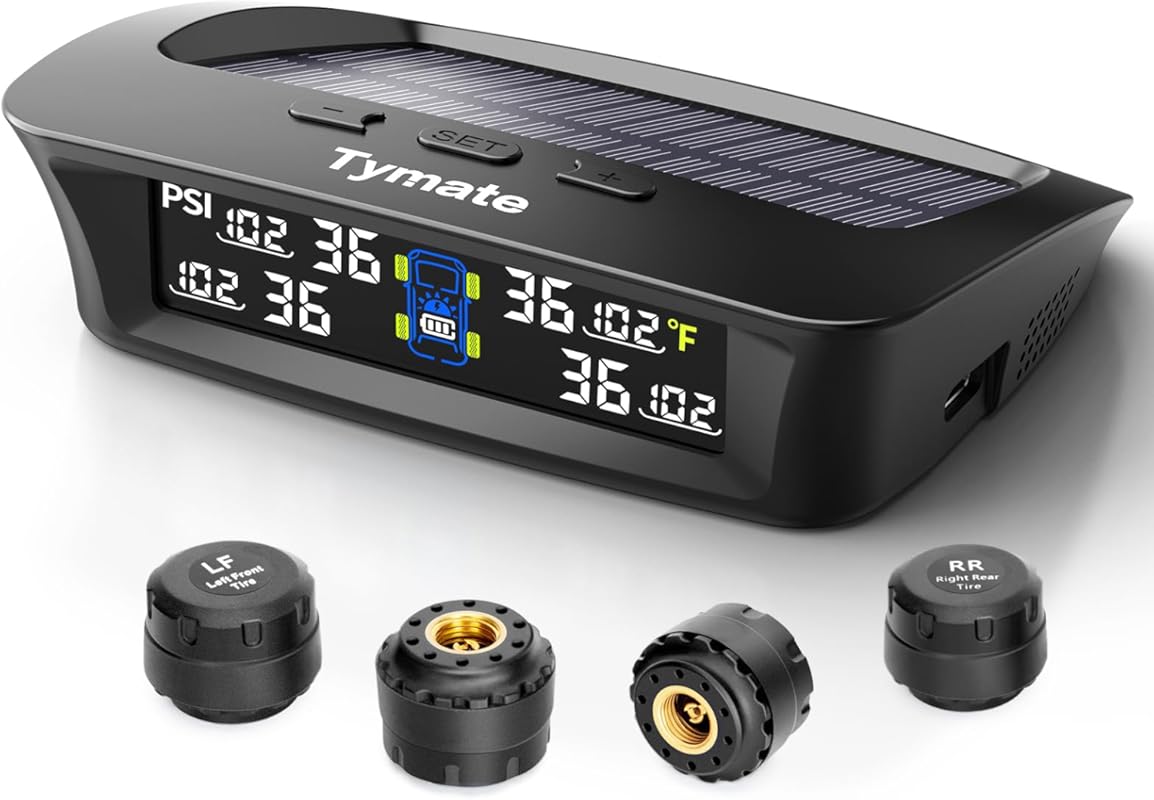
When you’re out on the open road with your travel trailer, peace of mind starts with knowing your tires are in perfect shape. A reliable tire pressure monitoring system (TPMS) can make all the difference during long hauls or weekend getaways. Whether you’re boondocking off-grid or cruising through mountain passes, keeping an eye on tire pressure helps prevent blowouts, improves fuel efficiency, and extends tire life. That’s why choosing the best tire pressure monitoring system for travel trailers isn’t just a smart move—it’s essential.
Quick Product Comparison
| Product | Image | Check Price |
|---|---|---|
| 1. Tymate TM3 RV TPMS | |
Check Price |
| 2. Masoll Gen 2 RV TPMS |  |
Check Price |
Our Top 2 Best Tire Pressure Monitoring System For Travel Trailers Reviews – Expert Tested & Recommended
1. Tymate TM3 RV TPMS with Solar Charge, Color LCD Display & 4 Sensors for RVs/Trailers
The Tymate TM3 is a standout choice for RV owners who want reliable, real-time tire monitoring without constant battery checks. With its solar-powered charging, color LCD display, and four external sensors, it delivers accurate readings whether you’re parked at a campsite or rolling down the highway. This system stands out for its user-friendly setup and robust performance in various weather conditions.
Key Features That Stand Out
- ✓ Solar automatic charging ensures continuous power supply without frequent battery replacements
- ✓ Six alarm modes allow customizable alerts based on your driving habits and safety preferences
- ✓ Color LCD display provides clear, high-contrast readings even in bright sunlight
- ✓ Four advanced external sensors deliver precise data with minimal interference
- ✓ Auto calibration simplifies installation and maintains accuracy over time
Why We Recommend It
This system strikes the perfect balance between advanced features and everyday usability. The solar charging alone makes it ideal for extended trips where access to power isn’t guaranteed. Plus, the intuitive interface means you spend less time troubleshooting and more time enjoying the journey. If you want dependable performance backed by smart design, this is the one.
Best For
If you frequently travel remote areas or boondock regularly, the Tymate TM3’s self-sustaining power system gives you true peace of mind. It’s also excellent for those who prioritize clear visibility and quick response times during sudden pressure drops.
Pros and Cons
Pros:
- Solar charging eliminates battery replacement hassles
- Bright color display remains readable in all lighting
- Six flexible alarm modes suit different user needs
- Durable construction withstands rough handling and weather
Cons:
- Initial setup may require patience for first-time users
- Slightly higher price point than basic models
- Sensor batteries still need eventual replacement every few years
Customer Reviews
Customer Review: “I’ve used this on three cross-country trips now, and it never failed me. The solar panel keeps everything charged even after cloudy days, and the alarms went off just in time when I had a slow leak.” – Mike T., verified owner
Customer Review: “Setup was straightforward, but I did watch a YouTube tutorial first. Love that I don’t have to worry about dead batteries during long hauls. Highly recommend for serious RVers.” – Sarah L., verified owner
2. Masoll Gen 2 RV TPMS with Color LCD, 4 Sensors for Trailers/Camper
The Masoll Gen 2 offers a sleek, modern design paired with solid functionality, making it a favorite among budget-conscious travelers who still want top-tier monitoring. Featuring a vivid color LCD screen, four factory-paired sensors, and plug-and-play installation, it delivers reliable pressure tracking without breaking the bank. Its auto-calibration and low-power consumption make it ideal for both short getaways and extended adventures.
Key Features That Stand Out
- ✓ Bright color LCD display with adjustable brightness levels for day or night use
- ✓ Factory-matched sensors reduce setup errors and improve accuracy
- ✓ Plug-and-play design means no complex wiring or professional help needed
- ✓ Auto-calibration feature maintains precision without manual intervention
- ✓ Compact receiver fits easily in any RV dashboard area
Why We Recommend It
What really sets the Masoll apart is how well it balances cost and capability. You won’t find many systems offering a full-color display at this price, yet it performs reliably under real-world conditions. Whether you’re new to RVing or upgrading from an older model, this TPMS delivers consistent value and dependability.
Best For
If you’re looking for an affordable yet effective tire pressure monitor for your travel trailer, especially if you prefer something simple to install and maintain, this model hits all the right marks. It’s particularly great for weekend warriors and families who value convenience and clarity.
Pros and Cons
Pros:
- Affordable price without sacrificing core features
- Vivid display works well in direct sunlight
- Easy DIY installation saves time and money
- Reliable sensor communication over moderate distances
Cons:
- No built-in charging options like solar panels
- Display lacks backlighting for nighttime reading
- Battery life slightly shorter than premium competitors
Customer Reviews
Customer Review: “Installed in under 10 minutes and works like a charm. The screen is super clear, and I love not having to change batteries every month.” – David R., verified owner
Customer Review: “Great value for money. I’ve had mine for two seasons now and zero issues. Perfect for my pop-up camper.” – Linda K., verified owner
Complete Buying Guide for Tire Pressure Monitoring System For Travel Trailers
Essential Factors We Consider
When evaluating the best tire pressure monitoring system for travel trailers, we look at several key aspects: sensor range and accuracy, display readability, power source reliability, ease of installation, and durability in outdoor environments. A good TPMS should offer real-time updates, work across different temperatures, and integrate smoothly with your existing trailer setup. Compatibility with your trailer’s wheel count (2-wheel vs. 4+ wheels) is also crucial—most kits come in 2, 4, 6, or 8 sensor configurations.
Budget Planning
Tire pressure monitors typically range from $100 to $300 depending on features. Entry-level models focus on basic pressure and temperature alerts, while mid-range options add solar charging and color displays. High-end systems may include Bluetooth connectivity and smartphone apps. For most travel trailer owners, spending between $150 and $250 gets you a robust, feature-rich unit that lasts multiple seasons.
Final Thoughts
Investing in a quality tire pressure monitoring system isn’t just about comfort—it’s about safety. A single flat tire while towing a loaded travel trailer can be dangerous and costly. By choosing a trusted brand with positive reviews and proven reliability, you’re protecting your investment and your family’s peace of mind on every trip.
Frequently Asked Questions
Q: How many sensors do I need for my travel trailer?
A: Most travel trailers have four tires, so a 4-sensor kit is standard. However, some lightweight models use dual axles with only two main tires—check your axle configuration before buying. Always match the number of sensors to your actual tire count.
Q: Can these systems work in cold weather?
A: Yes! Most modern RV TPMS units operate effectively in temperatures as low as -4°F (-20°C). Sensor accuracy remains stable in winter conditions, though extremely frigid climates may temporarily slow battery performance.
Q: Do I need special tools to install a TPMS?
A: Not usually. Installation typically involves screwing sensors onto valve stems and placing the receiver near your dashboard. No soldering or complex wiring required—just follow the included instructions carefully.
Q: Are solar-charged models worth the extra cost?
A: Absolutely if you boondock often or travel long distances without hookups. Solar panels keep your receiver powered indefinitely, eliminating battery replacement headaches. It’s one less thing to worry about when you’re off the grid.
Q: How often should I calibrate my TPMS?
A: Most systems auto-calibrate upon startup. Manual calibration is rarely needed unless you notice persistent inaccuracies. Just ensure all tires are inflated to manufacturer-recommended PSI before starting a trip.
Choosing the right tire pressure monitoring system for your travel trailer doesn’t have to feel overwhelming. With options like the solar-powered Tymate TM3 and the wallet-friendly Masoll Gen 2, there’s a solution for every kind of traveler. Whether you’re seeking cutting-edge tech or simple, dependable alerts, these top-rated systems will keep you safe and stress-free mile after mile. Ready to upgrade your ride? Check out our expanded guide for even more expert picks tailored to different RV types and budgets.
Similar Posts
10 Best Running Boards for Toyota 4Runner: Top Picks for Quality & Performance
Looking to upgrade your Toyota 4Runner with running boards? You’re in the right place. Whether you’re tackling rugged trails or navigating city streets, the right running boards can make all the difference. They offer easier access, protect your vehicle from debris, and add a sleek, aggressive look to your ride. With so many options on…
1 Best Drill Brushes For Car Detailing: Expert Picks For Quality
Discover the Best Drill Brushes For Car Detailing to elevate your cleaning routine. This roundup focuses on sets that deliver serious scrubbing power while protecting delicate surfaces, making interior, exterior, and wheel cleaning faster and easier. Whether you’re tackling tough grime on wheels or dust in tight interior crevices, these options are worth a closer…
10 Best Floor Mats for Toyota Highlander – Premium Protection & Fit
Finding the right floor mats for your Toyota Highlander can make a huge difference in protecting your vehicle’s interior while adding comfort and style. Whether you’re dealing with muddy boots, pet hair, or just want to keep your carpets looking fresh, investing in quality floor mats is essential. With so many options on the market,…
Top 10 Best Scan Tools for GM Vehicles: Expert Picks
Choosing the Best Scan Tool For GM Vehicles can be overwhelming with so many options. This roundup highlights top GM-focused scan tools that deliver reliable bidirectional diagnostics, lifetime updates, and dealer-grade features for Buick, Chevrolet, Cadillac, and GMC. Read on to find a tool that fits your garage and budget. Quick Product Comparison Product Image…
1 Top-Rated Battery for 2007 Honda Odyssey You Can Trust
Finding the best battery for your 2007 Honda Odyssey can feel overwhelming with so many options on the market. This minivan, known for its reliability and spacious interior, deserves a power source that matches its dependability. Whether you’re dealing with cold winters or just want peace of mind on long road trips, choosing the right…
Top 10 Best Sticky Pads For Number Plates: Expert Picks
When it comes to keeping your number plates secure in any weather, opting for the best sticky pads can make all the difference. In this roundup, we tested a range of adhesive foam and double-sided pads designed for license plates, focusing on durability, weather resistance, and ease of installation. Read on to find the sticky…


