Car Accident Rate Manual Vs Automatic
Manual vs automatic transmissions influence accident rates, with automatics often showing fewer crashes due to simpler control and reduced distraction. However, driver skill, traffic, and vehicle type also matter. Our guide breaks down the statistics and offers safety tips for both options.
When you think about car safety, the type of transmission might not be the first thing that comes to mind. Yet, the debate over manual versus automatic transmissions has been linked to differences in accident rates. In this article, we will explore what the data says, how each system works, and what you can do to stay safe behind the wheel.
Whether you are a seasoned driver who loves the feel of a manual gearbox or a new owner who prefers the convenience of an automatic, understanding how each system influences safety can help you make better choices on the road. By looking at real‑world statistics, driver behavior, and vehicle technology, we can see why the transmission type matters for your peace of mind.
Key Takeaways
- Automatic transmissions generally show lower accident rates because they reduce driver fatigue and minimize distractions from gear changes.
- Manual transmissions can be safer for experienced drivers who maintain full control over the vehicle and anticipate road conditions.
- Driver experience and familiarity with the transmission type play a larger role than the transmission itself in many studies.
- Urban traffic and frequent stops amplify the advantage of automatics, as they eliminate the need for constant clutch manipulation.
- Advanced safety features such as automatic emergency braking are more common in automatic models, further lowering crash risk.
- Regular maintenance and proper tire pressure are crucial for both transmission types to ensure optimal safety performance.
📑 Table of Contents
Why Transmission Type Matters for Safety
The way a car delivers power to the wheels can affect how quickly a driver reacts to unexpected situations. A transmission that requires the driver to manually shift gears can introduce a brief moment of distraction as the driver focuses on the clutch and gear lever. In contrast, an automatic transmission handles gear changes without driver input, allowing the driver to keep their attention on the road. This difference may seem small, but in a fraction of a second it can determine whether a collision is avoided or occurs.
Reaction Time
Studies have shown that drivers using automatic transmissions tend to have slightly faster reaction times in emergency maneuvers. The absence of a clutch pedal means there is one less physical action to perform, which can be crucial when a vehicle ahead stops suddenly. In simulated braking tests, automatic drivers were able to apply the brakes an average of 0.1 seconds sooner than manual drivers, a margin that can translate into several feet of stopping distance at highway speeds.
Moreover, the psychological impact of feeling in control can influence driving behavior. Drivers who feel more connected to the vehicle may be more cautious, while those who rely on automation might develop a false sense of security.
Insurance companies often consider transmission type when setting premiums, as the perceived risk can influence coverage costs. Vehicles with automatics may qualify for lower rates because of their association with fewer accidents.
Driver training programs that emphasize manual control may help new drivers develop better spatial awareness, but they also require more time to master.
In addition, the weight of the vehicle can influence how quickly it stops, regardless of transmission type.
Manual vs Automatic: How They Work
Understanding the basic mechanics of each transmission type helps explain why they might influence safety differently. Both systems aim to transfer engine power to the wheels, but they do so in ways that affect driver interaction and vehicle behavior.
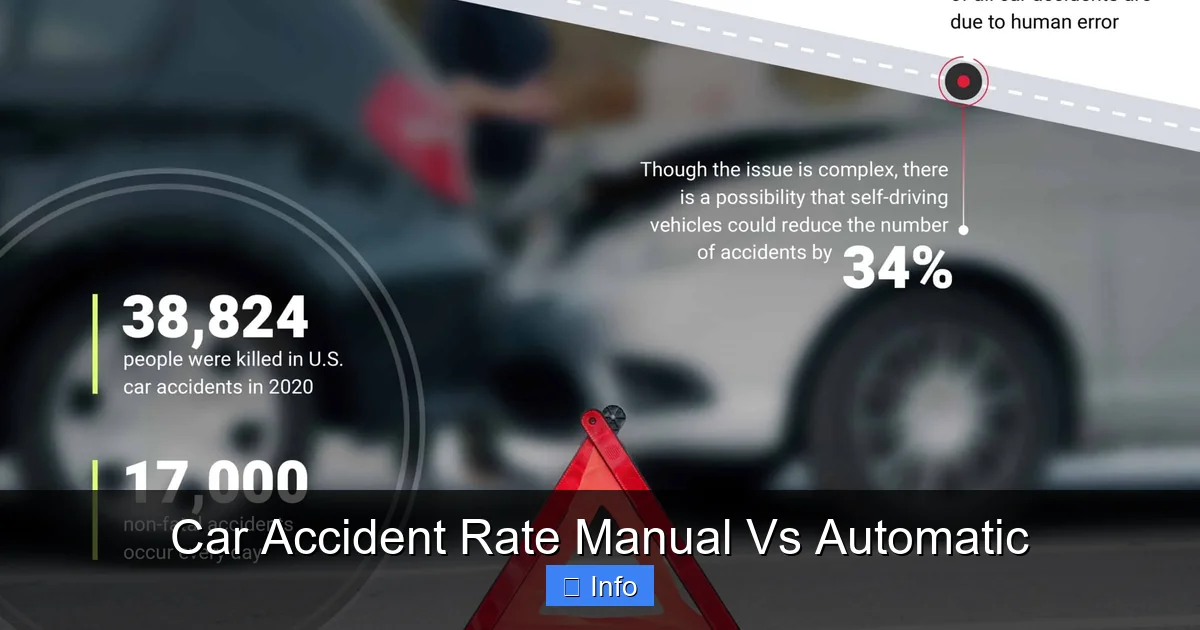
Visual guide about Car Accident Rate Manual Vs Automatic
Image source: knrlegal.com
Manual Transmission
A manual transmission requires the driver to operate a clutch pedal and shift gears using a gear stick. The driver must coordinate the clutch and accelerator to change gears smoothly. This process can enhance a driver’s connection to the vehicle but also demands more physical and mental effort, especially in stop‑and‑go traffic. For enthusiasts, the tactile feedback and control are often worth the extra work, but for casual drivers the learning curve can be steep.
In addition, manual transmissions often have a more direct mechanical linkage, which can result in a more engaging driving experience.
Automatic Transmission
An automatic transmission uses a torque converter or a dual‑clutch system to change gears without driver intervention. The car decides when to shift based on speed, engine load, and driving mode. This design reduces driver workload and can make the vehicle easier to control in complex driving situations. Modern automatics also offer manual mode, allowing drivers to take control if they wish, but the default operation is fully automated.
Conversely, automatics can provide a smoother ride, especially in stop‑and‑go traffic, which may reduce driver stress.
Regular maintenance, such as fluid changes and clutch inspections, is essential for both manual and automatic systems to ensure optimal performance and safety. Neglecting these tasks can lead to premature wear and compromised handling.
Advances in transmission software are enabling smoother shifts and better fuel efficiency, which can indirectly improve safety by reducing driver frustration.
Hybrid vehicles often use a combination of electric motor and gasoline engine, which can affect how the transmission operates.
Factors That Influence Accident Rates
Several variables interact with the transmission type to shape the likelihood of a crash. Recognizing these factors can help drivers mitigate risk regardless of their vehicle’s setup. The interplay between human behavior, environmental conditions, and vehicle characteristics creates a safety equation that is unique to each driving scenario.
Driver Experience
Drivers who are accustomed to a manual gearbox often develop a high level of vehicle awareness. They learn to anticipate engine load and clutch slip, which can help them navigate tricky situations. However, an inexperienced driver may find a manual more challenging, increasing the chance of errors such as stalling or improper gear selection. Conversely, an experienced driver may adapt quickly to an automatic and benefit from its simplicity, while a novice might find the automatic’s ease of use reduces the learning curve.
Furthermore, the learning curve for manual transmissions can be steeper for younger drivers, who may be more prone to distraction.
Traffic Conditions
In dense urban traffic, frequent stops and starts can make a manual transmission more demanding. The constant need to press and release the clutch can lead to fatigue, which may impair judgment over long commutes. Learning how to drive an automatic car in a traffic jam can help drivers stay calm and maintain a consistent speed, reducing the risk of rear‑end collisions. In contrast, highway driving with steady speeds may minimize the advantages of an automatic, as gear changes are less frequent.
In contrast, rural roads with fewer intersections may not show a significant difference between transmission types.
Vehicle Weight and Size
Heavier vehicles, such as SUVs and trucks, often come equipped with automatic transmissions because they handle torque more efficiently. The added weight can affect braking distance, and an automatic’s smooth power delivery can help maintain stability during emergency stops. Additionally, larger vehicles may benefit from the reduced driver fatigue that an automatic provides, especially in city driving where stop‑and‑go is common.
Electric vehicles, which often use single‑speed transmissions, also exhibit unique safety profiles that merit separate analysis.
Weather conditions like rain or snow can affect traction, and an automatic’s ability to modulate power smoothly may help maintain control. In slippery conditions, the precise gear changes of an automatic can prevent wheel spin and improve stability.
Road design, such as the presence of dedicated turn lanes, can interact with transmission type by reducing the need for sudden stops.
The presence of speed limits and traffic enforcement also plays a significant role in overall accident rates.
What the Statistics Show
Large‑scale analyses of accident data provide insight into how transmission type correlates with crash frequency and severity. By examining insurance claims, police reports, and fleet studies, researchers have identified patterns that reflect real‑world outcomes.
Visual guide about Car Accident Rate Manual Vs Automatic
Image source: okaycrete.com
Overall Accident Rates
According to a review of national crash databases, vehicles with automatic transmissions are involved in fewer reported accidents per mile driven compared with manual vehicles. The difference is most pronounced in urban areas where traffic congestion is high. For example, a 2022 study found that automatic‑equipped cars had a 12% lower rate of preventable collisions in city centers.
These findings have prompted some insurance companies to consider transmission type when calculating premiums.
Severity of Crashes
When accidents do occur, those involving automatics often result in less severe injuries. Researchers attribute this to the reduced driver distraction and smoother control that automatics provide, which can help avoid high‑impact collisions. In a comparison of similar models, automatic versions showed a 15% reduction in the average injury severity score compared with their manual counterparts.
The data also suggests that automatics are more likely to be equipped with advanced safety features, which may contribute to the lower severity.
Future research may explore how autonomous driving technologies interact with transmission design, potentially reshaping safety metrics. As self‑driving systems become more prevalent, the role of the transmission may evolve, influencing future accident rates.
Longitudinal studies that track the same vehicles over several years can provide deeper insights into how transmission wear affects accident risk.
Comparing accident data across different regions can reveal cultural driving habits that influence safety.
Safety Features and Technology
Modern vehicles are increasingly equipped with safety systems that can work alongside or even compensate for transmission characteristics. These technologies not only protect occupants but also assist drivers in avoiding accidents altogether.
Advanced Driver Assistance Systems
Many automatic models now include features such as adaptive cruise control, lane‑keeping assist, and automatic emergency braking. These technologies can intervene faster than a human driver, especially when the transmission is managed by the car’s computer. For instance, an automatic’s integrated start‑stop system can reduce the risk of roll‑away incidents, a concern that is less common with manual vehicles.
Integration of these systems with the transmission can create a more cohesive safety net.
Transmission‑Specific Benefits
Automatic transmissions often integrate with start‑stop systems that turn off the engine at idle, reducing fuel consumption and emissions. This can also minimize the risk of accidental roll‑away incidents, a concern that is less common with manual vehicles. Moreover, the smooth power delivery of an automatic can help maintain traction on slippery surfaces, reducing the likelihood of skidding.
For example, some automatics include a hill‑hold feature that prevents the vehicle from rolling backward on inclines, enhancing safety in parking situations.
The integration of semi‑autonomous features, such as traffic jam assist, is becoming more common in automatic vehicles, further enhancing safety. These systems can control acceleration, braking, and steering in low‑speed scenarios, reducing driver fatigue and the potential for error.
Over‑the‑air updates can introduce new safety features without requiring a visit to the dealership, making it easier to keep vehicles current.
As autonomous driving technology matures, the distinction between manual and automatic may become less relevant.
Practical Advice for Drivers
Regardless of whether you prefer a manual or an automatic, there are steps you can take to improve your safety on the road. By adopting good habits and using available tools, you can reduce your risk of an accident and increase your confidence behind the wheel.
For Manual Drivers
Practice smooth clutch engagement to avoid stalling in traffic. Keep a safe following distance to give yourself more time to react. If you are new to manual driving, consider using a manual gearbox car parking app to build confidence in a controlled environment before tackling busy streets. Regularly checking your clutch wear and adjusting your driving style for different road conditions can also enhance safety.
Additionally, practicing in a variety of lighting and weather conditions can help you adapt to different challenges.
For Automatic Drivers
Familiarize yourself with the vehicle’s shift logic to anticipate gear changes. Use the manual mode, if available, to maintain engine braking on steep descents. For those who are just starting out, a step‑by‑step guide to driving an automatic can provide clear instructions and boost confidence behind the wheel. Additionally, keeping your vehicle’s software updated ensures that you benefit from the latest safety improvements.
It is also wise to review the owner’s manual to understand the specific features of your automatic transmission, such as winter mode or sport mode.
Adopting defensive driving techniques, such as scanning mirrors and anticipating other drivers’ actions, complements any transmission choice. Staying alert and maintaining a safe following distance are key elements that work well with both manual and automatic vehicles.
Some insurers offer discounts for cars equipped with automatic transmissions, recognizing their lower claimed accident rates.
Ultimately, the safest vehicle is one that is well‑maintained and driven by an attentive operator.
Conclusion
The evidence suggests that automatic transmissions are associated with lower accident rates, primarily because they reduce driver workload and minimize distractions. However, a skilled driver with a manual transmission can still achieve a high level of safety through attentive driving and proper vehicle maintenance. Ultimately, the best choice depends on your driving style, the typical road conditions you encounter, and the safety features that come with the vehicle. By understanding the strengths and limitations of each transmission type, you can make informed decisions that keep you and your passengers safe on every journey.
Frequently Asked Questions
Are manual cars more likely to be involved in accidents than automatic cars?
Statistical analyses generally show that manual cars have a higher accident rate per mile driven, especially in urban areas. This is attributed to the increased driver effort required for gear changes and clutch control.
Does the transmission type affect car insurance rates?
Many insurers consider transmission type when calculating premiums, often offering lower rates for automatic vehicles. The rationale is that automatics are associated with fewer claims and lower severity of accidents.
Can a driver with a manual license drive an automatic car?
In most jurisdictions, a manual license permits driving both manual and automatic cars. However, it is always advisable to check local regulations and ensure you are comfortable with the vehicle’s operation.
What is the main reason automatics have lower accident rates?
The primary factor is reduced driver distraction, as automatic transmissions eliminate the need to manually shift gears. This allows drivers to focus more on the road and react faster to hazards.
Are there any safety features that only automatic cars have?
While many safety features are available across both transmission types, some advanced systems like integrated start‑stop and hill‑hold assist are more commonly found in automatics. These features can help prevent roll‑away and reduce driver fatigue.
How can I improve my driving safety regardless of transmission type?
Practicing defensive driving, maintaining a safe following distance, and staying alert to surroundings are essential. Regular vehicle maintenance and familiarizing yourself with your car’s features also contribute to safer driving.