Car Subwoofer with Built in Amplifier

A car subwoofer with built in amplifier gives you deep bass without needing a separate amp. It saves space, simplifies wiring, and delivers punchier low-end sound for any vehicle. This guide walks you through types, features, and installation so you can pick the perfect powered subwoofer.
Key Takeaways
- All-in-one convenience: A car subwoofer with built in amplifier combines the sub and amp in a single enclosure, saving space and reducing clutter.
- Easier installation: Because the amplifier is already matched to the subwoofer, you avoid guesswork and complex wiring.
- Multiple form factors: You can choose from enclosed boxes, bass tubes, under-seat models, and spare-tire subs based on your car’s layout.
- Check RMS power: Look at continuous RMS wattage rather than peak power to understand real-world bass performance.
- Proper tuning matters: Setting gain, crossover, and bass boost correctly prevents distortion and protects your equipment.
- Great for leased cars: Powered subs are often easier to remove, making them ideal if you do not want to modify your vehicle permanently.
📑 Table of Contents
- What Is a Car Subwoofer with Built in Amplifier?
- Why Choose a Car Subwoofer with Built in Amplifier?
- Types of Car Subwoofer with Built in Amplifier Options
- Key Features to Check Before Buying
- How to Install a Car Subwoofer with Built in Amplifier
- Top Brands and What to Expect by Budget
- Maintenance and Common Troubleshooting
- Conclusion
What Is a Car Subwoofer with Built in Amplifier?
If you love music while driving, you know that factory speakers often fall short in the bass department. A regular car speaker can handle vocals and guitars, but it struggles to reproduce the deep thump of a kick drum or the rumble of a bass guitar. That is where a subwoofer comes in.
A car subwoofer with built in amplifier is essentially a powered subwoofer. It places the speaker and the amplifier inside one enclosure. Unlike a passive subwoofer, which needs a separate amplifier to move the cone, this all-in-one unit has its own power source onboard. You connect it to your head unit, run power from your battery, and you are ready to feel the low end.
This design makes life easier for anyone who wants better bass without turning their trunk into a rack of electronic gear. Whether you drive a compact sedan, an SUV, or a leased vehicle you cannot modify heavily, a powered subwoofer offers a straightforward path to richer sound.
Why Choose a Car Subwoofer with Built in Amplifier?
You might wonder why you should pick a powered model instead of piecing together a separate sub and amp. There are several practical reasons that make this option appealing for everyday drivers.
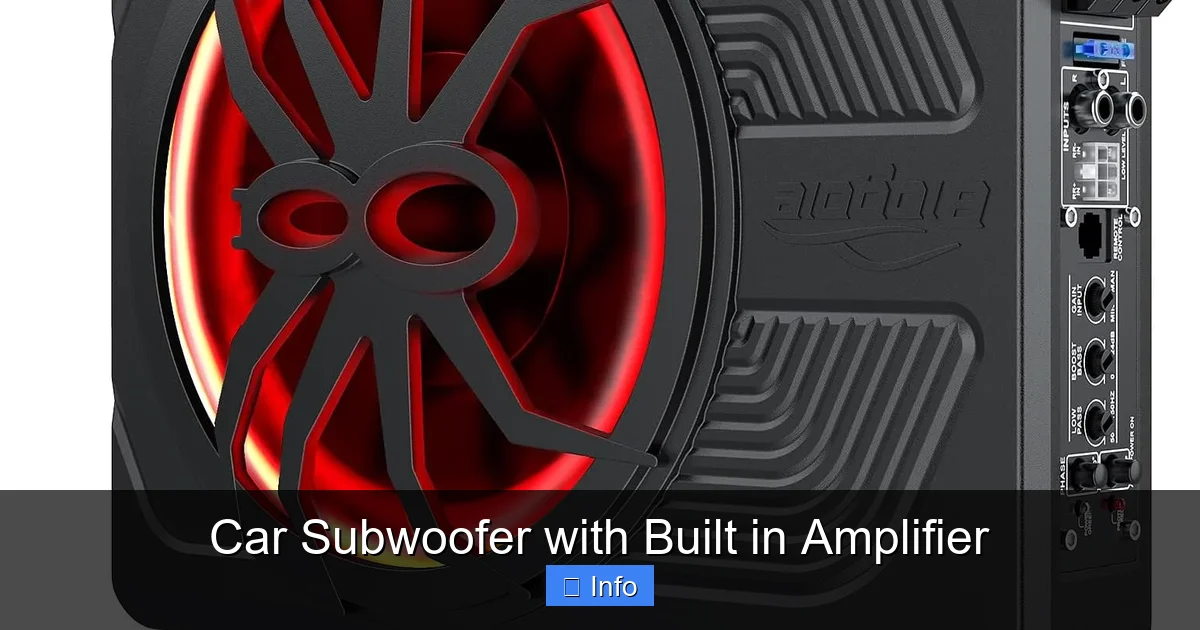
Visual guide about Car Subwoofer with Built in Amplifier
Image source: m.media-amazon.com
Space-Saving Design
Space inside a car is always at a premium. A traditional setup requires a subwoofer box, a separate amplifier, wiring kits, and plenty of room to mount everything securely. A car subwoofer with built in amplifier consolidates two major components into one box. That means less hardware under your seats or in your cargo area, leaving more room for groceries, luggage, or golf clubs.
Simplified Wiring and Installation
Matching an amplifier to a subwoofer can be tricky if you are new to car audio. You have to worry about impedance, power ratings, and wiring gauges. With a powered subwoofer, the manufacturer has already matched the amp to the speaker. You generally only need to handle power, ground, remote turn-on, and signal input. This streamlined process saves time and reduces the chance of costly mistakes.
Matched Components for Better Sound
When a company designs a car subwoofer with built in amplifier, they tune the amplifier to work specifically with that driver. The result is tighter, more controlled bass. You are less likely to experience the boomy, muddy sound that can happen when an underpowered or overpowered amp drives the wrong subwoofer.
Great for Small Cars and Leased Vehicles
If you drive a hatchback or a small sedan, a massive sealed box might not fit. Many powered subs come in slim enclosures that tuck under a seat or behind the rear bench. They are also easier to remove, which is a big plus if you lease your car and want to return it to stock condition later.
If you want specific product recommendations, check out our guide on the best sub with built in amp for car to see top-rated models on the market today.
Types of Car Subwoofer with Built in Amplifier Options
Not all powered subs look the same. Depending on your vehicle and your listening preferences, one style may fit better than another.
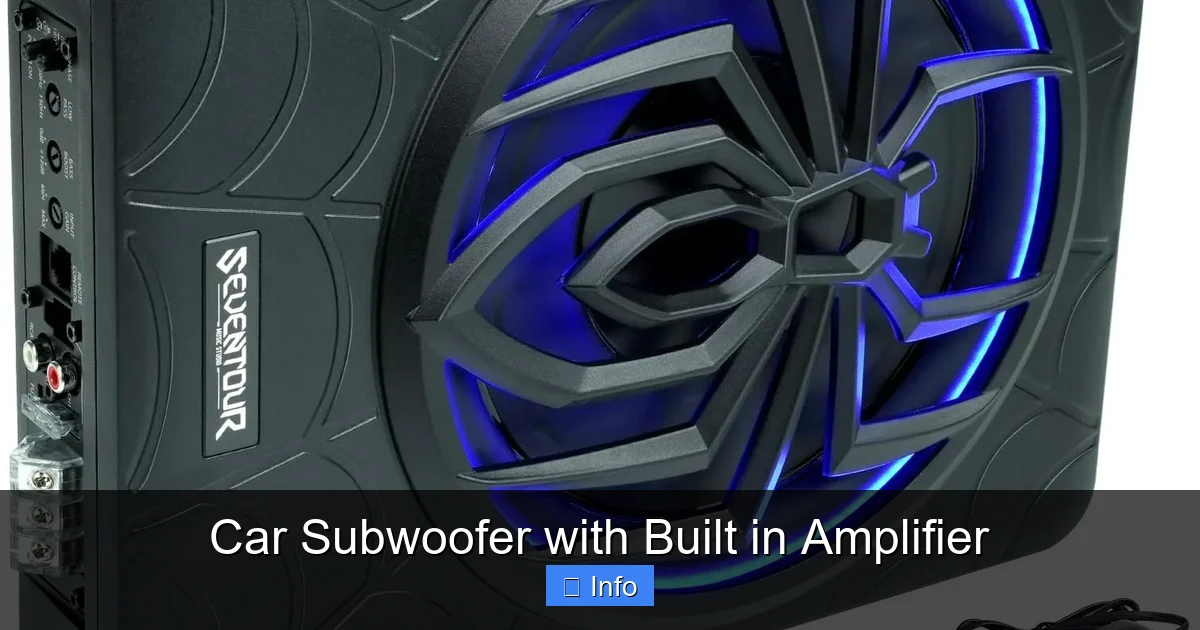
Visual guide about Car Subwoofer with Built in Amplifier
Image source: m.media-amazon.com
Enclosed Powered Subwoofers
This is the most common type. It features a subwoofer mounted in a sealed or ported box with the amplifier installed on the side or back of the enclosure. These units usually deliver the deepest and most powerful bass because the box is designed specifically for the driver. They work well in trunks or cargo areas where space is less of a concern.
Bass Tubes with Built In Amplifiers
A bass tube is a cylindrical enclosure that houses the subwoofer and amp. These are popular because they can be mounted in tight spaces, such as behind a seat or in a corner of the trunk. They often produce punchy bass and are easier to install than large boxes. If you are interested in this style, take a look at our roundup of the best bass tube with inbuilt amplifier for car.
Under-Seat and Compact Powered Subs
Some powered subs are slim enough to slide under a front seat. These are ideal if you do not want to sacrifice trunk space. While they may not rattle your rearview mirror like a 12-inch sealed box, they can still add noticeable depth and warmth to your music.
Spare Tire Subwoofers
If your car has a spare tire well in the trunk, you can replace the spare with a shallow powered subwoofer that fits inside the well. This keeps the sub completely hidden and preserves cargo room. It is a clever solution for drivers who want bass without giving up practicality.
Key Features to Check Before Buying
Shopping for a car subwoofer with built in amplifier can feel overwhelming if you do not know what specs matter. Here are the features worth your attention.

Visual guide about Car Subwoofer with Built in Amplifier
Image source: m.media-amazon.com
RMS Power vs Peak Power
You will see two power ratings on most boxes: RMS and peak. RMS is the continuous power the amplifier can deliver, and it is the number that matters most for real-world performance. Peak power is a short-term burst and looks impressive on paper, but it does not tell you how the sub will sound during an entire song. Focus on RMS wattage to gauge true output.
Frequency Range and Bass Response
Look at the frequency response to see how low the subwoofer can play. A range that extends down to 30 Hz or lower will give you those chest-thumping low notes. Keep in mind that enclosure type and car acoustics also affect what you actually hear.
Inputs: Speaker Level vs RCA
If you are keeping your factory stereo, you will likely need speaker-level inputs. These let you tap into your existing speaker wires. If you have an aftermarket head unit with preamp outputs, RCA inputs provide a cleaner signal. Many powered subs offer both, giving you flexibility.
Crossover and Bass Boost Controls
A built-in low-pass crossover lets you set the highest frequency the sub will play. This ensures the sub handles only the bass while your other speakers take care of mids and highs. Bass boost can add extra emphasis to a specific low frequency, but use it sparingly to avoid distortion.
Size, Enclosure, and Placement
Measure your available space before buying. A 10-inch or 12-inch enclosed sub will need trunk room, while an 8-inch under-seat model can fit almost anywhere. Think about where you will mount it and whether you need to remove seats or trim panels during installation.
How to Install a Car Subwoofer with Built in Amplifier
Installing a powered subwoofer is a project many car owners can handle with basic tools. Here is a friendly walkthrough to get you started.
Pick the Perfect Spot in Your Car
Choose a location that is secure and well-ventilated. The amplifier generates heat, so avoid tucking it under carpet where it cannot breathe. Common spots include the trunk, under a front seat, or behind the rear seat. Make sure the subwoofer is firmly mounted so it does not become a projectile during a sudden stop.
Power Wiring and Grounding Basics
Run a power cable from your car battery to the amplifier, using an inline fuse within 18 inches of the battery terminal. This fuse protects your car’s electrical system if the wire shorts. Connect the ground wire to a bare metal point on the chassis, and keep it as short as possible. A poor ground is one of the most common causes of alternator whine and amplifier shutdown.
Connecting to Your Factory or Aftermarket Stereo
If your head unit has RCA subwoofer outputs, run RCA cables from the back of the stereo to the powered sub. If you are using a factory radio, use the speaker-level inputs and tap into the rear speaker wires. Connect the remote turn-on wire so the amplifier powers up when you start the car.
Tuning the Gain and Crossover
Once everything is wired, turn the gain all the way down. Play a familiar song at a normal volume and slowly raise the gain until the bass blends naturally with your speakers. Set the crossover around 80 Hz to start, then adjust to taste. If the bass sounds boomy, lower the bass boost or move the crossover point down.
Looking for a broader look at woofers? Visit our article on the best woofer for car with amplifier for more options and buying advice.
Top Brands and What to Expect by Budget
Several brands dominate the powered subwoofer space. Knowing what to expect at different price points can help you set realistic goals.
Entry-Level Powered Subs
Budget-friendly models usually range from 100 to 300 watts RMS. They are perfect for adding a bit of thump to daily commutes without breaking the bank. You will not get concert-level output, but they are a huge step up from factory speakers.
Mid-Range Options
In the 300 to 600 watts RMS range, you will find better build quality, more adjustment controls, and cleaner bass. These units suit most enthusiasts who want satisfying low-end response for rock, hip-hop, and electronic music.
Premium Models
High-end powered subs often exceed 600 watts RMS and include advanced DSP, remote bass knobs, and rugged enclosures. They are built for serious bass lovers who want deep, accurate output and are willing to invest in quality.
Maintenance and Common Troubleshooting
A car subwoofer with built in amplifier is relatively low maintenance, but a little care goes a long way.
Routine Care for Long Life
Keep the enclosure free of dust and moisture. Check the power and ground connections every few months to make sure they are tight. Avoid cranking the volume to maximum for hours at a time, as prolonged clipping can damage the subwoofer voice coil.
No Bass? Check These Things First
If your powered sub is silent, check the fuse, the ground connection, and the remote turn-on wire. Make sure your head unit subwoofer output is enabled in the menu. A loose RCA cable is another common culprit.
Distortion and Rattling Fixes
Distortion usually means the gain is set too high. Back it off until the bass sounds clean. If you hear rattles from the trunk or license plate, add sound-deadening material or tighten loose panels. Sometimes the subwoofer itself is simply placed too close to a loose object.
Conclusion
Adding a car subwoofer with built in amplifier is one of the easiest ways to transform your daily drive. You get deep, satisfying bass without the hassle of matching separate components or sacrificing half your trunk to a rack of gear. From compact under-seat models to powerful enclosed boxes, there is a powered subwoofer for nearly every vehicle and budget.
Take time to measure your space, check the RMS power rating, and plan your wiring carefully. Once installed, spend a little time tuning the gain and crossover so the bass blends smoothly with your existing speakers. With the right setup, every song will feel fuller, every beat will hit harder, and your time behind the wheel will be a lot more enjoyable.
Frequently Asked Questions
What is the difference between a car subwoofer with built in amplifier and a passive subwoofer?
A car subwoofer with built in amplifier has the amplifier inside the enclosure, so it powers itself. A passive subwoofer needs a separate external amplifier to work.
Can I install a powered subwoofer with a factory stereo?
Yes, most powered subs include speaker-level inputs that let you connect to factory speaker wires without replacing your head unit.
How much power do I need in a car subwoofer with built in amplifier?
For everyday listening, 150 to 300 watts RMS is usually enough. If you want louder, deeper bass, look for 400 watts RMS or more.
Where should I mount a powered subwoofer in my car?
Common spots include the trunk, under a front seat, behind the rear seat, or inside the spare tire well. Choose a secure, ventilated location.
Will a car subwoofer with built in amplifier drain my battery?
It draws power only when the car is on and music is playing. As long as your charging system is healthy and you use a proper fuse, it should not drain your battery.
How do I stop my subwoofer from distorting?
Lower the gain setting, check that the crossover is set correctly, and avoid bass boost extremes. Distortion usually means the amplifier is being pushed too hard.