
Correct Tire Pressure for Toyota Sienna
Keeping your Toyota Sienna’s tires at the correct pressure is essential for safety, fuel efficiency, and tire longevity. This guide walks you through finding the official PSI, checking pressure easily, and adjusting for seasonal changes, plus resetting the TPMS light and using the Toyota app for hassle‑free monitoring.
Key Takeaways
- Correct PSI ensures safety: Proper inflation reduces crash risk and improves handling.
- Fuel savings: Under‑inflated tires can cut fuel economy by up to 3%.
- Longer tire life: Even wear extends tire lifespan and saves money.
- Easy DIY checks: Use a reliable gauge and the Toyota app for quick readings.
- Seasonal adjustments: Adjust pressure for hot summer heat and cold winter cold.
- TPMS awareness: Know how to reset the tire pressure light to avoid false alerts.
📑 Table of Contents
Why Tire Pressure Matters
When you think about keeping your Toyota Sienna ready for the road, correct tire pressure is one of the first things that should come to mind. The tires are the only thing connecting your vehicle to the pavement, and they work hard to support the weight of passengers, cargo, and the vehicle itself. If the pressure is off, even by a few pounds, the tire’s shape changes. This changes how the tire contacts the road, which affects braking distance, cornering stability, and overall safety.
Many drivers overlook tire pressure because it seems like a small detail. In reality, it has a big impact on fuel economy. The U.S. Department of Energy says that under‑inflated tires can lower mileage by about 0.2% for every 1 PSI drop. For a Sienna that averages 20 MPG, that could mean losing a whole gallon every 500 miles. Over the year, the savings add up. Plus, proper inflation helps the tire wear evenly, which means you get more miles out of each set of tires before you need to replace them.
Safety First
Safety is the top reason to keep tires inflated. A tire that is too low generates extra heat. Heat builds up faster during long highway drives or in hot climates. This heat can weaken the tire structure, increasing the risk of a blowout. A blowout is dangerous, especially in heavy traffic or at high speeds. On the flip side, over‑inflated tires have a smaller contact patch. That reduces grip, which can lengthen braking distances and make the vehicle harder to control on wet or icy roads.
When you drive a Toyota Sienna, you also have a family to protect. Children and pets ride in the back seats, and a sudden tire failure can be catastrophic. Maintaining the correct tire pressure is a simple, inexpensive habit that protects everyone inside the vehicle. It also helps the vehicle’s Electronic Stability Control (ESC) system work as intended. ESC relies on accurate tire data to prevent skids and spinouts.
Fuel Efficiency and Cost Savings
Fuel economy is another everyday benefit. Each tire pressure check is a small investment of time that pays off at the pump. Imagine saving $0.05 per gallon for every 100 miles you drive. Over a year, that could be hundreds of dollars saved. Those savings can be redirected to other maintenance tasks, like oil changes or brake service.
Cost savings also come from tire longevity. When tires wear evenly, you can often push their useful life to the upper end of the warranty period. This means you delay the next set of tires, which can cost $600‑$800 for a set of four high‑quality tires. Proper inflation is a free or low‑cost way to extend that lifespan.
Where to Find the Official PSI
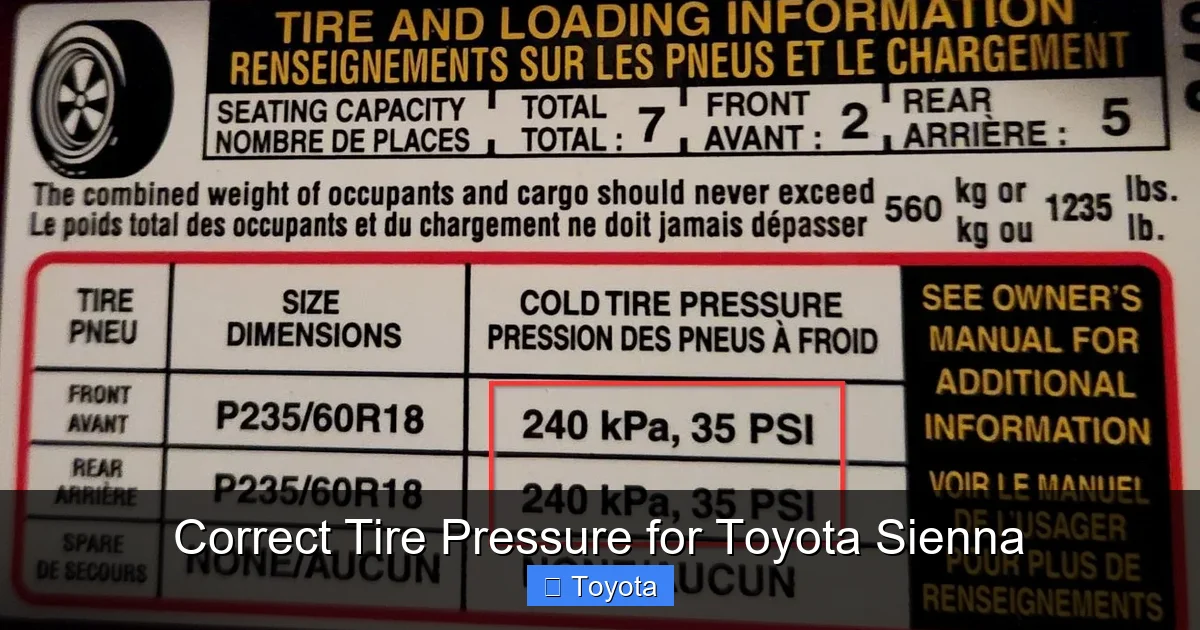
Every Toyota Sienna has a recommended tire pressure that you can find in a few places. The most reliable source is the driver’s door jamb sticker. This metal plate lists the “Cold Tire Pressure” for your specific model year, trim, and engine type. It usually says something like “Front 35 psi, Rear 33 psi.” Write those numbers down in a notebook or on your phone so you always have them handy.
Visual guide about Correct Tire Pressure for Toyota Sienna
Image source: i.ytimg.com
If you cannot locate the door jamb sticker, check the owner’s manual. The manual includes a quick reference section with tire pressure numbers. Many owners also keep a small tire pressure card in the glove box. This card is printed by Toyota and contains the exact PSI for each tire.
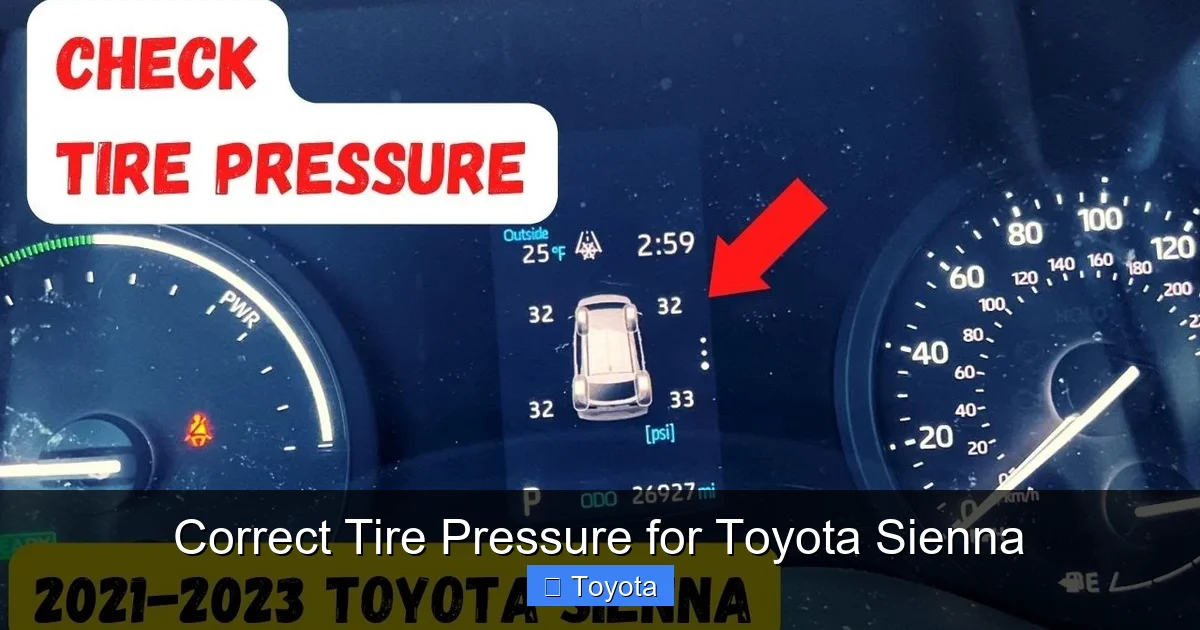
Modern Siennas also display the recommended pressure on the instrument panel when you turn the key to the “ON” position. The system shows a “Tire Pressure Monitoring System (TPMS)” message that lists the correct values. This is a convenient way to verify you have the right numbers before you start checking.
Reading the Door Jamb Sticker
The door jamb sticker is the gold standard for accuracy. Look for two sets of numbers: one for the front tires and one for the rear tires. Some Siennas have different pressures for front and rear because of weight distribution. The sticker will often include a note like “Cold – 35 psi front, 33 psi rear.” Use a measuring tape to confirm you are reading the correct numbers.
Remember that the sticker lists “cold” pressure. This means you should measure before the tires have been driven for at least three hours, or before you have driven less than a mile. Cold pressure gives you a true baseline. If you check after a short drive, the pressure will be higher because the tires heat up, and you might think they are over‑inflated.
Checking the Owner’s Manual
The owner’s manual is another reliable source. It often repeats the door jamb information but also includes tips on how often to check. For many drivers, checking tires once a month is a good habit. If you live in areas with big temperature swings, you might want to check more often. The manual may also explain what the TPMS light means and how to reset it. You can also find instructions on how to use the Toyota app for remote tire checks.
How to Check and Adjust Your Tires
Checking tire pressure is a simple process that takes only a few minutes. You need a reliable tire pressure gauge, a foot pump or air compressor, and the recommended PSI numbers. Many auto parts stores rent gauges for free, so you don’t have to buy one right away.
Visual guide about Correct Tire Pressure for Toyota Sienna
Image source: seventrumpet.com
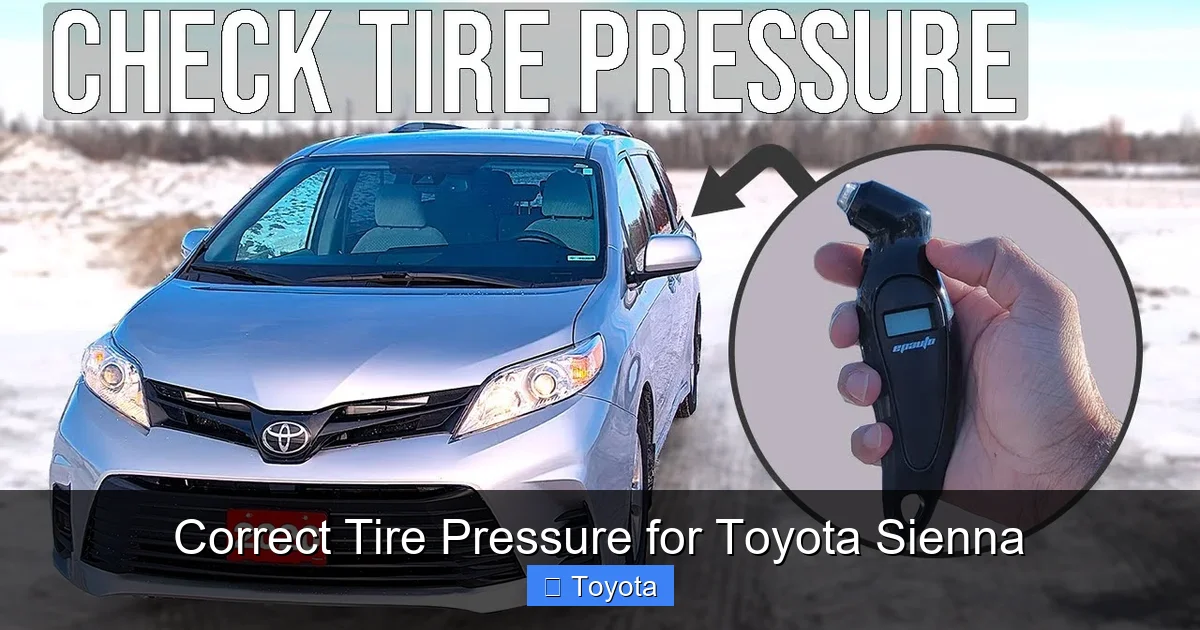
Start by locating the valve stem on each tire. The valve stem is a small metal or plastic piece that sticks out like a little antenna. Press the gauge onto the stem until you hear a click. The gauge will display the current pressure. Write down the readings for all four tires. If any tire is off by more than 5‑10 PSI from the recommended value, it’s time to adjust.
To add air, connect the hose of your air compressor to the valve stem. Some compressors have a digital display that lets you set the exact PSI. Others require you to pump until the tire feels firm. It’s best to use a compressor that has a pressure regulator, so you can stop exactly at the target PSI. If you are using a portable pump, watch the gauge closely and stop when you reach the correct number.
Using the Toyota App for Checks
Modern drivers love convenience, and the Toyota app brings tire checks to your smartphone. The app can read the TPMS data and show you the current pressure of each tire. It also lets you set alerts if pressure drops below a threshold. To use the app, download it from the App Store or Google Play, pair it with your vehicle via Bluetooth, and follow the setup instructions. Once connected, you can view real‑time tire pressure without even getting out of the driveway.
When you see a low reading in the app, you can quickly head to a gas station air dispenser or a local tire shop. Many gas stations have free air pumps, but they often only allow you to add air, not release it. If you need to let air out, a small pin tool can be found in the glove box of most Siennas. Just be careful not to damage the valve.
Seasonal Adjustments and Temperature Effects
Temperature changes affect tire pressure dramatically. For every 10°F change in ambient temperature, tire pressure changes about 1 PSI. In summer, the heat can push pressure up by 3‑5 PSI compared to a cold morning reading. In winter, the opposite occurs; pressure can drop by a similar amount.
If you live in a region with four distinct seasons, adjust your checks accordingly. In early spring, you might notice the tires are slightly over‑inflated. It’s a good idea to check them after the temperature stabilizes. In late fall, you might need to add a little air as the mercury drops.
Many drivers forget that tire pressure also changes when you load up the Sienna. Carrying heavy cargo or a full load of passengers adds weight, which increases pressure slightly. The best practice is to check pressure when the vehicle is empty and cold, then adjust after you know your typical load. This ensures you always have the correct tire pressure for everyday driving.
Seasonal Changes and Driving Conditions
Season brings different challenges for tire pressure. In hot climates, the sun can heat the asphalt and the tires to high temperatures. Driving on a hot day can raise tire pressure by up to 10 PSI. This extra pressure reduces the contact patch and can lead to a harsher ride. It also increases the risk of a blowout, especially if you are carrying heavy loads.
Visual guide about Correct Tire Pressure for Toyota Sienna
Image source: i.ytimg.com
To combat heat, check your tires early in the morning when they are still cool. This gives you a true baseline. If you notice the pressure is already near the maximum, consider letting a little air out before heading out. Many gas stations have a pressure release tool that you can use to lower pressure safely.
Winter brings cold temperatures that can drop pressure by 5‑10 PSI. Cold air contracts, making the tire walls shrink. This reduces the contact area, which can affect traction on snow and ice. It also makes steering feel heavier. To stay safe, check tire pressure before the first frost and again after a week of freezing weather.
When you drive on snow or ice, you might want to consider using tires with a different tread pattern or even install snow tires. The correct pressure for snow tires is often lower than for all‑season tires, as it helps the tire conform to the road surface. However, always follow the manufacturer’s recommended pressure for those specific tires.
Driving on Wet Roads
Wet roads require good grip. Proper tire pressure ensures the tire maintains the right shape for optimal contact. Over‑inflated tires can hydroplane more easily because the contact patch is smaller. Under‑inflated tires can bulge, which can also lead to hydroplaning. Keep your pressure within the recommended range to maximize wet‑weather safety.
If you frequently drive in heavy rain, consider checking your tire pressure after each storm. The heat from braking can raise pressure temporarily, so a post‑storm check gives you a more accurate reading.
Off‑Road and Rough Terrain
Some Sienna owners use their vehicles for light off‑road adventures, like gravel drives or unpaved forest roads. Off‑road driving adds stress to the tires, and pressure can fluctuate with each bump. For rough terrain, you might want to lower pressure slightly to increase the tire’s contact area and improve traction. This technique is called “deflating for traction.” However, you must never go below the minimum pressure listed on the tire sidewall, as this can damage the tire.
Always remember to re‑inflate tires after off‑road use. Returning to the correct pressure helps maintain tire life and ensures safe on‑road performance.
The Role of TPMS and Resetting the Light
The Tire Pressure Monitoring System (TPMS) is a valuable safety net. It alerts you when any tire is 25% below the recommended pressure. The system uses sensors inside each tire that send data to the vehicle’s computer. When a tire drops too low, a warning light on the dashboard flashes or stays solid.
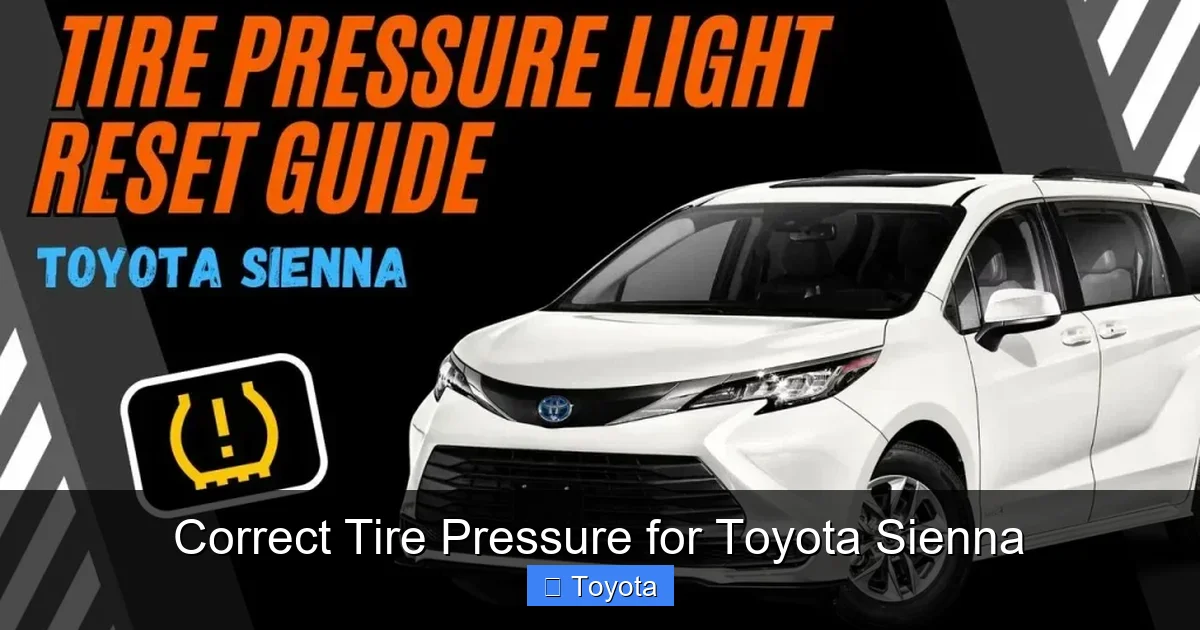
Many drivers ignore the TPMS light, thinking it’s a false alarm. However, resetting the tire pressure light is a simple step that can clear the system once you have fixed the pressure issue. To reset, turn the ignition key to the “ON” position without starting the engine. The TPMS light will flash, then stay steady. After a few seconds, it will turn off automatically. If it does not turn off, you may need to hold the reset button under the dash for a few seconds. For detailed steps, see the article on how to reset tire pressure light on Toyota Sienna.
Understanding TPMS Alerts
The TPMS has two types of alerts: a steady light and a flashing light. A steady light usually means one or more tires are significantly under‑inflated. A flashing light can indicate a system malfunction, such as a dead sensor battery. In either case, you should check the tire pressure promptly. Ignoring the warning can lead to uneven wear, reduced fuel economy, and safety risks.
If the TPMS light stays on after you adjust the pressure, the system may need a manual reset. Some newer Siennas have a reset button near the steering column. Press and hold it for about 10 seconds. The light should turn off. If it does not, consult the owner’s manual for your specific model year, as procedures can vary.
When to Seek Professional Help
If you repeatedly get TPMS warnings, it could be a sign of a leak. Small punctures can develop over time, especially if you drive on rough roads. A slow leak may not trigger the TPMS immediately, but you will notice pressure dropping between checks. In this case, take your Sienna to a trusted mechanic or tire shop. They can locate the leak and repair it, or replace the tire if needed.
Professional tire services also include balancing and alignment. Even with correct pressure, misaligned wheels can cause uneven wear. A proper alignment ensures that the tires wear evenly, which extends their life and maintains the correct pressure longer.
Tips for Longevity and Safety
Keeping your Toyota Sienna’s tires at the correct pressure is an ongoing habit, not a one‑time task. Here are some practical tips to help you stay on top of tire maintenance:
- Check pressure monthly: Use a reliable gauge and record the readings. This habit catches slow leaks early.
- Inspect tires visually: Look for cracks, bulges, or embedded objects. A visual check can prevent dangerous failures.
- Rotate tires regularly: Most manufacturers recommend rotation every 5,000‑7,500 miles. Rotation promotes even wear and maintains pressure.
- Balance wheels: Imbalanced wheels cause vibration, which can affect pressure readings and tire life.
- Store spare tire properly: If you have a spare, keep it inflated to the correct pressure. A flat spare can become a liability.
- Use the Toyota app: Connect your phone to monitor pressure remotely. Set alerts for low pressure to avoid surprises.
Remember, tire pressure is not the only factor in vehicle safety. Brakes, suspension, and windshield wipers also play crucial roles. However, correct tire pressure is a foundational element that influences all of them. By staying diligent, you protect yourself, your passengers, and your investment in the Sienna.
In conclusion, the correct tire pressure for Toyota Sienna models is a simple yet powerful way to boost safety, improve fuel economy, and extend tire life. Use the door jamb sticker, owner’s manual, and TPMS as your guides. Check pressure monthly, adjust for temperature changes, and reset the warning light when needed. With these habits, you’ll enjoy smoother rides, lower costs, and peace of mind on every journey.
Final Thoughts
Driving a Toyota Sienna should be a pleasurable experience, whether you are commuting to work, taking the kids to school, or embarking on a family road trip. Proper tire pressure ensures that the vehicle handles predictably in all conditions. It also helps you avoid unexpected repair bills and keeps your fuel costs down. By following the steps outlined in this article, you can maintain the correct tire pressure with confidence.
If you ever feel unsure about how to check or adjust tire pressure, refer back to the detailed guide on correct tire pressure for a Toyota Sienna. Also, consider using the Toyota app for real‑time monitoring, and learn how to reset the tire pressure light to keep the TPMS functioning correctly. With these tools at your disposal, you’ll be well‑equipped to keep your Sienna running smoothly for years to come.
Frequently Asked Questions
What is the correct tire pressure for a Toyota Sienna?
The correct tire pressure for a Toyota Sienna is listed on the driver’s door jamb sticker, typically around 35 psi for the front tires and 33 psi for the rear tires. Always check the “Cold Tire Pressure” values specific to your model year and trim.
How often should I check my Sienna’s tire pressure?
You should check tire pressure at least once a month and before long trips. Monthly checks help catch slow leaks early and keep fuel economy optimal.
Can I use the Toyota app to monitor tire pressure?
Yes, the Toyota app connects via Bluetooth and displays real‑time tire pressure data from the TPMS. It can also send alerts when pressure drops below your set threshold.
What should I do if the TPMS light stays on after adjusting pressure?
First, verify that all tires are at the correct pressure. Then perform a TPMS reset by turning the ignition key to the “ON” position without starting the engine, or hold the reset button if your Sienna has one. If the light persists, consult a mechanic to check for sensor issues.
Do I need to adjust tire pressure for seasonal changes?
Yes, temperature changes affect pressure by about 1 PSI per 10 °F. Check pressure in extreme heat or cold and adjust accordingly to maintain optimal performance and safety.
How can I find a reliable tire pressure gauge?
Look for digital gauges with an accuracy of ±1 PSI. Many auto parts stores rent reliable gauges for free, or you can purchase an affordable handheld gauge from a trusted brand.


