
Delhi to Taj Mahal Agra Distance by Car
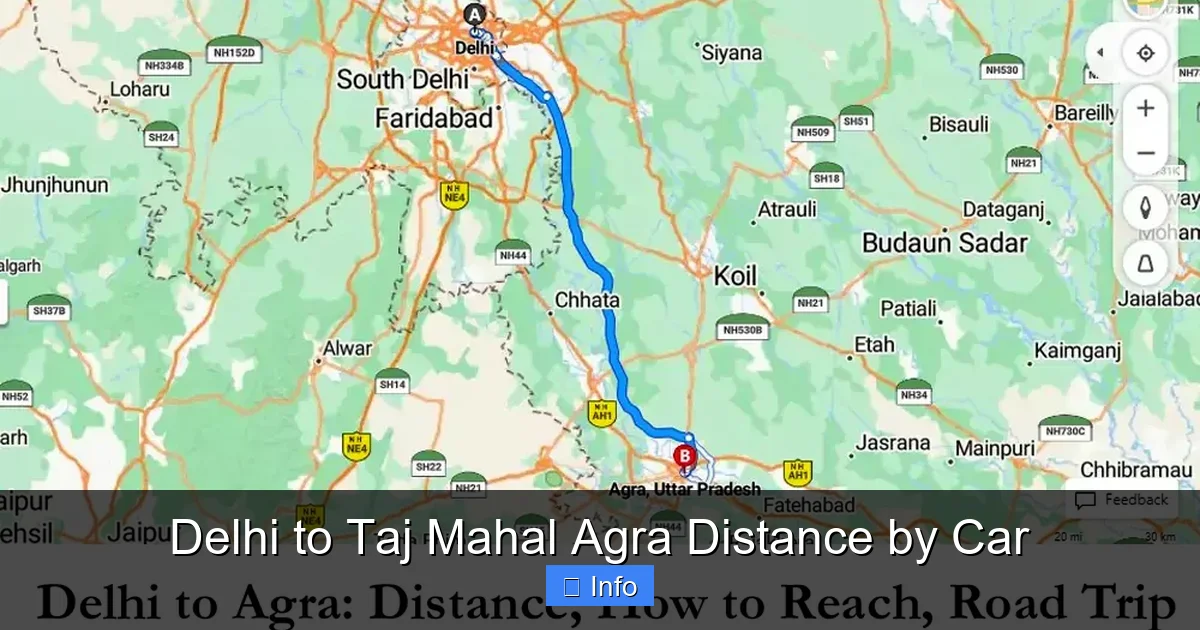
The drive from Delhi to the Taj Mahal in Agra covers approximately 230 kilometers via the Yamuna Expressway, taking about 3 to 4 hours depending on traffic. This guide details routes, travel tips, costs, and what to see along the way for a hassle‑free road trip.
Planning a road trip from India’s bustling capital to the timeless wonder of the Taj Mahal is a favorite adventure for both locals and tourists. The journey blends modern highway convenience with glimpses of rural life, historic towns, and the anticipation of seeing one of the world’s most photographed monuments. Knowing the exact Delhi to Taj Mahal Agra distance by car helps you schedule departure times, budget fuel and tolls, and decide whether to make a quick day trip or a leisurely overnight stay.
This article walks you through every aspect of the drive: the precise distance, the best routes, factors that affect travel time, practical cost estimates, and tips for a comfortable ride. We’ll also highlight interesting stops along the way and what to see once you reach Agra, ensuring your trip is as enjoyable as the destination itself.
Key Takeaways
- Distance: The road distance from Delhi to the Taj Mahal is roughly 230 km (143 mi) via the Yamuna Expressway.
- Travel Time: Expect 3–4 hours of driving under normal conditions; peak traffic can add 30–60 minutes.
- Best Route: The Yamuna Expressway (NH‑148) offers the fastest, toll‑road connection with minimal stops.
- Costs: Fuel, tolls, and optional parking fees total about ₹1,500–₹2,200 for a round trip in a midsize car.
- Stops & Sights: Consider visiting Sikandra, Fatehpur Sikri, or the Agra Fort on your way or after seeing the Taj.
- Preparation: Perform a quick vehicle check (see our pre‑delivery inspection guide) and know Delhi parking options if you arrive by train.
- Timing: Early morning departures (5–7 am) avoid congestion and let you enjoy the Taj at sunrise.
📑 Table of Contents
Understanding the Distance: Delhi to Taj Mahal Agra
The straight‑line (as‑the‑crow‑flies) distance between Delhi and the Taj Mahal is about 180 km, but road travel follows the network of highways and expressways that connect the two cities. The most commonly used route is the Yamuna Expressway, a six‑lane, access‑controlled toll road that significantly reduces travel time compared to older national highways.
When you measure the distance along the Yamuna Expressway from the Delhi‑Gurugram border (near the Delhi‑Gurugram toll plaza) to the Agra‑Delhi border (near the Sikandra toll plaza), the figure comes out to approximately 230 kilometers (143 miles). If you start from central Delhi (e.g., Connaught Place) and add the short stretch to reach the expressway entry point, the total road distance is roughly 240 km. For most planning purposes, quoting 230 km gives a reliable estimate for fuel consumption and travel time.
Understanding this distance is useful for several reasons:
- It helps you calculate fuel needs based on your vehicle’s mileage.
- It allows you to estimate toll expenses (the expressway has a fixed toll structure).
- It gives you a baseline for scheduling breaks, especially if you travel with kids or elderly passengers.
Best Routes from Delhi to Agra by Car
While multiple roads connect Delhi and Agra, the Yamuna Expressway stands out for speed, safety, and convenience. Below we detail the primary route and a couple of alternatives for those who prefer scenic drives or want to avoid tolls.
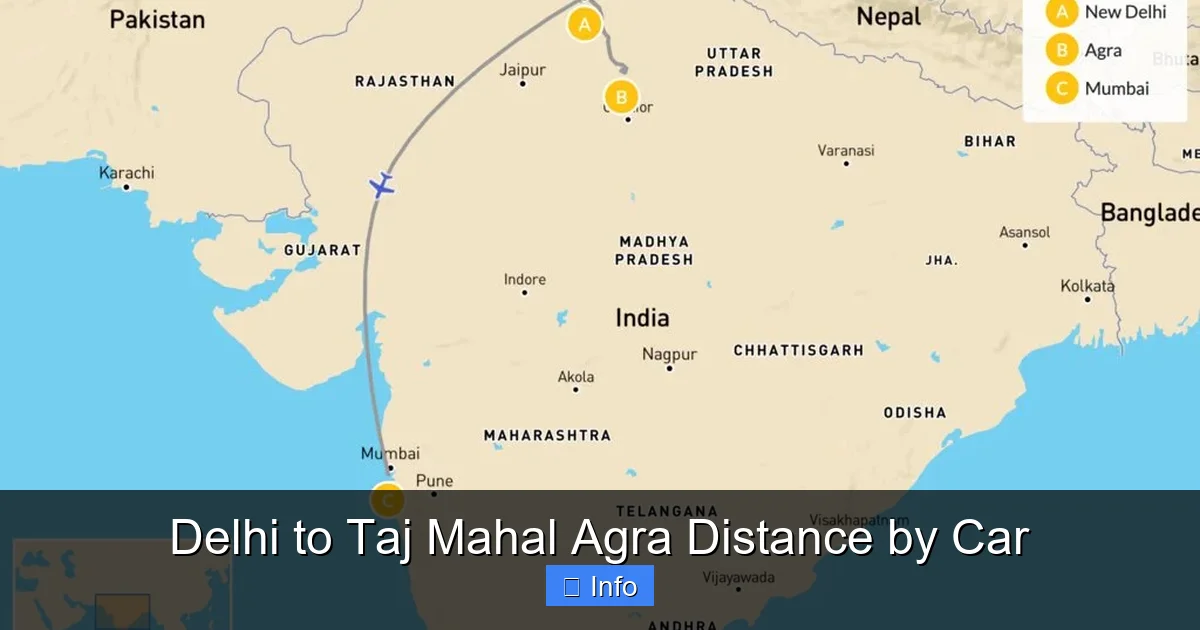
Visual guide about Delhi to Taj Mahal Agra Distance by Car
Image source: cdn.kimkim.com
Primary Route: Yamuna Expressway (NH‑148)
- Start in Delhi and head south on the Delhi‑Gurugram Expressway (NH‑48) toward the Gurgaon toll plaza.
- Continue onto the Yamuna Expressway after crossing the Delhi‑Gurugram border.
- Stay on the expressway for about 165 km; you’ll pass through towns like Greater Noida, Sikandrabad, and Khurja.
- Take the Agra‑Delhi exit (near Sikandra) and follow signs to the Taj Mahal area (approximately 5 km from the exit to the monument’s parking zone).
- Total distance: ~230 km; estimated time: 3–4 hours under normal traffic.
The expressway is well‑maintained, has frequent patrol services, and offers amenities like fuel stations, restrooms, and food courts every 30–40 km. Toll charges for a car (up to 7 seaters) are around ₹360 one‑way as of 2024, making the round‑trip toll cost roughly ₹720.
If you’re looking for a guided experience that includes transportation, sightseeing, and a knowledgeable driver, you might consider a Delhi To Agra Tour Package One Day By Car. This option handles the driving, tolls, and itinerary planning, letting you focus on enjoying the sights.
Alternative Route: NH‑19 (Old GT Road)
For travelers who prefer a more traditional highway with opportunities to stop at small towns, the historic Grand Trunk Road (NH‑19) is an alternative.
- Leave Delhi via NH‑44 (Delhi‑Mathura Road) heading toward Mathura.
- Continue on NH‑19 through Palwal, Hassanpur, and Hathras before reaching Agra.
- The route is about 240 km long and typically takes 4.5–5.5 hours due to traffic lights, towns, and occasional congestion.
While this road is free of tolls, you’ll encounter more traffic signals, pedestrian crossings, and varying road conditions. It can be interesting for those who want to experience local life, but it’s less efficient for a quick day trip.
Scenic Option: Via the Chambal River & Wildlife Sanctuary
If you have extra time and enjoy nature, a detour via the Chambal River area adds a unique flavor.
- Take the Yamuna Expressway to Agra, then instead of heading straight to the Taj, turn toward Dholpur (via NH‑21).
- Follow the Chambal River road, spotting gharials, mugger crocodiles, and diverse birdlife.
- Re‑join NH‑19 near Dholpur and continue to Agra.
This loop adds roughly 30–40 km and an extra hour of driving, but the wildlife sightings and river views can make the journey memorable.
Travel Time and Factors Affecting the Journey
Although the distance is fixed, actual travel time can vary based on several factors. Knowing these helps you plan departure times and set realistic expectations.

Visual guide about Delhi to Taj Mahal Agra Distance by Car
Image source: alamgirtajmahalguide.com
Peak vs. Off‑Peak Traffic
Delhi’s outskirts experience heavy morning and evening rush hours, especially on the Delhi‑Gurugram stretch. Leaving Delhi before 6 am or after 10 am usually avoids the worst congestion. Similarly, returning from Agra after 4 pm can encounter the inbound rush toward Delhi.
Weather Conditions
Fog during winter months (December–January) can reduce visibility on the expressway, prompting slower speeds. Monsoon rains (July–September) may cause occasional waterlogging near the Yamuna River crossings, though the expressway’s drainage is generally good.
Vehicle Type and Load
A fully loaded SUV or a car with roof cargo will consume more fuel and may accelerate slightly slower, affecting overtaking maneuvers. However, the impact on overall travel time is minimal unless you’re driving significantly below the speed limit.
Stoppage for Food, Fuel, or Rest
The expressway features several well‑equipped plazas (e.g., at Mahamaya, Greater Noida, and Sikandra). A quick 10‑minute break for refreshments adds little to total time, but a longer meal stop can extend the journey by 30–45 minutes.
Taking all these into account, a safe estimate for a one‑way trip is:
- Best case (early morning, light traffic): 2 hours 45 minutes
- Average case: 3 hours 30 minutes
- Worst case (peak hour, fog, long break): 5 hours
Tips for a Comfortable Road Trip
Even a relatively short drive can become tiring if you’re unprepared. Below are practical suggestions to make the journey pleasant for driver and passengers alike.
Visual guide about Delhi to Taj Mahal Agra Distance by Car
Image source: tajmahalcabs.com
Vehicle Preparation
Before hitting the road, it’s wise to perform a quick check; you can learn how to do that with our guide on How To Do Pre Delivery Inspection Of Car. Key points include:
- Tire pressure and tread depth (especially important for high‑speed expressway driving).
- Engine oil and coolant levels.
- Functioning lights, brakes, and windshield wipers.
- Emergency kit: spare tire, jack, jumper cables, flashlight, and basic tools.
Navigation and Apps
While the Yamuna Expressway is straightforward, using a reliable navigation app (Google Maps, Waze, or Apple Maps) helps you stay aware of real‑time traffic, toll plaza locations, and speed‑limit changes. Enable voice guidance so you can keep your eyes on the road.
Comfort Essentials
- Hydration: Keep water bottles within reach; dehydration can cause fatigue.
- Snacks: Pack light, non‑messy snacks like nuts, fruit, or granola bars.
- Music/Podcasts: Prepare a playlist or download episodes beforehand to avoid streaming interruptions.
- Seat Adjustments: Ensure the driver’s seat offers good lumbar support; adjust mirrors before departure.
- Clothing: Wear comfortable clothes and keep a light jacket handy for early morning chill or evening cool.
Safety Practices
- Maintain a safe following distance (at least two seconds) on the expressway.
- Observe the posted speed limit (usually 100 km/h on the Yamuna Expressway; some sections allow 120 km/h).
- Avoid using mobile phones while driving; use hands‑free if you must take a call.
- Take a break every 90–120 minutes to stretch and reduce fatigue.
What to See Along the Way and Near Taj Mahal
The drive itself offers a few interesting stops, and Agra has plenty beyond the iconic mausoleum.
En Route Attractions
- Sikandra: Just a few kilometers from the Agra‑Delhi exit, Sikandra houses the tomb of Akbar the Great. It’s a quiet, well‑maintained complex worth a 20‑minute visit.
- Fatehpur Sikri: If you have extra time, a slight detour (about 40 km west of Agra) leads to this UNESCO World Heritage site—a perfectly preserved Mughal city built by Akbar.
- Khurja: Known as the “Ceramics City,” Khurja offers colorful pottery shops if you’d like to pick up a souvenir.
Agra Highlights Beyond the Taj
- Agra Fort: A massive red‑sandstone fort that offers panoramic views of the Taj Mahal from its balconies.
- Mehtab Bagh: A Mughal garden located directly across the Yamuna River, providing a stunning sunset view of the Taj.
- Itmad‑ud‑Daulah’s Tomb: Often called the “Baby Taj,” this marble mausoleum showcases intricate inlay work.
- Local Markets: Sadar Bazaar and Kinari Bazaar are great for handicrafts, leather goods, and the famous Agra petha (sweet).
Many travelers choose to start early, see the Taj at sunrise, then explore the fort and gardens before heading back to Delhi in the late afternoon.
Practical Information: Costs, Fuel, Toll, and Parking
Budgeting for the trip helps avoid surprises. Below is a typical cost breakdown for a midsize sedan (average fuel efficiency 15 km/l) making a round trip.
Fuel Cost
Round‑trip distance ≈ 460 km. At 15 km/l, you’ll need about 31 liters of petrol. With petrol priced at roughly ₹105 per liter (2024 average), fuel cost ≈ ₹3,250.
Toll Cost
Yamuna Expressway toll (one‑way) for a car: ₹360. Round‑trip toll ≈ ₹720.
Parking Fees
- Taj Mahal complex parking (near the east gate): ₹30–₹50 per car for a few hours.
- Agra Fort parking: similar rates.
- If you’re arriving in Delhi by train and picking up a rental car, you might want to know about Car Parking At New Delhi Railway Station to leave your vehicle safely before the drive.
Miscellaneous
- Snacks & drinks: ₹300–₹500.
- Optional guide or audio guide at Taj Mahal: ₹250–₹500.
- Emergency buffer: keep ₹500–₹1,000 for unexpected expenses.
Overall, a comfortable round‑trip by car can be budgeted at **₹5,000–₹6,500**, depending on your vehicle’s fuel efficiency and personal spending habits.
Conclusion
The journey from Delhi to the Taj Mahal by car is more than just a measure of kilometers—it’s an opportunity to experience the changing landscape of northern India, enjoy the convenience of a modern expressway, and arrive at one of the world’s most awe‑inspiring monuments with a sense of accomplishment. By knowing the exact Delhi to Taj Mahal Agra distance by car (≈ 230 km), planning for traffic, preparing your vehicle, and scheduling stops wisely, you can turn a simple drive into a memorable mini‑adventure.
Whether you opt for a swift day trip, a leisurely overnight stay, or a scenic detour through Fatehpur Sikri and the Chambal region, the road offers flexibility and comfort. Keep the tips in mind, check your car beforehand, and consider using a guided package if you prefer a hassle‑free experience. Safe travels, and enjoy the timeless beauty of the Taj Mahal!
Frequently Asked Questions
What is the exact distance from Delhi to the Taj Mahal by car?
The road distance from Delhi to the Taj Mahal via the Yamuna Expressway is approximately 230 kilometers (about 143 miles). If you start from central Delhi and include the short approach to the expressway, the total is roughly 240 km.
How long does it take to drive from Delhi to Agra?
Under normal traffic conditions, the drive takes about 3 to 4 hours. Leaving early in the morning (before 6 am) can reduce the time to around 2 hours 45 minutes, while peak‑hour travel or adverse weather may extend it to 5 hours or more.
Which route is the fastest for a Delhi‑Agra car trip?
The Yamuna Expressway (NH‑148) is the fastest and most convenient route. It is a six‑lane, access‑controlled toll road that minimizes stops and maintains higher speed limits compared to the older Grand Trunk Road (NH‑19).
Are there toll charges on the Delhi‑Agra expressway?
Yes, the Yamuna Expressway charges a toll for cars. As of 2024, the one‑way toll for a passenger car is around ₹360, making the round‑trip toll approximately ₹720.
What are some good places to stop on the way to the Taj Mahal?
Popular stops include Sikandra (Akbar’s tomb), Khurja for its pottery, and Fatehpur Sikri if you have extra time. In Agra, consider visiting the Agra Fort, Mehtab Bagh, and Itmad‑ud‑Daulah’s Tomb alongside the Taj.
Is it safe to drive from Delhi to Agra at night?
Driving at night is generally safe on the Yamuna Expressway, which is well‑lit and patrolled. However, visibility can be reduced during winter fog, and wildlife may occasionally cross near rural sections. If you’re not comfortable with night driving, aim to depart early morning or late afternoon.


