
Gst Input on Car Purchase for Company
GST input on car purchase for company is a crucial topic for businesses claiming Input Tax Credit (ITC) on vehicles used for official operations. This guide simplifies the eligibility rules, documentation needs, and common pitfalls, helping your company stay compliant while maximizing tax benefits.
Starting a business often means making big purchases, and for many companies, a reliable vehicle is at the top of the list. But along with the excitement of a new car comes a complex question: what about the tax implications? Understanding gst input on car purchase for company can feel like navigating a maze of rules, forms, and eligibility criteria. The good news is that if your business uses the vehicle for official purposes, you may be able to claim Input Tax Credit (ITC) and reduce your overall tax burden. In this guide, we’ll walk through everything you need to know, from basic eligibility to documentation tips, so you can make informed decisions and keep your finances healthy. By the end, you’ll see how gst input on car purchase for company can be a game-changer for your bottom line.
Many entrepreneurs mistakenly believe that once a vehicle is bought in the company’s name, the GST question is solved. In reality, the process is nuanced. The rules differ based on vehicle type, usage, and whether the car is used for passenger transport versus freight. By the end of this article, you’ll have a clear roadmap to determine your eligibility, gather the right documents, and avoid common pitfalls. Let’s dive in and demystify gst input on car purchase for company together. A solid grasp of the basics ensures you don’t leave money on the table when the tax season arrives.
Key Takeaways
- Eligibility depends on business use: A vehicle must be used primarily for official business activities to qualify for Input Tax Credit; personal or mixed use limits the claim.
- Proper documentation is essential: Valid tax invoices, GST registration, and detailed usage logs are required to substantiate claims during audits.
- GST rate slabs vary by vehicle type: Luxury and passenger cars often attract higher rates, while commercial vehicles may have different treatment affecting credit amounts.
- Filing deadlines must be met: ITC must be claimed within specified timeframes, typically by September 30th of the following financial year, to avoid losing the credit permanently.
- Common mistakes can be costly: Claiming full credit on personal-use vehicles, ignoring rate slabs, and poor record-keeping frequently lead to disallowed claims and penalties.
- Staying informed saves money: Regularly reviewing GST policy changes and leveraging technology for tracking ensures maximum compliance and tax efficiency.
📑 Table of Contents
Understanding the Basics of GST Input and ITC
When a company decides to purchase a vehicle, the Goods and Services Tax (GST) is applied at the point of sale, but the financial impact doesn’t end there. Input Tax Credit, commonly known as ITC, is the mechanism that allows businesses to reclaim the GST paid on purchases, effectively reducing the net cost of the asset. For a company car, this means the tax component of the invoice can be claimed back if the vehicle meets the prescribed eligibility conditions. The core idea is simple: you pay GST on the purchase, and if the car is used for business, you can claim that amount as a credit against your future GST liabilities. Understanding this foundation is essential before diving into the specific rules that govern gst input on car purchase for company, as it sets the stage for all subsequent compliance steps. Proper knowledge of ITC also helps you anticipate how much of the purchase price will be recoverable, allowing for better cash flow planning.
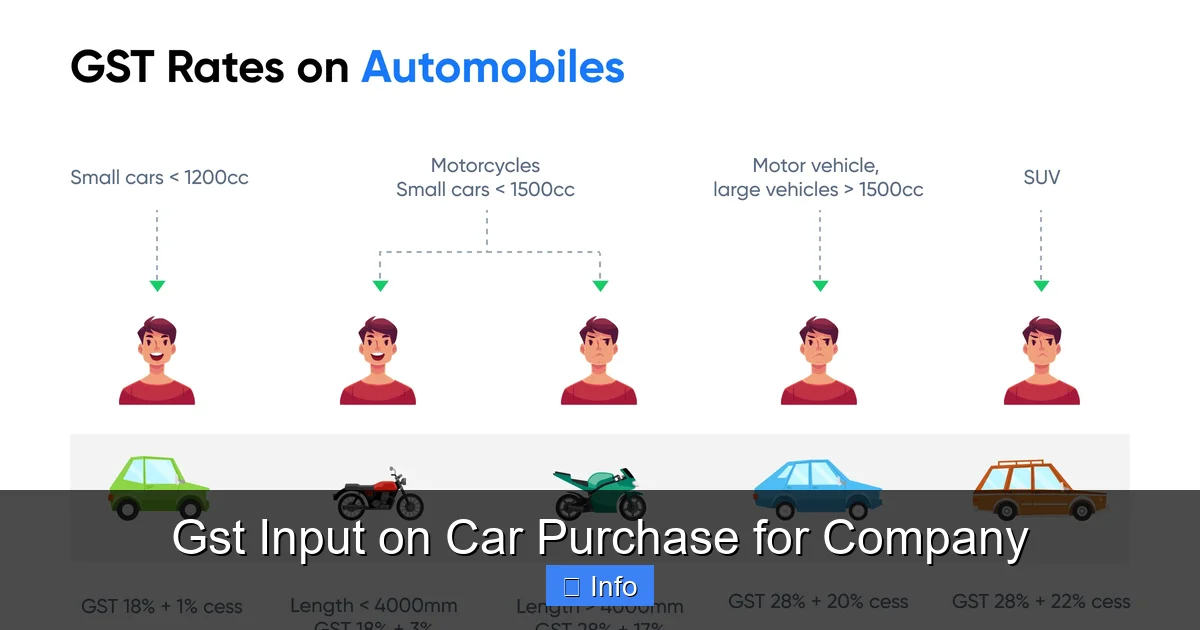
The GST rate applicable to vehicle purchases varies significantly depending on the car’s classification. Passenger cars typically fall under a specific slab, often 28% for luxury vehicles, while commercial vehicles like vans or trucks may attract a lower rate or different treatment altogether. Additionally, electric vehicles and those registered as commercial carriers sometimes qualify for concessional rates or incentives introduced in recent budget announcements. The timing of your ITC claim also matters—you can generally claim the credit once the tax invoice is generated, the payment is recorded in your books, and the supplier has filed their GST return. These nuances mean that simply buying a car in the company name doesn’t automatically grant you the credit; you must align your purchase with the specific rate slabs and procedural timelines that apply to gst input on car purchase for company. Being aware of these rate variations helps you time your purchase strategically, potentially saving thousands in tax outlay.
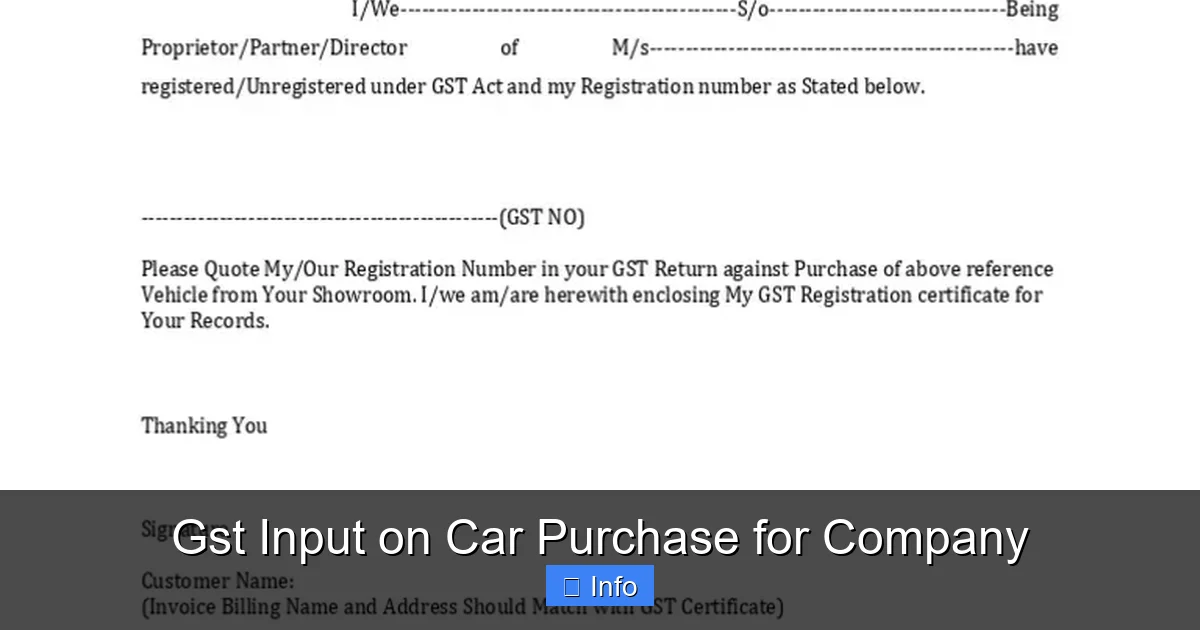
Another critical aspect is the documentation that supports your claim. A valid tax invoice must detail the supplier’s GST number, your company’s GST number, a detailed description of the vehicle including its make, model, and chassis number, the total amount paid, and the GST amount split out clearly. Without this, the credit remains blocked in your electronic ledger. Moreover, the invoice must be issued in the company’s name, not an individual’s, to match the business entity claiming the benefit. Keeping a dedicated folder—physical or digital—for every vehicle-related invoice, along with proof of payment and the supplier’s GST filing confirmations, creates a robust audit trail. This meticulous approach not only facilitates smooth ITC claims but also protects your company during random assessments or detailed scrutiny by tax authorities. When documentation is airtight, claiming gst input on car purchase for company becomes a straightforward process rather than a source of stress.
Eligibility Criteria: Who Can Claim GST Input?
Not every company vehicle qualifies for ITC, and the rules are designed to prevent abuse of the credit system. The primary test is whether the vehicle is used for business purposes. If a car sits in the parking lot for most of the week and is only driven for personal errands or commuting, the tax department may disallow the credit entirely. To determine eligibility, authorities look at the actual usage patterns, the nature of the business, and the proportion of time the vehicle spends on official activities versus personal use. A common benchmark is the business-use percentage; for instance, if a vehicle is used 70% for client meetings, deliveries, or company operations and 30% for personal trips, you might be eligible to claim ITC on 70% of the GST paid. Maintaining a detailed usage log, supported by GPS data or trip diaries, provides the evidence needed to substantiate this percentage during an audit. Understanding these eligibility thresholds is a key step in ensuring your company can legally claim gst input on car purchase for company without facing disallowances later.
Visual guide about Gst Input on Car Purchase for Company
Image source: assets1.cleartax-cdn.com
The type of vehicle also plays a decisive role in eligibility. Cars designed primarily for passenger transport, especially those with seating capacity above a certain limit, are treated differently from freight-carrying vehicles like trucks, pickups, or vans used for goods movement. Luxury passenger cars often fall under the highest GST slab, and the rules for claiming ITC on them can be more restrictive, sometimes allowing only a partial credit or none at all if the vehicle is deemed a “personal use” asset. Conversely, vehicles registered as commercial carriers may have more lenient ITC rules, reflecting the policy intent to support logistics and freight businesses. Before finalizing a purchase, it’s vital to check the specific GST rate and ITC eligibility for your vehicle’s category, as this directly impacts the actual savings your company can realize from gst input on car purchase for company. Some models may even qualify for reduced rates if they’re used predominantly for business, which can significantly alter your total tax burden.
Finally, your business must hold an active and valid GST registration to claim any input tax credit. If your company is not registered under GST, or if the vehicle is purchased under an individual’s name rather than the corporate entity, the credit is simply not available. Additionally, the business must be using the vehicle in the course of its regular operations—a one-off purchase might not satisfy the “regular business use” test that tax officers apply. Ensuring your GST number is active, your business description aligns with vehicle usage, and your internal policies reflect official usage will set a strong foundation for a successful claim. For businesses seeking deeper insights into how ITC is structured for commercial vehicles, our guide on ITC on car purchase for business purpose offers additional scenarios and compliance tips. Reviewing that resource alongside your own situation can clarify many grey areas around gst input on car purchase for company.
Documentation and Compliance: What You Need
Even if you meet all the eligibility criteria, the tax department will insist on solid proof before approving your ITC claim. Documentation is the backbone of GST compliance, and missing or incorrect paperwork can lead to rejected claims, interest charges, or even penalties. A systematic approach to record-keeping makes the difference between a smooth claim and a costly audit finding. From the moment you sign the purchase agreement to the day you file your return, every step should be supported by clear, accurate records that align with GST law requirements. Proper documentation is the bridge between eligibility and actual credit realization.
Tax Invoice Essentials
A valid tax invoice is the single most important document in the entire ITC chain. It must contain the supplier’s GST identification number, your company’s GST number, a detailed description of the vehicle including its make, model, and chassis number, the total amount paid, and the GST amount split out clearly. The invoice should be issued in the company’s name and must comply with the format specified in the GST regulations, including the HSN code for the vehicle type. Without a compliant invoice, the credit cannot be generated in your electronic ledger, regardless of how the vehicle is used. Always verify that the invoice arrives before or at the time of payment, and cross-check the GST percentage applied against the official rate slab for your vehicle’s category. A missing or incorrect invoice is the most common reason companies fail to claim gst input on car purchase for company, so double-check every detail before filing.
GST Returns and Filing
Claiming ITC is not a one-time event; it must be reflected in your periodic GST returns, typically filed monthly or quarterly. The credit moves from the supplier’s ledger to your electronic credit ledger only after you file your return, such as GSTR-3B or GSTR-1. Filing delays, errors, or mismatches between your purchase records and the supplier’s filed return can block the credit, making it unavailable for set-off until the issue is resolved. Reconciling your records with the supplier’s GSTR-1 filing on a regular basis—ideally every month—helps catch discrepancies early. Many modern accounting platforms offer automatic reconciliation features that flag mismatches, but even with technology, a manual review once a month is a best practice to ensure your ITC remains uninterrupted. Staying on top of your filing schedule is essential for consistently claiming gst input on car purchase for company each financial year.
Maintaining a Usage Log
Proving business use is perhaps the most scrutinized aspect of ITC claims for vehicles. A detailed usage log should record the date of each trip, the purpose (business or personal), the destination, and the kilometers traveled. Many companies now rely on fleet management software or GPS tracking apps that automatically categorize trips and generate reports ready for GST filing. These digital tools not only save time but also provide a reliable, hard-to-dispute record if the tax department ever questions your claim. During an audit, having organized logs that show a consistent pattern of business use can be the deciding factor between a successful credit claim and a disallowed one, along with potential demands to repay the credit with interest. Digital logs also make it easier to demonstrate the proportion of business use, which directly affects how much gst input on car purchase for company you can legitimately claim.
Reconciliation with Supplier
Ensuring that the GST you claim matches what the supplier has actually filed is a critical compliance step. Discrepancies between your purchase register and the supplier’s GSTR-1 filing can lead to credit blockage, where the system prevents you from using the credit until the mismatch is rectified. If a supplier fails to file their return on time or reports a different GST amount, it can indirectly affect your ITC availability. Maintaining open communication with your vendors, confirming their filing status, and keeping copies of all payment receipts and agreements safeguards your claim. In cases where discrepancies persist, working with a tax professional to rectify the records with the GST portal can restore your credit flow and secure your ability to claim gst input on car purchase for company in future returns.
Common Mistakes and How to Avoid Them
Even the most diligent businesses can stumble when navigating the complexities of GST on vehicle purchases. Being aware of the most frequent errors can save your company from financial loss, legal complications, and the hassle of repaying claimed credits with interest. A proactive mindset, combined with a simple checklist, can help you steer clear of these pitfalls and keep your tax position healthy. Knowledge of these mistakes also empowers you to structure your purchase and usage in a way that maximizes legitimate credit.
Visual guide about Gst Input on Car Purchase for Company
Image source: d1avenlh0i1xmr.cloudfront.net
Claiming ITC on Personal-Use Vehicles
One of the most common mistakes is attempting to claim the full Input Tax Credit on a car that is primarily used for personal commuting or family use. The tax department is particularly vigilant about this, and disallowed claims can result in having to repay the credit plus interest at the rate specified under the law. To avoid this, clearly define the business usage percentage for each vehicle and only claim credit proportional to that usage. If your company’s use case changes—such as a sales team shifting from field visits to remote work—update your records and adjust your claims accordingly. Maintaining a written policy that outlines acceptable usage scenarios can also provide an extra layer of documentation support during audits. Many companies lose out on legitimate gst input on car purchase for company benefits simply because they cannot prove sufficient business use, so always err on the side of conservative claiming.
Ignoring the GST Rate Slab
Not all vehicles fall under the same GST rate, and assuming a single rate for all cars is a recipe for incorrect calculations. The GST slab depends on multiple factors, including the vehicle’s engine capacity, fuel type (petrol, diesel, or electric), and its intended use (passenger vs. commercial). For example, a high-end luxury sedan may attract a 28% slab, while a standard compact car might be at 18% or 28% depending on the specific notification in force. Consulting the latest GST notification or speaking with a chartered accountant who specializes in indirect taxes can prevent this mistake. Additionally, some electric vehicles qualify for reduced rates or incentives that can further impact your effective tax cost and the amount of credit you can claim. Misunderstanding the rate slab is a frequent error that can lead to over-claiming or under-claiming, both of which have consequences when dealing with gst input on car purchase for company.
Poor Record Keeping
GST audits can occur years after the vehicle purchase, and if your documentation is scattered, incomplete, or poorly organized, you’ll have little defense against a disallowed claim. Investing in a dedicated accounting system or cloud-based storage for all vehicle-related invoices, usage logs, and return filings is a wise move. Digital backups ensure you’re never caught off-guard, and they make it easy to produce records during assessments or inquiries from tax authorities. Some businesses even create a separate GST folder for each vehicle in their fleet, containing the invoice, logbooks, reconciliation sheets, and filing confirmations. This level of organization not only simplifies compliance but also provides peace of mind knowing you’re prepared for any inquiry. Poor records can quickly turn a legitimate gst input on car purchase for company claim into a tax liability.
Missing Filing Deadlines
ITC must be claimed within the stipulated timeframe, typically by filing the return for the month in which the purchase was made, or by September 30th of the following financial year, whichever is earlier. Missing this window means losing the credit forever, and you cannot claim it in future returns. Setting calendar reminders and working with your accountant to stay on top of deadlines is essential. Some businesses use automated alert systems within their accounting software to never miss a filing window, which is especially helpful when managing a fleet of multiple vehicles. Remember that each new purchase resets the clock, so staying organized across all acquisitions is key to never missing an opportunity to claim gst input on car purchase for company.
Practical Tips to Maximize Your GST Benefits
Now that you understand the rules and common traps, it’s time to put that knowledge into practice. A few strategic habits can make a significant difference in your company’s tax efficiency, turning a necessary business expense into a tax-smart investment. Small changes in how you record, use, and plan your vehicle purchases can yield substantial savings over the life of the asset. Applying these tips consistently will help you get the most out of every gst input on car purchase for company situation.
Choose the Right Vehicle for Your Needs
If your business primarily involves freight, deliveries, or client site visits, a commercial vehicle might offer more favorable GST treatment than a standard passenger car. Evaluating your actual operational needs against the tax implications before signing the purchase agreement can reveal opportunities for optimization. Sometimes a slightly different model—such as one with a higher payload capacity or registered as a commercial carrier—can change the GST slab and your ITC eligibility, resulting in lower effective costs. Always request a clear breakdown of the GST amount from the dealer and compare it against the official rate for your vehicle’s category before finalizing the deal. Making an informed choice upfront sets the stage for maximizing gst input on car purchase for company benefits from day one.
Leverage Technology for Usage Tracking
Gone are the days of manual logbooks that are easy to forget, lose, or intentionally manipulate. Fleet management apps and GPS tracking solutions can automatically categorize trips, calculate business versus personal mileage, and generate ready-to-use reports for GST filing. These tools not only save countless hours of administrative work but also provide robust, data-driven evidence if the tax department ever questions your ITC claim. Some advanced platforms even integrate directly with your GST portal, allowing one-click filing of relevant credit details, which streamlines the entire compliance process and reduces the risk of human error. Using technology also simplifies the documentation needed to support your claim of gst input on car purchase for company, making audits less daunting.
Stay Updated on GST Policy Changes
Tax laws are not static; budget announcements, annual finance acts, and circulars from the GST council can shift rates, eligibility criteria, or documentation requirements at any time. Subscribing to reliable tax news sources, attending quarterly compliance webinars, or working with a chartered accountant who specializes in indirect taxes ensures you’re always operating under the latest rules. Setting a quarterly review of your GST compliance checklist can catch any regulatory updates before they impact your claims. For instance, a recent change might introduce a new concession for electric commercial vehicles, which could make switching your fleet more advantageous from a tax perspective. Staying informed is the best way to adapt your strategy for gst input on car purchase for company as regulations evolve.
Consider Leasing vs. Buying
For some companies, leasing a vehicle can be more tax-efficient than purchasing outright. Lease payments often include GST, and the Input Tax Credit treatment may differ based on the lease structure, duration, and state-specific regulations. If you’re exploring options, researching state-specific examples can provide clarity; for instance, guidelines around a yellow board car for lease in Bangalore illustrate how local rules can affect your decision. Additionally, lease agreements often have specific clauses about maintenance, usage limits, and early termination, all of which can influence how much of the GST you’re able to recover each financial year. Weighing the cash flow benefits of leasing against the long-term ITC advantages of buying requires a careful analysis of your company’s specific situation. The choice between lease and purchase should always factor in how each option affects your ability to claim gst input on car purchase for company over time.
For more insights on company car policies and leasing options, check out our guide on yellow board car for lease in Bangalore, which highlights state-wise considerations that may impact your GST planning and how they relate to gst input on car purchase for company.
Conclusion and Next Steps
Navigating gst input on car purchase for company doesn’t have to be overwhelming. By understanding the eligibility criteria, maintaining meticulous documentation, and avoiding common mistakes, your business can claim the Input Tax Credit it deserves and reduce the net cost of essential vehicles. The journey to tax efficiency begins with a clear policy, diligent record-keeping, and a willingness to stay informed about regulatory changes. The key takeaways are clear: keep business use records up to date, ensure every invoice is GST-compliant, and file your returns on time. If you’re ever in doubt, consulting a tax professional who knows the ins and outs of indirect taxation can provide peace of mind and maximize your savings. Now that you’re equipped with this knowledge, you can make confident, compliant decisions for your company’s fleet, and you’ll be well-prepared to handle any gst input on car purchase for company scenario that arises.
Frequently Asked Questions
Can any company claim GST input on a car purchase?
Not all companies are eligible; the vehicle must be used for business purposes and the company must have an active GST registration. Personal use or mixed usage may limit the credit amount.
What documents are needed to claim GST input on a car purchase?
A valid tax invoice in the company’s name, proof of GST payment, the vehicle’s registration details, and a usage log showing business proportion are essential. Additional documents like reconciliation records with the supplier may also be required.
How is the business use percentage determined for GST input claims?
The percentage is based on the actual time the vehicle is used for official business activities versus personal use. Maintaining a detailed logbook or using GPS tracking software helps substantiate the claim during tax assessments.
Can GST input be claimed on car insurance premiums?
Yes, if the insurance is taken in the company’s name and the vehicle is used for business, the GST portion of the premium may be claimable as Input Tax Credit, though specific conditions apply based on usage and GST rate slabs.
What happens if a company mistakenly claims ineligible GST input on a car?
The tax department may disallow the claim, require repayment of the credit plus interest, and potentially impose penalties. Proper documentation and adherence to eligibility criteria can prevent such situations.
Are electric vehicles treated differently for GST input on car purchases?
Electric vehicles may qualify for reduced GST rates or incentives, which can affect the amount of Input Tax Credit claimable. It’s important to check the latest GST notifications and consult a tax professional for the specific model and usage.


