High Pressure Water Pump for Car Wash
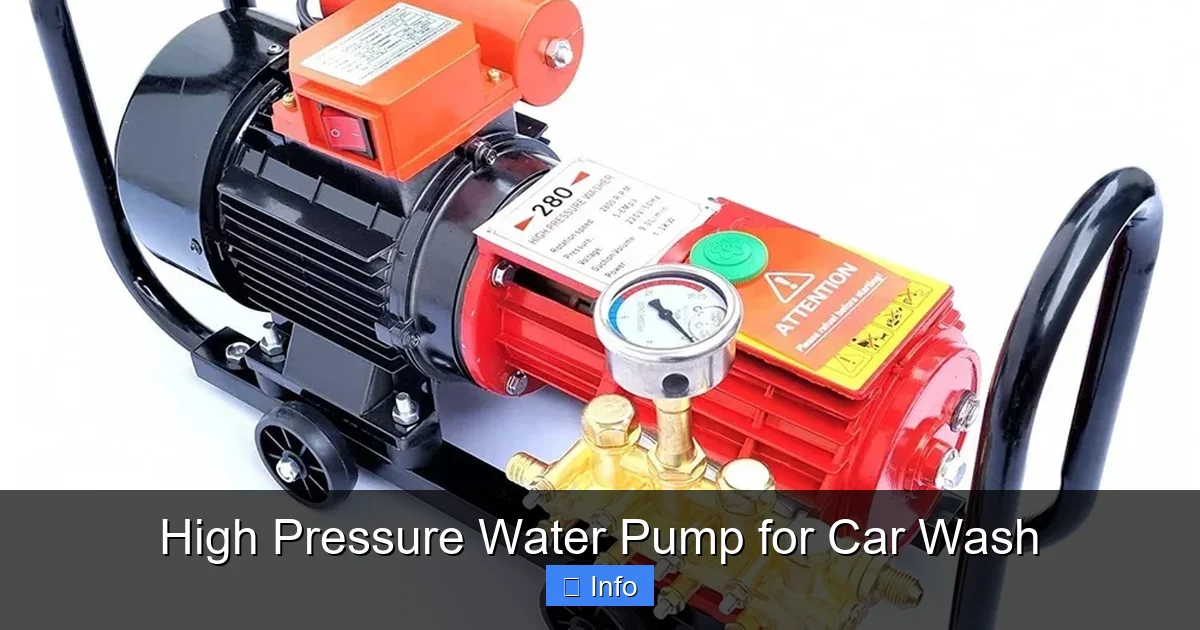
A high pressure water pump for car wash is the heart of any effective cleaning system, delivering the force needed to remove dirt without damaging paint. Choosing the right pump depends on your usage frequency, desired pressure levels, and budget. Proper maintenance ensures longevity and consistent performance for years.
Washing your car at home or running a professional detailing business both rely on one critical component: the high pressure water pump for car wash applications. This pump creates the force that blasts away road grime, brake dust, and stubborn contaminants. Without a reliable pump, even the best soap and technique fall short. I have spent years testing different setups, and the pump truly makes or breaks the experience.
Many people focus solely on the pressure washer brand but overlook the pump inside. That is a mistake. The pump determines durability, pressure consistency, and how often you will need repairs. Whether you wash your weekend cruiser once a month or run a mobile detailing van daily, understanding pump technology saves money and frustration. Let us break down everything you need to know.
Key Takeaways
- Pump Type Matters: Axial cam pumps suit occasional use, while triplex plunger pumps handle daily professional demands.
- Match PSI and GPM: Balance pressure (PSI) and flow rate (GPM) for your specific cleaning tasks to avoid surface damage.
- Power Source Options: Electric models are quiet and low-maintenance; gas units offer portability and higher power for mobile detailers.
- Regular Maintenance Extends Life: Changing oil, checking seals, and winterizing prevent costly breakdowns and downtime.
- Accessories Boost Efficiency: Quality nozzles, foam cannons, and hose reels improve cleaning speed and results significantly.
- Safety First: Always wear eye protection, never point the wand at people or animals, and use GFCI protection with electric units.
- Budget for Total Cost: Consider initial price, maintenance supplies, and potential repairs when calculating your investment.
📑 Table of Contents
- Understanding Pump Types and Technologies
- Key Specifications: PSI, GPM, and Cleaning Units
- Electric vs. Gas Power Sources
- Essential Features for Car Washing
- Maintenance Routines for Longevity
- Choosing the Right Pump for Your Needs
- Accessories That Transform Results
- Safety Practices You Cannot Ignore
- Budgeting: Total Cost of Ownership
- Environmental Considerations
- Conclusion
Understanding Pump Types and Technologies
Not all pumps are created equal. The internal mechanism defines performance and lifespan. There are three main designs you will encounter.
Axial Cam Pumps (Wobble Plate)
These are the most common in entry-level electric pressure washers. A rotating wobble plate pushes pistons back and forth. They are compact, lightweight, and affordable. However, they run hotter and wear faster. Expect 200 to 400 hours of life. They are fine for a homeowner washing a car and patio furniture a few times a year.
Triplex Plunger Pumps
This is the gold standard for professional and serious enthusiast use. Three ceramic plungers move in a crankcase filled with oil. They run cooler, deliver smoother pressure, and last 2,000 hours or more with proper care. They cost more upfront but rarely need replacement. If you wash multiple vehicles weekly, this is the only logical choice.
Direct Drive vs. Belt Drive
Direct drive pumps connect directly to the motor or engine shaft. They are compact and efficient but transfer vibration and heat directly to the pump. Belt drive systems use pulleys and a belt to reduce pump RPM. This drastically lowers heat and vibration, extending seal and bearing life. Belt drive is standard on commercial skid units and high-end gas models.
Key Specifications: PSI, GPM, and Cleaning Units
Two numbers dominate pressure washer specs: PSI (pounds per square inch) and GPM (gallons per minute). Understanding their relationship is crucial for car washing.
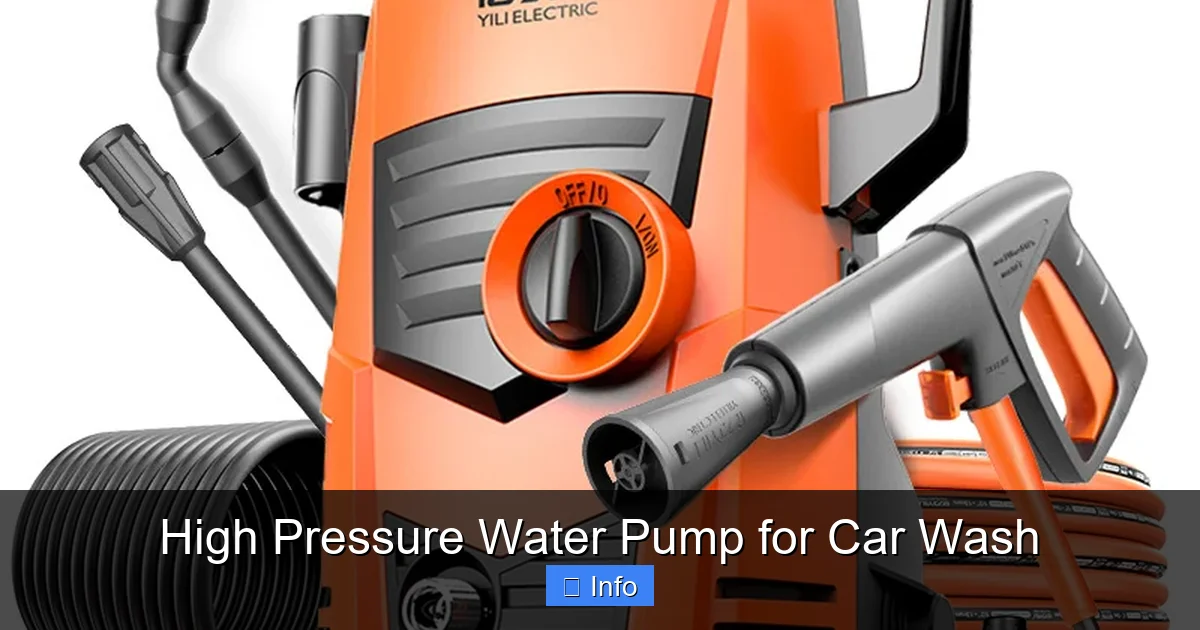
Visual guide about High Pressure Water Pump for Car Wash
Image source: autostore.pk
PSI: The Stripping Force
PSI measures pressure intensity. For car paint, you generally want 1,200 to 1,900 PSI. Anything above 2,000 PSI risks clear coat damage, especially with narrow nozzles. Higher PSI helps with concrete or heavy equipment but is overkill and dangerous for automotive finishes.
GPM: The Rinsing Power
GPM measures water volume. This is often more important than PSI for washing. Higher GPM rinses soap and loosened dirt away faster. A 2.0 GPM machine cleans a car much quicker than a 1.2 GPM unit at the same PSI. Professional detailers often prefer 3.0 to 4.0 GPM for speed.
Cleaning Units (CU)
Multiply PSI by GPM to get Cleaning Units. This single number compares overall cleaning power. A 1,500 PSI / 2.0 GPM unit (3,000 CU) often outperforms a 2,000 PSI / 1.3 GPM unit (2,600 CU) on vehicles because volume rinses better than pure pressure.
Electric vs. Gas Power Sources
The motor driving the pump changes the user experience significantly.
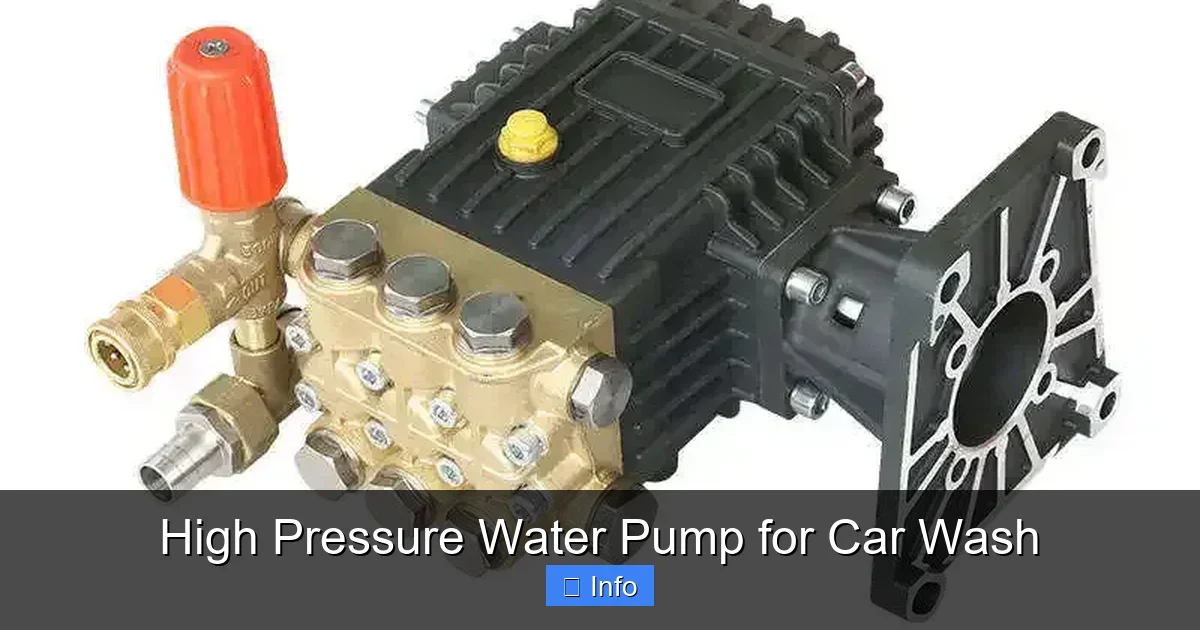
Visual guide about High Pressure Water Pump for Car Wash
Image source: shopcdnpro.grainajz.com
Electric Motors
Electric high pressure water pump for car wash setups are quiet, emission-free, and start instantly. They require minimal maintenance—no oil changes, spark plugs, or fuel stabilization. They are ideal for garages with power access. Most residential units max out around 2,000 PSI and 1.5 GPM. Commercial electric models exist but need 240V power.
Gas Engines
Gas-powered units offer complete portability. No cords, no outlet hunting. They deliver higher PSI and GPM combinations, often 3,000+ PSI and 3.0+ GPM. This speed is vital for mobile detailers. Downsides include noise, exhaust fumes (never run indoors), engine maintenance, and weight. They also cost more initially.
Battery-Powered Options
Newer battery platforms (like 18V/36V systems) power small pumps for rinsing or light washing. They are ultra-portable but lack the sustained power for full washes. They work well as a supplement for spot cleaning or rinsing after a bucket wash.
Essential Features for Car Washing
Beyond the pump core, specific features make car washing safer and easier.
Adjustable Pressure / Unloader Valve
A quality unloader valve lets you dial down pressure at the pump or gun. This is vital for switching between wheels (high pressure) and paint (low pressure). Some pumps have external adjustment knobs; others require changing nozzle tips. External adjustment is much faster.
Chemical Injection / Downstream Injector
Downstream injection draws soap after the pump. This protects pump seals from chemical corrosion. It also allows high-pressure soap application via a foam cannon. Ensure your pump has a brass or stainless steel injector port. Plastic ports crack and leak quickly.
Thermal Relief Valve
If you run the pump without spraying water (bypass mode), water inside heats up rapidly. A thermal relief valve dumps hot water and draws cool water in. This prevents seal failure. It is a small, cheap part that saves expensive pumps. Never buy a pump without one.
Ceramic Plungers and Brass Manifold
Ceramic plungers resist scoring and corrosion far better than steel or chrome-plated ones. A forged brass manifold handles pressure spikes and resists cracking better than aluminum. These materials signal a pump built for longevity.
Maintenance Routines for Longevity
A pump fails due to neglect, not age. Simple habits add years of service.
Daily / Pre-Use Checks
- Check oil level in triplex pumps (sight glass or dipstick). Top off with specific pump oil (non-detergent 30W or 15W-40).
- Inspect inlet filter screen. Clean debris to prevent cavitation (air bubbles destroying pump internals).
- Verify all quick-connect fittings are tight. Leaks suck air and reduce pressure.
- Ensure water supply flow exceeds pump GPM rating. Use a 5/8″ or 3/4″ hose, not a 1/2″ garden hose.
Periodic Maintenance
- Oil Change: First change at 50 hours, then every 3 months or 500 hours. Use only pump-specific oil.
- Valve Kit: Replace inlet/outlet valves and springs annually or every 1,000 hours. Restores lost pressure.
- Seal Kit: Replace plunger seals (packings) every 1,500-2,000 hours or if you see water dripping from the crankcase.
- Winterizing: Critical in freezing climates. Run RV antifreeze through the pump or use compressed air to blow all water out. Frozen water cracks manifolds instantly.
Troubleshooting Common Issues
Low Pressure: Worn nozzle tip (replace), clogged inlet filter, unloader valve stuck, worn seals/valves, or insufficient water supply. Pulsating Pressure: Air in system (bleed gun), worn check valves, or sticking unloader. Oil Milky/Water in Oil: Blown plunger seals. Stop immediately and rebuild. Pump Won’t Build Pressure: Unloader stuck open, broken valve spring, or severe seal wear.
Choosing the Right Pump for Your Needs
Match the pump to your reality, not your aspirations.
Weekend Warrior (1-2 cars/month)
An electric pressure washer with an axial cam pump (1,500-1,800 PSI, 1.2-1.5 GPM) is perfect. Low cost, low maintenance, stores easily. Look for a brass manifold and thermal relief. Expect 3-5 years of life.
Enthusiast / Weekly Washer (1-2 cars/week)
Step up to an electric unit with a triplex pump (1,800-2,000 PSI, 1.5-2.0 GPM) or a small gas unit (2,500 PSI, 2.3 GPM). The triplex electric offers quiet operation; the gas offers portability. Both handle foam cannons well.
Mobile Detailer / Small Shop (5+ cars/day)
You need a commercial gas unit with a belt-drive triplex pump (3,000-3,500 PSI, 3.5-4.0 GPM). Speed is money. High GPM rinses fast. Belt drive handles daily vibration. Budget for annual valve/seal kits. Consider a best high pressure car wash equipment setup for maximum efficiency.
Fixed Site Detail Shop
Large electric triplex pumps (3,000 PSI, 4.0+ GPM) on 240V 3-phase power. Quiet, no fumes, infinite runtime. Pair with a boiler for hot water cleaning. This is a major investment but lowest operating cost long-term.
Accessories That Transform Results
The pump delivers water, but accessories shape it.
Nozzle Selection
Never use a 0-degree (red) tip on paint. It cuts like a laser. Use 25-degree (green) for wheels/tires, 40-degree (white) for paint rinse, and 65-degree (black) for soap application. Quick-connect tips make switching instant.
Foam Cannons
A foam cannon mixes air, water, and soap into thick clinging foam. This encapsulates dirt before you touch the paint. It requires a pump with at least 1.5 GPM and 1,100 PSI to work well. Adjustable fan pattern and chemical ratio knobs are worth the extra cost.
Surface Cleaners
For driveways, garage floors, and truck beds, a surface cleaner (rotary arm under a shroud) cleans 4x faster than a wand with zero streaks. It saves your back and knees too.
Hose Reels and Quality Hose
Don’t fight kinked 1/4″ hose. Use 3/8″ non-marking high-pressure hose on a reel. It lays flat, resists abrasion, and stores neatly. Your shoulders will thank you.
Safety Practices You Cannot Ignore
High pressure water is dangerous. Respect it.
- Eye Protection: Mandatory. A ricocheting stone or hose failure blinds instantly. Wear ANSI Z87+ safety glasses or a face shield.
- Footwear: Closed-toe, non-slip boots. Wet surfaces + pressure = slip hazard.
- Never Point at People/Animals: Even 1,500 PSI injects water deep into tissue, causing compartment syndrome. It is a medical emergency.
- Electrical Safety: Plug electric units into GFCI outlets. Use outdoor-rated extension cords (12 gauge minimum). Keep connections dry and off the ground.
- Trigger Gun Lock: Engage the safety latch whenever you set the gun down. Prevents accidental discharge if bumped.
- Hot Water Burns: If using a hot water unit, water exits at 180-200°F. Severe burns occur in seconds. Wear insulated gloves.
Budgeting: Total Cost of Ownership
The sticker price is just the beginning.
Initial Investment
Entry-level electric: $150-$300. Mid-range electric triplex: $400-$700. Pro gas belt-drive: $1,200-$2,500. Commercial electric skid: $3,000-$6,000+. You generally get what you pay for in pump life.
Operating Costs
Pump oil ($15/quart), valve kits ($40-$80), seal kits ($60-$120), nozzles ($5-$15 each), hose ($1-$2/foot), soap ($20-$50/gallon concentrate). Gas units add fuel, engine oil, spark plugs, air filters.
Repair vs. Replace
Axial cam pumps are often throwaway items—repair cost approaches replacement. Triplex pumps are designed for rebuilds. A $200 seal/valve kit restores a $600 pump to new condition. Factor this into your buying decision.
Resale Value
Commercial brands (Kärcher, Landa, Hotsy, General Pump, CAT Pumps) hold value well. A well-maintained 5-year-old pro unit sells for 50-60% of new. Consumer brands depreciate faster.
Environmental Considerations
Washing cars creates contaminated runoff. Be responsible.
Water Reclamation
Many municipalities prohibit driveway washing due to storm drain contamination. Professional detailers must use water reclaim systems or wash on permeable surfaces/grass. Check local regulations.
Biodegradable Soaps
Use soaps labeled biodegradable and phosphate-free. They break down faster in the environment. Even then, avoid letting large volumes enter storm drains directly.
Water Conservation
High pressure uses less water than a garden hose (2-4 GPM vs 8-10 GPM). A pressure washer is actually the eco-friendlier choice if used efficiently. Turn off the trigger between panels.
Conclusion
Selecting the right high pressure water pump for car wash tasks transforms a chore into a satisfying process. It protects your vehicle’s finish, saves time, and lasts for years with basic care. Start by honestly assessing your frequency and volume. Match the pump type—axial for occasional, triplex for frequent—to your reality. Prioritize GPM alongside PSI for rinsing efficiency. Invest in a few quality accessories like a foam cannon and surface cleaner. Maintain it religiously: oil, filters, winterizing. And always, always respect the pressure. Whether you are a weekend warrior or a mobile pro, the right pump is the foundation of every great wash. Now go make some shine.
Frequently Asked Questions
What PSI is safe for washing a car?
For automotive paint, 1,200 to 1,900 PSI is the safe range. Pressures above 2,000 PSI can strip clear coat or force water past seals, especially with narrow nozzles. Always use a 40-degree (white) or wider nozzle tip on painted surfaces.
How often should I change the oil in my triplex pump?
Change the oil after the first 50 hours of break-in, then every 3 months or 500 hours thereafter. Use only non-detergent pump oil (typically 30W or 15W-40). Never use engine oil with detergents; it foams and ruins seals.
Can I use a pressure washer pump to draw water from a tank?
Most pumps are gravity-fed and require positive inlet pressure (20-60 PSI from a tap). They cannot suck water up from a ground-level tank. You need a separate transfer pump to feed the pressure washer pump, or a belt-drive unit with a specific suction capability.
Why does my pressure washer pulsate or surge?
Pulsation usually means air in the system (bleed the gun), a worn unloader valve, or sticking check valves inside the pump. Clean the inlet filter first. If it persists, rebuild the valve kit and/or unloader.
Is a foam cannon worth it for home use?
Absolutely. A foam cannon covers the car in thick suds that dwell and loosen dirt before you touch it with a mitt. This drastically reduces swirl marks. It works on any pump delivering at least 1.3 GPM and 1,100 PSI.
How do I winterize my pressure washer pump?
Disconnect the water supply. Attach a short hose to the inlet. Pour RV antifreeze (pink) into the hose. Start the engine/motor and pull the trigger until pink fluid exits the nozzle. Shut off immediately. Store indoors. This prevents freeze cracking.