
How Do I Know If My Mercedes Has Airmatic Suspension

To find out if your Mercedes has Airmatic suspension, look for a “Ride Height” or “Airmatic” button on the center console or check for air bellows instead of coil springs. You can also verify your VIN through a dealer or check for the car’s ability to raise and lower its height automatically.
Owning a Mercedes-Benz is all about the experience. One of the biggest parts of that experience is the ride quality. If you just bought a used Mercedes or are looking at one, you might be wondering, “How do I know if my Mercedes has Airmatic suspension?” It is a common question because not every model comes with it, and it can change everything from how the car handles to how much it costs to maintain.
Airmatic is essentially a high-tech air suspension system. Instead of using traditional steel springs, it uses air bellows. These bags fill with compressed air to lift the car or deflate to lower it. This allows the car to stay level regardless of how many passengers are inside and provides that famous “magic carpet ride” that Mercedes is known for. But because it is a complex system, knowing if you have it is crucial for proper maintenance.
In this guide, we will walk you through the simplest ways to identify this system. Whether you are looking at the dashboard or peeking under the car, we have you covered. Let’s dive into the different ways to confirm if your luxury ride is floating on air.
Key Takeaways
- Check the Console: Look for a button that allows you to raise or lower the vehicle height.
- Visual Inspection: Look behind the wheels for rubber air bags (bellows) instead of metal coil springs.
- VIN Lookup: Use your Vehicle Identification Number to check the original factory build sheet.
- Ride Quality: Airmatic provides a “floating” feeling that is significantly smoother than standard suspension.
- Warning Signs: A car that sags overnight or leans to one side usually has a failing Airmatic system.
- Menu Settings: Check the onboard computer settings for suspension mode options like “Comfort” or “Sport.”
📑 Table of Contents
Check the Interior Controls
The easiest way to answer “how do I know if my Mercedes has Airmatic suspension” is to simply look at your center console. Mercedes usually makes it very obvious if the car has adjustable air suspension because they give you the controls to manage it.
The Ride Height Button
Look for a button that looks like a car with an arrow pointing up or down. In many models, this is a dedicated button that allows you to manually raise the chassis. This is especially common in the GL-Class or GLE-Class SUVs, where raising the height helps with off-roading or deep snow. If you see a button that changes the ride height, you definitely have Airmatic.
Suspension Mode Switches
Some Mercedes models don’t have a height button but do have “Comfort” and “Sport” modes. While some standard suspensions have these, Airmatic systems use them to change the air pressure in the struts. If you can toggle between a very soft, floaty ride and a stiff, sporty ride via a button or a dial, there is a high chance you have an air system. This is similar to how some owners check specific performance features, such as how to tell if a BMW is an M Sport to determine the car’s trim level.
The Instrument Cluster
Pay attention to your dashboard when you start the car. If the system has a fault, you will see a warning message like “Airmatic Malfunction” or “Vehicle Raising/Lowering.” If you have ever seen these warnings, you have the system. Even if the car is working perfectly, some digital displays show the current height setting in the menu.
Visual Inspection of the Wheel Wells
If the interior doesn’t give you a clear answer, it is time to take a look under the car. You don’t need to be a mechanic to do this; you just need a flashlight and a quick glance behind the wheels.
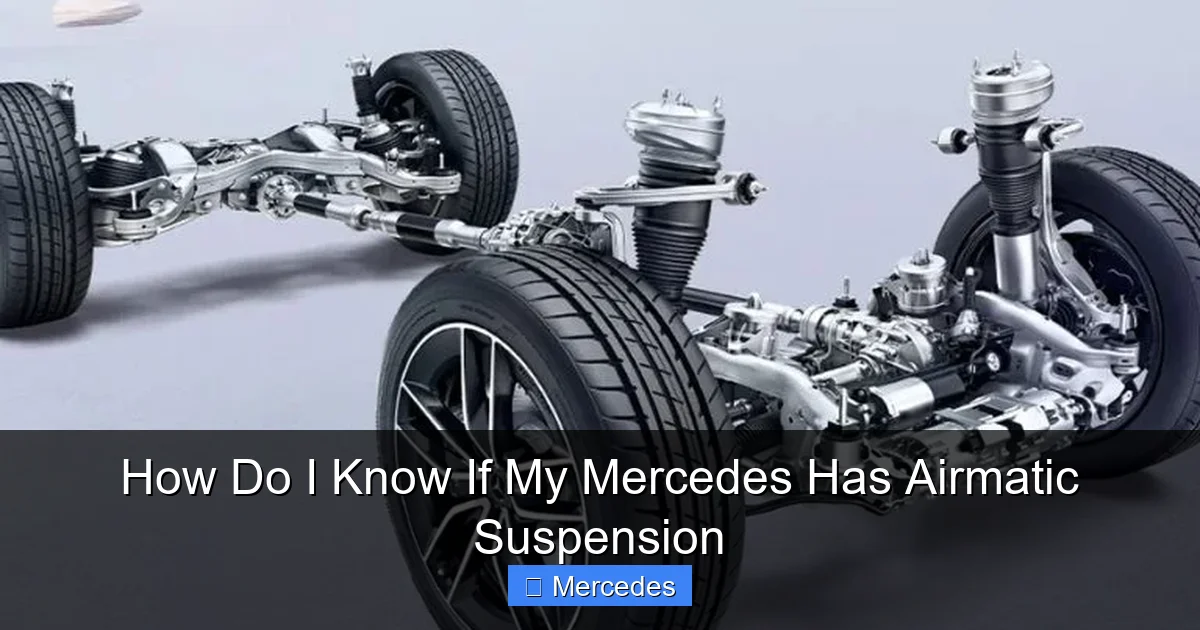
Visual guide about How Do I Know If My Mercedes Has Airmatic Suspension
Image source: cdn-ds.com
Looking for Air Bellows
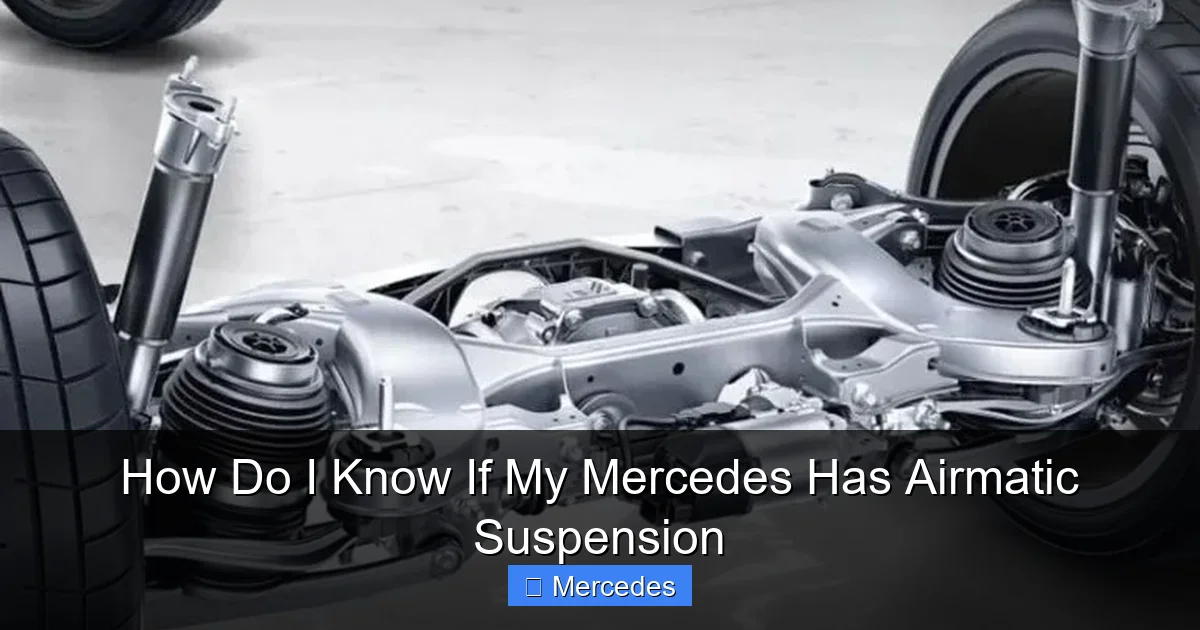
Standard suspension uses coil springs. These look like thick, spiraled metal coils. Airmatic suspension, however, uses rubber air bags. These look like thick, black rubber bellows or “sleeves” that surround the shock absorber. If you see rubber instead of metal spirals, you have Airmatic.
Comparing the Sides
One of the fastest ways to spot a failing Airmatic system is to look at the car’s stance. If the car is leaning to one side or looks like it is “squatting” in the rear, it is a classic sign of an air leak. Traditional springs don’t just “sink” overnight; they only sag if they are physically broken. If your car looks lower in the morning than it did when you parked it at night, you are dealing with an air suspension system.
Checking for the Compressor
If you are feeling adventurous, you can look for the air compressor. This is a small pump located in the engine bay or near the trunk. It is the heart of the Airmatic system, pumping air into the bags. If you see a pump connected to air lines running toward the wheels, you’ve found your answer.
Using the VIN and Build Sheet
If you want 100% certainty without crawling under the car, the Vehicle Identification Number (VIN) is your best friend. Every single feature installed at the factory is coded into the VIN.
Visual guide about How Do I Know If My Mercedes Has Airmatic Suspension
Image source: cdn-ds.com
Decoding the VIN
You can find your VIN on the driver’s side dashboard (visible through the windshield) or on your registration papers. You can enter this number into a VIN decoder online or call a local Mercedes-Benz dealership. The dealer can pull up the “Build Sheet,” which is a list of every option the car had when it left the factory.
Checking the Option Codes
On the build sheet, look for specific option codes. Airmatic is often listed as a specific package or a standalone option. This is the most accurate method because it removes all the guesswork. It is much like how you might check your car’s technical specs to see how do I know which tire is low on air by using the car’s onboard computer; the VIN tells you exactly what the car was born with.
The “Feel” and Ride Quality
Sometimes, the way a car drives tells you everything you need to know. Airmatic is designed to provide a level of comfort that traditional springs simply cannot match.

Visual guide about How Do I Know If My Mercedes Has Airmatic Suspension
Image source: cdn-ds.com
The “Floating” Sensation
When you drive a car with Airmatic, it feels like you are gliding. The car absorbs bumps and potholes with almost no jarring movement. If the ride feels exceptionally smooth—almost like you are on a cloud—it is likely Airmatic. Traditional suspension feels more “connected” to the road, meaning you feel the bumps more distinctly.
Automatic Leveling
Notice what happens when you load the car with heavy luggage or passengers. A standard car will sink lower toward the ground when weighted down. An Airmatic car will automatically pump air into the bags to keep the car perfectly level. If your car maintains its height regardless of the load, it is using air suspension.
High-Speed Stability
Airmatic systems often lower the car automatically as you increase your speed. This reduces wind resistance and improves stability. If you notice the car feels “lower” and more planted on the highway compared to when it is idling in your driveway, that is the Airmatic system adjusting for aerodynamics.
Common Signs of Airmatic Issues
Knowing if you have Airmatic is especially important because the system requires specific care. Unlike traditional springs, air bags eventually leak, and compressors eventually wear out.
The “Sinking” Effect
As mentioned before, if your car sinks after being parked for a few hours, you have an air leak. This is the most common symptom of an aging Airmatic system. If you start the car and hear a loud humming sound for a few seconds, that is the compressor working hard to lift the car back up to the correct height.
Harsh Ride Quality
When an Airmatic system fails, it often goes to a “fail-safe” mode. This can make the ride feel incredibly harsh or “bouncy.” If your Mercedes suddenly feels like it has the ride quality of a truck, it might be because the air system has failed, and the car is resting on its internal bump stops.
Warning Lights
Your dashboard will tell you if there is a problem. A “CAR” symbol with a warning or a message saying “Suspension Leveling Fault” is a dead giveaway. Just as you would check how do I know my oil life percentage to keep your engine healthy, monitoring these suspension warnings is key to preventing a costly breakdown.
Pros and Cons of Airmatic Suspension
Now that you know how to identify it, you might be wondering if having Airmatic is actually a good thing. Like most luxury features, it comes with trade-offs.
The Advantages
- Unmatched Comfort: It is the gold standard for luxury travel.
- Adjustability: You can raise the car for obstacles or lower it for style and speed.
- Load Leveling: No more sagging rear ends when carrying passengers.
- Better Handling: The system can stiffen up during cornering to reduce body roll.
The Disadvantages
- Higher Cost: Replacing an air strut is significantly more expensive than replacing a coil spring.
- Complexity: More parts (compressors, sensors, lines) means more things that can break.
- Maintenance: It requires specialized knowledge to repair correctly.
Summary of Identification Methods
To wrap things up, let’s summarize the quickest ways to answer “how do I know if my Mercedes has Airmatic suspension.”
First, check your center console for a height adjustment button. Second, look under the car for rubber air bags instead of metal coils. Third, use your VIN to check the factory build sheet. Finally, pay attention to the ride quality—if it feels like a floating cloud and levels itself automatically, you have Airmatic.
Knowing whether your car has this system helps you plan for future maintenance. If you have Airmatic, be mindful of any sagging or unusual noises. If you have standard suspension, you can enjoy the simplicity and lower maintenance costs of traditional springs.
Regardless of which system you have, keeping your Mercedes in top shape is all about paying attention to the details. From checking your suspension to monitoring your fluids, a little bit of attention goes a long way in preserving the life of your luxury vehicle.
Frequently Asked Questions
How can I tell if my Mercedes Airmatic is leaking?
The most obvious sign is if the car sags or leans to one side after being parked overnight. You may also hear the compressor running more frequently or see a “Suspension Fault” message on your dashboard.
Is Airmatic better than traditional coil springs?
It depends on your priorities. Airmatic is far superior for comfort and versatility, but coil springs are much more durable and cheaper to maintain over the long term.
Can I convert my Airmatic suspension to coil springs?
Yes, there are “coil-over” conversion kits available. This is a popular choice for owners who want to get rid of the expensive air system and have a permanent, reliable ride height.
How long does a Mercedes Airmatic system usually last?
Most Airmatic components last between 80,000 and 120,000 miles. However, depending on the road conditions and climate, some bags may leak sooner, especially in areas where road salt is used.
Does every Mercedes-Benz model have Airmatic?
No, it is usually an optional feature or reserved for higher-end models like the S-Class, E-Class, and GL-Class. Many entry-level or sport-tuned models use traditional suspension.
Is it safe to drive if the Airmatic system fails?
It is safe for short distances, but you should get it fixed quickly. Driving on a failed system can put extra stress on other suspension components and significantly reduce your handling and braking efficiency.


