How Much Is a Lamborghini Truck
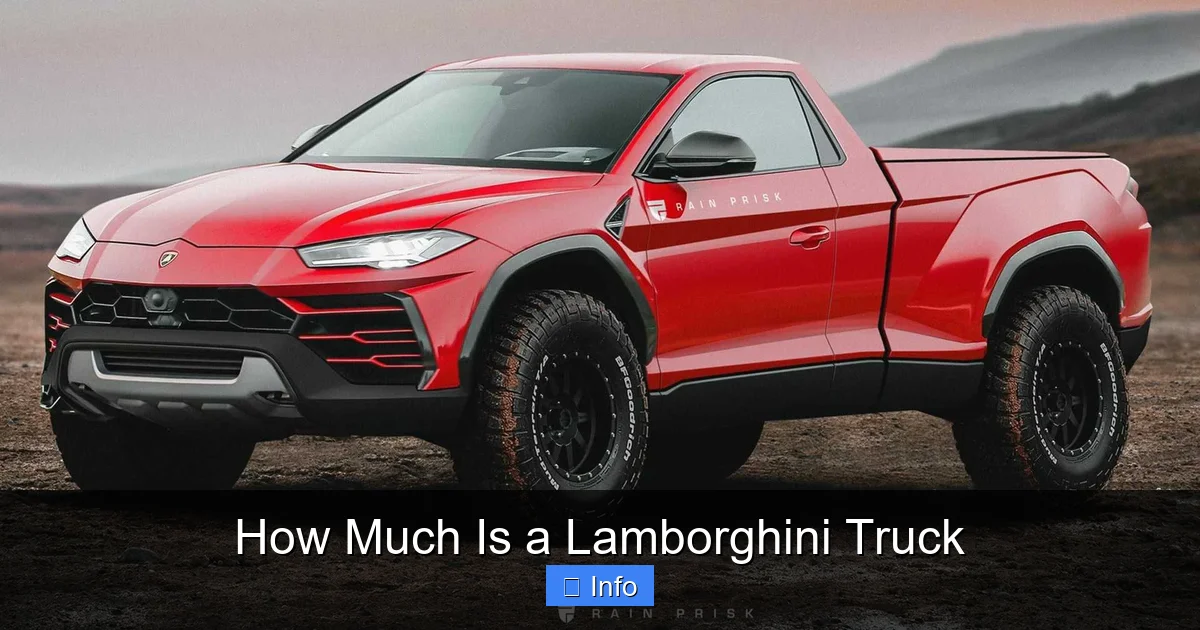
Discover why lamborghini trucks command premium prices. This guide breaks down everything you need to know about lamborghini truck pricing, from raw materials to brand prestige. Learn about factors that influence lamborghini truck pricing and whether your budget aligns with these luxury machines.
Have you ever stared at a price tag for a lamborghini truck and wondered where all that money went? These exotic vehicles blend raw power with stunning design, creating a unique class of automobile that doesn’t fit neatly into traditional categories. The question isn’t just about what you can afford today, but understanding the true cost of owning something that combines motorsport heritage with daily usability. This guide will walk you through lamborghini truck pricing, covering everything from initial purchase to ongoing expense management.
## What Is a Lamborghini Truck?
At first glance, a lamborghini truck might seem like a strange hybrid of concepts. Lamborghini is best known for producing supercars with blistering speeds and aggressive styling. However, certain models have been adapted or modified to function as trucks. The most notable examples include the VW Lobster, the iconic LMV concept, and various custom-built conversions that transform sports cars into utilitarian vehicles. Unlike a standard freight truck engineered for cargo hauling, a lamborghini truck prioritizes performance, handling, and aesthetic flair. These vehicles typically feature V10 or twin-turbo V8 engines, advanced suspension systems, and lightweight construction. Whether you’re considering the powerful Huracán ST or the versatile Urus, the price reflects both the engineering challenge and the brand’s legacy of excellence.
Understanding what distinguishes a lamborghini truck from a conventional pickup helps explain why you see such steep price differences. Traditional trucks focus on durability and payload capacity, while lamborghini trucks emphasize speed, agility, and driver engagement. This fundamental difference in purpose directly impacts manufacturing costs, material quality, and component sourcing. As we explore lamborghini truck pricing in the sections below, you’ll see how these core distinctions manifest in real-world financial figures.
## Price Range Overview
When you look at the starting prices for new lamborghini trucks, you’ll notice a clear hierarchy among models. Entry-level offerings like the Urus begin at approximately $115,000, positioning it competitively within the premium crossover space. Moving up the spectrum, more powerful variants such as the Huracán or the Thundercruiser push prices into the $130,000 to $150,000 range. Full-size adaptations like the Lamborghini LMV, engineered specifically for truck-like dimensions, command even higher asking prices that often exceed $180,000 before any options are selected. Even these top-tier models include base equipment that rivals the functionality of larger luxury vehicles.
It’s important to distinguish between sticker price and actual dealership cost. Shipping, taxes, registration, and dealer fees can add another 5-10 percent to your initial investment. Then there’s the option package. Many customers upgrade with premium wheels, special paint finishes, enhanced audio systems, or additional safety features. Each addition represents a substantial percentage increase in total cost. For example, a minor paint job or upgraded interior can add $15,000 to $25,000 to the purchase price. When factoring in these variables, a fully customized lamborghini truck can easily surpass $200,000.
## Factors That Affect Lamborghini Truck Pricing
Several interconnected factors drive lamborghini truck pricing up and down. The engine specification stands as the primary determinant of cost. Models featuring naturally aspirated V10 engines produce more power but require different cooling systems and maintenance schedules compared to turbocharged V8s. Turbocharged versions benefit from improved efficiency but demand more precise tuning and additional sensor packages. Body configuration also plays a critical role. Compact models like the Huracán ST prioritize maneuverability and handle smaller spaces, making them somewhat more affordable than massive full-size applications. Meanwhile, extended-length variants accommodate taller loads and command higher price tags due to increased complexity.
Market demand creates another dynamic force. Limited production runs for special editions result in scarcity-driven pricing. When suppliers allocate fewer engines to their flagship models, waiting lists develop and prices climb. Additionally, cultural trends shape demand; the rise of the “dirty sporty” aesthetic has kept certain lamborghini truck designs in steady demand despite economic fluctuations. Dealer inventory levels matter as well. Cars sitting on lot shelves longer accumulate holding costs, allowing sellers to request higher prices while maintaining sales velocity.
Finally, the relationship between race heritage and production capabilities adds nuance. Vehicles originally developed for competition, like the Lamborghini Avangarde concept adapted into a truck form, command multiple thousand-dollar price premiums due to their proven performance credentials. Conversely, road-focused models prioritizing comfort and practicality sit at the lower end of the price spectrum.
## Market Value Comparison
To contextualize lamborghini truck pricing, it’s helpful to compare them with traditional trucks. A standard 2023 Ford F-150 rises to approximately $38,000 new, representing a fraction of the cost of equivalent lamborghini truck positions. Even when considering that many lamborghini models share chassis platforms with other premium vehicles, the price gap remains substantial. This disparity stems primarily from the perception of exclusivity, technological innovation, and emotional appeal associated with the brand. The buyer isn’t simply purchasing transportation; they’re acquiring a piece of automotive artistry.
Interestingly, the gap has narrowed slightly in recent years. Electric powertrain adoption in some lamborghini truck concepts suggests future models may compete more directly with electric commercial trucks. Still, the traditional gas-powered lamborghini truck retains advantages in performance metrics and driving dynamics that justify its premium positioning. Owners can expect lamborghini trucks to depreciate differently than conventional vehicles. Rather than dropping precipitously after five years, these exotic models tend to hold value remarkably well, sometimes appreciating modestly over time as collector interest grows.
## Budget-Friendly Alternatives
Not everyone possesses the financial means—or desire—to commit to a true lamborghini truck. Fortunately, several alternative options deliver compelling performance at significantly lower price points. Mid-sized luxury pickups like the Chevrolet Tahoe or Ram 2500 provide robust trimming with respectable horsepower without approaching the price of exotic imports. For those drawn to electric propulsion, the Tesla Cybertruck offers a futuristic experience with lower operational costs once purchased, though technology gaps remain distinct from traditional lamborghini engineering.
Hybrid approaches also exist. Some manufacturers now blur lines between traditional trucks and sports car DNA, creating vehicles that offer high performance with more everyday usability. Choosing wisely between a conventional truck and a lamborghini truck ultimately comes down to priorities: Do you want pure utility, or do you crave the thrill of street-legal supercars? The answer shapes your selection process and determines the final price you encounter.
## Investment Potential and Resale
One of the most appealing aspects of lamborghini truck ownership is the potential for long-term appreciation. Well-maintained exotic vehicles frequently outperform traditional assets in resale markets. Their limited production runs and passionate enthusiast communities create sustained demand. A properly preserved lamborghini truck can maintain 70-80 percent of its value after seven years, far exceeding the depreciation observed in standard pickups.
This investment potential rests on several pillars. First, meticulous documentation of maintenance ensures transparency when future buyers evaluate the vehicle. Second, retaining original factory colors and unmodified interiors minimizes restoration costs. Third, avoiding unauthorized modifications preserves the vehicle’s desirability to discerning collectors. By treating ownership as a protected asset rather than disposable commodity, you position yourself for lasting financial returns alongside the prestige that comes with your unique machine.
## Conclusion
Purchasing a lamborghini truck represents a significant financial commitment, yet it may be worthwhile for those who view automobiles as both functional tools and collectibles. The starting prices range from around $115,000 for entry models to well over $200,000 for fully customized applications. Every dollar spent contributes to engineering excellence, cutting-edge technology, and an identity synonymous with performance and style. For the uninitiated, understanding these costs beforehand prevents costly surprises. Careful research, thorough budgeting, and patient acquisition strategies will help you secure a lamborghini truck that meets your criteria while maximizing both enjoyment and return on investment.
—
### Frequently Asked Questions
What is the average price of a new lamborghini truck?
New lamborghini trucks generally start between $85,000 and $145,000, depending on the specific model year and configuration. Premium variants like the Urus or Huracán ST can exceed $150,000 at the factory. Dealership markups and optional equipment can push the final purchase price well above these baseline figures, especially for factory-unique finishes and extensive performance packages.
Do lamborghini trucks require special maintenance?
Yes, lamborghini trucks demand specialized maintenance routines due to their high-performance engines and sophisticated electronics. Regular services include oil changes every 10,000 miles, timing belt replacements, coolant system checks, and advanced tire rotations. Specialized shops experienced with the brand’s proprietary systems are recommended to ensure proper care and longevity.
Is insurance more expensive for a lamborghini truck?
Insurance costs for lamborghini trucks are notably higher than for standard passenger vehicles. Policyholders must account for the vehicle’s exceptionally high replacement value and limited secondary-market liquidity. Premiums typically run 2-3 times higher than comparable non-exotic models, emphasizing the importance of thorough risk assessment before purchase.
How does ownership cost compare to traditional trucks?
Ownership expenses for lamborghini trucks are substantially greater than for conventional trucks. Beyond fuel consumption—which can reach 20-30 gallons daily—these vehicles require premium lubricants, specialized filters, and periodic engine rebuilds. Comprehensive coverage often includes extensive liability limits and may necessitate additional endorsements to protect against the elevated risk profile associated with high-performance machinery.
Can a used lamborghini truck be a smart investment?
With careful selection, yes. Pre-owned lamborghini trucks can depreciate more slowly than mass-produced trucks, particularly if they exhibit low mileage, complete service histories, and minimal accident reports. Focusing on models from trusted dealerships with documented maintenance records maximizes resale potential and upholds the vehicle’s exclusivity value.
What are common reasons for lamborghini truck depreciation?
Excessive wear and tear, inconsistent maintenance tracking, and visible damage from accidents contribute to rapid depreciation. Enthusiasts who avoid these pitfalls through disciplined care typically see their investments hold value surprisingly well. Documentation and professional detailing also play protective roles in maintaining resale viability.
Key Takeaways
- Only the rarest models reach top price points
- Maintenance costs significantly impact ownership
- Insurance premiums vary widely across lamborghini trucks
- Used lamborghini trucks depreciate slower than anticipated
- Budget-friendly alternatives exist for performance seekers
- Resale value hinges on condition and market demand
- Proper ownership practices preserve your investment
Frequently Asked Questions
What is How Much Is A Lamborghini Truck?
How Much Is A Lamborghini Truck is an important topic with many practical applications.