How to Calculate on Road Price of Car
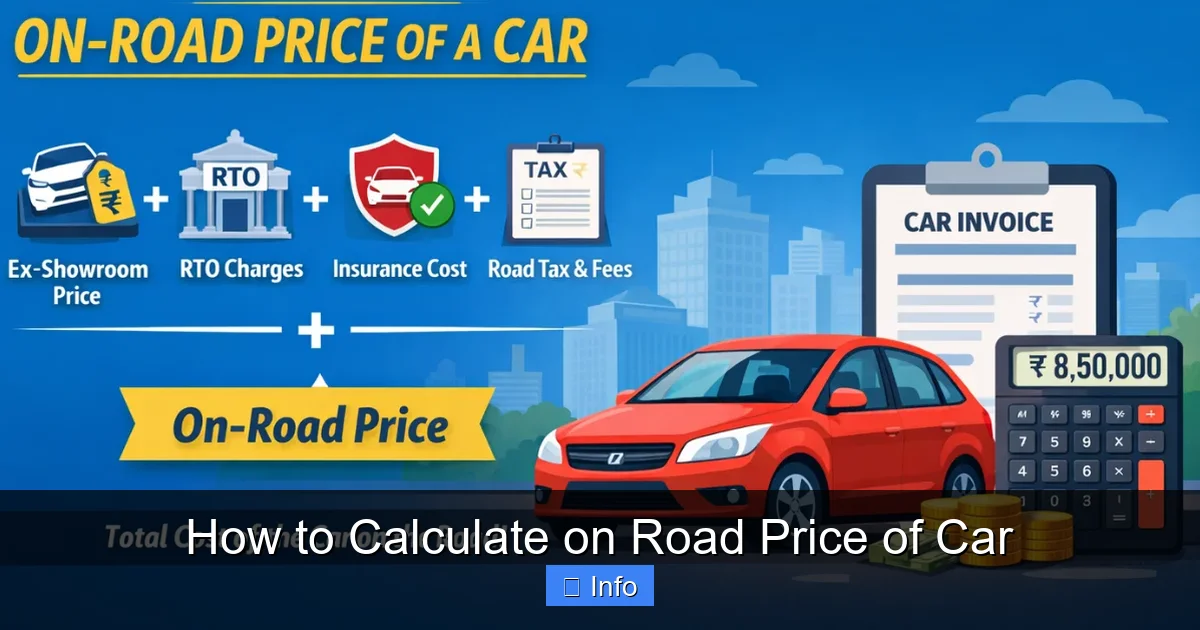
Calculating the on-road price of a car can feel overwhelming, but breaking it down into simple components makes it manageable. In this guide, we’ll walk you through every fee, tax, and charge so you know exactly what you’re paying for.
“Buying a car is one of the biggest financial decisions many of us make. While the showroom price tag grabs your attention, it’s rarely what you actually hand over at the dealership. The on-road price includes a mix of taxes, registration fees, insurance, and dealer charges that can increase the total by 15% to 30%. If you’ve ever felt confused by the final number, you’re not alone. Learning how to calculate on road price of car empowers you to negotiate better, budget accurately, and avoid unexpected surprises. In this post, we’ll break down every component step by step, using plain language and practical examples so you can approach your next purchase with confidence. Knowing the true cost upfront also helps you compare financing options and avoid stretching your budget beyond comfort.”
Key Takeaways
- Know the base ex-showroom price: This is the starting point before any additional costs are added.
- Add RTO and registration fees: Government taxes that vary by state and vehicle type.
- Include insurance premiums: Mandatory coverage that significantly impacts the final on-road price.
- Factor in road tax: A state-imposed tax calculated based on the vehicle’s price and specifications.
- Account for dealer accessories and handling charges: Optional add-ons that dealers often bundle into the final quote.
- Use a reliable on-road price calculator: Online tools can give you a quick estimate, but always verify the breakdown.
- Compare multiple quotes: Different dealerships may offer varying prices for the same model.
📑 Table of Contents
Understanding the Ex-Showroom Price
The ex-showroom price is the base amount that the manufacturer sets for a vehicle, excluding all additional costs. This price does not include road tax, registration, or insurance; it simply reflects the cost of the car at the dealership gate. When you look at a car brochure or website, the number you see is usually the ex-showroom price. Understanding this figure is the first step in learning how to calculate on road price of car, because every other charge builds upon it. For example, if a car has an ex-showroom price of ₹10 lakh, the final on-road price could easily cross ₹12 lakh once taxes and fees are added. Knowing this starting point helps you estimate the extra amount you’ll need to budget.
What Ex-Showroom Means
Ex-showroom means the price of the vehicle before the dealer adds any local or regional taxes. It’s a standardized figure that remains consistent across a city or state, though it can vary slightly based on the specific variant you choose. This baseline makes it easier to compare different models on an equal footing, but it’s important to remember that it’s only half the story.
How It Differs From On-Road
The on-road price is the total amount you pay to drive the car home. It includes the ex-showroom price plus every applicable tax, fee, and charge. The difference between the two can be substantial, especially in states with higher road tax rates. By keeping the ex-showroom price in mind, you can mentally subtract it from any total quote you receive, making the extra costs more transparent.
Decoding RTO and Registration Charges
Every vehicle must be registered with the Regional Transport Office, or RTO, before it can legally hit the roads. The registration fee covers the cost of assigning a unique registration number and issuing the necessary documents. This fee is usually a small percentage of the ex-showroom price, but it varies depending on the vehicle’s engine capacity and type. In addition to the base registration charge, you’ll also pay a smart card fee and a one-time road tax, which is calculated based on the vehicle’s price and specifications. These RTO-related costs can add anywhere between 3% and 8% to the ex-showroom price, depending on your state and the car you choose. Being aware of these charges helps you avoid sticker shock when the dealer hands you the final invoice.
Visual guide about How to Calculate on Road Price of Car
Image source: carnbikecafe.com
Road Tax Variations
Road tax is not uniform across India; each state has its own formula and rate structure. Some states charge a flat percentage of the ex-showroom price, while others use a slab-based system that considers the engine size, fuel type, and even the seating capacity. For instance, petrol cars often attract lower road tax compared to diesel variants, and electric vehicles may benefit from reduced or waived road tax in certain regions. This variation means that the same car model can have different on-road prices in different states, making it essential to check your local RTO guidelines before finalizing a purchase.
Registration Fees and Smart Cards
The registration fee itself is relatively modest, but it covers the administrative cost of entering your vehicle into the government database. Most RTOs now issue a smart card registration, which is more durable and harder to forge than the old paper books. The smart card fee is usually a fixed amount, but it’s mandatory for new registrations. Together, the road tax and registration fee form the core of the RTO component in your on-road price calculation, and they’re non-negotiable since they’re set by government policy.
The Role of Insurance in On-Road Pricing
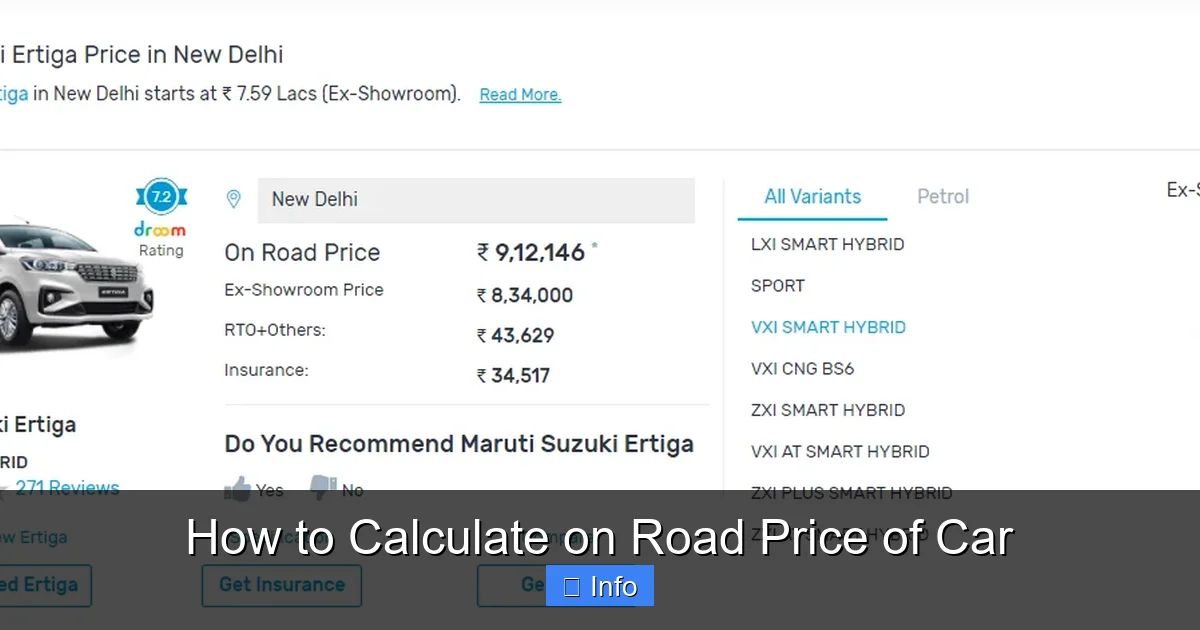
Insurance is a mandatory component of the on-road price, and no dealer will allow you to drive away without a valid policy. The cost of insurance depends on several factors, including the car’s make and model, its engine capacity, your age, location, and the type of coverage you choose. Third-party liability insurance is the minimum legal requirement, but most buyers opt for comprehensive coverage that also protects against theft, fire, and accidental damage. Comprehensive policies naturally cost more, but they provide broader peace of mind. When calculating the on-road price, insurance can range from 2% to 5% of the ex-showroom price, though premium models or high-performance cars may see higher percentages. It’s always wise to get insurance quotes from multiple providers before accepting the dealer’s bundled offer, as you might find a more affordable policy elsewhere. Just like transfer car insurance to new owner processes require careful attention to policy details, calculating your insurance cost upfront ensures there are no hidden surprises later on.
Visual guide about How to Calculate on Road Price of Car
Image source: blog.droom.in
Mandatory Coverage vs Optional Add-Ons
Basic third-party insurance covers damage or injury you cause to others, but it doesn’t pay for your own car’s repairs or theft. Optional add-ons, often called “riders,” can include zero depreciation cover, engine protection, roadside assistance, and consumables coverage. While these extras increase the premium, they can save you significant money in the event of a claim. When you’re learning how to calculate on road price of car, factor in the base premium first, then decide if any add-ons are worth the extra cost based on your driving habits and risk tolerance.
How Insurer and Model Affect Premiums
Different insurance companies use different rating factors to determine your premium. A car with a high safety rating might attract a lower rate, while a model with a history of high claim costs could push the price up. Your personal profile—age, occupation, and location—also plays a major role. Urban areas typically have higher premiums due to increased risk of accidents and theft. Additionally, the insured declared value, or IDV, which is the current market value of your car, directly influences the premium. A higher IDV means a higher sum insured, but also a higher cost. Always compare quotes from at least three insurers to ensure you’re getting a fair deal for the coverage you need.
Dealer Fees, Accessories, and Hidden Costs
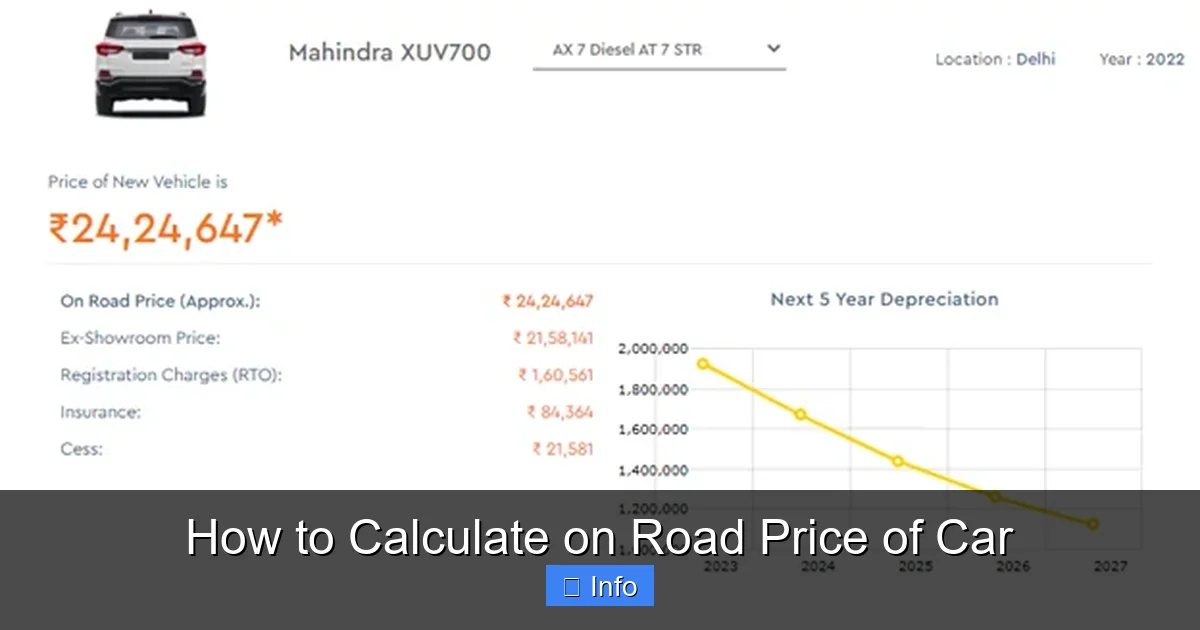
Beyond the mandatory taxes and insurance, dealers often bundle various fees and accessories into the on-road price quote. These can include documentation fees, processing charges, and optional add-ons like floor mats, anti-rust coating, or upgraded audio systems. While some of these items add genuine value, others are simply profit centers for the dealership. When you’re figuring out how to calculate on road price of car, it’s crucial to ask for a itemised breakup so you can distinguish between necessary charges and optional extras. A transparent dealer will happily separate these costs, but some may bundle them together, making the final number look more attractive than it actually is. Always request a detailed invoice before signing any paperwork. Before finalising, it’s also wise to understand the pre-delivery inspection of car to ensure all fees are accounted for correctly and the vehicle meets quality standards before you drive home.
Visual guide about How to Calculate on Road Price of Car
Image source: cdn1.acedms.com
Common Dealer Add-Ons
Floor mits, seat covers, and protective films are among the most frequently offered add-ons. These items are often marked up significantly compared to market prices, so it’s worth checking if you can purchase them independently for less. Other common additions include anti-theft devices, nitrogen-filled tyres, and fabric protectors. While some of these can enhance your ownership experience, many are unnecessary if you’re comfortable with basic maintenance. The key is to evaluate each add-on based on your actual needs rather than the dealer’s sales pitch.
Negotiating Hidden Charges
Many buyers accept the first on-road price quote without question, but there’s often room for negotiation, especially on dealer fees. You can ask the dealer to waive or reduce documentation charges, particularly if you’re paying in cash or financing through a specific bank. Some dealerships also offer promotional discounts that can lower the overall price. If a particular add-on doesn’t appeal to you, politely decline or request its removal from the quote. Remember, the on-road price is not set in stone; it’s a sum of individual components, and each one is an opportunity to save a few thousand rupees. Being proactive and informed puts you in a stronger position to get the best deal.
Using Online Calculators and Getting Accurate Quotes
The internet has made it easier than ever to estimate the on-road price before you set foot in a dealership. Numerous websites offer on-road price calculators that take your city, model, and variant into account to give you a reasonably accurate breakdown. These tools typically ask for the ex-showroom price, your state, and the engine type, then apply the applicable road tax, registration fee, and insurance premium to generate a total. While online calculators are a great starting point, they often provide estimates rather than exact figures, since road tax rates and insurance premiums can vary even within the same city. To get the most reliable result, use multiple calculators and compare the outputs, then cross-check with the specific dealer you’re planning to buy from. This multi-pronged approach gives you a realistic range and helps you negotiate from a position of knowledge.
Trusted Calculator Tools
Popular automotive websites and financial portals often host the most user-friendly calculators. Look for tools that allow you to input your exact pin code, as road tax and registration fees can vary by district. Some advanced calculators also let you select your preferred insurance coverage, giving you a more personalised estimate. However, keep in mind that these tools rely on average data, so your actual quote may differ based on your negotiation skills, the specific variant you choose, and any current promotional offers the dealer is running.
Verifying the Breakdown
Once you receive a quote from a dealer, don’t just accept the total amount at face value. Ask for a line-item breakdown that shows the ex-showroom price, road tax amount, registration fee, insurance premium, and any dealer-added charges. Compare this breakdown with the estimate you got from the online calculator. If there are discrepancies, ask the dealer to explain each line item. A reputable dealer will be transparent and happy to walk you through the calculations. This verification step is crucial because it ensures you’re not overpaying for unnecessary services or inflated taxes.
Final Thoughts: Drive Away Confident
Calculating the on-road price of a car may seem like a daunting task at first, but once you break it down into its core components, it becomes a manageable process. You start with the ex-showroom price, add the state-specific road tax and registration fees, include a suitable insurance policy, and account for any dealer charges or accessories you actually want. By understanding each step, you can estimate the total cost with confidence and avoid the stress of surprise expenses. The key is to do your research upfront, use reliable online tools, and always demand an itemised invoice from the dealer. With this knowledge in hand, you’ll be able to negotiate better, budget accurately, and drive away feeling fully informed about exactly what you’re paying for. Remember, a well-informed buyer is always in the strongest position, and learning how to calculate on road price of car is one of the smartest moves you can make before signing any purchase agreement.
Frequently Asked Questions
What is included in the on-road price of a car?
The on-road price includes the ex-showroom price, road tax, registration fees, insurance premium, and any dealer-added accessories or charges. It is the total amount you pay to drive the car home.
Can the on-road price vary between different cities?
Yes, road tax and registration fees are state-specific, so the on-road price can differ significantly between cities even for the same car model. Local taxes and RTO charges influence the final amount.
Is the ex-showroom price the same as the on-road price?
No, the ex-showroom price is the base cost of the vehicle before the dealership, while the on-road price includes all additional taxes, fees, and insurance required for legal registration and use.
How can I estimate the on-road price before visiting a dealership?
You can use online on-road price calculators that factor in your city, model, and variant. These tools provide a close estimate, but always verify the breakdown with the dealer for exact figures.
Do dealer accessories increase the on-road price significantly?
Dealer accessories can add anywhere from a few thousand to several lakhs to the on-road price, depending on the type and number of items chosen. It’s advisable to select only those you truly need.
Why is insurance mandatory for the on-road price?
Insurance is legally required to operate a vehicle on public roads, and dealers include a basic policy in the on-road price. The cost varies based on the car’s value, your profile, and the coverage type you choose.