
How to Disconnect Toyota Electrical Connectors
Knowing how to disconnect Toyota electrical connectors the right way can save time, prevent broken clips, and protect delicate wiring. With a few simple tools and the right technique, you can unplug most Toyota connectors safely during repairs, cleaning, or part replacement.
How to Disconnect Toyota Electrical Connectors
If you have ever tried to unplug a sensor, switch, or light on a Toyota, you already know one thing. The connector can feel stuck even when it is not. That is why learning how to disconnect Toyota electrical connectors is such a useful skill. It helps you work faster, avoid damage, and feel more confident around your car.
Most Toyota connectors are built to stay secure. That is good while you drive, but not so fun when you need to replace a part. The trick is to use the right method for the style of connector you have. Once you know what to look for, how to disconnect Toyota electrical connectors becomes simple and safe.
This guide will walk you through the process in plain language. You will learn the tools you need, the common connector types, the best way to release them, and what to do when one refuses to budge. Whether you are changing a sensor, removing a headlight, or doing a small interior repair, these steps will help.
Key Takeaways
- Use the release tab: Most Toyota electrical connectors have a lock or tab that must be pressed before the plug will come apart.
- Pull on the connector body: Never yank the wires. Grip the plastic housing and pull straight out.
- Check for secondary locks: Some Toyota plugs have an extra safety clip that must be moved first.
- Work with the battery off: Disconnecting the battery helps reduce the risk of shorts or accidental electrical damage.
- Use gentle tools if needed: A small pick or trim tool can help release stubborn tabs without breaking them.
- Inspect before reconnecting: Look for dirt, corrosion, or damaged pins before plugging the connector back in.
- Take your time: Slow, careful movement is the best way to avoid broken connectors and costly repairs.
📑 Table of Contents
- Why Toyota Electrical Connectors Feel So Tight
- Tools and Prep Before You Start
- How to Disconnect Toyota Electrical Connectors Step by Step
- Common Toyota Connector Types You May See
- What to Do If the Connector Will Not Come Off
- Best Practices for Safe Reconnection
- Practical Examples From Common Toyota Jobs
- Final Tips to Avoid Damage
- Conclusion
Why Toyota Electrical Connectors Feel So Tight
They are made to lock in place
Toyota uses connectors that snap firmly together. This keeps vibration from shaking them loose. It also protects the connection from dirt and moisture. So if a plug feels tight, that is often normal. It does not always mean something is wrong.
Age and heat can make them harder to release
Over time, plastic gets stiff. Heat from the engine bay can also make clips brittle. Dust, grease, and corrosion can add more resistance. That is why how to disconnect Toyota electrical connectors is not just about pulling harder. It is about using the proper release method.
Different Toyota models use different lock styles
A Corolla may use a simple press tab. A Tacoma or Highlander may have a tab plus a secondary lock. Some connectors also have a sliding clip. The basic idea is the same, but the shape can change from one part to another. If you are unsure, take a close look before you try to force it.
Tools and Prep Before You Start
Gather a few simple tools
You do not need a full shop to handle how to disconnect Toyota electrical connectors. In many cases, your fingers are enough. Still, a few tools can help:
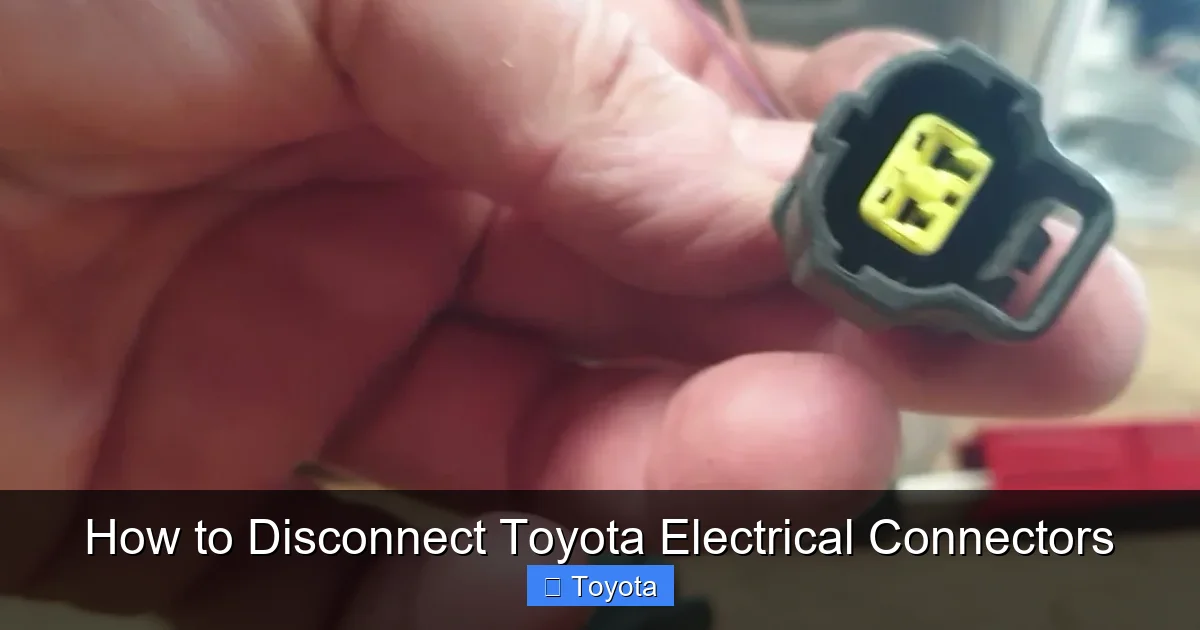
Visual guide about How to Disconnect Toyota Electrical Connectors
Image source: thecarhow.com
- A flashlight
- A small pick or hook tool
- Plastic trim tools
- Needle-nose pliers for very specific cases
- Electrical contact cleaner
Plastic tools are best when you want to avoid scratching nearby parts. Metal tools can work, but use them with care. One slip can damage a tab or a wire loom.
Disconnect the battery when needed
For many jobs, it is smart to disconnect the negative battery terminal first. This lowers the chance of a short circuit. It is especially helpful when you are working near airbags, the starter, the alternator, or exposed wiring. If you are doing a simple interior plug, you may not always need to, but it is still a safe habit.
Work in good light
Some Toyota connectors are easy to see. Others are tucked behind a bracket or under a panel. A flashlight helps you find the release tab and see how the connector is locked. Good light also helps you spot broken clips or dirt before you start pulling.
How to Disconnect Toyota Electrical Connectors Step by Step
Step 1: Find the lock or release tab
Start by looking at the connector closely. Most Toyota plugs have a tab on the top or side. This tab is the key to how to disconnect Toyota electrical connectors. Press it, lift it, or slide it, depending on the design.
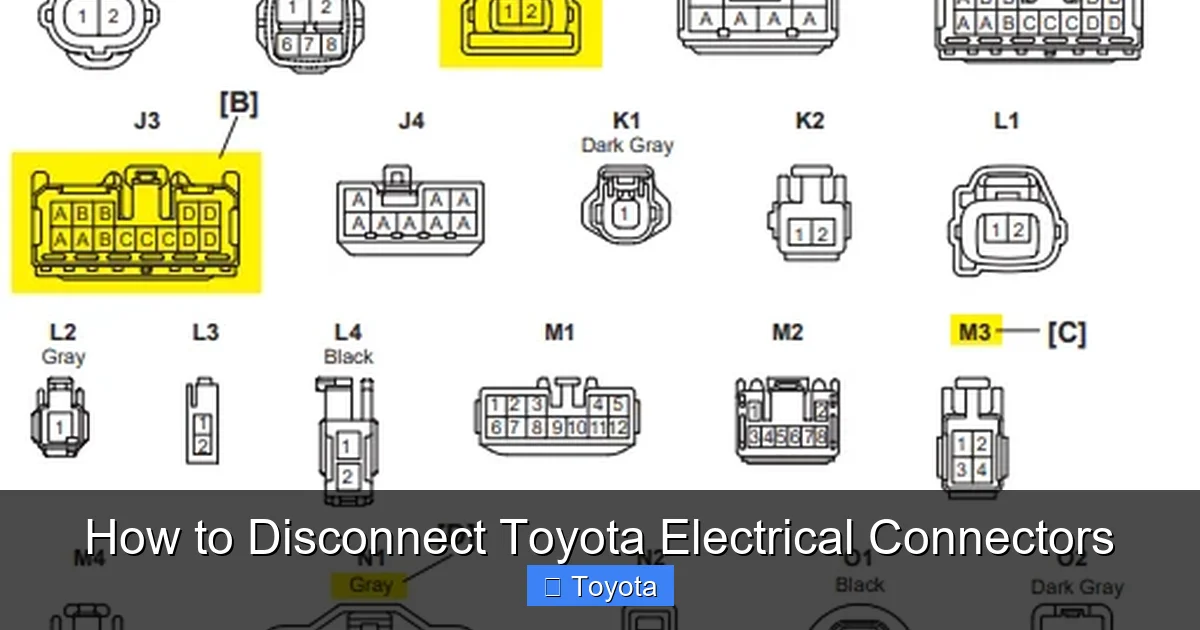
Visual guide about How to Disconnect Toyota Electrical Connectors
Image source: toyotaspace.com
If the connector has a secondary lock, do not force the main plug yet. First, move the safety clip out of the way. That clip may be blue, gray, white, or black. It often slides a few millimeters before the connector can be released.
Step 2: Press the tab fully
Press the tab all the way down or inward. You should feel it move. If it does not move, stop and look again. You may be pressing the wrong part. Some tabs are small, so a flashlight and a thin pick can help.
When you master how to disconnect Toyota electrical connectors, this step becomes easier. The tab should release the internal latch. Once that happens, the connector can slide apart without much force.
Step 3: Pull the connector body, not the wires
Hold the plastic housing with your fingers. Then pull straight back while keeping the tab pressed. Do not tug on the wires. Wires can stretch, tear, or pull out of the terminal. That can create a bigger repair than the one you started with.
If the connector is stubborn, gently wiggle it side to side while pulling. Small movement is fine. Hard twisting is not. The goal is to free the latch, not break the plug.
Step 4: Use a tool only if needed
Sometimes your fingers are not enough. That is when a small pick or trim tool can help. Use it to press the tab or lift a secondary lock. Be gentle. The plastic on older Toyota connectors can crack if you pry too hard.
When you are learning how to disconnect Toyota electrical connectors, remember that tools are helpers, not force multipliers. If a connector will not release, it usually means a lock is still engaged.
Step 5: Inspect the connector after removal
Once it is unplugged, look at both sides. Check for bent pins, dirt, green corrosion, or broken tabs. If you see grime, clean it with electrical contact cleaner and let it dry. A clean connector helps the part work better when you plug it back in.
This is also a good time to compare the connector to the old part if you are replacing something. For example, if you are working on a sensor and need to remove other panels first, guides like how to change the cabin air filter on a Toyota RAV4 can show how careful trim removal and access steps matter in Toyota repairs.
Common Toyota Connector Types You May See
Simple press-tab connectors
These are the easiest to handle. You press the tab and pull the plug apart. Many interior switches, small sensors, and light connectors use this style. If the tab is clean and not damaged, this is usually a quick job.
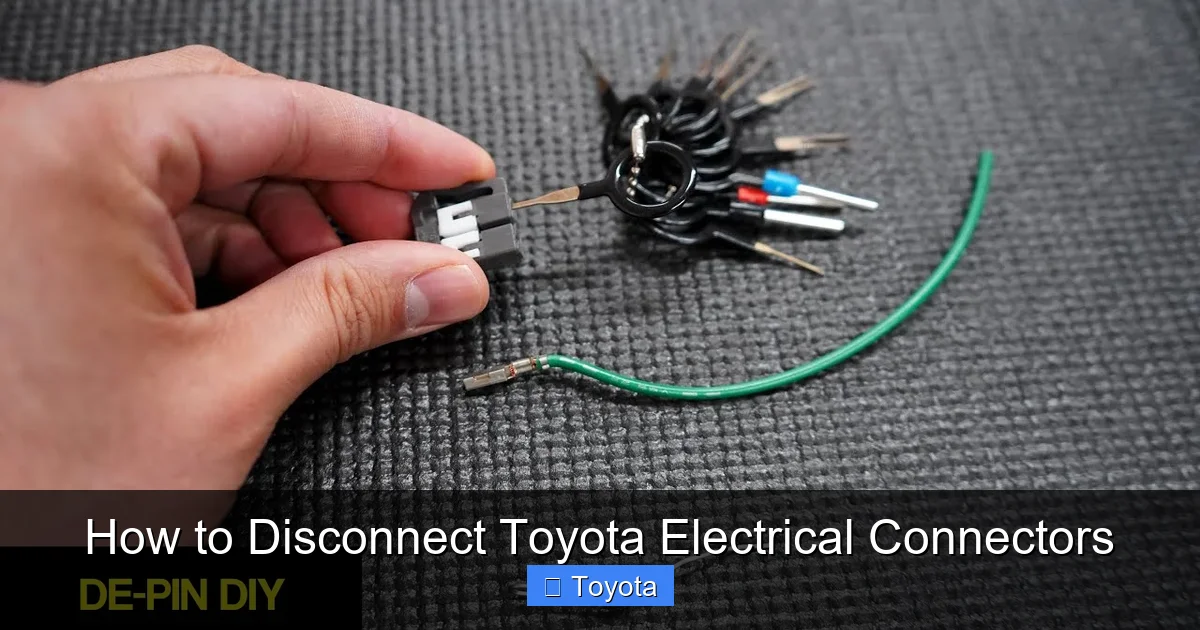
Visual guide about How to Disconnect Toyota Electrical Connectors
Image source: i.ytimg.com
Secondary-lock connectors
These have an extra clip that prevents accidental release. You often see them in the engine bay. First, slide or lift the secondary lock. Then press the main tab. This design is common because it stays secure under heat and vibration.
Sliding-lock connectors
Some Toyota connectors use a small slider instead of a direct press tab. The slider may move before the connector can be unplugged. This style can feel confusing at first, but the rule is the same: find the lock, release it, then pull the connector body straight off.
Round or sealed connectors
These are often used in areas exposed to moisture. They may have stronger seals and tighter fits. Be careful not to twist too hard, because the waterproof seal can make them feel stuck. A slow, straight pull works best.
What to Do If the Connector Will Not Come Off
Check for a hidden lock
If the plug will not move, assume a lock is still engaged. Look from the side, top, and bottom. Toyota often hides the release point in plain sight. A small clip may need to be pushed down before the main tab can move.
Use a little contact cleaner
Dirt and corrosion can make a connector feel glued in place. A small spray of electrical contact cleaner can help loosen grime. Let it soak for a moment, then try again. Do not flood the area. A little goes a long way.
Warm the area gently if the plastic is cold
Cold plastic can be stiff and easy to crack. If you are working outside in winter, let the car warm up a bit or bring the connector into a warmer space if possible. This can make how to disconnect Toyota electrical connectors much easier and safer.
Do not force it
If you have to use a lot of force, stop. Something is wrong. Forcing the connector can break the latch, damage the pins, or tear the wiring. That is a costly mistake, and it is easy to avoid with patience.
If you are dealing with another Toyota electrical issue, such as dashboard or system warning problems, it can help to read related guides like how to fix application download errors in Toyota vehicles to better understand how Toyota systems respond when connections or settings are off.
Best Practices for Safe Reconnection
Line up the connector before pushing
When you reconnect the plug, make sure it is oriented the right way. Toyota connectors are shaped to fit one way, but it is still smart to check the guide rails and pin alignment. If it feels crooked, stop and realign it.
Push until it clicks
You should hear or feel a click when the connector locks. That click matters. It tells you the latch is seated. If it does not click, the connector may only be halfway in. That can cause intermittent problems later.
Give it a light tug test
After reconnecting, pull very gently on the housing. It should stay in place. If it slides off, the lock did not engage. Re-seat it and try again. This small check can save you a lot of trouble down the road.
Protect the pins and seal
If the connector has a rubber seal, make sure it sits flat. A twisted seal can let in water or dirt. If you are reconnecting after a repair, this is a good time to verify the part is installed fully and the plug is clean.
Practical Examples From Common Toyota Jobs
Replacing a sensor
Many engine sensors use small electrical plugs. The connector may have a lock tab or a sliding clip. Press the release, pull the plug straight off, replace the sensor, and reconnect until it clicks. This is one of the most common uses for how to disconnect Toyota electrical connectors.
Removing an interior switch
Interior switches are usually easier, but the tabs can still be tight. For example, if you are removing a switch panel or dash control, use a trim tool to access the plug area. Work slowly so you do not scratch the panel or crack the clip.
Working near lighting parts
Headlight, taillight, and fog light connectors often sit in tight spots. Sometimes you need to reach behind the housing and feel for the tab by touch. A flashlight helps, but patience helps more. If you are already doing small Toyota maintenance tasks, a guide like how to change windshield wipers on a Toyota Corolla is another good example of simple hands-on care that builds confidence.
Final Tips to Avoid Damage
Take photos before unplugging
If you are working on several connectors at once, take a quick photo first. That makes reassembly easier. It also helps if you forget which connector goes where.
Label connectors in busy areas
Some Toyota repairs involve several similar plugs close together. A small piece of tape with a note can save time later. This is especially useful in the engine bay.
Replace broken clips when possible
If a latch breaks, the connector may still work, but it may not stay secure. In that case, replace the damaged connector or use the proper repair part. A loose connection can cause strange electrical issues later.
Stay calm and work slow
The best advice for how to disconnect Toyota electrical connectors is simple: do not rush. Most problems happen when someone pulls too hard or pries in the wrong spot. Slow hands make clean work.
Conclusion
Learning how to disconnect Toyota electrical connectors is one of those small car skills that pays off again and again. It helps with repairs, part swaps, cleaning, and troubleshooting. It also keeps you from breaking clips or damaging wires.
The process is not hard once you know the basics. Find the lock, release it, pull on the connector body, and inspect the plug before reconnecting. If the connector feels stuck, do not force it. Look for a hidden lock or use a little help from a small tool. With patience and the right method, how to disconnect Toyota electrical connectors becomes a quick and safe part of almost any DIY job.
And the more you do it, the easier it gets. After a few tries, you will start to recognize Toyota connector styles right away. That means less stress, fewer mistakes, and smoother repairs every time.
Frequently Asked Questions
Do I need to disconnect the battery before unplugging Toyota electrical connectors?
It is often a good idea, especially when you work near engine parts, airbags, or exposed wiring. Disconnecting the battery lowers the chance of a short circuit and makes the job safer.
Why is my Toyota connector stuck even after I press the tab?
There may be a secondary lock or a sliding clip still in place. Look closely for a hidden safety latch before you pull harder.
Can I use pliers to remove a Toyota electrical connector?
You can, but only with care and only if you grip the plastic housing. Never squeeze the wires, and avoid using too much force.
What should I do if a connector tab breaks?
If the plug still holds securely, you may be able to keep using it for a short time. For a lasting fix, replace the connector or repair the latch so it does not come loose later.
How do I know if the connector is fully reconnected?
You should hear or feel a click when it locks in place. A gentle tug test can also confirm that it is seated properly.
Can dirt or corrosion make Toyota connectors hard to remove?
Yes, grime and corrosion can make connectors feel stuck. A small amount of electrical contact cleaner can help loosen buildup and make removal easier.


