
How to Fix Braking Power Low Toyota Highlander
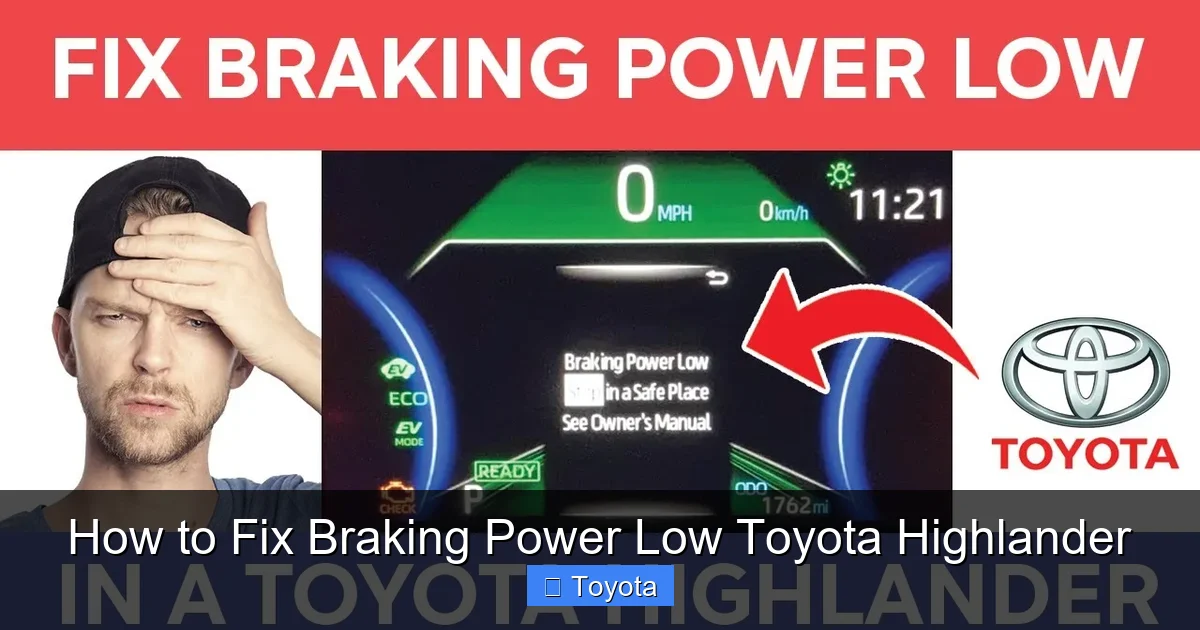
If your Toyota Highlander shows a braking power low warning, do not ignore it. This guide explains the most common causes, easy checks, and the right steps to fix braking power low Toyota Highlander issues before they get worse.
How to Fix Braking Power Low Toyota Highlander
Seeing a braking power low Toyota Highlander warning can feel scary. And for good reason. Your brakes are one of the most important safety systems in your SUV. When that message appears, it means the vehicle has found a problem that may reduce stopping power or make the brake pedal feel weak.
The good news is that the issue is often fixable. In many cases, the cause is simple, like low brake fluid or worn pads. In other cases, the problem may be tied to the brake booster, a vacuum leak, or an electrical fault. The key is to stay calm, check the basics, and act fast.
This guide will walk you through the most common causes and the best ways to fix braking power low Toyota Highlander problems. You will also learn what you can inspect yourself and when it is time to call a mechanic.
Key Takeaways
- Point 1: A braking power low warning often points to low brake fluid, worn pads, or a problem in the brake booster system.
- Point 2: Start with simple checks like fluid level, pad wear, and dashboard warnings before moving to deeper repairs.
- Point 3: Brake boosters, vacuum lines, and master cylinder issues can cause a soft pedal or weak braking feel.
- Point 4: Hybrid Highlanders may show braking power low messages because of regenerative braking or electrical system faults.
- Point 5: Driving with poor braking power is unsafe, so fix the issue as soon as possible.
- Point 6: Regular brake service helps prevent repeat braking power low Toyota Highlander warnings.
📑 Table of Contents
What the Braking Power Low Warning Means
Why the message appears
The braking power low Toyota Highlander warning means the vehicle has detected reduced help from the brake assist system. Your Highlander still has brakes, but they may need more pedal force to stop the car. That can make driving harder and less safe.
In many Toyota models, this warning may come from the brake booster system, the hydraulic system, or the hybrid braking system. If the message shows up with a hard brake pedal, a squeal, or a longer stopping distance, do not delay repairs.
How it feels when braking power is low
You may notice one or more of these signs:
- The brake pedal feels stiff or hard.
- You need to press the pedal farther than usual.
- The car takes longer to stop.
- The dashboard shows a brake warning light.
- You hear a hissing sound near the engine bay.
If these symptoms appear together, the braking power low Toyota Highlander issue is likely real and not just a sensor glitch.
Start With the Simple Checks
Check the brake fluid level
Low brake fluid is one of the first things to check. Open the hood and look at the brake fluid reservoir. It should sit between the MIN and MAX marks. If it is low, the system may not build enough pressure, which can trigger a braking power low Toyota Highlander warning.
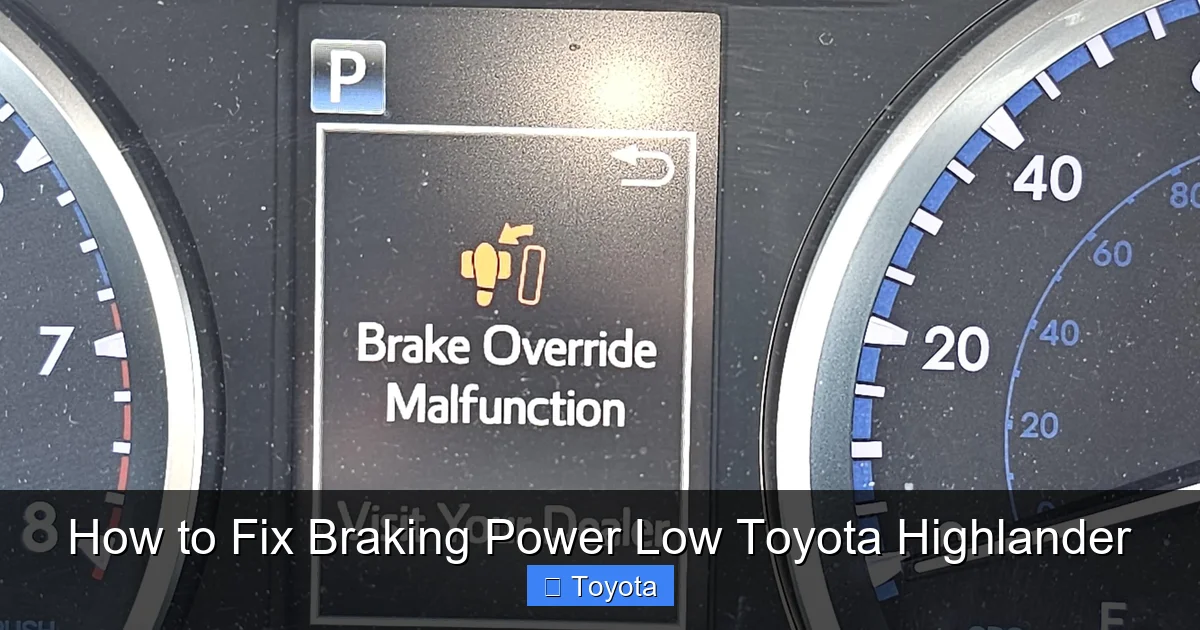
Visual guide about How to Fix Braking Power Low Toyota Highlander
Image source: i.redd.it
If the fluid is low, do not just top it off and forget it. Find out why it dropped. A leak, worn brake pads, or a bad master cylinder may be the real cause.
Inspect the brake pads and rotors
Worn brake pads can reduce stopping power and make the brake system work harder. If the pads are thin, the calipers must travel farther, and the pedal may feel off. Look through the wheel spokes if you can. If the pads look very thin, they may need replacement.
Also check the rotors. Deep grooves, rust, or heavy wear can hurt braking performance. If your Highlander shakes while stopping, the rotors may also be part of the problem.
Look for warning lights and odd sounds
Pay attention to the dash. A brake warning light, ABS light, or stability control light can help point to the cause. Strange sounds matter too. A squeal may mean worn pads. A grinding sound can mean metal-on-metal contact, which needs fast repair.
If you recently reset other service reminders, such as through a Toyota Highlander maintenance light reset, that does not clear brake faults. Brake issues need their own diagnosis.
Common Mechanical Causes of Braking Power Low
Worn brake pads or damaged rotors
This is one of the most common reasons for weak braking. Pads wear down over time. When they get too thin, the braking system loses efficiency. The rotors can also wear unevenly or become warped. That can make the pedal feel strange and reduce control.
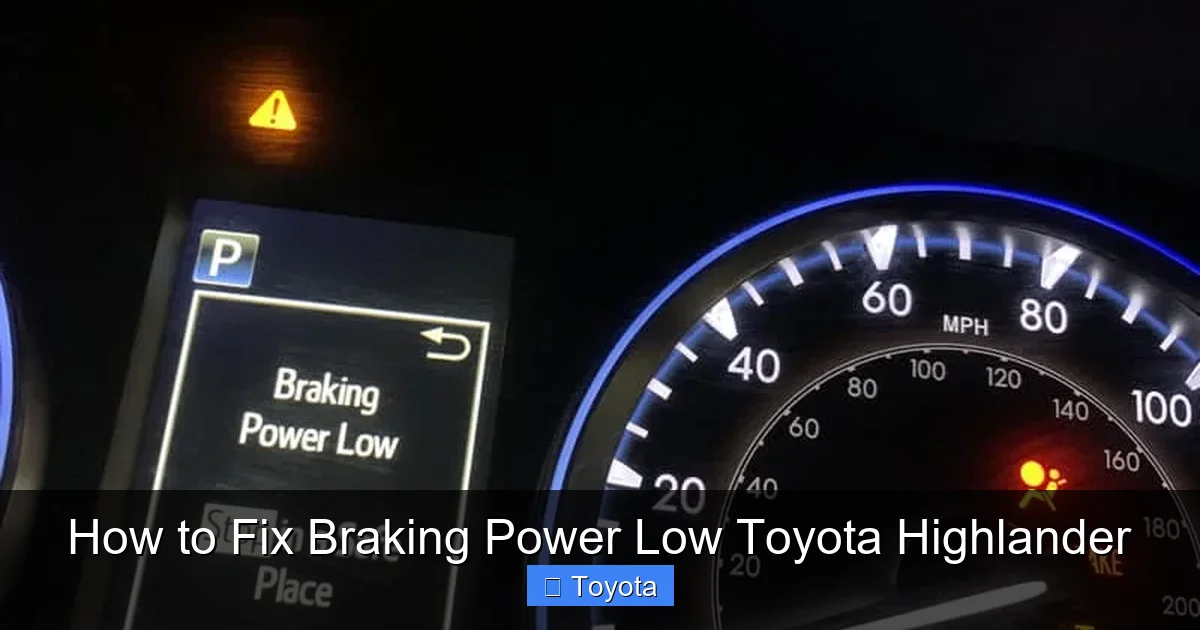
Visual guide about How to Fix Braking Power Low Toyota Highlander
Image source: garagesee.com
If your Highlander has high mileage or has not had brake service in a while, this is a strong place to start. Replacing pads and rotors often restores normal braking feel.
Brake booster failure
The brake booster helps you press the brake pedal with less effort. If it fails, the pedal can feel very hard. That is a classic sign of braking power low Toyota Highlander trouble.
A failing booster may come from age, internal wear, or a vacuum problem. You may also hear a hissing sound when pressing the brake pedal. In that case, the booster or its hose may need inspection.
Vacuum hose leaks
Many Highlander models use vacuum help for brake assist. If a hose cracks, loosens, or leaks, the booster may not work right. That can reduce brake assist and make stopping feel weak.
Check for cracked rubber hoses, loose fittings, or damaged lines near the brake booster and intake area. Even a small leak can cause a big change in pedal feel.
Master cylinder problems
The master cylinder creates hydraulic pressure for the brake system. If it leaks or wears out, braking power can drop. You may see fluid loss, a soft pedal, or uneven braking. This is a serious issue and should be fixed right away.
If you add fluid often but cannot find an outside leak, the master cylinder may be leaking internally or externally.
Hybrid and Electrical Causes in Toyota Highlander Models
Regenerative braking issues
Some Highlander models use hybrid braking systems. These systems blend regenerative braking with normal hydraulic braking. If the hybrid system has a fault, the vehicle may display a braking power low Toyota Highlander message even if the pads still look fine.
Visual guide about How to Fix Braking Power Low Toyota Highlander
Image source: garagesee.com
In hybrid models, the brake system depends on sensors, pumps, and electronic control units. A fault in one part can affect the whole system. If the warning appears with other hybrid alerts, the issue may be electronic rather than mechanical.
Faulty sensors or brake control modules
Modern Toyotas use many sensors to manage brake performance. A bad wheel speed sensor, pressure sensor, or control module can confuse the system. That may trigger a warning even when the brakes still feel partly normal.
If you have access to an OBD2 scanner, check for stored codes. That can help you narrow down the problem before replacing parts. If you do not have a scanner, a shop can run a brake system scan for you.
Weak battery or charging issues
On some Highlanders, a weak battery can cause odd brake warnings. This is more common in hybrid models, where the electrical system plays a bigger role. If the battery is old or the car has trouble starting, do not ignore it.
Low voltage can cause false warnings, sensor errors, or poor system response. A battery and charging check is a smart step when dealing with braking power low Toyota Highlander messages.
How to Fix the Problem Step by Step
Step 1: Park safely and inspect the basics
First, park on level ground. Set the parking brake. Look for leaks under the car. Check the brake fluid reservoir. Inspect the brake lights too. If the pedal feels very hard or the car will not stop well, do not drive it far.
If the issue started after maintenance, double-check that all brake components were reinstalled correctly. A loose hose or missed connector can cause trouble.
Step 2: Replace worn pads and rotors if needed
If the pads are thin, replace them. If the rotors are warped or badly worn, replace or resurface them based on condition. Use quality parts that match Toyota specs. Cheap brake parts may work for a while, but they can wear fast and bring the problem back.
After replacement, test the pedal feel in a safe area. Many drivers notice an immediate improvement after fresh pads and rotors.
Step 3: Fix leaks and refill brake fluid
If the fluid is low, top it off with the correct brake fluid type listed in your owner’s manual. Then inspect for leaks at the calipers, lines, master cylinder, and reservoir. If you find wet spots, repair them before driving much more.
Never use the wrong fluid. Brake fluid types are not all the same. Using the wrong one can damage seals and reduce braking performance.
Step 4: Test the brake booster and vacuum lines
With the engine off, press the brake pedal a few times. Then hold the pedal down and start the engine. The pedal should drop a little if the booster is working. If it does not change, the booster or vacuum supply may be faulty.
Inspect vacuum hoses for cracks or loose ends. Replace damaged hoses right away. If the booster itself has failed, replacement is usually the fix.
Step 5: Scan for codes and reset only after repairs
If the warning is still there, scan the vehicle for trouble codes. This is especially important on hybrid Highlanders. A scan can tell you if the problem is with the ABS, brake control module, or another sensor.
Do not clear codes until the real issue is fixed. If you want to learn more about Toyota warning lights and service reminders, you may also find our guide on resetting the maintenance light on a 2019 Toyota Highlander helpful for general dashboard care.
When to Drive and When to Stop
Signs you should not keep driving
Some brake problems are too risky to ignore. Stop driving and get help if:
- The brake pedal is extremely hard.
- The car takes too long to stop.
- You hear grinding or scraping.
- Brake fluid is leaking.
- Multiple brake warning lights stay on.
A braking power low Toyota Highlander warning is not something to “watch for a few weeks.” If the pedal feel changes, treat it as urgent.
Safe short-term steps
If you must move the vehicle a short distance, drive slowly and leave extra room ahead. Avoid highways. Avoid steep hills. Do not tow a heavy load. And if the brakes feel unsafe, have the car towed instead.
It is always better to pay for a tow than to risk a crash.
How to Prevent the Warning From Coming Back
Stick to a brake service schedule
Regular brake checks help you catch wear early. Have the pads, rotors, fluid, and hoses inspected during routine service. This is the easiest way to avoid repeat braking power low Toyota Highlander problems.
Brake fluid should also be changed at the interval in your owner’s manual. Old fluid can absorb moisture and hurt performance.
Watch for early warning signs
Do not ignore small changes. A squeak, softer pedal, or longer stop distance can be the first clue. Fixing a small issue early is much cheaper than waiting for a full failure.
Keep the electrical system healthy
On newer and hybrid Highlanders, battery health matters. Have the battery tested if the car is slow to start or if you see random warnings. A healthy electrical system helps the brake system work as designed.
If you like learning more about Toyota systems, you may also want to read about how to check the AWD system on a Toyota Highlander, since many warning lights can appear together when one system is under stress.
Conclusion
Fixing braking power low Toyota Highlander issues starts with simple checks and honest attention to symptoms. Look at the brake fluid, pads, rotors, hoses, and warning lights first. Then move to the booster, master cylinder, sensors, and battery if needed.
The most important thing is not to ignore the warning. Brakes are not a place to guess. If the pedal feels hard, soft, or strange, get the system inspected as soon as you can. A quick repair now can protect your Highlander, your wallet, and everyone in the car.
When in doubt, have a qualified mechanic diagnose the problem. That is the safest way to bring your Toyota Highlander back to normal braking power.
Frequently Asked Questions
What does braking power low mean on a Toyota Highlander?
It means the brake assist system is not working at full strength. The car may still stop, but the pedal can feel harder and stopping distance may increase.
Can I drive with a braking power low warning?
Only for a very short distance, and only if the brakes still feel safe. If the pedal is hard, soft, or the car stops poorly, do not drive it.
What is the most common cause of braking power low Toyota Highlander?
Low brake fluid, worn brake pads, or a brake booster problem are common causes. On hybrid models, sensor or electrical faults can also trigger the warning.
Will adding brake fluid fix the warning?
Sometimes, but only if low fluid is the real cause. If the fluid is low, you should also check for leaks or worn pads before assuming the problem is solved.
How do I know if my brake booster is bad?
A very hard brake pedal, hissing sounds, or poor brake assist are common signs. A simple pedal test can help, but a mechanic may need to confirm the diagnosis.
Do hybrid Toyota Highlanders have different brake problems?
Yes. Hybrid models can have issues with regenerative braking, sensors, or brake control modules. These systems are more complex, so a scan tool is often needed.


