How to Increase Mileage of Petrol Car
Want to spend less on fuel? This guide explains how to increase mileage of petrol car using simple driving habits, timely maintenance, and smart trip planning. Follow these practical steps to get more kilometres from every litre of petrol.
Petrol prices seem to rise every few months, and every car owner feels the pinch at the fuel station. If you own a petrol car, you have probably wondered how to increase mileage of petrol car without spending a fortune on modifications. The good news is that you do not need a new vehicle or expensive gadgets. A few simple changes in how you drive and maintain your car can make a real difference.
Increasing petrol mileage is not just about saving money. It also means your car runs smoother, produces fewer emissions, and lasts longer. Whether you drive a small hatchback or a family sedan, these tips work for almost any petrol-powered vehicle. Let us look at the easiest and most effective ways to get more kilometres from every litre.
Key Takeaways
- Drive smoothly: Gentle acceleration and braking can significantly improve your petrol car’s mileage.
- Maintain tyre pressure: Properly inflated tyres reduce rolling resistance and save fuel.
- Service regularly: Clean air filters and fresh engine oil keep your engine running efficiently.
- Reduce extra weight: Remove unnecessary items from your car to lighten the load.
- Use AC wisely: Overusing air conditioning increases fuel consumption, especially in city traffic.
- Plan your routes: Avoiding traffic jams and combining errands helps you save petrol.
📑 Table of Contents
Understand Your Car’s Current Mileage
Before you try to improve fuel efficiency, you need to know where you stand. Many drivers guess their mileage, but guessing does not help you track progress. Knowing your actual numbers makes it easier to see what works and what does not.
How to Calculate Petrol Mileage
Calculating mileage is simple. Fill your tank completely and reset the trip meter to zero. Drive until you need to refuel, then fill the tank again and note how many litres you used. Divide the kilometres driven by the litres used. The result is your kilometre per litre figure.
For example, if a car runs 16 km using 1 litre of petrol, that is your baseline mileage. Do this test two or three times to get an average. Once you know your starting point, you can measure improvements after applying the tips in this guide.
Why Petrol Car Mileage Drops Over Time
Petrol cars often lose mileage as they age. Dirty air filters, worn spark plugs, and low tyre pressure can all reduce efficiency. Driving in heavy traffic and carrying extra weight also make the engine burn more fuel. Regular checks can catch these problems early before they cost you extra at the pump.
Smart Driving Habits That Save Fuel
How you drive has the biggest impact on petrol mileage. Aggressive driving wastes fuel, while smooth driving helps your engine work efficiently. You do not need to drive like a grandparent, but small changes behind the wheel can add up to big savings.
Visual guide about How to Increase Mileage of Petrol Car
Image source: vahandunia.com
Accelerate Gently and Brake Smoothly
Hard acceleration uses a lot of petrol. When you press the accelerator hard, the engine injects more fuel to deliver instant power. Instead, accelerate slowly and shift to higher gears at the right time. Similarly, avoid sudden braking. Anticipate stops and let off the accelerator early. This saves fuel and reduces wear on your brakes.
Maintain a Steady Speed
Constantly speeding up and slowing down burns more petrol. On highways, try to keep a steady speed. Most petrol cars are most efficient between 50 and 80 kilometres per hour, depending on the model. Driving at 100 km/h or more increases wind resistance and can lower mileage noticeably.
Avoid Idling for Long Periods
Idling means your engine is running but the car is not moving. This burns petrol for zero kilometres. If you are waiting at a railway crossing or stuck in a long queue, turn off the engine if it is safe to do so. Modern cars restart easily, and idling for more than a minute usually wastes more fuel than restarting.
Use Cruise Control on Highways
Cruise control helps maintain a constant speed on open roads. This prevents unnecessary acceleration and deceleration, which improves fuel economy. Use it only on highways or roads with light traffic. In crowded city conditions, cruise control is not practical and may not be safe.
Avoid Peak Traffic Hours
Stop-and-go traffic is terrible for mileage. Every time you accelerate from a complete stop, your car uses extra fuel. If your schedule allows, try to travel outside rush hours. If you drive an automatic, learning smooth techniques for driving an automatic car in traffic can prevent unnecessary fuel burn.
Use Navigation to Find Shorter Routes
Getting lost or taking a longer route wastes fuel. Use a navigation app to find the shortest path to your destination. Some apps also show real-time traffic, helping you avoid jams and save petrol.
Keep Your Petrol Car Well-Maintained
A well-maintained engine burns fuel more efficiently. Neglecting basic service can silently reduce your mileage over time. You do not need to be a mechanic to handle these simple checks.
Visual guide about How to Increase Mileage of Petrol Car
Image source: blog.droom.in
Service Your Engine on Time
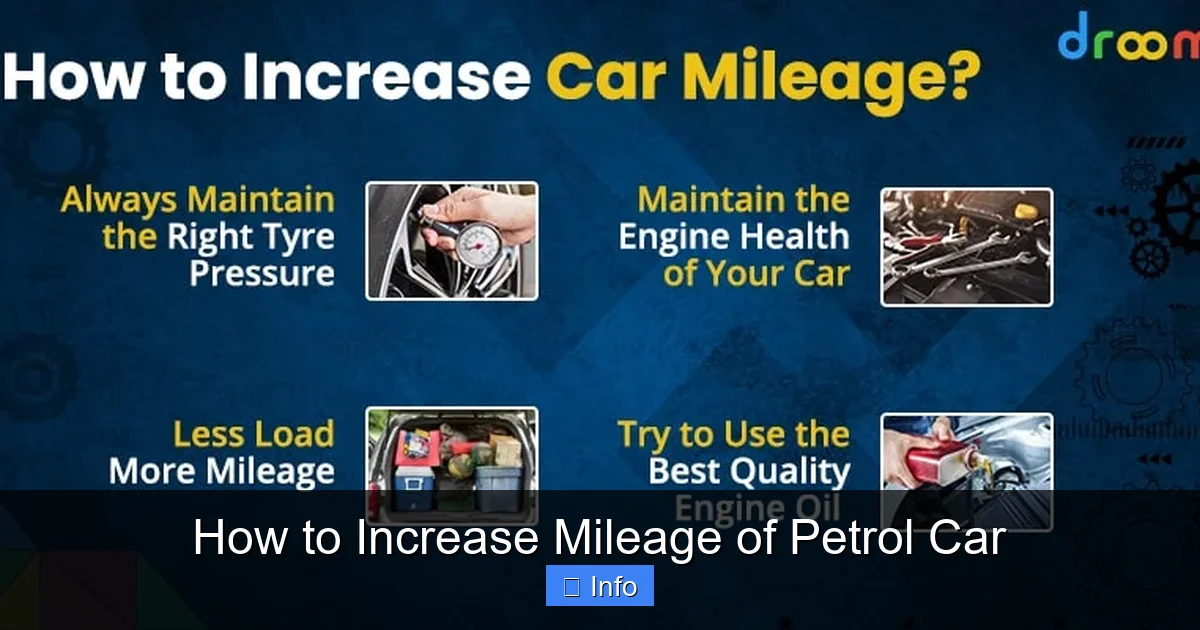
Follow the service schedule in your owner’s manual. Regular oil changes, spark plug checks, and engine tuning keep your car running at its best. A poorly tuned engine can consume significantly more petrol than a healthy one.
Check and Replace Air Filters
Your engine needs clean air to burn petrol efficiently. A clogged air filter restricts airflow, forcing the engine to use more fuel. Check your air filter every few months and replace it if it looks dirty. This is one of the cheapest ways to improve mileage.
Use the Right Engine Oil
Using the manufacturer-recommended engine oil reduces internal friction. Thicker or incorrect oil makes the engine work harder, which increases fuel consumption. Always use the oil grade specified for your petrol car.
Keep Tyres Properly Inflated
Underinflated tyres create more rolling resistance, which means your engine has to work harder to move the car. Check your tyre pressure every two weeks and keep it at the recommended level. Worn-out tyres also increase rolling resistance, so it helps to know when to change car tyres for better efficiency.
Reduce Weight and Improve Aerodynamics
The heavier your car, the more fuel it needs to move. Extra weight and poor aerodynamics force the engine to burn more petrol, especially during acceleration and highway driving.
Visual guide about How to Increase Mileage of Petrol Car
Image source: autohunt.in
Remove Unnecessary Weight from the Boot
Many drivers carry heavy items they do not need, such as tools, sports equipment, or old bags. Every extra kilogram reduces mileage slightly. Clear out your boot and back seat regularly. Travel light whenever you can.
Remove Roof Racks When Not in Use
Roof racks and roof boxes create wind drag, even when they are empty. At high speeds, this drag can significantly lower fuel economy. Remove them when you are not using them, and your car will slice through the air more easily.
Keep Windows Closed at High Speeds
Open windows at highway speeds increase air resistance. Some people think opening windows saves fuel compared to using air conditioning, but at high speeds the opposite is often true. Use the air conditioner or ventilation system instead of keeping windows down on fast roads.
Use Air Conditioning and Plan Trips Wisely
Air conditioning is comfortable, but it puts extra load on the engine. Using it wisely can help you save petrol without sacrificing comfort.
Use Air Conditioning Smartly
Set the AC to a moderate temperature rather than the coldest setting. In city traffic, the AC can noticeably increase fuel consumption. On cooler days, use the fan or open windows slightly at low speeds. Parking in the shade also keeps the cabin cooler, so the AC does not have to work as hard when you start driving.
Plan Your Trips and Combine Errands
A cold engine uses more petrol than a warm one. If you make several short trips, the engine never reaches its optimal temperature. Combine errands into one longer trip whenever possible. This allows the engine to warm up and run efficiently for most of the journey.
Conclusion
Learning how to increase mileage of petrol car does not require expensive modifications or major lifestyle changes. It comes down to driving smoothly, keeping your car in good condition, and making smart choices about weight, air conditioning, and routes. Start with one or two tips from this guide and add more over time.
Even a small improvement in mileage can save you hundreds of rupees every year. More importantly, it makes your drive smoother and reduces your carbon footprint. Take care of your petrol car, and it will take care of your wallet.
Frequently Asked Questions
How can I check my petrol car’s current mileage?
Fill your tank completely and reset the trip meter. Drive until you refuel again, then divide the kilometres driven by the litres used. This gives you your actual kilometre per litre figure.
Does driving slowly always increase petrol mileage?
Not necessarily. Driving too slowly in a high gear can strain the engine, while very high speeds increase wind resistance. A steady, moderate speed usually gives the best fuel efficiency.
How often should I check my tyre pressure?
You should check your tyre pressure at least once every two weeks. Properly inflated tyres reduce rolling resistance and help your petrol car use less fuel.
Does using air conditioning reduce mileage?
Yes, air conditioning puts extra load on the engine and increases fuel consumption. Using it moderately and parking in the shade can help reduce this effect.
Will premium petrol improve my car’s mileage?
For most regular petrol cars, premium petrol does not provide a noticeable mileage boost. Stick to the fuel grade recommended by your car’s manufacturer unless advised otherwise.
Can removing roof racks really save fuel?
Yes, roof racks create wind drag that makes the engine work harder, especially at highway speeds. Removing them when not in use can improve your car’s aerodynamics and mileage.