How to Start Car When Battery Is Down
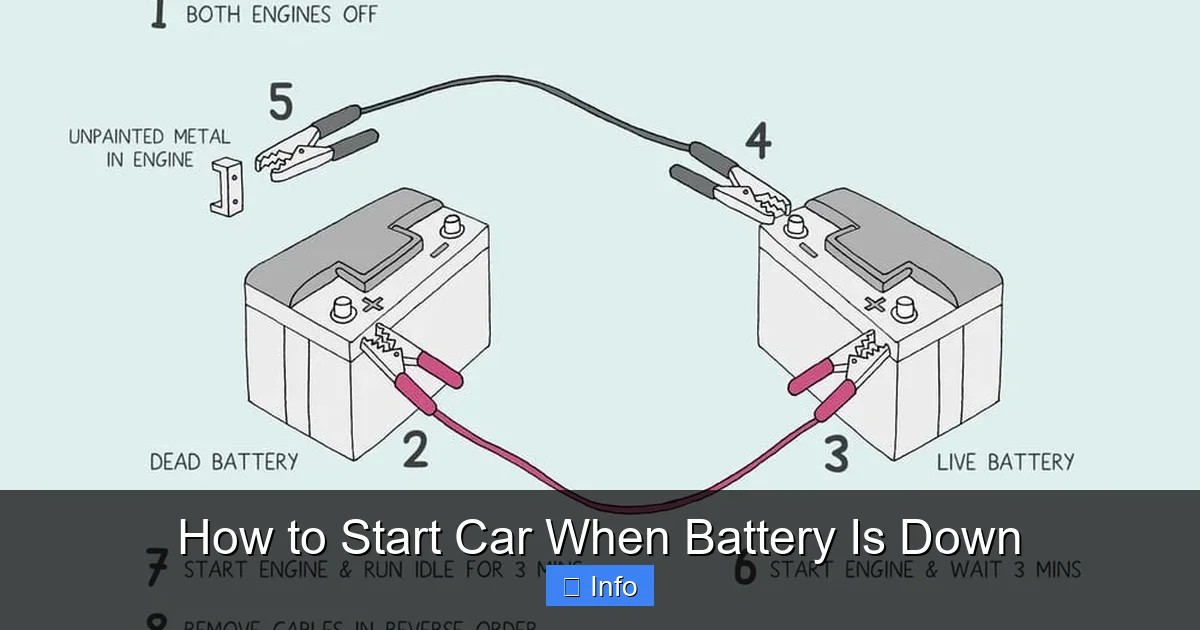
When your car battery dies, you can still start the engine using a jump starter, portable power pack, or by push‑starting a manual transmission. This guide walks you through each method step‑by‑step, along with safety tips and preventative advice to keep your battery healthy.
When you turn the key and hear only a faint click, it’s a clear sign that your car’s battery has lost its charge. In that moment, knowing how to start car when battery is down can save you time and stress. This article will walk you through several practical methods, from using a portable jump starter to push‑starting a manual transmission, while also highlighting safety precautions and preventative care.
Whether you’re stranded at home, in the office, or on a roadside, the steps below are designed to be straightforward and safe. By the end, you’ll feel confident tackling a dead battery without needing a professional mechanic.
Before diving into the specific techniques, it helps to understand why a battery fails and what warning signs to watch for. This knowledge can prevent you from being caught off guard and allow you to act quickly when the situation arises.
Key Takeaways
- Point 1: Use a portable jump starter or battery pack to provide immediate power.
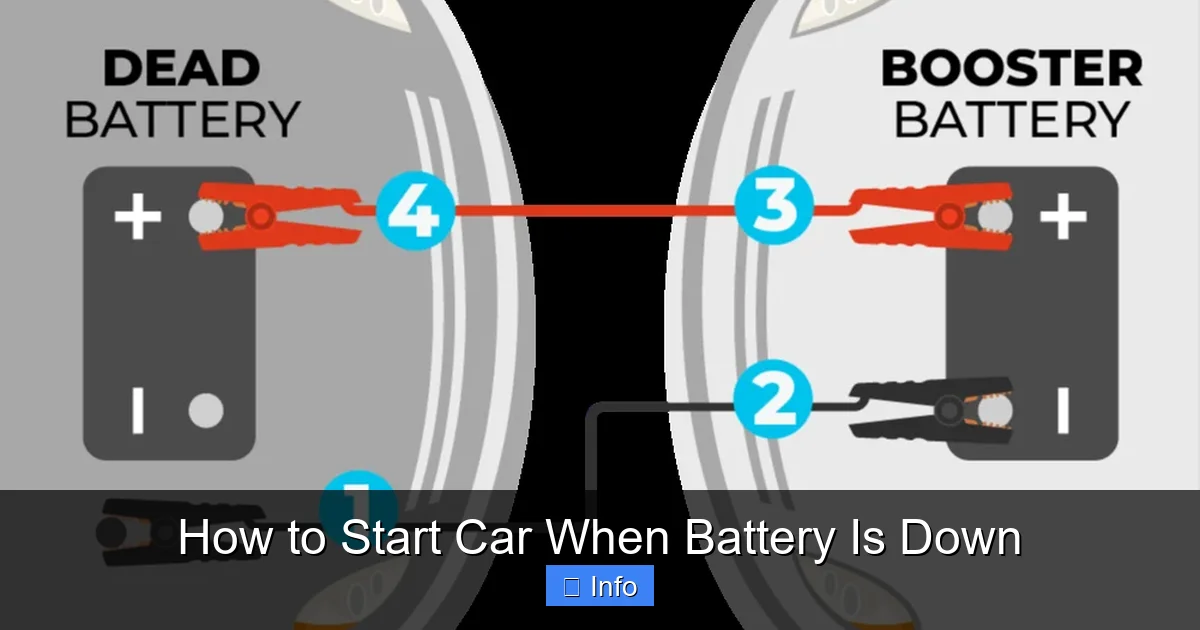
- Point 2: Connect jumper cables correctly—red to positive, black to negative—to avoid sparks.
- Point 3: For manual transmissions, push‑starting can be an effective alternative.
- Point 4: A battery charger can slowly recharge a dead battery if you have access to an outlet.
- Point 5: Keep battery terminals clean and tight to ensure good electrical contact.
- Point 6: Regular maintenance and periodic charging help prevent future battery failures.
📑 Table of Contents
Understanding Your Car Battery
A car battery is a lead‑acid storage device that provides the high current needed to crank the engine. It consists of cells that convert chemical energy into electrical energy. When the battery is healthy, it can deliver a strong burst of power for a few seconds, which is enough to start the engine.
How a Battery Works
Inside each cell, a chemical reaction between lead plates and sulfuric acid creates electrons. These electrons flow through the starter motor, turning the crankshaft. Once the engine runs, the alternator recharges the battery, maintaining its voltage.
Common Causes of Failure
Batteries can fail for several reasons: age, extreme temperatures, corrosion on terminals, or repeated short trips that don’t allow the alternator to fully recharge the battery. Understanding these factors helps you take preventive steps.
In addition, factors such as excessive vibration, manufacturing defects, and leaving the lights on overnight can accelerate battery degradation. Knowing these causes allows you to inspect your battery regularly and replace it before it leaves you stranded.
You can also check the battery’s manufacturing date to estimate its remaining life.
Recognizing a Weak Battery
Before the battery completely dies, it often shows warning signs. You might notice the engine cranking slowly, the headlights dimming, or the dashboard warning light illuminating. Ignoring these symptoms can lead to a complete failure.
Visual guide about How to Start Car When Battery Is Down
Image source: useast2qabrandsites.blob.core.windows.net
Other indicators include a swollen battery case, a rotten‑egg smell, or the car refusing to start after a cold night. If you observe any of these, it’s time to test the battery or consider a replacement.
You can also perform a simple voltage test using a multimeter. A fully charged battery should read at least 12.6 volts with the engine off. If the reading is below 12.4 volts, the battery is losing capacity and may need attention.
Load testing, available at most auto parts stores, simulates the demands of starting the engine and reveals whether the battery can deliver sufficient power under load.
Modern vehicles may also display a battery warning symbol on the instrument cluster, which should not be ignored.
If you hear a rapid clicking sound when turning the key, it often indicates a weak battery that cannot supply enough current.
A healthy battery should show a steady voltage reading when the headlights are turned on.
Jump‑Starting Options
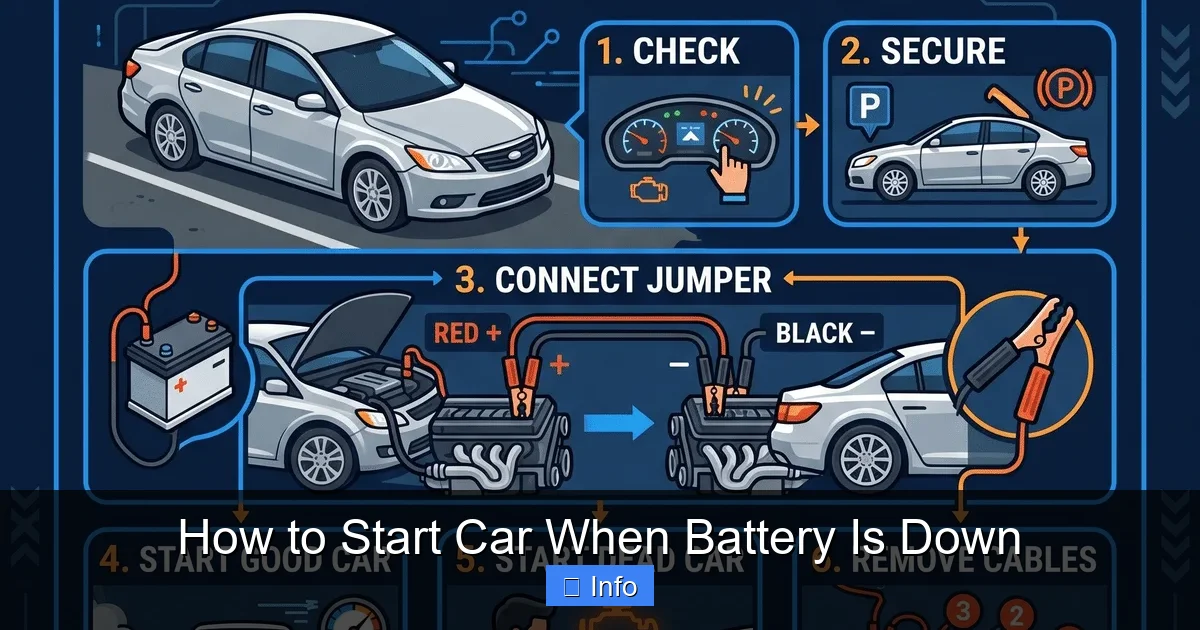
There are several ways to provide enough power to crank the engine when the battery is dead. The method you choose depends on the tools you have available and the type of vehicle you drive.
Visual guide about How to Start Car When Battery Is Down
Image source: apnamechanic.com
Using a Portable Jump Starter
One of the quickest ways to get your car running is to use a portable jump starter. These compact units store enough energy to crank the engine without needing another vehicle. They often include built‑in safety features like reverse polarity protection.
When selecting a jump starter, look for a model with a peak current rating that matches or exceeds your engine’s requirements. For most passenger cars, a 400‑amp unit is sufficient, while larger trucks may need 800 amps or more. Also, consider the size and weight if you plan to carry it in the trunk.
Some jump starters also include USB ports, LED lights, and even air compressors, making them versatile tools for emergencies.
To use a portable jump starter, follow these steps:
- Connect the red clamp to the positive terminal of the dead battery.
- Connect the black clamp to a grounded metal part on the vehicle, such as a bolt on the engine block.
- Turn on the jump starter and attempt to start the engine.
After the engine starts, disconnect the clamps in reverse order to avoid sparks.
If the engine fails to start after several attempts, the battery may be severely damaged or there could be another issue, such as a faulty starter motor.
When using a portable jump starter, ensure the unit is fully charged before you need it; a partially charged unit may not provide enough power.
Always wear insulated gloves when handling cables to protect against electrical shock.
If the car does not start, wait a few minutes before trying again to allow the battery to recover slightly.
Jump‑Starting from Another Vehicle
If you don’t have a portable jump starter, you can use another car with a good battery. This method requires jumper cables and a second vehicle. It’s essential to follow the correct sequence to prevent damage to either electrical system.
Proper cable connection is critical:
- Connect the red cable to the positive terminal of the dead battery.
- Connect the other end of the red cable to the positive terminal of the good battery.
- Connect the black cable to the negative terminal of the good battery.
- Connect the final black clamp to a clean metal surface on the car with the dead battery, away from the battery itself.
Start the engine of the good vehicle, then try to start the dead car. Once it runs, carefully remove the cables in reverse order.
If you drive an automatic, you might find our detailed guide on how to start an automatic car with a dead battery especially helpful.
Remember to keep the donor engine running while you attempt to start the dead car, and avoid touching the cables together to prevent short circuits.
Push‑Starting a Manual Transmission
For vehicles with a manual gearbox, push‑starting can be a viable option when the battery is dead. This method relies on the momentum of the car to turn the engine, bypassing the need for a spark from the battery.
The procedure is as follows:
- Ensure the ignition is in the “on” position and the fuel pump is running.
- Have at least two people ready to push the car.
- Depress the clutch pedal fully and shift into second gear.
- With the car rolling at about 5‑10 mph, release the clutch smoothly.
The engine should catch and start. Once it runs, keep the clutch engaged and drive for a while to allow the alternator to recharge the battery.
For more tips on starting a dead car without jumping, see our article on how to start a dead car without jumping.
Push‑starting is not recommended for automatic transmissions, as it can damage the torque converter and transmission.
Using a Battery Charger
If you have access to an electrical outlet, a battery charger can slowly bring a dead battery back to life. This method is slower but can revive a battery that is not permanently damaged.
Visual guide about How to Start Car When Battery Is Down
Image source: apnamechanic.com
There are different types of chargers, including trickle chargers, smart chargers, and fast chargers. Trickle chargers maintain the battery at full charge, while smart chargers adjust the charge rate based on the battery’s condition.
Charging Steps
- Connect the charger’s red lead to the positive terminal.
- Connect the black lead to the negative terminal.
- Set the charger to the appropriate voltage and current for your battery type.
- Allow the charger to run for several hours or as recommended.
After charging, check the battery voltage with a multimeter; it should read at least 12.6 volts when the engine is off.
It’s important to charge the battery in a well‑ventilated area and avoid overcharging, which can cause the battery to overheat or even explode.
If the battery does not reach a satisfactory voltage after charging, it may be time to replace it.
It is advisable to charge the battery slowly to avoid damaging the plates and to prolong its lifespan.
Always disconnect the charger before connecting it to the battery to prevent sparks.
Preventative Maintenance
Regular maintenance is key to avoiding future dead‑battery situations. Keep the terminals clean, tighten connections, and consider using a trickle charger if the car sits for long periods. In cold climates, protecting the battery from extreme low temperatures can extend its life. For more advice on cold‑weather care, refer to our guide on how to maintain a car battery in cold weather.
Additional tips include:
- Inspect the battery case for cracks or swelling.
- Test the battery voltage periodically with a multimeter.
- Avoid leaving lights or accessories on when the engine is off.
- Drive the car regularly to allow the alternator to charge the battery.
- Keep the battery tray secure and free of debris.
- Use a battery terminal cleaner to remove corrosion.
By following these practices, you can maximize the lifespan of your battery and reduce the likelihood of unexpected failures.
Periodically check the battery’s fluid level, if applicable, and top up with distilled water to maintain proper electrolyte levels.
Keep the battery terminals tight to ensure good electrical contact.
If you live in an area with high temperatures, consider using a battery insulator to protect against heat.
Conclusion
Being prepared with the knowledge of how to start car when battery is down can turn a frustrating breakdown into a minor inconvenience. Whether you use a portable jump starter, another vehicle, push‑start a manual, or a battery charger, each method has its place. Prioritize safety by following proper connection procedures, and invest in regular battery maintenance to reduce the chances of a dead battery in the future. With these strategies, you’ll stay mobile and confident, no matter what the road throws your way.
Remember, the key is to stay calm, assess the situation, and apply the appropriate technique. Keeping a portable jump starter in your trunk and performing routine battery checks can make all the difference.
By mastering these techniques, you’ll be prepared for unexpected battery failures and can avoid costly towing fees.
Investing in a quality jump starter and learning these methods can give you peace of mind on long trips.
These skills can save you time and money.
Frequently Asked Questions
What are the first signs of a dying car battery?
Common signs include slow engine cranking, dim headlights, a swollen battery case, and a rotten‑egg smell. A quick voltage test can also confirm if the battery is losing charge.
Can I start my car with a completely dead battery?
Yes, you can start the car using a portable jump starter, another vehicle with jumper cables, or by push‑starting a manual transmission. A battery charger may also revive it if it is not permanently damaged.
Is it safe to jump‑start a car in the rain?
It is possible, but you should keep the cables and connections as dry as possible to avoid short circuits. Using a portable jump starter with built‑in safety features is often safer in wet conditions.
How long does a portable jump starter last?
Most portable jump starters can hold a charge for several months if stored properly. Recharging it after each use and storing it in a cool, dry place will extend its lifespan.
Can I use a battery charger to start the car immediately?
A battery charger supplies a low current and is not designed to start an engine. It should be used to slowly recharge the battery over several hours before attempting to start the car.
What maintenance can prevent battery failure?
Regularly clean the terminals, keep connections tight, avoid leaving lights on, drive the car often, and perform periodic voltage checks. In extreme climates, consider using a battery insulator or trickle charger.