Hydraulic Car Parking System Price
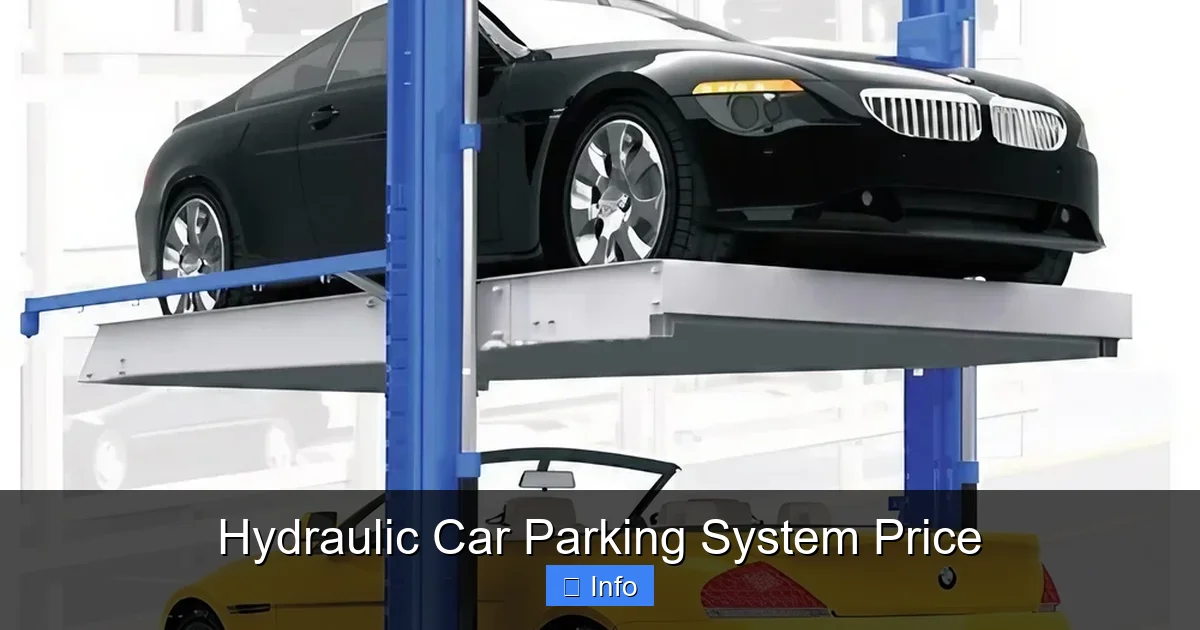
A hydraulic car parking system price usually falls between ₹1.5 lakh and ₹8 lakh in India. The final number depends on the system type, the number of car slots, and the civil work involved. Small two-car stackers sit at the low end, while multi-level puzzle systems cost much more. This guide breaks down real costs so you can plan your budget with confidence.
Finding parking in a crowded city feels like a daily battle. You circle the block, squeeze into tight gaps, and still worry about scratches. If you own a home or manage a building, the problem is even bigger. You have more cars than space.
That is exactly where hydraulic car parking systems come in. They stack cars vertically, one above the other, using hydraulic power. Two cars fit in the space of one. Sometimes three or four do. The idea is simple, and it works.
But here is the question everyone asks first: what does it cost? The hydraulic car parking system price can feel confusing because quotes vary so much. This guide walks you through real numbers, hidden costs, and smart ways to save. No jargon. Just clear answers.
Key Takeaways
- Entry-level cost: A basic two-level hydraulic stacker for two cars typically starts around ₹1.5 lakh and can go up to ₹3 lakh.
- Bigger systems cost more: Puzzle parking for four to six cars usually ranges from ₹4 lakh to ₹8 lakh or higher.
- Installation matters: Civil work, pit digging, and electrical setup can add 15% to 30% to the total bill.
- Running costs are low: Most hydraulic systems need only periodic servicing, costing a few thousand rupees a year.
- Space saved is real: One hydraulic system can double or triple your parking capacity without buying more land.
- Get three quotes: Comparing multiple vendors is the fastest way to land a fair hydraulic car parking system price.
📑 Table of Contents
What Is a Hydraulic Car Parking System?
A hydraulic car parking system lifts and lowers cars using hydraulic cylinders and pumps. Think of it like a strong elevator for vehicles. You drive in, press a button, and the platform moves your car up or down.
These systems are popular because they are smooth and quiet. They also handle heavy loads well. Unlike chain-driven systems, hydraulic ones move gently, which reduces wear on the machine.
How It Works
The setup is fairly straightforward. A hydraulic pump pushes fluid into cylinders. Those cylinders raise or lower the platform. A control panel manages the movement, and safety sensors stop the machine if something is in the way.
Most units run on standard single-phase or three-phase power. A two-car stacker might use about 2 to 3 kW. That is roughly the same as a small air conditioner running for an hour.
Common Types You Can Buy
You will see a few main types in the market. Each has a different price tag.
- Two-level stacker: The simplest option. One car parks on the ground, another goes up. Great for homes.
- Puzzle parking system: Multiple platforms slide sideways and up. Ideal for apartments and offices.
- Pit parking system: The lower car sits in a pit below ground. Saves height and looks clean.
- Stack parking (multi-level): Several cars stacked in a row. Used in tight commercial spaces.
If you are curious about the electronics behind automated parking, our guide on an automatic car parking system using Arduino explains the control side in plain language.
Hydraulic Car Parking System Price in India
Now for the numbers. Prices shift with the brand, city, and features. Still, the ranges below give you a realistic starting point.
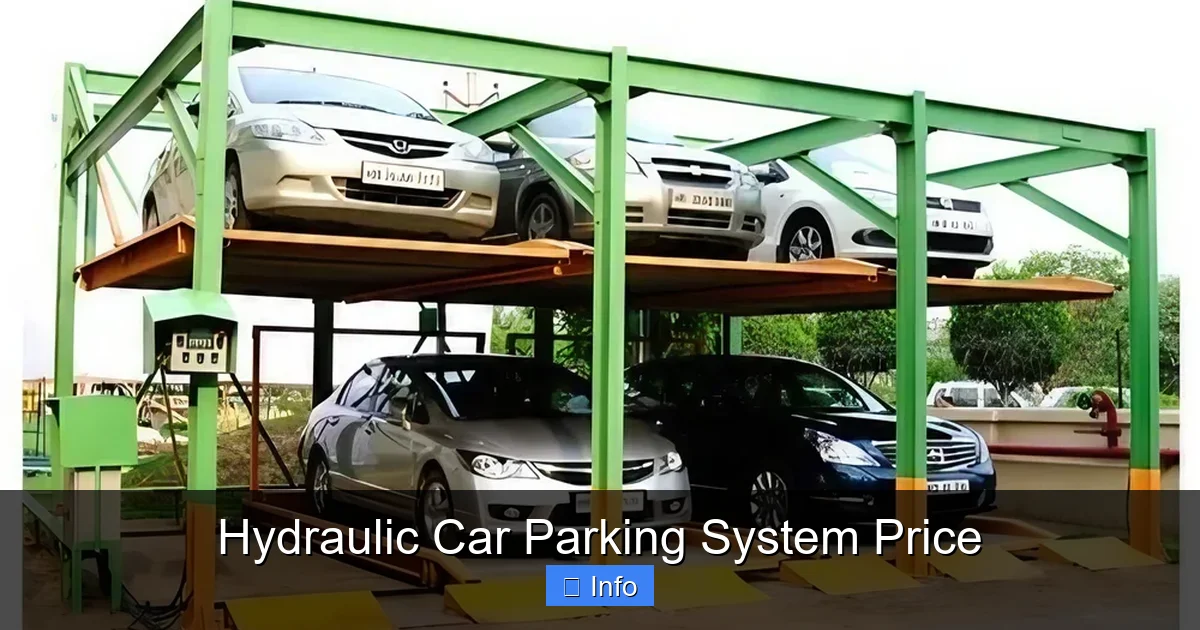
Visual guide about Hydraulic Car Parking System Price
Image source: 5.imimg.com
Price by System Type
- Two-level stacker (2 cars): ₹1.5 lakh to ₹3 lakh
- Two-level stacker (4 cars): ₹3 lakh to ₹5.5 lakh
- Puzzle parking (4 to 6 cars): ₹4 lakh to ₹8 lakh
- Pit parking system: ₹3 lakh to ₹7 lakh
- Multi-level stack (10+ cars): ₹12 lakh and above
These figures are for the equipment. Installation and civil work usually come on top. We will cover that in the next section.
Price by Number of Cars
Here is a simple rule of thumb. The more cars you park, the lower the cost per slot. A single two-car stacker might cost ₹1.75 lakh per car. A ten-car system could bring that down to ₹1.2 lakh per car.
So if you have room, buying a bigger system often gives better value. Just make sure you actually need the extra slots.
What Pushes the Price Up or Down
Several things move the hydraulic car parking system price up or down.
- Load capacity: Systems built for SUVs cost more than those for small hatchbacks.
- Brand: Well-known brands charge a premium but often offer better service.
- Automation level: Manual controls are cheaper. Fully automatic touch panels cost more.
- Safety features: Sensors, alarms, and anti-fall locks add to the bill.
- City: Metro cities often have higher installation and labour charges.
- Import vs local: Imported units can cost 30% to 50% more.
Ask each vendor to list what is included. A low quote often hides missing items.
The Full Cost Breakdown
Many buyers focus only on the machine price. That is a mistake. The total project cost includes several parts. Knowing them helps you avoid surprises.
Equipment and Hardware
This is the main chunk, usually 60% to 70% of the total. It covers the platforms, hydraulic cylinders, pump unit, control panel, and safety sensors.
If you want extra features like remote operation or a mobile app, expect to pay more. These add convenience but are not essential for most homes.
Installation and Civil Work
This part often catches people off guard. Depending on your site, you may need:
- Concrete foundation or base plate
- Pit digging for pit-style systems
- Electrical wiring and a dedicated power line
- Drainage to handle rainwater
- Painting and finishing
Budget 15% to 30% of the equipment cost for this. A pit system needs more civil work than a surface stacker, so plan accordingly.
Running and Maintenance Cost
Good news here. Hydraulic systems are low maintenance. A service contract usually costs ₹5,000 to ₹15,000 per year for a small unit.
Electricity use is modest. If you move cars four times a day, the monthly bill impact is small. Most owners barely notice it.
Do keep a small repair fund. Seals and hoses wear out over time. Replacing them every few years is normal and not very expensive.
Home or Commercial? Matching the System to Your Budget
The right system for a family home is not the same as the right one for an apartment block. Here is how to think about it.
For Homes and Small Families
A two-level stacker is usually the best pick. It fits in a normal driveway and handles two cars easily. Cost stays in the ₹1.5 lakh to ₹3 lakh range.
Before you buy, check your ceiling height. You need at least 3.5 metres of clear space for a standard stacker. Also confirm your parking area layout. Our article on a ground floor car parking house plan can help you visualise the space before you commit.
For Apartments, Offices, and Hotels
Larger buildings need puzzle or multi-level systems. These handle many cars in a small footprint. Expect to spend ₹4 lakh to ₹15 lakh or more, based on capacity.
In shared buildings, clear paperwork matters as much as the machine. Each owner needs a defined slot. A proper car parking allotment letter format keeps things fair and avoids disputes later.
Also think about who operates the system. A trained attendant or a simple user guide goes a long way.
How to Get the Best Hydraulic Car Parking System Price
You do not have to accept the first quote you get. A little homework can save you a lot.
Practical Tips That Work
- Get three quotes: Compare at least three vendors. Prices can differ by 20%.
- Visit a working site: See a system in action before you buy. Ask the owner about service quality.
- Buy during off-season: Some vendors offer discounts in slower months.
- Choose local brands wisely: Many Indian brands match imported quality at a lower price.
- Bundle installation: Ask for a turnkey quote. It is often cheaper than separate contracts.
- Check the warranty: Aim for at least two years on structure and one year on hydraulics.
- Confirm service reach: A cheap system with no local service is a bad deal.
One more tip. Ask for the price per car slot, not just the total. It makes comparison much easier.
Questions to Ask Every Vendor
Before signing, ask these simple questions:
- What is the maximum load per platform?
- What safety features are included?
- How long does installation take?
- What does the annual service contract cover?
- What is the warranty period and what is excluded?
Clear answers here tell you a lot about the vendor.
Is It Worth the Investment?
Let us put it simply. Land is expensive. Parking space is limited. A hydraulic system lets you park more cars in the same area.
For a homeowner with two cars and one slot, a ₹2 lakh system solves a daily headache. For a builder, it can add real value to a project. Buyers love buildings with easy parking.
The hydraulic car parking system price may look high at first glance. But spread over ten years, it often costs less than renting extra parking. And it saves you time every single day.
Just remember the key points. Match the system to your space. Get multiple quotes. Budget for installation. And choose a vendor with strong local service.
Do that, and you will get a fair price and a system that lasts. Parking stress becomes a thing of the past. That alone is worth a lot.
Frequently Asked Questions
What is the average hydraulic car parking system price in India?
Most two-car hydraulic stackers cost between ₹1.5 lakh and ₹3 lakh. Larger puzzle systems for four to six cars usually range from ₹4 lakh to ₹8 lakh. Final prices depend on capacity, brand, and installation needs.
Does the price include installation?
Not always. Many quotes cover only the equipment. Installation and civil work can add 15% to 30% more. Always ask for a turnkey quote so you know the full cost upfront.
How much space do I need for a hydraulic parking system?
A standard two-level stacker needs about 3.5 metres of clear height. The floor area depends on your car size, but usually one standard parking bay is enough. Measure your site before ordering.
What is the yearly maintenance cost?
For a small home unit, annual servicing usually costs ₹5,000 to ₹15,000. This covers inspection, oil checks, and minor adjustments. Occasional part replacement may cost extra every few years.
Can I install a hydraulic parking system in an existing building?
Yes, in most cases. Surface-mounted stackers need very little civil work, so they suit existing buildings well. Pit systems need excavation, which is harder to add later. Check with a structural engineer first.
Is a hydraulic system better than a chain-driven one?
Hydraulic systems run smoother and quieter, and they handle heavy loads well. Chain systems are often cheaper upfront. For most home and apartment use, hydraulic is the more comfortable long-term choice.