I Want to Attach My Car to Company in Hyderabad
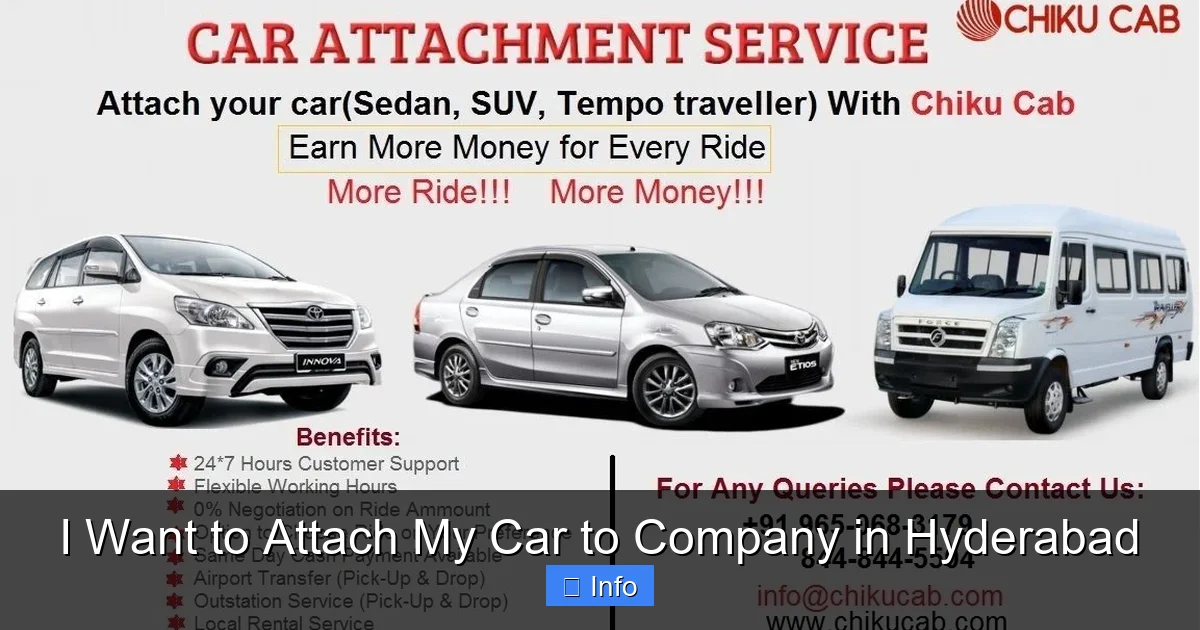
Attaching your car to a company in Hyderabad requires converting your private vehicle to commercial registration, obtaining necessary permits, and completing RTO formalities. This guide covers every step from documentation to final approval so you can start earning legally.
So you have a car sitting in your garage in Hyderabad and you are thinking about putting it to work. Maybe you want to join a ride-hailing platform like Ola or Uber. Maybe a corporate fleet company approached you. Or perhaps you want to lease it to a business for their employee transport. Whatever the reason, the phrase i want to attach my car to company in hyderabad brings up a maze of rules, paperwork, and decisions. Let us walk through the entire process together like we are having coffee at a cafe in Banjara Hills.
First things first. You cannot simply hand over your keys to a company and start collecting checks. Your private vehicle registration (that white number plate with black text) does not allow commercial use. The Motor Vehicles Act is very clear on this. If you operate a private car for hire or reward without proper conversion, you risk heavy fines, vehicle seizure, and insurance claim rejection in case of an accident. The good news? The process is straightforward once you know the steps. The bad news? It takes time, money, and patience with government offices.
Key Takeaways
- Vehicle Conversion Is Mandatory: Private cars must be re-registered as commercial vehicles before company attachment
- Permits Are Non-Negotiable: You need a valid Stage Carriage or Contract Carriage permit from Telangana RTO
- Insurance Must Be Updated: Commercial vehicle insurance costs more but is legally required for fleet operations
- Company Agreement Terms Matter: Review revenue sharing, maintenance responsibility, and exit clauses carefully
- RTO Hyderabad Has Specific Forms: Forms 46, 47, and 48 are essential for ownership transfer and permit applications
- Fitness Certificate Is Annual: Commercial vehicles require yearly fitness checks at authorized centers
- Tax Implications Are Significant: Road tax, GST, and TDS deductions change completely for commercial use
📑 Table of Contents
- Understanding What “Attaching Your Car” Actually Means
- Step 1: Check If Your Car Qualifies
- Step 2: The Conversion Process at RTO Hyderabad
- Step 3: Commercial Insurance – Do Not Skip This
- Step 4: Choosing the Right Company or Platform
- Step 5: Fitness Certificate and Ongoing Compliance
- Step 6: Tax, GST, and Accounting – The Boring But Critical Part
- Real Numbers: A Hyderabad Case Study
- Common Mistakes That Cost Money
- Hyderabad-Specific Tips and Resources
- Alternative: Sell and Buy Commercial-Ready
- Electric Vehicle Advantage in Hyderabad
- Conclusion
Understanding What “Attaching Your Car” Actually Means
Before we dive into forms and fees, let us clarify the terminology. “Attaching your car to a company” usually means one of three arrangements. Each has different legal requirements.
Ride-Hailing Platform Partnership
This is the most common route. You sign up as a driver-partner with Ola, Uber, Rapido, or similar platforms. Your car gets a commercial permit. You drive it yourself or hire a driver. The platform takes a commission (usually 20 to 25 percent) and pays you weekly. You remain the owner. You handle maintenance, fuel, and insurance.
Corporate Fleet Lease
Companies like Savaari, Zoomcar (for corporate), or local fleet operators lease cars for employee transport. They pay you a fixed monthly rent. They may provide the driver. You get predictable income but lower than ride-hailing peaks. The contract is usually 12 to 36 months. Early termination clauses can be strict.
Tourist Permit Operations
If you attach to a travel agency or tour operator, you need an All India Tourist Permit (AITP) or State Tourist Permit. This allows interstate travel for tourists. The paperwork is heavier. The returns can be higher during holiday seasons. But off-season income drops sharply.
Step 1: Check If Your Car Qualifies
Not every car can be converted. The Telangana Transport Department has age and specification rules.
Visual guide about I Want to Attach My Car to Company in Hyderabad
Image source: quartzmountain.org
Vehicle Age Limits
For ride-hailing and contract carriage permits, your car should typically be less than 7 years old from the date of first registration. Some companies prefer cars under 5 years. For tourist permits, the limit can extend to 10 or 12 years depending on the category. Check the exact age cut-off on the Telangana Transport Department website before you spend money on conversion.
Fuel Type and Emission Norms
BS6 compliant vehicles are mandatory now. Diesel cars face stricter scrutiny in some cities due to pollution norms. Hyderabad currently allows BS6 diesel but future restrictions are possible. CNG and electric vehicles get preference in some corporate tenders. Electric cars also enjoy lower road tax and permit fees in Telangana.
Seating Capacity Rules
A standard 5-seater sedan or hatchback qualifies for most contract carriage permits. If you have a 7-seater SUV (like Innova Crysta or XUV700), you can apply for higher category permits which may fetch better rates with corporate clients. But the conversion cost and tax also increase.
Step 2: The Conversion Process at RTO Hyderabad
This is where the real work begins. You need to visit the RTO where your vehicle is registered. In Hyderabad, major RTOs include Khairatabad (TS-09), Secunderabad (TS-10), Medchal (TS-11), Rangareddy (TS-12), and others. Go to your specific RTO.

Visual guide about I Want to Attach My Car to Company in Hyderabad
Image source: i.ytimg.com
Documents You Need Ready
Keep these originals and photocopies (3 sets each) in a folder:
- Original Registration Certificate (RC)
- Valid Insurance Certificate (private comprehensive)
- Pollution Under Control (PUC) Certificate
- Form 20 (Application for Registration)
- Form 21 (Sale Certificate – if bought from dealer)
- Form 22 (Road Worthiness Certificate from manufacturer)
- Form 34 (Hypothecation Addition – if loan pending)
- Form 46 (Application for Permit)
- Form 47 (Application for Temporary Permit)
- Form 48 (Application for Permit Renewal – if applicable)
- PAN Card copy
- Aadhaar Card copy
- Address proof (recent electricity bill or rental agreement)
- Passport size photos (6 copies)
- Chassis and Engine Pencil Print
- No Objection Certificate (NOC) from financier if loan is active
The NOC From Financier Is Critical
If your car has an active loan, you must get a No Objection Certificate from the bank or NBFC. They will charge a fee (usually Rs 500 to 2000). They may also require you to switch to commercial vehicle insurance before issuing NOC. This step alone can take 7 to 15 days. Start early. Without this NOC, the RTO will not process your conversion.
Forms 46, 47, and 48 Explained Simply
Form 46 is your main permit application. Form 47 is for a temporary permit (valid 4 months) which lets you operate legally while the permanent permit processes. Form 48 is for renewal later. Fill them carefully. Mistakes mean rejection and re-submission. Many agents sit outside RTOs who fill these for Rs 200 to 500. Worth it if you hate paperwork.
Fees Breakdown (Approximate 2024 Rates)
Budget roughly Rs 15,000 to 25,000 for the entire conversion including agent fees. Exact breakdown:
- Permit Application Fee: Rs 1,000 to 2,000
- Temporary Permit Fee: Rs 500 to 1,000
- Road Tax Difference (Private to Commercial): Rs 5,000 to 15,000 depending on vehicle age and category
- Smart Card RC Fee: Rs 200
- Number Plate Change (Yellow Plate with Black Text): Rs 500 to 1,000
- Agent/Service Charges: Rs 2,000 to 5,000
- Fitness Test Fee: Rs 600 to 1,000
Pro tip: Pay the road tax difference online via the Parivahan portal to avoid middlemen. Keep the receipt safely.
Step 3: Commercial Insurance – Do Not Skip This
Your private comprehensive insurance becomes void the moment you start commercial operations. If an accident happens and the insurer finds you were carrying passengers for hire, they will reject the claim. Period.
Visual guide about I Want to Attach My Car to Company in Hyderabad
Image source: selectcars.in
Types of Commercial Policies
You need a Commercial Vehicle Package Policy covering:
- Third Party Liability (unlimited for injury/death, property damage up to Rs 7.5 lakh)
- Own Damage (accident, theft, fire, natural calamities)
- Personal Accident Cover for Owner-Driver (mandatory, Rs 15 lakh minimum)
- Personal Accident Cover for Paid Driver (if you hire one)
- Passenger Cover (optional but recommended for ride-hailing)
Cost Difference
Expect to pay 2.5 to 4 times your private premium. A sedan that cost Rs 12,000 annually for private insurance may cost Rs 35,000 to 50,000 for commercial. Factors: vehicle age, IDV (Insured Declared Value), seating capacity, zone (Hyderabad is Zone A – highest premium), and claim history.
Where to Buy
Compare on Policybazaar, Coverfox, or directly with insurers like ICICI Lombard, HDFC ERGO, Bajaj Allianz, New India Assurance. Some ride-hailing platforms have tie-ups with insurers for discounted fleet policies. Ask your platform representative before buying independently.
Step 4: Choosing the Right Company or Platform
Now that your car is legally ready, you need a partner. Do not sign the first agreement that lands in your WhatsApp.
Ride-Hailing Platforms Comparison
Ola: Larger market share in Hyderabad. Offers “Ola Fleet” program for owners with multiple cars. Weekly payouts. Incentives for airport trips and peak hours. High commission (22-25%).
Uber: Slightly better per-km rates in some categories. “Uber Fleet” for multi-car owners. Daily payouts option. Good driver support centers in Hyderabad.
Rapido: Bike-taxi mainly but has auto and cab categories. Lower commission. Good for short city rides.
Local Players: Meru, Savaari, and Hyderabad-based operators sometimes offer better fixed rental deals for airport runs or corporate contracts.
Corporate Fleet Operators
Companies like Zoomcar Fleet, Orix, ALD Automotive, and local Hyderabad fleet managers approach owners directly. They offer fixed monthly rent (Rs 25,000 to 45,000 for sedans, Rs 40,000 to 70,000 for SUVs). They handle driver, maintenance, fuel. You just collect rent. But contracts are binding. Read the fine print on:
- Who pays for major repairs (engine, transmission, AC compressor)?
- What happens if the car is off-road for repairs?
- Early termination penalties
- Vehicle condition at return (they charge heavily for dents, scratches, worn tires)
- GST invoicing requirements (you must be GST registered if annual turnover exceeds Rs 20 lakh)
Red Flags in Agreements
Run away if the contract has: no clear maintenance clause, unilateral termination by company only, penalty clauses only for owner, no dispute resolution mechanism, or demand for blank signed cheques. Get a lawyer to review if the monthly value exceeds Rs 30,000. It costs Rs 2,000 to 5,000 and saves lakhs later.
Step 5: Fitness Certificate and Ongoing Compliance
Getting the permit is not the end. Commercial vehicles need a Fitness Certificate (FC) every year. Private vehicles need it only after 15 years. This is a major ongoing cost and hassle.
The Fitness Test Process
You take your car to an authorized testing center (several in Hyderabad – IDTR at Medchal, private centers in Shamshabad, Cherlapally). They check: brakes, steering, suspension, lights, horn, wipers, mirrors, tires, emissions, body condition, speed governor (mandatory for commercial), fire extinguisher, first aid kit, reflective tape.
Common Rejection Reasons
Worn brake pads, uneven tire tread, cracked windshield, missing fire extinguisher, expired first aid kit, speed governor not calibrated, excessive smoke, oil leaks, broken seat belts. Fix these before the test. A pre-check at a good garage costs Rs 1,000 but saves a failed test and re-test fee.
Speed Governor Mandate
All commercial passenger vehicles must have a speed governor limiting max speed to 80 kmph (or as per permit condition). It must be calibrated annually at an authorized center. Tampering is a serious offense. Keep the calibration certificate in the car always.
Step 6: Tax, GST, and Accounting – The Boring But Critical Part
Once money flows, the taxman watches. Understand your obligations.
Road Tax
Commercial road tax in Telangana is significantly higher than private. It is paid quarterly or annually. For a 5-seater sedan, expect Rs 3,000 to 6,000 per quarter. For SUVs, Rs 5,000 to 10,000. Pay on time via Parivahan. Late payment attracts penalty.
GST Registration
If your annual revenue from car attachment exceeds Rs 20 lakh, you must register for GST. Even if below, voluntary registration lets you claim Input Tax Credit on fuel, maintenance, insurance, car loan interest. File GSTR-1 and GSTR-3B monthly/quarterly. Hire a CA. It costs Rs 1,500 to 3,000 per month but keeps you clean.
TDS Deductions
Companies deduct TDS at 2% (Section 194C) on payments to you if you are an individual/HUF and annual payment exceeds Rs 30,000 per contract or Rs 1 lakh aggregate. They deposit it against your PAN. You claim credit while filing ITR. Ensure they give you Form 16A quarterly.
Income Tax on Earnings
Your net income (revenue minus expenses: fuel, maintenance, insurance, depreciation, driver salary, loan interest, GST paid) is taxed at your slab rate. Maintain a simple spreadsheet. Track every expense. Claim depreciation at 15% (WDV method) on the car. This reduces taxable income significantly.
Real Numbers: A Hyderabad Case Study
Let us look at a realistic scenario. Rajesh owns a 2021 Hyundai Verna (petrol) in Hyderabad. He attaches it to Uber Fleet.
Monthly Revenue
- Gross earnings (after Uber commission): Rs 65,000
Monthly Expenses
- Fuel: Rs 18,000
- Driver salary (2 drivers, 12-hour shifts): Rs 28,000
- Maintenance reserve (tyres, service, repairs): Rs 5,000
- Insurance (monthly amortized): Rs 3,500
- Road tax (monthly amortized): Rs 1,500
- Permit renewal fund: Rs 500
- Car loan EMI: Rs 12,000
- GST/Accounting: Rs 2,000
Net Profit
Rs 65,000 minus Rs 70,500 = Loss of Rs 5,500/month in first year due to loan. Without loan, profit ~Rs 6,500/month. Year 2 improves as loan ends. This is why many owners drive themselves initially to save driver salary.
Self-Drive Scenario
If Rajesh drives 12 hours/day himself: Saves Rs 28,000 driver cost. Net ~Rs 22,500/month. But he has no life. The math changes completely if he owns the car outright and has no EMI.
Common Mistakes That Cost Money
Mistake 1: Starting Commercial Operations Before Permit
Impatience leads to challans of Rs 10,000+ under Section 192/192A. Vehicle can be impounded. Wait for the temporary permit at minimum.
Mistake 2: Not Reading the Company Agreement
Owners sign 3-year contracts with fleet companies without reading maintenance liability clauses. Six months later, the AC compressor fails. Company says “owner responsibility.” Bill: Rs 35,000. Owner pays because he signed.
Mistake 3: Skipping Fitness Test Prep
Failed fitness test means car off road for days. Lost revenue. Re-test fee. Towing charges if caught without valid FC. A Rs 1,000 pre-check prevents this.
Mistake 4: Ignoring GST Threshold
Crossing Rs 20 lakh without registration leads to penalty and interest. Track monthly revenue. Register proactively.
Mistake 5: Wrong Insurance Declaration
Declaring “private use” to get cheaper premium while running commercially. Claim rejection is guaranteed. The surveyor checks permit and logbook.
Hyderabad-Specific Tips and Resources
Best RTO Offices for Commercial Work
Khairatabad (TS-09) and Medchal (TS-11) are considered relatively efficient for commercial permits. Avoid peak hours (10 AM to 1 PM). Go early (9 AM) or post-lunch (2:30 PM). Carry water and snacks. The wait can be long.
Authorized Fitness Centers in Hyderabad
- Institute of Driving Training and Research (IDTR), Medchal – Government run, strict but fair
- Automotive Fitness Centers in Shamshabad, Cherlapally, Balanagar – Private, faster but costlier
- Check the latest list on transport.telangana.gov.in
Speed Governor Calibration Centers
Only authorized centers can calibrate. List available at RTO. Usually attached to fitness centers. Cost: Rs 300 to 500. Certificate valid 1 year.
Hyderabad Traffic Police Challan Rates (Commercial)
No permit: Rs 10,000. No fitness certificate: Rs 5,000. No insurance: Rs 2,000. Overloading: Rs 20,000 + Rs 2,000 per extra passenger. Speed governor tampering: Rs 5,000. Keep all documents in the car always (RC, Insurance, Permit, FC, PUC, Driver License, Badge).
Alternative: Sell and Buy Commercial-Ready
If your car is older than 7 years, or the conversion math does not work, consider selling it privately and buying a used commercial-registered vehicle. Many fleet owners sell 3-4 year old cars with valid permits, FC, and insurance. You save 2-3 months of conversion time. Check platforms like CarDekho, Cars24, OLX, and local dealer groups in Hyderabad (Autonagar, Shamshabad). Verify permit transferability before buying.
Electric Vehicle Advantage in Hyderabad
If you are buying new specifically for attachment, strongly consider an EV (Tata Tigor EV, Xpres-T, Nexon EV, MG Comet). Telangana EV Policy offers: 100% road tax exemption, 100% registration fee exemption, retrofitment subsidy, charging infrastructure support. Commercial permit fees are also lower. Running cost per km is Rs 1 to 1.5 vs Rs 5 to 7 for petrol. The math heavily favors EVs for high-utilization commercial use. Many fleet operators now prefer EVs.
Conclusion
Attaching your car to a company in Hyderabad is a viable income stream but it is not passive income. It is a business. You are a fleet owner of one vehicle. Treat it like a business: track every rupee, maintain the asset, comply with every rule, and choose your partner carefully. The conversion process takes 30 to 60 days if you have all documents and no loan NOC delays. Budget Rs 20,000 to 30,000 upfront. Expect the first 3-6 months to be break-even or slight loss if you have a loan. Year 2 onwards, with no EMI, it becomes profitable. If you drive yourself, profit starts immediately but you trade time.
Start today by checking your car age, getting the financier NOC if needed, and downloading Forms 46, 47, 48 from the Parivahan portal. Visit your RTO with a complete file. Ask questions. Take photos of every submitted document. Get receiving stamps. This paper trail saves you later. Hyderabad roads are full of opportunity for compliant commercial vehicles. Your car can be one of them. Safe travels and steady income.
Frequently Asked Questions
Can I attach my private car to a company in Hyderabad without converting to commercial registration?
No. Operating a private vehicle (white number plate) for commercial hire or reward is illegal under the Motor Vehicles Act. You risk fines up to Rs 10,000, vehicle impoundment, and insurance claim rejection. Conversion to commercial registration (yellow plate) and a valid permit are mandatory.
How long does the commercial conversion process take at Hyderabad RTO?
Typically 30 to 60 days if all documents are in order. The temporary permit (Form 47) is issued within 7 to 10 days allowing legal operation while the permanent permit processes. Delays usually come from financier NOC (if loan active) or fitness test scheduling.
What is the approximate cost to convert a private car to commercial in Hyderabad?
Budget Rs 15,000 to 25,000 including permit fees, road tax difference, number plate change, fitness test, and agent charges. Commercial insurance will cost 2.5 to 4 times your private premium annually (additional Rs 25,000 to 40,000 per year for a sedan).
Do I need a commercial driving license to drive my own attached car?
Yes. If you drive the commercially registered vehicle yourself, you need a valid Commercial Driving License (Transport Vehicle endorsement) and a Driver Badge issued by Hyderabad RTO. A private license is insufficient for commercial operations.
What happens if my attached car meets with an accident during a trip?
Your commercial vehicle insurance covers third-party liability and own damage. Inform the police and insurer immediately. The company/platform may have additional insurance layers. Ensure you have a valid Fitness Certificate, Permit, and Driver Badge at the time of accident, or the claim can be rejected.
Can I attach an electric car to a company in Hyderabad? Are there benefits?
Yes, EVs are excellent for commercial attachment. Telangana offers 100% road tax and registration fee exemption for EVs. Commercial permit fees are lower. Running cost is Rs 1-1.5/km vs Rs 5-7/km for petrol. Many fleet operators and ride-hailing platforms prefer EVs and offer incentives. Highly recommended for new purchases.