Madurai to Tiruchendur Distance by Car
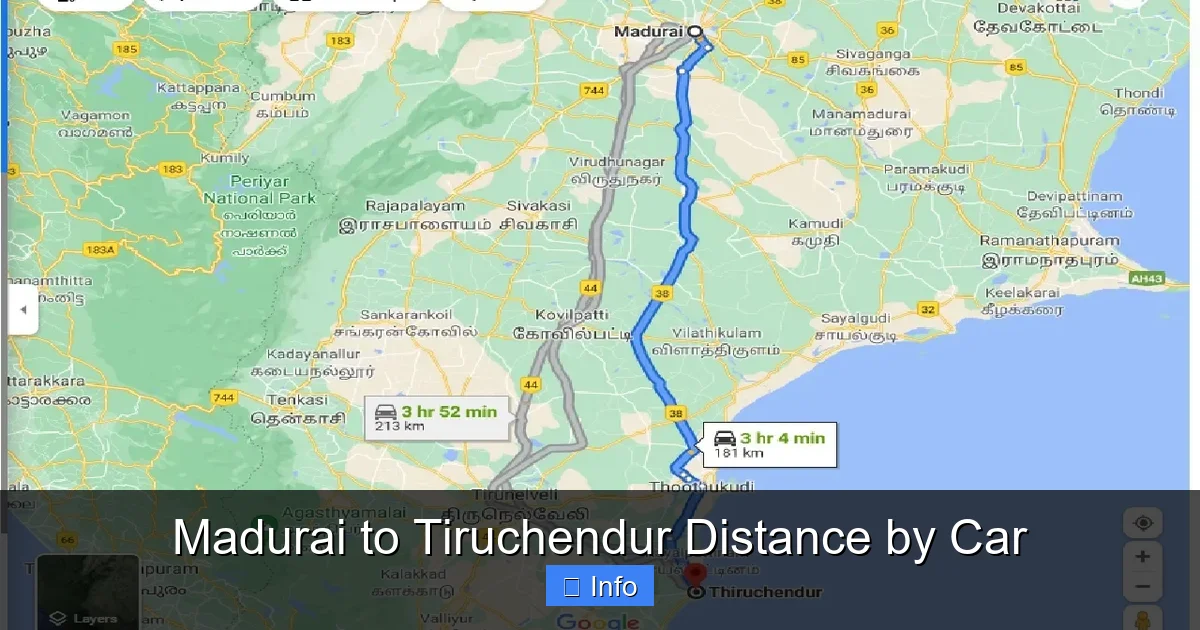
The Madurai to Tiruchendur drive is roughly 170 km and takes about 3 to 3.5 hours on the NH 44 highway. This route offers a mix of urban and coastal scenery, making it an enjoyable trip for families and road‑trip enthusiasts.
Planning a road trip from Madurai to Tiruchendur is a popular choice for both locals and tourists. The journey offers a blend of historic towns, scenic countryside, and the final glimpse of the Bay of Bengal. Whether you are traveling for a weekend getaway or a longer vacation, understanding the distance and the best route will help you make the most of your time on the road.
In this guide we will walk you through the exact mileage, expected driving time, cost considerations, and some must‑see stops along the way. By the end you will feel confident to pack your bags and hit the highway.
Key Takeaways
- Distance: The road distance from Madurai to Tiruchendur is about 170 km.
- Driving time: Expect to spend 3 to 3.5 hours on the road under normal traffic.
- Main route: The journey follows NH 44, connecting Madurai to Tirunelveli and then to Tiruchendur.
- Fuel cost: Depending on your vehicle, the fuel expense is roughly ₹1,200 to ₹1,500.
- Best season: Travel between October and March for comfortable weather.
- Stops: Consider halting at Sivaganga, Kovilpatti, and the scenic Tiruchendur beach.
📑 Table of Contents
Understanding the Madurai to Tiruchendur Distance
Exact mileage
The road distance between Madurai and Tiruchendur is approximately 170 kilometers. This measurement is taken via the most commonly used route, which follows National Highway 44 (NH 44) and connects through the towns of Sivaganga and Kovilpatti. The distance can vary slightly if you take a detour or a different exit, but 170 km is a reliable figure for planning purposes. When you type “Madurai to Tiruchendur distance by car” into a navigation app, the result will usually show this value, often with an estimated travel time.
Comparison with other routes
If you compare this trip to a longer journey such as the Bangalore to Kanyakumari distance by car, you will notice that the Madurai‑Tiruchendur stretch is relatively short, making it ideal for a day trip. However, the road quality and traffic patterns are similar to many South Indian highways, so a bit of preparation goes a long way. For those coming from the west, the Coimbatore to Tiruchendur distance by car article provides a different starting point and additional navigation tips.
Using a reliable mapping service like Google Maps or MapmyIndia can help you visualize the route and estimate fuel consumption. Many drivers also download offline maps in case of poor network coverage.
The terrain between Madurai and Tiruchendur is mostly flat, with occasional gentle hills near Kovilpatti. This makes for a smooth driving experience, but it also means that wind can be stronger on open stretches, so hold the steering wheel firmly.
If you are traveling during the harvest season, you might see fields of cotton and rice, adding a vibrant green hue to the landscape. The sight can be especially beautiful at sunrise.
The highway is generally four lanes wide, providing ample space for overtaking. However, near Sivaganga, the road narrows to two lanes, requiring extra caution when passing slower vehicles. Drivers should use indicators and check mirrors frequently in these sections.
The route has historical significance, as it was once used by the Pandya dynasty for trade. Many ancient temples along the way reflect the region’s rich heritage.
Choosing the Right Route
Primary highway
The main artery for this journey is NH 44, which runs north‑south and links Madurai to Tirunelveli. From Tirunelveli you continue on the same highway until you reach the junction for Tiruchendur. This route is well‑maintained and offers consistent lane markings, which makes driving smoother, especially for families with children. The highway is also equipped with regular fuel stations and eateries, so you will not have to worry about running out of fuel or snacks.
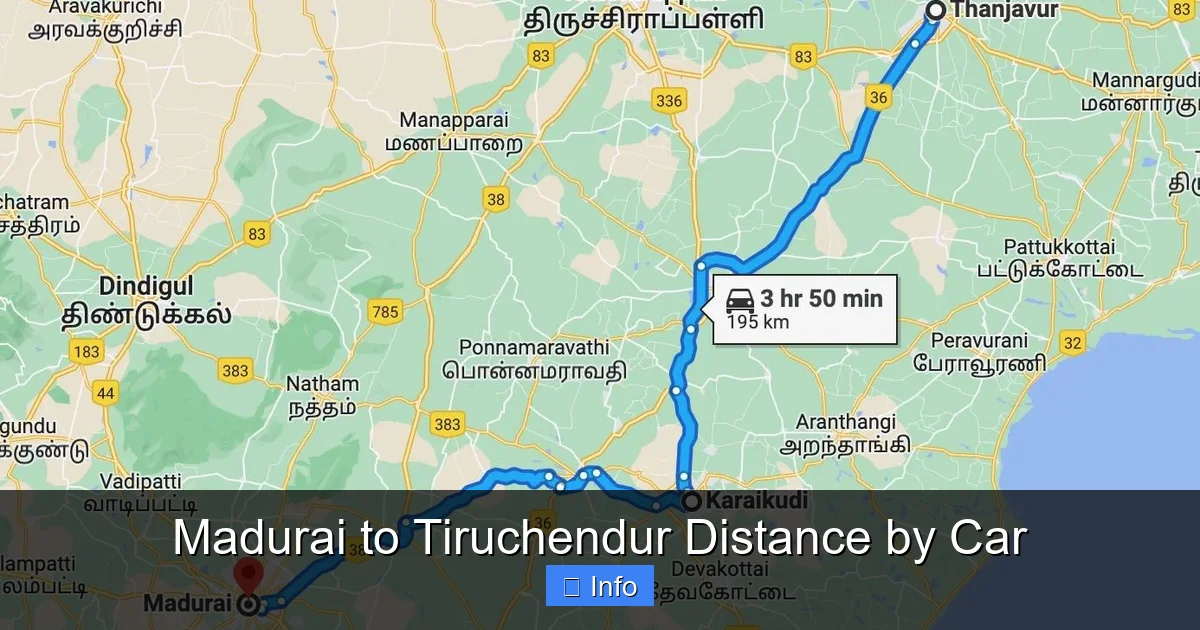
Visual guide about Madurai to Tiruchendur Distance by Car
Image source: team-bhp.com
Alternative paths
Some drivers prefer to take the state highway through Sivaganga, which can shave off a few kilometers but may involve more intersections and occasional traffic lights. This alternative can be appealing if you want to explore local markets or visit temples that are not on the main highway. However, for a straightforward trip, sticking to NH 44 is generally the fastest and most comfortable option.
During monsoon months, some sections of NH 44 may experience waterlogging, so checking recent weather reports is advisable. Additionally, road work can cause temporary diversions, and staying updated through local traffic radio can save time.
For those who prefer a more scenic drive, the route via the coastal road from Tirunelveli to Tiruchendur offers views of the Bay of Bengal. However, this road can be narrower and may require slower speeds.
Before you leave, check the status of the Madurai‑Tirunelveli highway for any construction updates. The Tamil Nadu Public Works Department website often posts real‑time information.
If you are traveling in a larger vehicle such as an SUV or a van, be aware that the turning radius is larger, especially on the state highway alternative. Planning turns in advance and allowing extra space can prevent unnecessary delays.
Along NH 44, you will find several bio‑fuel stations that offer compressed natural gas (CNG) as an alternative to petrol. If your vehicle is CNG‑compatible, refueling here can reduce your overall fuel cost.
Estimated Driving Time and Traffic Conditions
Average time
Under normal traffic, the drive takes about three to three‑and‑a‑half hours. This estimate assumes you leave Madurai in the mid‑morning, when the roads are not too crowded. If you start during peak hours, you might encounter slower‑moving vehicles, especially near the city limits. Real‑time traffic apps such as Google Maps can provide live updates and suggest alternate lanes to keep you moving.
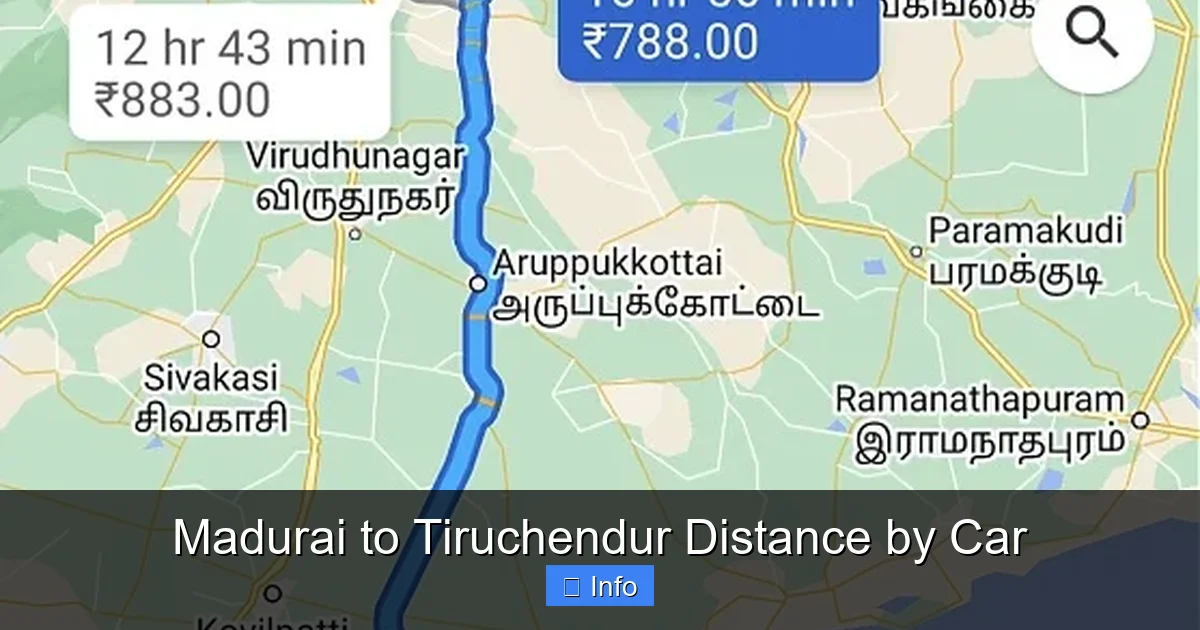
Visual guide about Madurai to Tiruchendur Distance by Car
Image source: team-bhp.com
Peak traffic
The busiest periods are usually between 8 am–10 am and 5 pm–7 pm. During these windows, you can expect more trucks and local traffic, which may add up to 30 minutes to your travel time. Planning your departure outside these windows can help you maintain a steady pace. Additionally, checking the weather forecast is wise, as heavy rain can reduce visibility and increase travel time.
Leaving early in the morning, around 6 am, can let you avoid the bulk of commuter traffic and enjoy cooler temperatures. Conversely, an evening departure may allow you to catch a sunset view near the coast.
If you are traveling with children, consider planning activities such as audiobooks or travel games to keep them entertained. A stop at a park or a beach can also help break up the journey.
Use a dashcam to record your trip. In case of an incident, the footage can be useful for insurance claims and provide a record of your journey.
Long drives can cause fatigue, so it’s advisable to take a 15‑minute break every two hours. Stretching your legs and doing simple exercises can help maintain alertness.
Budgeting for Fuel and Tolls
Fuel cost estimate
With an average fuel efficiency of 15 km per liter and petrol priced around ₹100 per liter, the fuel cost for the 170 km trip is roughly ₹1,100 to ₹1,300. If your car runs on diesel, the cost may be slightly lower, but the difference is not substantial for this distance. To save on fuel, consider using cruise control on the highway and avoiding sudden acceleration.
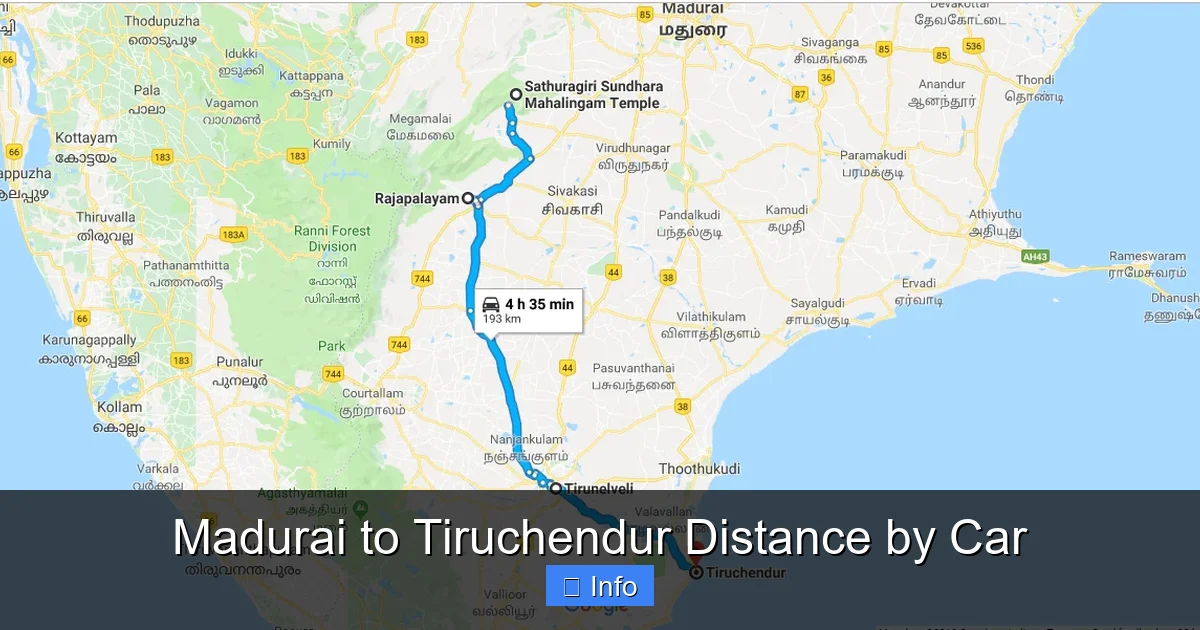
Visual guide about Madurai to Tiruchendur Distance by Car
Image source: blogger.googleusercontent.com
Toll fees
There are two major toll plazas on NH 44 between Madurai and Tiruchendur. A passenger car typically pays about ₹200 in total. Keep some cash or a fast‑tag card handy to avoid delays at the booths. Some toll plazas also offer discounts for vehicles with valid insurance, so it is worth checking your paperwork before you leave.
Factor in a small budget for vehicle maintenance, such as checking tire tread and topping up coolant. A well‑maintained car not only improves safety but can also enhance fuel efficiency, reducing overall trip cost.
Consider carpooling with friends or family to split fuel costs. Sharing the ride not only reduces expenses but also lessens the environmental impact of your trip.
To get the best fuel price, use apps like FuelBuddy or PetrolPrice that show real‑time rates along your route. You can then decide where to refuel for maximum savings.
If you plan to stay overnight in Tiruchendur, budget for accommodation. There are budget hotels and guesthouses near the beach, with rates starting from ₹800 per night.
Must‑See Stops Along the Way
Sivaganga
The town of Sivaganga is known for its historic temples and the famous Sivaganga Palace. It is a good place to stretch your legs and grab a quick snack. The local cuisine offers delicious vegetarian dishes that are worth trying. You can also explore the local market for handmade crafts and spices.
Kovilpatti
Further south, Kovilpatti is famous for its cotton industry and the ancient Kandaswamy Temple. The town also has several roadside eateries where you can enjoy fresh coconut water and local sweets. If you are traveling with children, the temple grounds provide a quiet spot for a short break.
Tiruchendur beach
As you approach your destination, the sight of the Tiruchendur beach is a rewarding finish. The beach is known for its golden sand and the historic Tiruchendur Murugan Temple, which is one of the six important shrines of Lord Murugan. You can spend some time relaxing by the shore before heading back. Coastal road trips are a favorite among travelers, and you might find inspiration from the Chennai to Kumbakonam shortest route by car, which also highlights beautiful shorelines and cultural landmarks.
While exploring Sivaganga, try the famous Sivaganga biryani and local sweets like soan halwa. In Kovilpatti, the cotton‑based snacks such as cotton candy are a unique treat for kids. Each of these stops offers a chance to experience local culture and cuisine, making the journey as enjoyable as the destination.
Sivaganga’s local market is a great place to buy traditional textiles and spices. You can also try the famous Sivaganga halwa, a sweet made from wheat flour and ghee.
In Kovilpatti, the cotton industry is the main livelihood. Visiting a cotton processing unit can give insight into the region’s economy and the quality of the cotton produced.
Bring a camera or use your smartphone to capture the beautiful landscapes and historic architecture. Early morning light provides the best conditions for photography at the temples and beach.
Each stop along the route holds cultural importance. Sivaganga is known for its annual temple festival, which attracts thousands of pilgrims. If your travel dates coincide with the festival, you can witness vibrant processions and traditional music.
Sivaganga is also famous for its handwoven silk sarees, which make excellent souvenirs. The local weavers often demonstrate their craft, offering a glimpse into traditional techniques.
Safety Tips and Final Recommendations
Vehicle check
Before you set out, make sure your car is in good condition. Check the tire pressure, brake fluid, and engine oil. A quick visit to a mechanic can prevent unexpected breakdowns on the highway. It is also wise to carry a spare tire, a basic tool kit, and a first‑aid kit in case of emergencies.
Driving safety
Use seat belts, avoid speeding, and take regular breaks every two hours. Staying hydrated and alert will make the journey safer and more enjoyable. If you are driving at night, ensure your headlights are functional and keep an eye out for stray animals near the road. In case of an accident, remember to document the scene and contact the local police for assistance.
Keep a list of emergency numbers, including the local police (100) and ambulance services (108), handy in your phone. In case of a breakdown, many highways have roadside assistance services that can be reached via a toll‑free number.
Remember to share your travel itinerary with a friend or family member, especially if you are driving alone. This simple step can provide peace of mind and ensure someone knows your expected arrival time.
Keep a bottle of water in your car to stay hydrated. Dehydration can impair concentration and increase fatigue, especially on long drives.
If you experience a flat tire, stay calm and follow the steps in your car’s manual. Many modern cars come with a spare tire and a basic tool kit, but knowing how to change a tire can be a valuable skill.
Carry a copy of your vehicle insurance and registration papers. In case of a police check, having these documents readily available can avoid unnecessary delays. Additionally, note the helpline numbers for your insurance provider.
Keep a reflective vest and a flashlight in your car. These items can be lifesavers if you need to change a tire on the roadside at night.
By following these tips, your Madurai to Tiruchendur distance by car experience will be smooth and memorable. Pack some snacks, download a good playlist, and enjoy the ride!
Frequently Asked Questions
What is the exact distance from Madurai to Tiruchendur by car?
The road distance is approximately 170 kilometers via National Highway 44, which is the most common route taken by drivers.
How long does it take to drive from Madurai to Tiruchendur?
Under normal traffic conditions, the journey takes about three to three‑and‑a‑half hours, though peak hours can add up to 30 minutes.
Which is the best route to take?
The primary route is NH 44, which is well‑maintained and offers consistent lane markings; alternative state highways exist but may involve more intersections.
What are the toll fees on this route?
There are two major toll plazas, and a passenger car typically pays around ₹200 in total.
Are there any good places to stop along the way?
Yes, Sivaganga, Kovilpatti, and Tiruchendur beach are recommended stops for food, culture, and relaxation.
What safety precautions should I take?
Check your vehicle before departure, use seat belts, take regular breaks, keep emergency numbers handy, and carry essential documents.