Profit Margin in Car Dealership in India
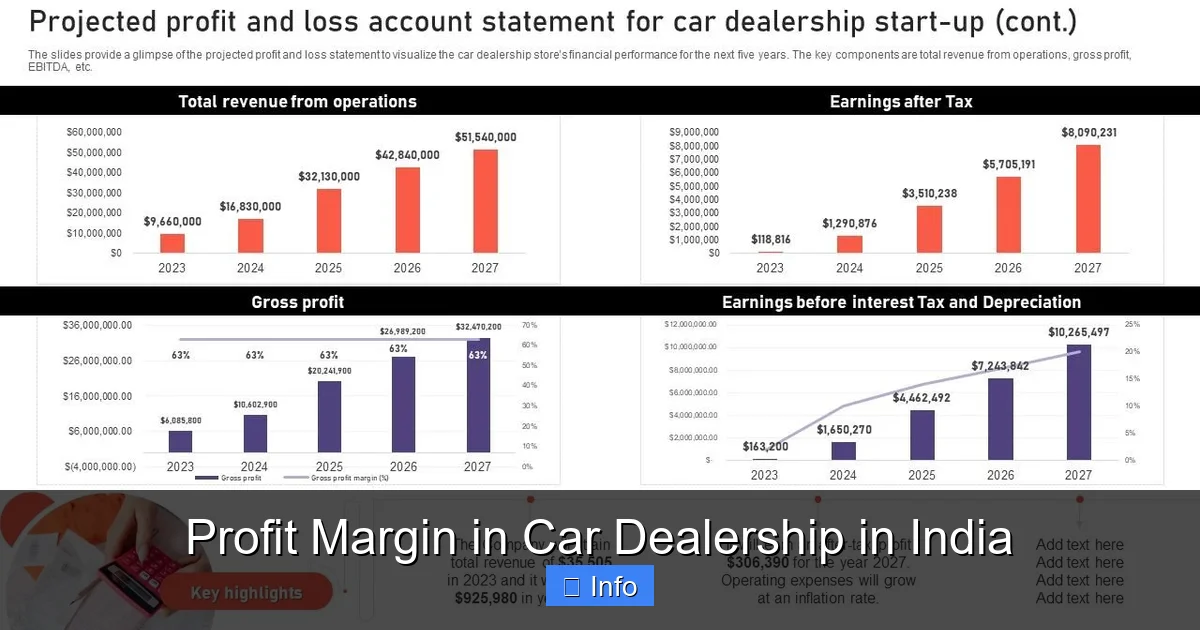
Understanding the profit margin in car dealership in India is crucial for sustainable growth. This article breaks down the key metrics, cost structures, and proven tactics that help dealers maximize earnings while navigating market challenges. By applying the strategies outlined here, you can improve your profit margin in car dealership in India and stay ahead of the competition.
Key Takeaways
- Point 1: Profit margin in car dealership in India typically ranges from 2‑5 % but can be higher with premium models.
- Point 2: Accurate calculation of cost of goods sold, overhead, and incentives directly impacts the profit margin in car dealership in India.
- Point 3: Inventory management and focusing on models with good resale value in India are essential to protect the profit margin in car dealership in India.
- Point 4: After‑sales service and extended warranties can add 10‑15 % to overall profitability, strengthening the profit margin in car dealership in India.
- Point 5: Lean operations, data‑driven pricing, and technology integration boost the profit margin in car dealership in India.
- Point 6: Comparing with the car wash business profit margin in India shows the importance of controlling overheads across the board.
- Point 7: Future trends like electric vehicles and government incentives will reshape the profit margin in car dealership in India.
📑 Table of Contents
- Understanding Profit Margins in Indian Car Dealerships
- How Dealerships Calculate Profit Margin in India
- Common Challenges That Eat Into Margins
- Strategies to Boost Profit Margin in Indian Dealerships
- The Role of Technology and Data in Margin Optimization
- Future Trends Shaping Profit Margins for Indian Car Dealers
- Conclusion
Understanding Profit Margins in Indian Car Dealerships
Key Metrics
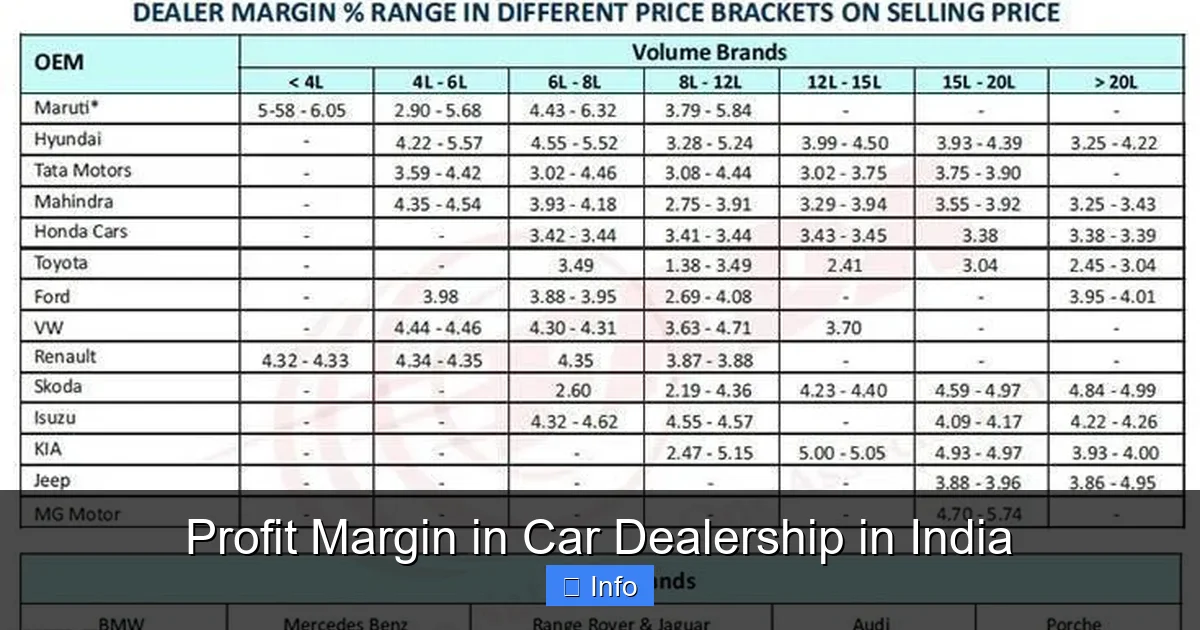
When you talk about the profit margin in car dealership in India, the first step is to know the core numbers. Dealerships usually quote a gross margin between 2 % and 5 % on most passenger cars. Premium brands can push this higher, sometimes reaching 8 % or more. The net profit margin after all expenses often sits around 1‑3 %. These percentages may look modest, but they reflect the high volume of sales and the competitive pricing environment in India.
To truly grasp the profit margin in car dealership in India, you need to separate the cost of the vehicle from the profit. The invoice price from the manufacturer, plus transportation, duties, and any import taxes, forms the cost base. Subtract this from the selling price to see the gross profit. Then factor in dealership overhead—rent, staff salaries, utilities, marketing, and compliance costs. The leftover is the net profit margin in car dealership in India.
Factors Influencing Margins
Several forces shape the profit margin in car dealership in India. Seasonal demand swings, festival discounts, and new model launches can compress margins temporarily. Currency fluctuations affect imported components, while changes in GST rates directly impact the cost structure. Additionally, regional differences in registration fees and road taxes create variations across states. Understanding these variables helps dealers forecast the profit margin in car dealership in India more accurately.
After‑sales service also plays a huge role. Warranty claims, spare parts sales, and maintenance contracts generate extra revenue that can lift the overall profit margin in car dealership in India. However, high service costs can erode margins if not managed well. Balancing service profitability with customer satisfaction is a constant challenge for dealers aiming to improve the profit margin in car dealership in India.
How Dealerships Calculate Profit Margin in India
Cost Components
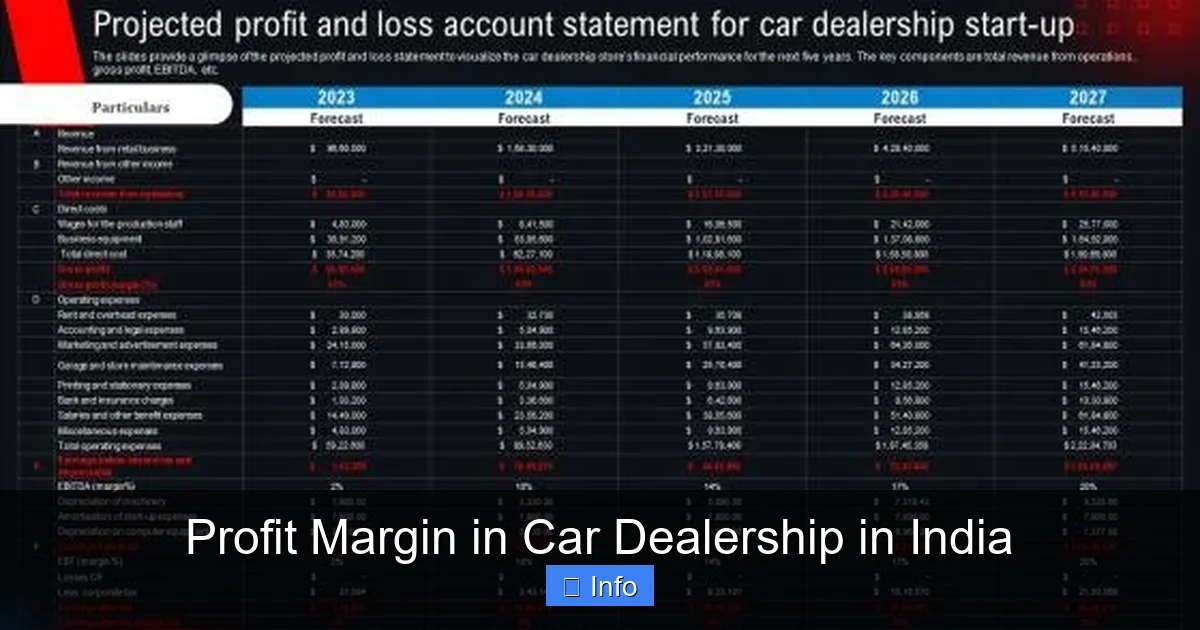
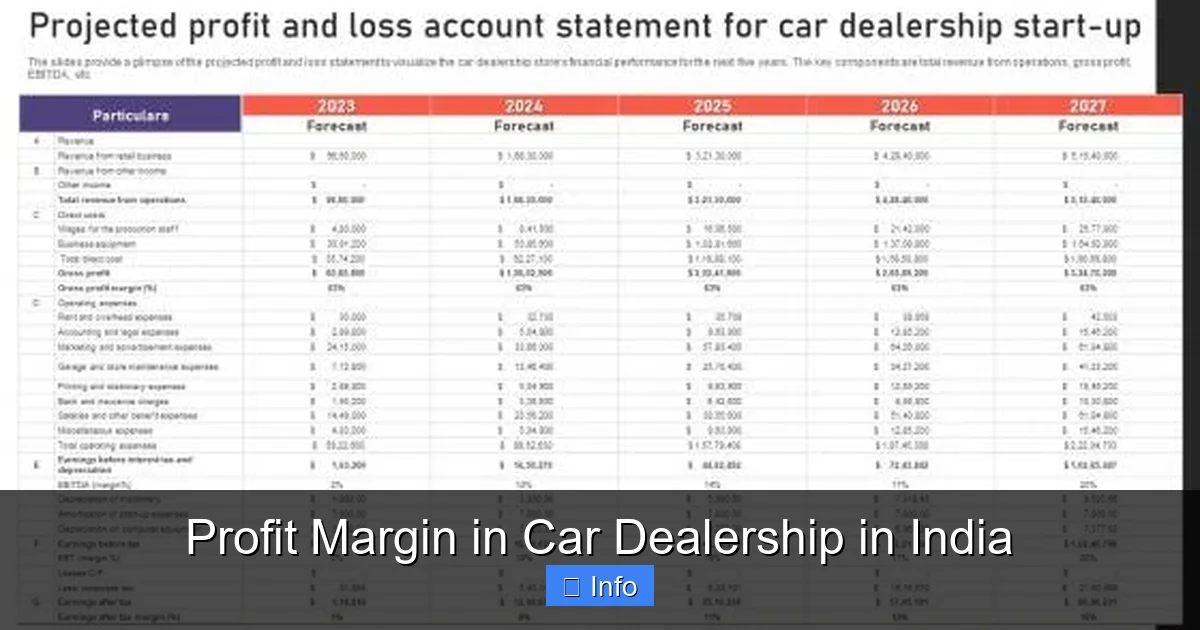
Calculating the profit margin in car dealership in India starts with a detailed cost breakdown. The purchase cost includes the ex‑showroom price, dealer discount, and any additional financing charges. Transportation, insurance, and registration fees are added to the cost of goods sold. Dealerships also allocate a portion of their fixed costs—like showroom rent and staff salaries—to each vehicle sold. This allocation method ensures that the profit margin in car dealership in India reflects true profitability.
Visual guide about Profit Margin in Car Dealership in India
Image source: slideteam.net
Variable costs such as advertising, promotional offers, and after‑sales labor must be tracked per transaction. Some dealers use a per‑vehicle margin model, while others apply a blended margin across the entire portfolio. Both approaches aim to capture the real profit margin in car dealership in India, helping managers make informed pricing and inventory decisions.
Revenue Streams
Revenue is not limited to vehicle sales alone. Extended warranties, paint protection packages, and accessory kits add to the top line and improve the profit margin in car dealership in India. Financing commissions from banks and NBFCs also contribute. Dealers that bundle these services can increase the average profit margin in car dealership in India by 10‑15 %.
It is also wise to compare the profit margin in car dealership in India with related sectors. For instance, the car wash business profit margin in India often follows similar patterns of high volume, low per‑unit margin, and reliance on ancillary services. Learning from that comparison can inspire better cost control and service bundling strategies.
Common Challenges That Eat Into Margins
Inventory Management
One of the biggest drains on the profit margin in car dealership in India is poor inventory turnover. Holding onto slow‑moving models ties up capital and incurs storage costs. Dealers that focus on models with good resale value in India can reduce this risk. A vehicle that retains its value quickly helps maintain a healthier profit margin in car dealership in India, as trade‑ins and financing become easier.
Visual guide about Profit Margin in Car Dealership in India
Image source: team-bhp.com
Seasonal demand spikes, especially around Diwali and other festivals, can force dealers to offer deep discounts. These discounts directly cut into the profit margin in car dealership in India unless offset by higher volume or ancillary sales. Effective inventory planning, demand forecasting, and dynamic pricing are essential to protect the profit margin in car dealership in India during peak periods.
After‑Sales Service Costs
After‑sales service is a double‑edged sword for the profit margin in car dealership in India. While service centers generate significant revenue, they also require skilled labor, spare parts inventory, and continuous training. High warranty claim rates can erode the profit margin in car dealership in India if not monitored.
Dealerships can improve the profit margin in car dealership in India by adopting preventive maintenance programs and offering value‑added services like periodic health checks. Leveraging digital service scheduling reduces idle time and improves resource utilization, which in turn supports a stronger profit margin in car dealership in India.
Strategies to Boost Profit Margin in Indian Dealerships
Pricing Tactics
Pricing is the most direct lever to influence the profit margin in car dealership in India. Dealers should avoid indiscriminate discounting. Instead, they can use limited‑time offers on accessories or low‑interest financing to increase the average transaction value without slashing the base price. This approach preserves the profit margin in car dealership in India while stimulating demand.
Visual guide about Profit Margin in Car Dealership in India
Image source: slideteam.net
Dynamic pricing software can analyze real‑time market data, competitor pricing, and local demand to set optimal selling prices. By aligning prices with market conditions, dealers protect the profit margin in car dealership in India and reduce excess inventory. The use of such tools mirrors the data‑driven approaches seen in the Bosch service franchise cost in India, where precise cost tracking drives profitability.
Lean Operations
Lean operations focus on eliminating waste and improving flow. For a car dealership, this means streamlining the sales process, reducing paperwork, and optimizing showroom layout. Fewer touchpoints lower labor costs, which directly lifts the profit margin in car dealership in India. Automation of routine tasks—such as inventory updates and service appointment reminders—also reduces errors and improves customer satisfaction.
Dealers should regularly audit their cost structure. Small savings in utilities, marketing spend, or even office supplies add up over time, boosting the profit margin in car dealership in India. Benchmarking against industry peers, including the good resale value in India standards, helps identify areas for improvement.
The Role of Technology and Data in Margin Optimization
DMS and CRM Integration
A robust Dealer Management System (DMS) and Customer Relationship Management (CRM) platform are essential for tracking the profit margin in car dealership in India at a granular level. Real‑time dashboards show gross profit per model, service revenue, and overhead allocation. This visibility enables quick adjustments to preserve the profit margin in car dealership in India.
CRM tools also help nurture after‑sales relationships, encouraging repeat business and higher service utilization. When customers return for maintenance, the dealership can generate additional profit, which strengthens the overall profit margin in car dealership in India. Integration between DMS and CRM ensures that every customer interaction is logged and analyzed for margin impact.
Predictive Analytics
Predictive analytics use historical sales data, market trends, and seasonal patterns to forecast demand. By anticipating which models will sell well, dealers can fine‑tune inventory, avoiding overstock that depresses the profit margin in car dealership in India. Analytics also identify the most profitable add‑on services, guiding targeted promotions.
Machine learning models can even predict the optimal discount level for each customer segment, balancing volume and margin. This precision helps maintain a healthy profit margin in car dealership in India while staying competitive. The same analytical rigor applied to the car wash business profit margin in India demonstrates how data can transform low‑margin industries into profitable enterprises.
Future Trends Shaping Profit Margins for Indian Car Dealers
Electric Vehicles
The rise of electric vehicles (EVs) is reshaping the profit margin in car dealership in India. EVs typically have higher gross margins due to lower after‑sales complexity and government subsidies. However, dealers must invest in training, charging infrastructure, and specialized inventory to capture this margin potential.
Dealerships that proactively adapt to the EV wave can secure a competitive edge, improving the profit margin in car dealership in India for years to come. Partnerships with manufacturers and offering test‑drive events can accelerate adoption and boost ancillary revenue.
Government Policies
Policy changes—such as modifications to GST rates, emission norms, and import duties—directly affect the cost structure and thus the profit margin in car dealership in India. Staying informed about upcoming policy shifts allows dealers to adjust pricing and inventory strategies ahead of time, protecting margins.
Government incentive programs for greener transportation also open new revenue streams. Dealers that bundle EV purchases with subsidies and offer eco‑friendly financing can enhance the profit margin in car dealership in India while contributing to national sustainability goals.
Conclusion
Understanding and improving the profit margin in car dealership in India requires a blend of disciplined accounting, strategic pricing, and smart technology adoption. By mastering cost components, diversifying revenue streams, and tackling inventory and service challenges, dealers can lift their margins beyond the industry average. The lessons learned from related sectors—like the car wash business profit margin in India and the Bosch service franchise cost in India—show that meticulous cost control and data‑driven decisions are universal drivers of profitability.
Looking ahead, dealers who embrace electric vehicles, leverage predictive analytics, and stay agile in response to government policy will secure a stronger profit margin in car dealership in India. The combination of traditional strengths and modern technology creates a resilient business model that can thrive in the dynamic Indian market. By applying the strategies outlined here, you can enhance your profit margin in car dealership in India and build a sustainable, growth‑focused dealership for the future.
Frequently Asked Questions
What is the typical profit margin in car dealership in India?
The typical gross profit margin ranges from 2 % to 5 % on most passenger cars, with premium brands sometimes exceeding 8 %. Net profit margins after all expenses usually sit around 1‑3 %.
How do I calculate profit margin in car dealership in India?
First, determine the cost of goods sold (invoice price, transport, taxes). Subtract this from the selling price to get gross profit. Then deduct overhead—rent, salaries, marketing—to arrive at net profit. Divide net profit by total sales and multiply by 100 for the margin percentage.
What factors affect profit margin in car dealership in India?
Seasonal demand, festival discounts, GST changes, currency fluctuations, regional registration fees, and after‑sales service costs all influence the margin. Inventory turnover and model resale value are also critical.
How can I improve profit margin in car dealership in India?
Focus on pricing tactics that avoid deep discounts, bundle accessories and financing, use dynamic pricing tools, adopt lean operations, and integrate DMS/CRM for better cost control and data analysis.
Why is after‑sales service important for profit margin in car dealership in India?
Service centers generate additional revenue that can add 10‑15 % to overall profitability. Well‑managed service operations also enhance customer loyalty, leading to repeat sales and higher margins.
What role does technology play in optimizing profit margin in car dealership in India?
Technology like Dealer Management Systems, CRM platforms, and predictive analytics provides real‑time insights into costs, sales performance, and demand forecasting, enabling quick adjustments to protect and grow margins.