Rto Approved Sun Control Film for Car Price
RTO approved sun control film lets you reduce heat and glare while staying within Indian legal limits. This guide breaks down price ranges, key features, and how to choose the right film for your budget and vehicle.
Key Takeaways
- Legal VLT limits: Front windshield 70%, side windows 50%, rear windshield 50% visible light transmission.
- Price range: Quality RTO approved films cost between ₹2,500 and ₹12,000 for a full car kit.
- Film types: Dyed, metalized, ceramic, and hybrid films each offer different heat rejection and durability.
- Brand matters: Reputable brands like Garware, 3M, and Llumar provide certified compliance and warranty.
- Professional installation: Proper fitting avoids bubbles, peeling, and ensures the film meets RTO standards.
- Maintenance: Clean with mild soap, avoid abrasive tools to extend film life.
- Complementary protection: Pair film with a car cover for sun protection for maximum interior care.
📑 Table of Contents
Introduction
Driving under the harsh Indian sun can turn a comfortable cabin into an oven. Many car owners turn to window films to cut heat and glare. However, not every tint is legal. The Regional Transport Office (RTO) sets strict visible light transmission (VLT) limits. Choosing an rto approved sun control film for car price that meets those limits keeps you safe from fines and ensures clear visibility.
In this article we walk through the regulations, explore film technologies, compare price brackets, and share practical tips for buying and maintaining the right film. Whether you drive a hatchback, sedan, or SUV, you’ll find the information you need to make a smart, compliant purchase.
Understanding RTO Regulations
Visible Light Transmission Limits
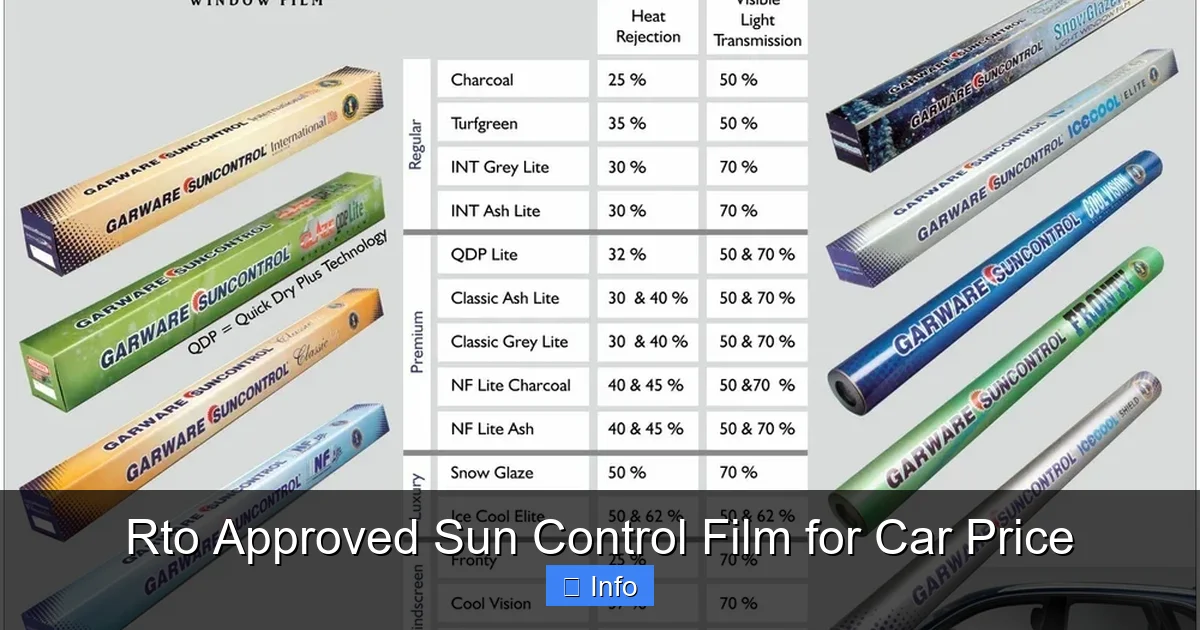
The RTO mandates specific VLT percentages for each glass area. Front windshields must allow at least 70% light. Front side windows need a minimum of 50%. Rear side windows and the rear windshield also require 50% VLT. Any film darker than these limits is illegal and can attract penalties.
Visual guide about Rto Approved Sun Control Film for Car Price
Image source: 5.imimg.com
Certification and Stickers
Approved films carry a certification mark from the manufacturer and a compliance sticker that must be displayed on the driver’s side window. When you buy, ask the dealer for the test report that proves the film meets the RTO standards. This documentation is essential during vehicle inspections.
Types of Sun Control Films
Dyed Films
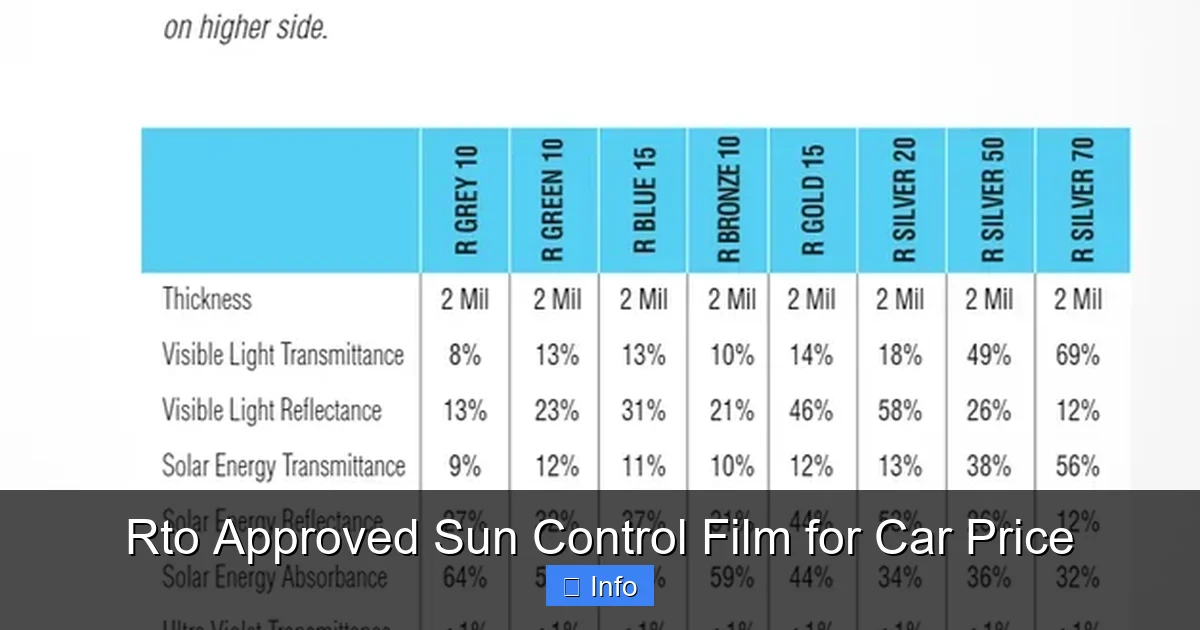
Dyed films use a layer of dye to absorb solar energy. They are the most affordable option, typically priced between ₹2,500 and ₹4,500 for a full car kit. While they reduce glare, their heat rejection is modest and they can fade over time.
Visual guide about Rto Approved Sun Control Film for Car Price
Image source: 5.imimg.com
Metalized Films
Metalized films embed tiny metallic particles that reflect heat. They offer better infrared rejection than dyed films and cost around ₹4,500 to ₹7,000. A downside is potential interference with GPS, mobile signals, and radio reception.
Ceramic Films
Ceramic films use non‑metallic nano‑ceramic particles. They provide superior heat rejection, UV blocking up to 99%, and do not affect electronic signals. Prices range from ₹7,000 to ₹12,000. They are the premium choice for long‑term performance.
Hybrid Films
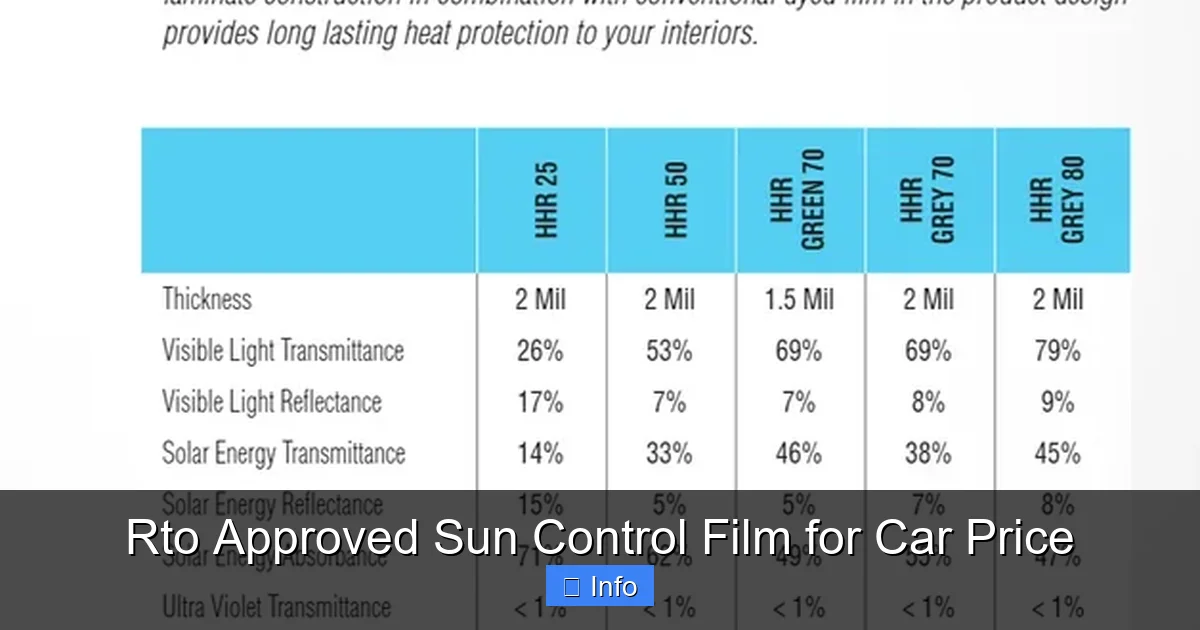
Hybrid films combine dyed and metalized layers for a balance of cost and performance. They sit in the ₹5,000 to ₹8,500 bracket and deliver decent heat rejection with minimal signal interference.
Factors That Influence the Price
Brand Reputation and Warranty
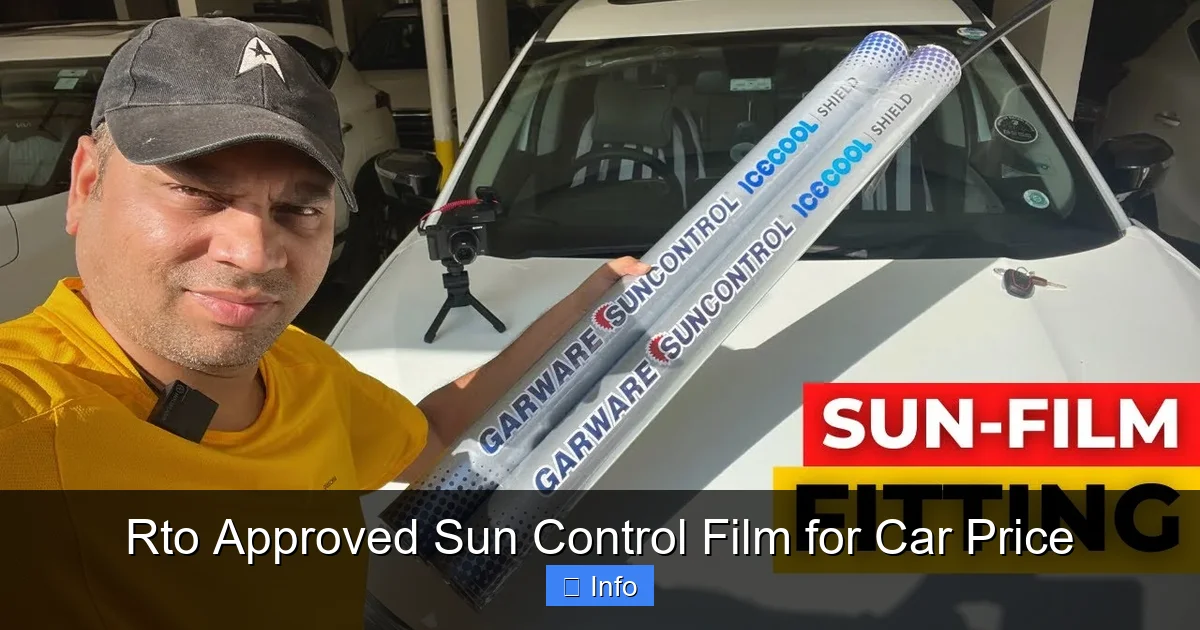
Established brands like Garware, 3M, Llumar, and SunTek command higher prices because they offer certified compliance, longer warranties (often 5–10 years), and consistent quality. A warranty protects you against bubbling, peeling, and discoloration.
Visual guide about Rto Approved Sun Control Film for Car Price
Image source: i.ytimg.com
Vehicle Size and Glass Area
Larger vehicles such as SUVs and MPVs have more glass surface, so the material cost rises. A compact hatchback kit may start at ₹2,500, while a full‑size SUV kit can exceed ₹10,000 for top‑tier ceramic film.
Installation Complexity
Professional installation adds ₹1,000 to ₹3,000 depending on the shop and region. Complex curves, sensor cutouts, and the need for precision trimming increase labor time. DIY kits exist but risk improper fit, which can void the film’s certification.
Additional Features
Some films include anti‑scratch coatings, hydrophobic surfaces, or enhanced UV protection. These extras add ₹500 to ₹1,500 to the base price but can extend the film’s lifespan and keep the glass clearer.
Top Brands and Their Price Ranges
Garware SunControl
Garware is a home‑grown leader with a strong dealer network. Their dyed series starts near ₹2,800, metalized around ₹5,200, and ceramic at ₹9,500 for a standard sedan kit. All carry RTO compliance stickers.
3M Crystalline Series
3M’s Crystalline line uses multi‑layer optical film technology. Prices begin at ₹7,500 for a hatchback and climb to ₹12,000 for an SUV. The series boasts 99% UV block and high infrared rejection without metal.
Llumar ATC
Llumar’s ATC (Automotive Thermal Control) range offers ceramic performance at a mid‑range price. Expect ₹6,500 to ₹10,000 depending on vehicle size. The film is known for excellent clarity and durability.
SunTek Carbon
SunTek Carbon blends carbon particles for a matte finish and strong heat rejection. Kits run ₹5,500 to ₹9,000. It’s a popular choice for owners who want a stealthy look with solid performance.
Installation and Maintenance Tips
Choose a Certified Installer
Look for shops authorized by the film brand. Certified installers follow the manufacturer’s guidelines, ensuring the film meets RTO VLT specs after application. Ask to see previous work or customer reviews.
Prepare the Glass
Thorough cleaning removes dust, oil, and residues that cause bubbles. Installers typically use a slip solution and a squeegee to achieve a smooth finish. Allow the film to cure for 48 hours before rolling windows down.
Cleaning the Film
Use a mild soap solution and a soft microfiber cloth. Avoid ammonia‑based cleaners, abrasive pads, or harsh chemicals. Regular gentle cleaning preserves clarity and the hydrophobic coating if present.
Inspect Periodically
Check edges for lifting or peeling every few months. Early detection lets you get a warranty repair before the issue spreads. Keep the compliance sticker visible; it’s your proof of legality.
Combine with Other Sun Protection
For maximum interior comfort, pair your window film with a anti‑glare sun visor and consider a UV protection coating for the paint. These extras reduce heat buildup and protect surfaces from fading.
Conclusion
Selecting an rto approved sun control film for car price that fits your budget and legal requirements is straightforward when you know the rules and the market. Start by confirming the VLT limits for each window, then decide which film technology matches your heat‑rejection needs and signal‑sensitivity concerns. Compare brands, factor in vehicle size and professional installation costs, and always verify certification stickers and warranty terms.
With the right film, you’ll enjoy a cooler cabin, reduced glare, and peace of mind knowing you’re fully compliant. Don’t forget to maintain the film properly and consider complementary accessories like a quality car cover or paint protection film for complete vehicle care. If you’re also looking to shield your car’s exterior, check out our guide on the best paint protection film for cars.
Frequently Asked Questions
What is the legal VLT limit for front windshields in India?
The RTO requires a minimum of 70% visible light transmission for front windshields. Any film darker than this is illegal.
Can I install RTO approved film myself?
DIY installation is possible but not recommended. Improper fit can cause bubbles, peeling, and may void the film’s certification. Professional installers ensure compliance and warranty coverage.
How long does a quality sun control film last?
Premium ceramic or metalized films with proper care can last 7–10 years. Dyed films may start fading after 3–5 years.
Will metalized film affect my GPS or phone signal?
Yes, metalized films can interfere with GPS, mobile, and radio signals. Ceramic or hybrid films are better choices if you rely heavily on electronic navigation.
Do I need a compliance sticker on my car?
Yes, the RTO mandates a visible compliance sticker on the driver’s side window. It proves the film meets legal VLT standards during inspections.
Can I combine window film with a car cover for extra protection?
Absolutely. Using a car cover for sun protection alongside window film gives the best defense against heat and UV damage.