
Staff Car Rules for Central Government Employees
This guide breaks down everything you need to know about staff car regulations for central government employees. It covers eligibility, vehicle requirements, driver responsibilities, and security protocols. Follow these rules to stay compliant while enjoying hassle-free official travel.
Earning a salary through public service comes with privileges—and privileges come with responsibilities. As a central government employee, knowing the nuances of staff car usage ensures smooth operations and avoids unnecessary headaches. These vehicles aren’t just transport; they’re extensions of your work commitment. Whether you’re heading to a crucial meeting or covering emergency duties, understanding the rules helps you navigate every mile confidently. Let’s dive into what you actually need to know to keep your staff car program running like clockwork.
Key Takeaways
- Eligibility matters: Only designated central government personnel may use staff cars, ensuring proper accountability.
- Compliance is key: Vehicles must meet strict age limits, maintenance schedules, and safety equipment checks.
- Driver duties are clear: Strict working hour restrictions and rest period mandates protect your wellbeing and productivity.
- Luggage rules apply: Carry only approved personal items and follow baggage weight limitations to avoid penalties.
- Health and comfort matter: Proper seating ergonomics and lumbar support reduce fatigue during long official trips.
- Stay informed: Regularly review updates from your department to adapt to changing policy directives.
📑 Table of Contents
Understanding Central Government Staff Car Policies
What Defines a Staff Car
Not every company van qualifies as a staff car. Under central government rules, only vehicles assigned specifically to sanctioned employees receive this designation. Think of it as a badge of trust—your name on the assignment means the government has entrusted you with a car for official business. This distinction separates everyday personal use from authorized transportation, which carries different expectations around maintenance, usage history, and insurance coverage.
The classification isn’t arbitrary. Each staff car must be registered under the department’s fleet management system and undergo periodic inspections. When you drive a staff car, you’re not just operating a vehicle—you’re representing the institution’s reputation. That’s why adherence to protocol isn’t optional but expected. Failure to follow established guidelines can result in disciplinary action, fines, or even revocation of your driving privileges.
Legal Framework and Compliance Essentials
Central government staff car rules are rooted in both national legislation and department-specific regulations. The primary legal foundation comes from the Public Service Rule and various departmental travel policies. These documents outline mandatory requirements such as annual vehicle inspection, GPS tracking obligations, and reporting procedures for any incidents involving the staff car.
Compliance extends beyond paperwork. Every trip requires documentation—from pre-departure permission slips to post-journey summaries detailing route taken and time spent. Digital logbooks have become standard practice, allowing real-time monitoring rather than retroactive reporting. Department officials conduct random spot-checks to verify that vehicles remain in good condition and that drivers adhere to the agreed-upon schedule.
Embrace these systems early. The sooner you get comfortable with checklists and reporting formats, the less stress will accompany your official journeys later on.
Eligibility and Assignment Process
Who Qualifies as a Staff Member
Only individuals employed as permanent or contract officers in recognized departments can access staff car benefits. This means civil servants, post office workers, railway employees, and other central government functionaries fall under the umbrella. Your position title matters—if you hold a sanctioned role, you’ll typically receive a staff car allocation based on seniority, duty frequency, and departmental budget approvals.
New hires usually begin their journey without a staff car initially. Most departments require a probationary period where you earn mileage allowances instead of vehicle access. Once you demonstrate consistent performance and stability, your eligibility for a staff car becomes a reality. Some paramilitary or defense-linked positions also qualify, though their processes differ slightly from civilian roles.
It’s important to note that eligibility isn’t based solely on rank. Experience and proven reliability often determine who gets the privilege. If you’re considering applying for a staff car, discuss your career progression with your supervisor to understand the criteria better. Clear communication prevents surprises when opportunity arises.
The Assignment Protocol
Once eligible, the assignment process follows a formal procedure. Your department head submits a request specifying your daily travel needs—the destination, duration, and number of passengers. The central fleet coordinator reviews this against available vehicles and assigns the most appropriate car based on factors like your tenure, department location, and typical commute patterns.
Documentation plays a critical role here. You’ll need signed letters of assignment and proof of employment before the vehicle is officially allocated to you. Without these, there could be delays when you try to book travel. Keep copies of all correspondence—it serves as evidence if any disputes arise regarding car availability or scheduling conflicts.
Regular reassessment keeps assignments fair and efficient. Departments periodically review who uses staff cars versus personal vehicles to prevent over-allocation and ensure resources serve those who truly need them most.
Vehicle Requirements and Maintenance Standards
Age and Condition of Cars
Strict age limits apply to staff cars. Typically, vehicles must not exceed 12 years in service, depending on the specific department’s capital expenditure cycles. Older cars show wear and tear faster, so newer models tend to command higher priority for official transport. Regular servicing—including oil changes, brake inspections, and tire rotations—is non-negotiable. A failing engine or worn suspension cannot operate a staff car, regardless of its prestige.
Inspections happen twice yearly: once annually by the central fleet team and monthly during peak usage seasons. During these checks, trained personnel verify lights, brakes, steering, and overall mechanical integrity. Any deficiencies found must be corrected immediately; otherwise, you risk operational shutdowns that disrupt official schedules.
Modern staff cars often feature advanced safety technologies like automatic emergency braking and reinforced structures. Adhering to these upgrades demonstrates your commitment to safety—not just for yourself but for passengers and fellow road users. Consider investing in premium tires and air conditioning units if your car lacks them, as comfort impacts professionalism during extended drives.
Safety Equipment Mandates
Every staff car must carry required safety gear before leaving the depot. This includes fire extinguishers rated for electrical fires, first aid kits stocked with essential supplies, reflective warning triangles, and spare tyres for flat tubes. In some regions, additional equipment like reflective vests for night shifts or COVID-19 sanitization kits may be mandated. Failing to maintain this roster equips you to respond quickly to emergencies while on duty.
Remember, safety equipment isn’t merely bureaucratic—real accidents happen. A properly maintained car reduces liability claims and protects your family life. When traveling overnight, extra caution pays off because help may arrive hours after the incident occurs. Always familiarize yourself with location maps showing nearest hospitals and police stations along your planned routes.
Driver Rights and Responsibilities
Working Hours and Rest Periods
Your driving schedule falls under the official working hours prescribed by your department’s travel policy. These may range from eight-hour shifts to longer continuous periods depending on mission demands. Regardless of the length, statutory rest breaks are mandatory—typically at least 30 minutes after four hours of driving followed by a full eight-hour rest between shift days.
Exceeding these limits without authorization risks disciplinary action. The law expects staff car drivers to prioritize recovery and alertness. Fatigue impairs judgment, increases accident likelihood, and violates core principles of occupational health. Build habits that respect these boundaries even when you feel capable of pushing through tiredness.
Conduct and Discipline
Driving responsibility extends beyond mechanics to behavior. Respect local traffic laws is non-negotiable—speed limits, turn signals, and right-of-way rules must be observed at all times. Road rage, excessive noise, and disregard for pedestrians undermine your standing within the organization and affect community relations.
Professionalism shines through in how you treat passengers, colleagues en route, and fellow motorists. Keep conversations low-key during official travel. Avoid displaying political opinions or controversial topics while seated behind the wheel. Such conduct reflects poorly on your department and can trigger investigations. Maintaining composure builds trust with supervisors and preserves your credibility.
When mistakes occur—such as minor violations or unapproved detours—report them immediately. Self-policing shows maturity and prevents escalations. The goal is transparent, responsible ownership of every kilometer driven in service of the nation.
Luggage and Personal Effects Regulations
Packing Limitations
Your staff car comes with a defined luggage allowance designed for efficiency and security. Generally, you’re permitted a limited quantity of personal belongings—often two bags per passenger plus necessary work documents. Excessive packing not only wastes space but also complicates vehicle inspections and can lead to confiscation of unauthorized items.
Heavy bags increase fuel consumption and strain the vehicle, especially older models. Distribute your load evenly across the trunk and cabin to promote balance and prevent shifting during turns. Store fragile electronics separately from books or clothing to minimize damage upon arrival.
If you need to transport sensitive materials requiring climate control, consider using insulated cases. These preserve temperature-sensitive documents or samples without compromising the car’s interior environment. Simple planning today saves headaches tomorrow.
Security Considerations
Protecting your staff car involves proactive measures. Park in designated areas whenever possible—public parking lots near offices guarantee visibility and deter theft. At night, switch on headlights and hazard indicators to signal presence to passersby. Never leave valuables unattended inside the vehicle, even if you expect minimal disturbance.
In case of emergency, familiarise yourself with your car’s emergency kit. Though rare, punctures, breakdowns, or medical situations may demand prompt intervention. Know the locations of key tools—spare jack, jumper cables, emergency flares—and practice their use before true crises emerge.
Finally, report any suspicious activity or attempted tampering immediately to your department. Early detection prevents larger problems and maintains operational trustworthiness.
## Conclusion
Navigating staff car rules as a central government employee takes precision and awareness. By understanding eligibility criteria, maintaining rigorous vehicle standards, honoring driver duties, and respecting security protocols, you safeguard both your interests and institutional reputation. Remember that compliance isn’t just about avoiding punishment—it’s about earning the trust of your superiors and contributing effectively to public service. Stay organized, keep documentation current, and always prioritize safety. With these practices embedded in your routine, your staff car becomes a reliable partner in advancing your career and fulfilling your civic duty. Drive responsibly, report diligently, and let your commitment shine through every mile.
—
Frequently Asked Questions
What happens if I forget to document my trip?
Failure to record your journey details can result in audit issues and potential penalties. Always fill out the digital logbook immediately after returning, noting departure time, route taken, and arrival status. Even minor deviations deserve entry; honesty builds accountability and prevents disputes later.
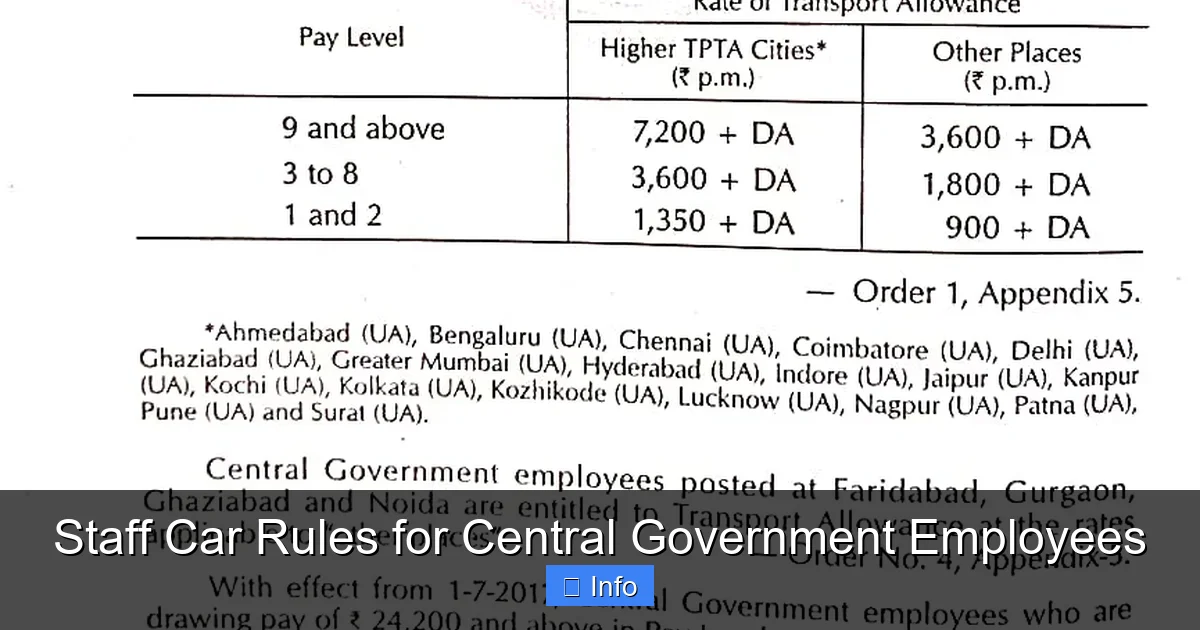
Visual guide about Staff Car Rules for Central Government Employees
Image source: knowscope.in
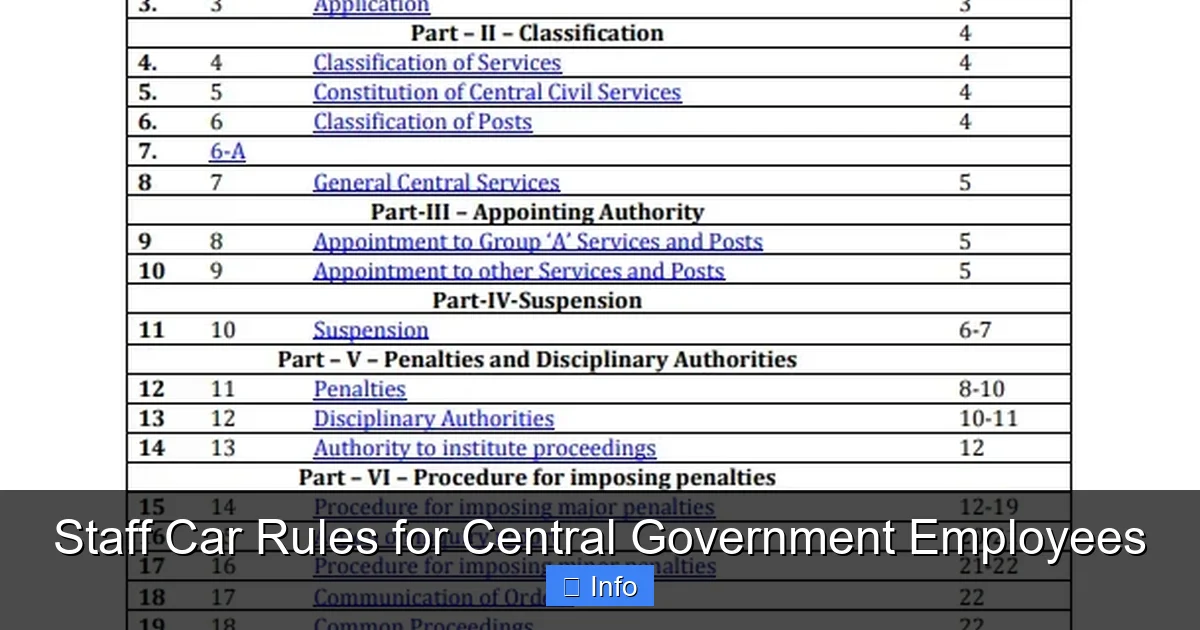
Visual guide about Staff Car Rules for Central Government Employees
Image source: knowscope.in

Visual guide about Staff Car Rules for Central Government Employees
Image source: rajindrabook.com
Can I bring my own personal music player in the car?
Yes, personal devices are allowed for entertainment during legally permitted driving hours. However, ensure audio levels don’t interfere with road safety or violate department noise ordinances. Opt for volume-controlled playback and consider noise-cancelling earbuds for optimal experience.
How do I request an additional staff car?
Submit a formal application through your department’s HR portal, attaching proof of continued employment and recommended tenure. The central fleet committee reviews requests quarterly based on workload demands. Approval depends on availability, your service record, and operational needs.
Is lunch allowed on official staff car trips?
Meals are permitted but require advance approval from your supervisor to confirm timing aligns with official travel windows. Eating too late may conflict with evening meetings scheduled at headquarters. Coordinate with your team beforehand to avoid scheduling clashes.
What if my staff car breaks down halfway through a trip?
Contact the nearest maintenance depot immediately via the dedicated hotline or mobile app. Document the issue with photos and details before seeking assistance. Prompt notification allows rapid replacement or alternative routing arrangements to minimise disruption.
Do all central government staff share the same car type?
No, vehicle allocation varies by department. Some agencies use compact sedans for city commutes while others rely on larger SUVs for remote location visits. Your specific department determines the model category, but modern standards encourage energy-efficient, well-maintained vehicles across the board.
Frequently Asked Questions
What is staff car rules for central government employees?
staff car rules for central government employees is an important topic with many practical applications.


