The Car Makes a Displacement of 100m Towards East
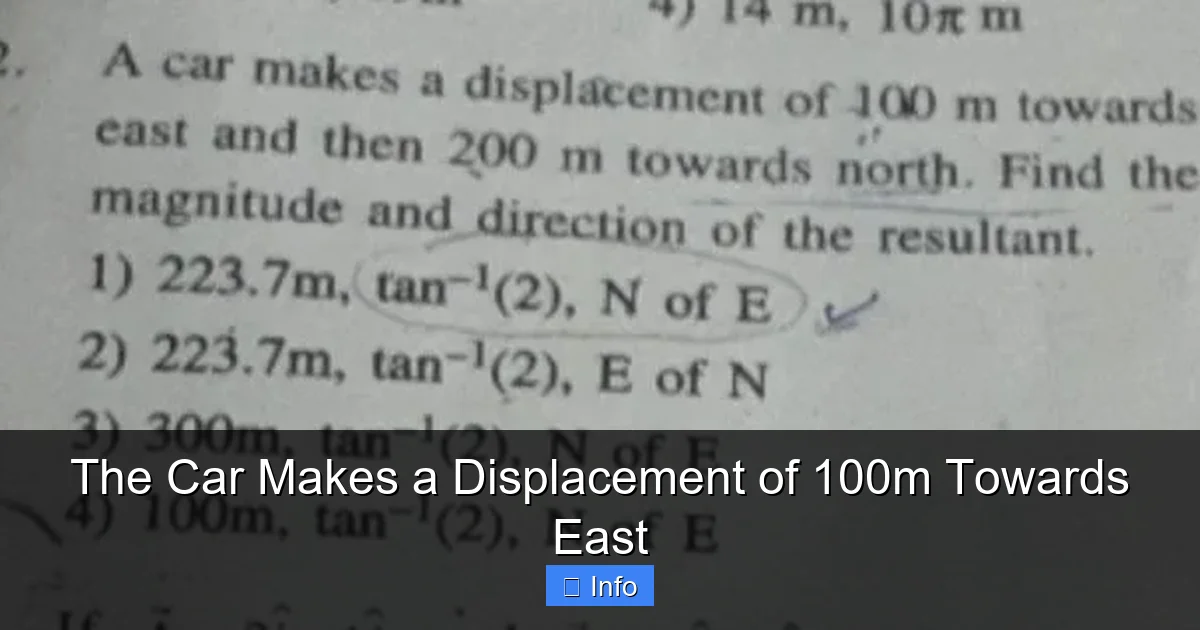
When a car makes a displacement of 100m towards east, it simply means the vehicle moved 100 meters in that direction. This measurement is key for understanding motion, vehicle dynamics, and even GPS tracking. Knowing how to calculate and interpret displacement helps drivers, engineers, and hobbyists improve performance and safety.
This is a comprehensive guide about the car makes a displacement of 100m towards east.
Key Takeaways
- Displacement Defined: Displacement is a vector that tells you how far and in what direction an object moves, unlike distance which only measures total path length.
- 100m Eastward: A car that makes a displacement of 100m towards east ends up 100 meters to the east of its starting point, regardless of the route taken.
- Real‑World Use: Understanding this concept helps with navigation, fleet management, and even advanced driver‑assist systems.
- Measurement Tools: Modern GPS devices and telematics can record exact displacement, making it easy to track vehicle performance.
- Performance Impact: Proper maintenance, like correct oil levels, ensures the engine can deliver the power needed for precise displacement.
- Safety First: Knowing how far and where a car moves aids in accident reconstruction and insurance claims.
[FEATURED_IMAGE_PLACEHOLDER]
Understanding Displacement
When we talk about motion, two key ideas often come up: distance and displacement. Distance tells you how much ground an object has covered, while displacement tells you how far out of place it is and in what direction. In simple terms, if a car makes a displacement of 100m towards east, the vehicle is now 100 meters to the east of where it started.
What Displacement Means
Displacement is a vector. That means it has both size and direction. A size of 100 meters and a direction of east together describe the car’s change in position. If the car had gone 150 meters east then 50 meters west, the net displacement would still be 100 meters east because the two movements cancel each other partially.
Vector Nature and Real‑World Example
Imagine a delivery truck that starts at a warehouse, drives 200 meters east to drop off a package, then doubles back 300 meters west to pick up another load. Its total distance traveled is 500 meters, but its displacement is 100 meters west (because it ends up 100 meters west of the starting point). This example shows why displacement matters when you need to know where a car actually is after a series of moves.
How a Car Achieves 100m Eastward
To make a displacement of 100m towards east, the car must accelerate, maintain speed, and steer in a straight line toward the east. The process is broken down into three simple steps:
Acceleration and Speed
First, the driver presses the accelerator. The engine produces torque, which turns the wheels. As the wheels push against the road, the car gains speed. A typical passenger car can reach 30 km/h (about 8.3 m/s) in just a few seconds, giving it enough momentum to cover 100 meters quickly.
Straight‑Line Motion
Once the car is moving, the driver keeps the steering wheel straight. This ensures the car travels in a straight line. If the driver turns the wheel even a little, the path curves and the net displacement changes. Maintaining a straight line is essential for achieving exactly 100 meters east.
Factors Affecting Direction
Several things can affect direction: road grade, wind, and tire pressure. A slight incline can pull the car forward or backward. Crosswinds can push the car sideways, requiring constant steering input. Proper tire inflation, as discussed in many maintenance guides, helps the car stay true to its intended path.
Why Displacement Matters for Car Performance
Displacement is not just a physics term; it has practical importance for drivers and mechanics. Understanding how far and where a car moves helps improve fuel efficiency, optimize engine tuning, and even enhance safety systems.
Engine Power and Displacement
When a car makes a displacement of 100m towards east, the engine must deliver consistent power. If the engine is low on oil, power drops and the car may struggle to maintain speed. For a quick guide on keeping your engine well‑lubricated, see what is the right amount of oil in a car. Proper oil levels keep the engine running smoothly, which directly affects how the car achieves its displacement.
Tire Grip and Road Contact
Tire tread and pressure determine how well the car can convert engine power into motion. Under‑inflated tires increase rolling resistance, making it harder for the car to move the required 100 meters east. Checking and adjusting tire pressure is a simple step that improves displacement accuracy.
Measuring and Tracking Displacement
Modern vehicles come equipped with tools that can record displacement automatically. GPS units, onboard diagnostics (OBD‑II), and smartphone apps all provide real‑time data on a car’s movement.
Odometer vs. GPS
The traditional odometer measures total distance traveled, not displacement. GPS devices, however, can calculate net change in position. If you want to know if a car made a displacement of 100m towards east, a GPS app will show you the exact start‑to‑end vector.
Using Mobile Apps
Many free apps let you log trips and view displacement graphs. You can set a start point, drive east, and the app will tell you when you have achieved a 100‑meter eastward shift. Some apps even alert you when you reach a target displacement, which is handy for fleet managers tracking delivery routes.
Safety and Legal Considerations
Knowing a car’s displacement can be important for safety and legal reasons. In accident investigations, experts calculate displacement to reconstruct events. Insurance companies may also ask for displacement data when filing claims.
Road Rules and Documentation
Some jurisdictions require commercial vehicles to log displacement for compliance with hours‑of‑service rules. Even for personal cars, keeping a simple log can help you remember where you parked after a long day.
Preparing for Measurements
Before you take measurements, you may need to lift the car for a proper inspection. If you ever need to raise one side of the vehicle safely, our article on how to jack up one side of a car provides step‑by‑step guidance.
Tips for Drivers to Optimize Displacement
Whether you are a daily commuter or a professional driver, small adjustments can help a car make a clean 100m eastward displacement every time.
Maintain Proper Tire Pressure
Check tire pressure at least once a month. Correct pressure reduces rolling resistance and helps the car move in a straight line.
Regular Maintenance
Keep oil changes on schedule. A well‑lubricated engine delivers steady power, which is essential for precise displacement.
Inspect the Hood Components
Sometimes you need to open the hood to check fluid levels or inspect belts. For most models, including the Toyota Rav4, the process is straightforward. See our guide on how to open the hood of a Toyota Rav4 for visual steps.
By following these tips, you can ensure that when you need a car to make a displacement of 100m towards east, it does so reliably and safely.
Conclusion
In everyday driving, the phrase “the car makes a displacement of 100m towards east” might sound technical, but it simply describes a car moving 100 meters to the east of its starting point. Understanding displacement helps you interpret GPS data, improve vehicle maintenance, and stay safe on the road. Whether you are tracking a delivery route, measuring performance for a project, or just curious about how far you have moved, the concept of displacement is a powerful tool. Remember to keep your tires inflated, your oil at the right level, and your hood components in good shape. With these basics, you can confidently achieve any eastward displacement your journey demands.
Frequently Asked Questions
What does it mean when a car makes a displacement of 100m towards east?
It means the car’s final position is 100 meters to the east of where it started, regardless of the path it took. Displacement focuses on the straight‑line change in position, not the total distance traveled.
How is displacement different from distance traveled?
Distance measures the total length of the path a car follows, while displacement measures the net change in position, including direction. A car could travel 500 meters but have a displacement of only 100 meters east.
Can displacement be negative?
Yes. If the car ends up west of its starting point, the displacement would be expressed as -100 meters (or 100 meters west). The sign indicates direction.
How do you measure a car’s displacement in real life?
Modern GPS devices and telematics apps calculate displacement by comparing start and end coordinates. The car’s odometer only shows total distance, not the directional change.
Why is understanding displacement important for drivers?
It helps with navigation, fleet management, and safety analysis. Knowing how far and where a car moves can improve fuel efficiency, aid in accident reconstruction, and support accurate logging for insurance or compliance.
How does tire pressure affect a car’s ability to achieve a 100m eastward displacement?
Proper tire pressure reduces rolling resistance, allowing the engine to transfer power efficiently. With under‑inflated tires, the car may struggle to maintain speed, making it harder to achieve the desired 100‑meter eastward shift.