Voluntary Deductible in Car Insurance
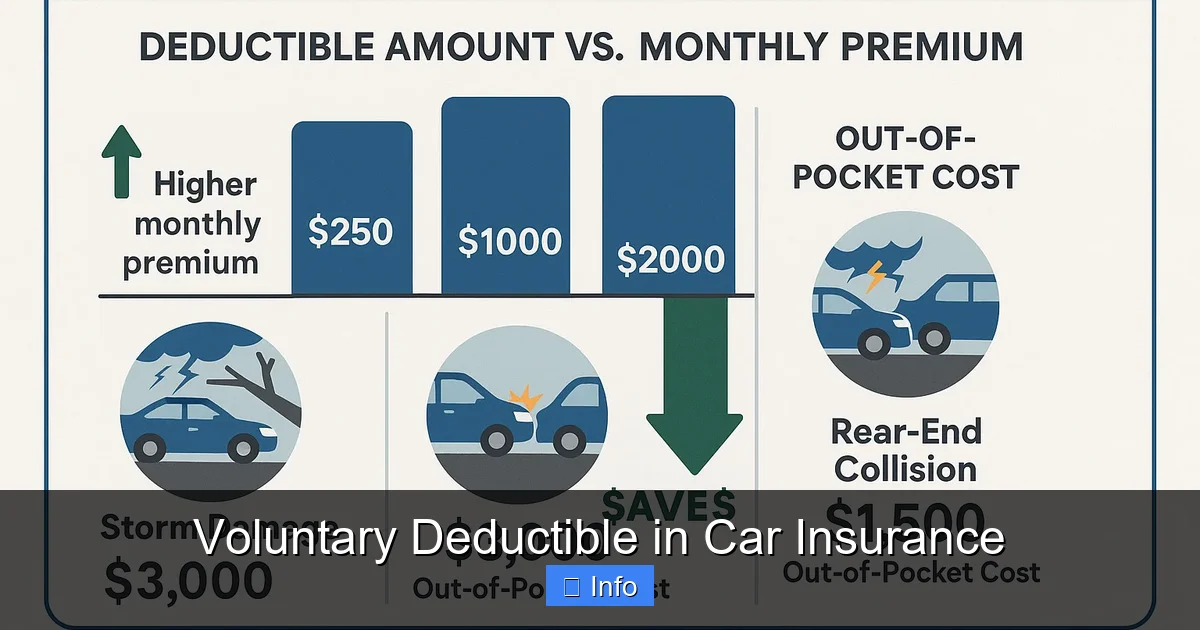
Learn what a voluntary deductible in car insurance means, why you might want to choose one, and how to pick the perfect amount to lower your premium without risking your finances.
Key Takeaways
- Voluntary deductible in car insurance lets you set a fixed amount you’ll pay out‑of‑pocket before the insurer steps in. It directly reduces your premium.
- Choosing a higher voluntary deductible can save you 10‑25% on annual premiums. The trade‑off is a larger personal expense if a claim occurs.
- Assess your financial health and claim history before deciding on a voluntary deductible amount. A stable cash reserve makes higher deductibles safer.
- Voluntary deductible works alongside other covers like personal accident, engine protection, and return‑to‑invoice, enhancing overall protection.
- Review policy documents regularly and update your voluntary deductible as your car’s value or your needs change.
Key Takeaways
- Understanding voluntary deductible in car insurance: Provides essential knowledge
📑 Table of Contents
Understanding the Voluntary Deductible
When you buy a car insurance policy, the insurer agrees to cover most of the loss you suffer in an accident. However, the policy usually includes a deductible – the amount you must pay yourself before the insurer contributes.
What is a deductible?
A deductible is a fixed sum that the policyholder agrees to bear. For example, if your deductible is ₹5,000 and the repair bill is ₹50,000, the insurer will pay ₹45,000 after you cover the first ₹5,000.
How voluntary deductible differs
The term “voluntary deductible in car insurance” refers to a deductible that you choose yourself, rather than one set by the insurer. You can pick any amount within the limits allowed by your insurer, giving you control over premium costs.
To learn more about the basics, see our article on What Is Voluntary Deductible In Car Insurance. This guide explains the concept in detail and helps you decide if it fits your needs.
Benefits of Choosing a Voluntary Deductible
One of the biggest reasons drivers opt for a voluntary deductible is the potential to lower their premium. Insurers view a higher out‑of‑pocket risk as a reduced chance of small claims, and they pass part of that saving to you.
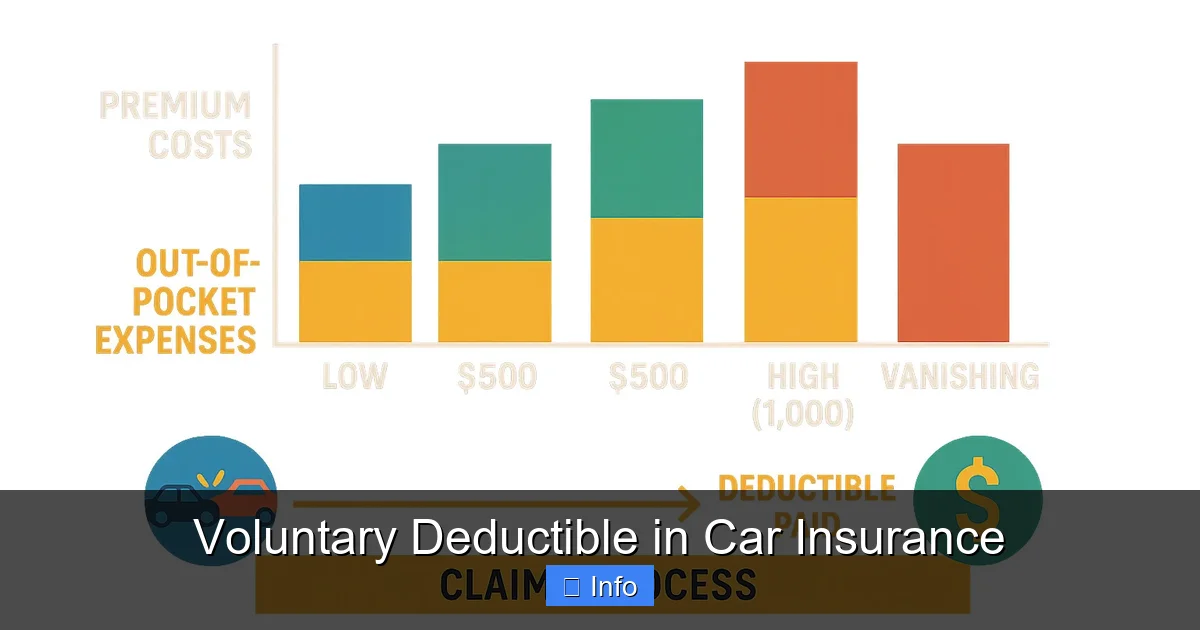
Visual guide about Voluntary Deductible in Car Insurance
Image source: images.bannerbear.com
Lower premiums
Choosing a higher voluntary deductible can shave 10‑25% off your annual premium, depending on the insurer and the amount you select. Over the life of a five‑year policy, that can translate to thousands of rupees saved.
Customization and risk management
A voluntary deductible lets you align the policy with your personal risk tolerance. If you consider yourself a careful driver with few accidents, a higher deductible makes sense. If you drive in high‑traffic city areas, you might prefer a lower amount to avoid large surprise expenses.
How to Select the Right Voluntary Deductible Amount
Picking the right figure isn’t just about saving money; it’s about balancing cost and comfort. Here are two key steps to guide your decision.
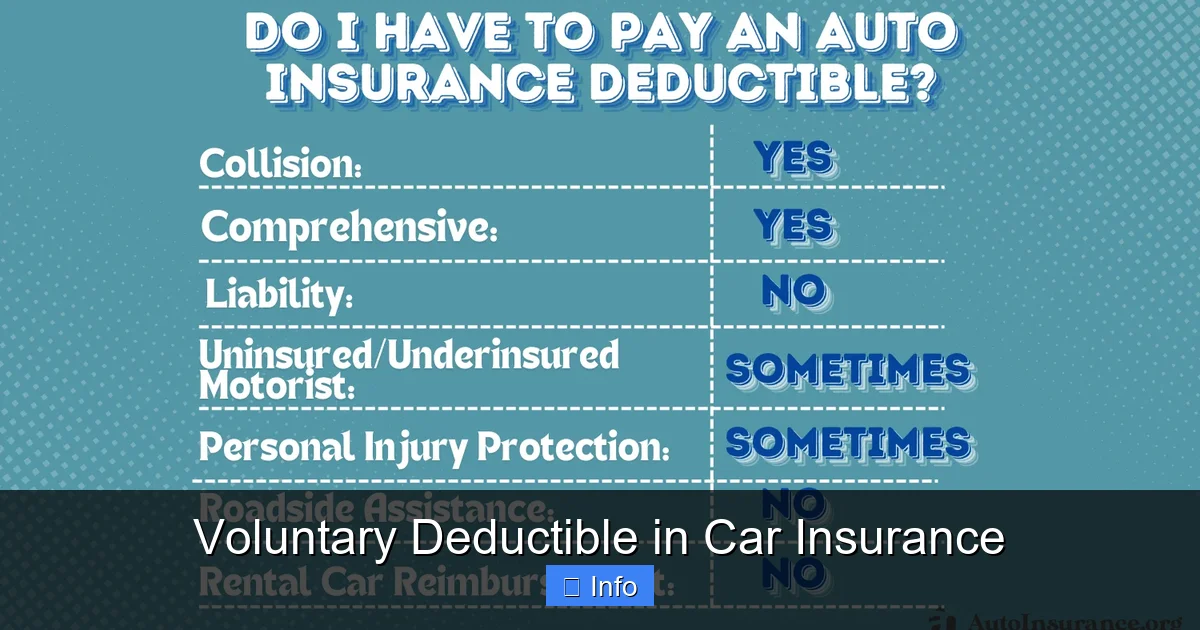
Visual guide about Voluntary Deductible in Car Insurance
Image source: autoinsurance.org
Assessing your financial capacity
Before you settle on a number, check your savings, monthly cash flow, and emergency fund. If you can comfortably cover a ₹10,000 outlay, then a higher voluntary deductible will be more effective at reducing premiums. If your finances are tight, a lower amount protects you from cash‑flow strain during a claim.
Evaluating claim frequency and risk profile
Consider how often you file claims. Drivers with a clean record for several years may safely opt for a higher deductible, knowing that claims are rare. Conversely, if you frequently drive in congested areas or have a history of minor bumps, a lower voluntary deductible might be wiser.
For more on how other covers interact with your deductible, check out Depreciation Reimbursement In Car Insurance. Understanding depreciation helps you see the full picture of claim settlements.
Impact on Claim Process and Settlement
Many drivers worry that a higher voluntary deductible will complicate claims or reduce settlement amounts. In reality, the process remains largely the same; you simply pay the agreed amount first.
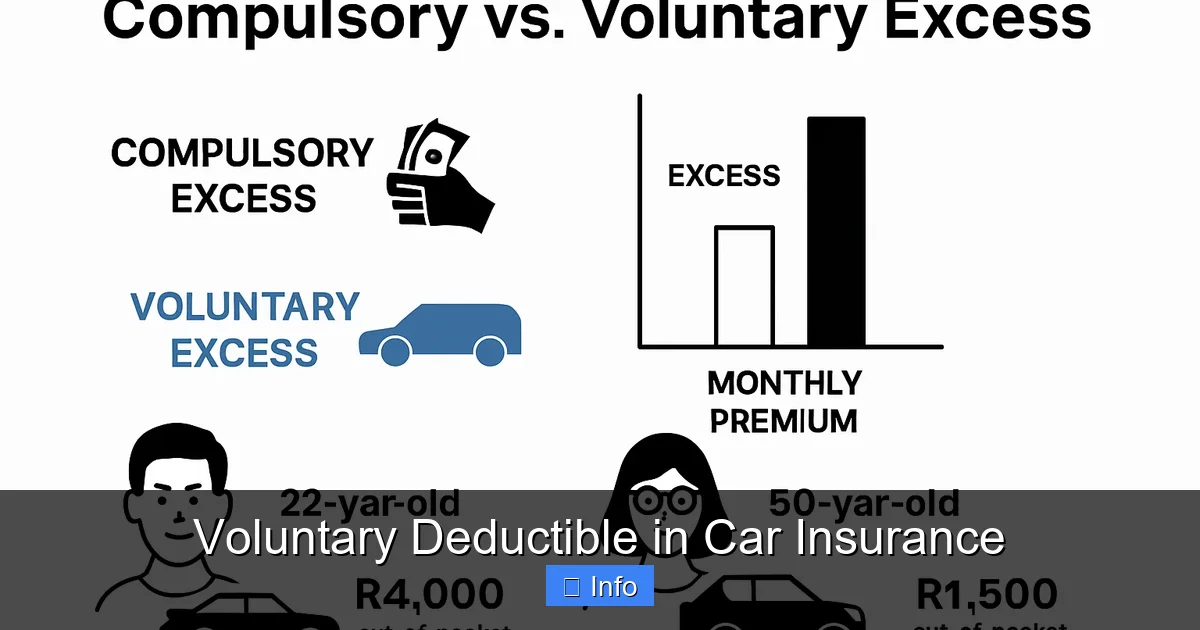
Visual guide about Voluntary Deductible in Car Insurance
Image source: csuxjmfbwmkxiegfpljm.supabase.co
Effect on claim amount
If your car sustains damage worth ₹80,000 and you have a ₹10,000 voluntary deductible, you will pay the first ₹10,000, and the insurer will settle the remaining ₹70,000. The total payout you receive is unchanged, but your out‑of‑pocket expense is higher.
Interaction with other covers
Voluntary deductible works alongside various add‑ons. For instance, if you have a return‑to‑invoice cover, the insurer will still reimburse the full invoice amount after deducting your voluntary deductible. Similarly, engine protection cover will apply after your chosen deductible is met.
To understand how return‑to‑invoice interacts with your deductible, read What Is Return To Invoice In Car Insurance. This article explains the mechanics in simple terms.
Common Myths and Misconceptions
Several myths surround the idea of a voluntary deductible. Let’s debunk a few of them.
Myth: Higher out‑of‑pocket costs mean you’ll lose money.
Not necessarily. While you pay more if a claim occurs, the lower premium you pay each year can result in net savings over time, especially if you rarely make claims.
Myth: Insurers may reject claims if the deductible is high.
Insurers cannot refuse a valid claim simply because the voluntary deductible is high. They must honor the policy terms, provided you meet the deductible amount.
Practical Tips and Best Practices
Choosing a voluntary deductible is a smart move, but it requires thoughtful planning. Below are actionable tips to get the most out of this option.
Review policy documents carefully
Every insurer has its own rules about the minimum and maximum voluntary deductible you can select. Make sure you read the fine print or ask your agent for clarification before finalizing your choice.
Regularly reassess your deductible
Your car’s value, your driving habits, and your financial situation can change. Review your policy annually and adjust the voluntary deductible if needed. This practice ensures you stay aligned with your current needs.
For a checklist of documents you may need when updating your policy, see Documents Required For Car Insurance In India.
Maintain an emergency fund
Even with a low voluntary deductible, unexpected expenses can arise. Keeping a dedicated fund for claim payments prevents financial strain and lets you focus on repairs rather than worrying about money.
Conclusion
In summary, a voluntary deductible in car insurance is a powerful tool that lets you tailor your policy to match both your budget and your risk appetite. By understanding how it works, weighing its benefits against potential out‑of‑pocket costs, and selecting an amount that fits your financial situation, you can enjoy lower premiums without compromising protection.
Remember to review your policy regularly, keep an emergency fund ready, and stay informed about how other covers like return‑to‑invoice or engine protection interact with your chosen deductible. Doing so will ensure you get the best value from your car insurance while staying in control of your expenses.
Frequently Asked Questions
What is voluntary deductible in car insurance?
voluntary deductible in car insurance is an important topic with many practical applications.