Which Type of Mirror Is Used in Headlight of Car
which type of mirror is used in headlight of car is an essential topic that provides valuable insights.
This is a comprehensive guide about which type of mirror is used in headlight of car.
Key Takeaways
- Understanding which type of mirror is used in headlight of car: Provides essential knowledge
Frequently Asked Questions
Which type of mirror is used in headlight of car?
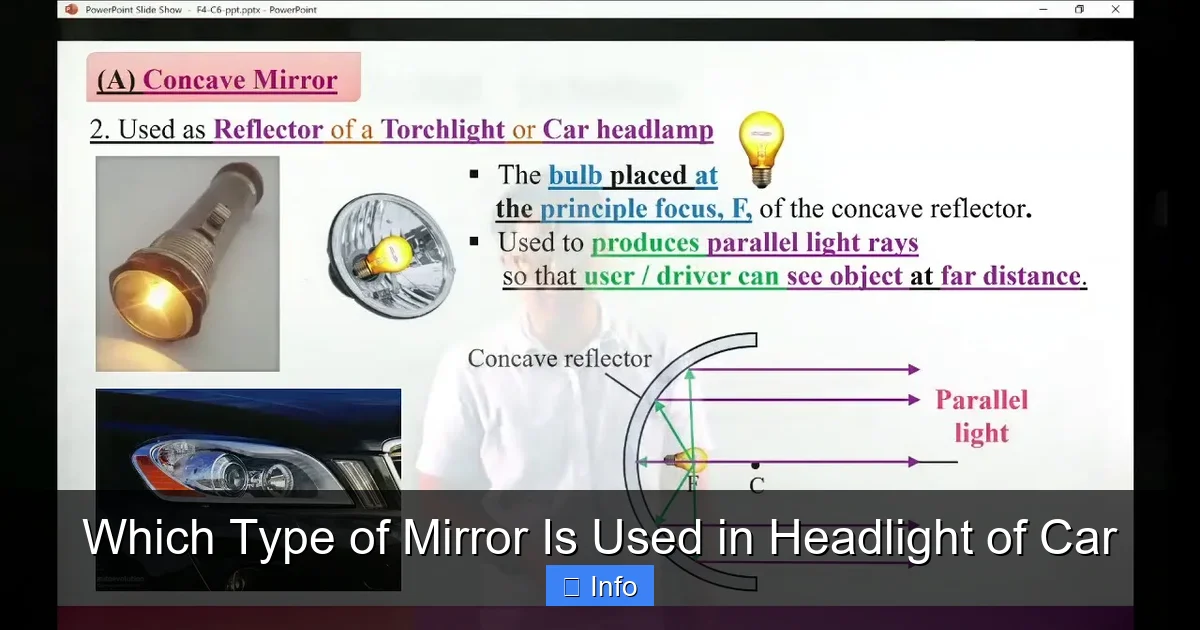
The headlight uses a concave (often parabolic) mirror to focus light from the bulb into a strong beam. This shape converges light rays, improving night‑time visibility while reducing glare for other drivers.
Why is a concave mirror preferred over a flat mirror in car headlights?
A flat mirror would simply reflect light without changing its direction, resulting in a weak, scattered beam. A concave mirror gathers divergent light rays and redirects them forward, creating a focused, intense illumination that lights the road far ahead.
Can I replace the mirror inside my headlight if it gets damaged?
In most vehicles the mirror is bonded to the headlamp housing and is not serviced separately; if the reflective coating is degraded, the entire headlamp unit usually needs replacement or professional refurbishment.
Do LED or HID headlights still use a concave mirror?
Yes. Regardless of whether the light source is halogen, LED, or HID, the headlamp design retains a concave mirror to shape and direct the output. The mirror’s curvature may be fine‑tuned for the specific source, but the principle remains the same.
How often should I clean the mirror inside my headlight?
Clean the exterior lens regularly, and if you notice reduced beam intensity, inspect the mirror surface for dirt or residue. A gentle cleaning with a microfiber cloth and mild glass cleaner every few months helps maintain optimal reflectivity.
What signs indicate that the headlight mirror is losing its effectiveness?
Look for a dimmer or uneven beam, dark spots in the light pattern, or a hazy appearance when you view the reflector from outside. These symptoms suggest coating wear, pitting, or misalignment that need attention.