
Why Is My Toyota Corolla Cranking but Not Starting
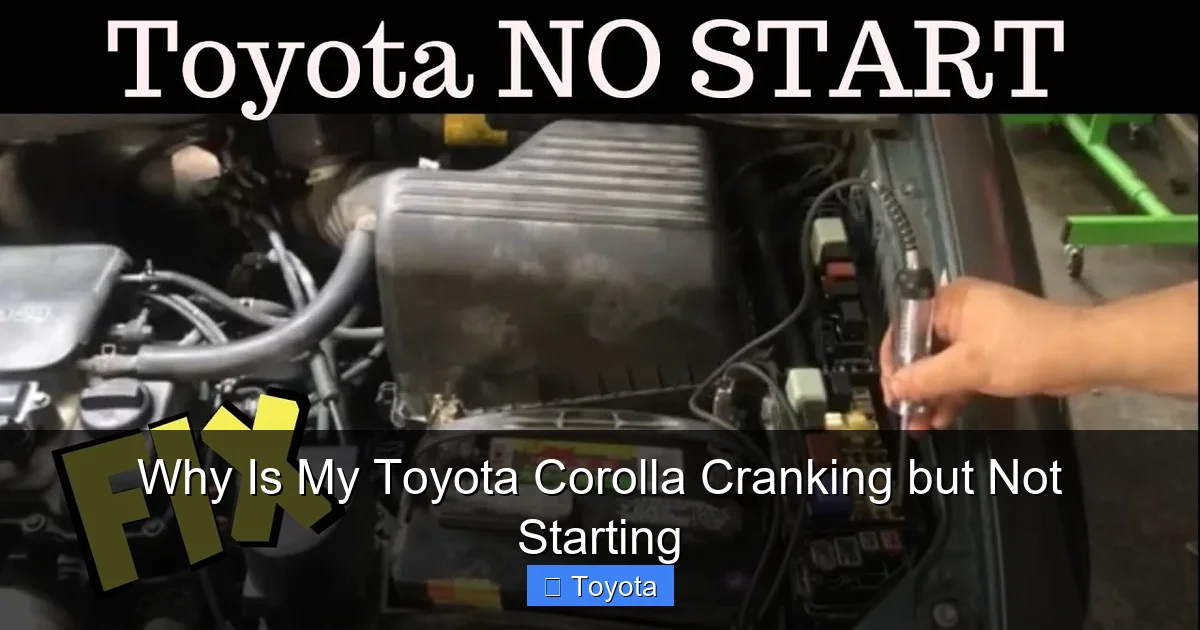
If your Toyota Corolla is cranking but not starting, the problem is usually tied to fuel, spark, air, battery power, or the anti-theft system. The good news is that many causes are simple to check at home before you call a mechanic. This guide breaks down the most likely reasons and the best next steps.
Why Is My Toyota Corolla Cranking but Not Starting
If you are asking, why is my Toyota Corolla cranking but not starting, you are not alone. This is one of the most common no-start problems Corolla owners face. It can feel confusing too, because the engine sounds like it wants to run. But it never catches.
The good news is that “cranking but not starting” often points to a small group of problems. Your Corolla needs three things to run: fuel, spark, and air. It also needs enough battery power and a working security system. If even one of those is off, the engine may crank all day and still refuse to start.
In this guide, we will walk through the most likely causes, simple checks you can do, and when it is time to get help. If you want a broader overview of starting trouble, you may also want to read what can cause a Toyota Corolla not to start and this related guide on how to disable the anti theft system on a Toyota Corolla.
Key Takeaways
- Point 1: A Corolla that cranks but will not start usually has a fuel, spark, air, or security issue.
- Point 2: A weak battery can still crank the engine but may not provide enough power for the fuel and ignition systems.
- Point 3: Bad fuel pumps, clogged filters, or injector problems can stop fuel from reaching the engine.
- Point 4: Failing spark plugs, coils, or crank sensors can keep the engine from firing.
- Point 5: The anti-theft system or a bad key fob can block starting even when the engine turns over.
- Point 6: Simple checks like listening for the fuel pump, checking lights, and scanning for codes can save time and money.
- Point 7: If your Corolla still will not start after basic checks, it is best to get a proper diagnosis fast.
📑 Table of Contents
What “Cranking but Not Starting” Really Means
The starter is working
When your Corolla cranks, the starter motor is turning the engine over. That means the battery has at least enough power to spin the engine. So the problem is not always the starter itself. This is why many drivers get stuck wondering, why is my Toyota Corolla cranking but not starting, even though the car sounds normal.
The engine is not firing
For the engine to start, the fuel and spark systems must work at the right time. The air intake must also be open and clean. If fuel is missing, spark is weak, or a sensor gives the wrong signal, the engine will crank but never fire.
It can be a simple or complex issue
Sometimes the fix is easy, like a dead key fob battery or an empty gas tank. Other times it is a failed fuel pump, bad crankshaft sensor, or clogged injectors. That is why the best first step is to narrow it down one system at a time.
Battery, Starter, and Power Problems
A weak battery can still crank
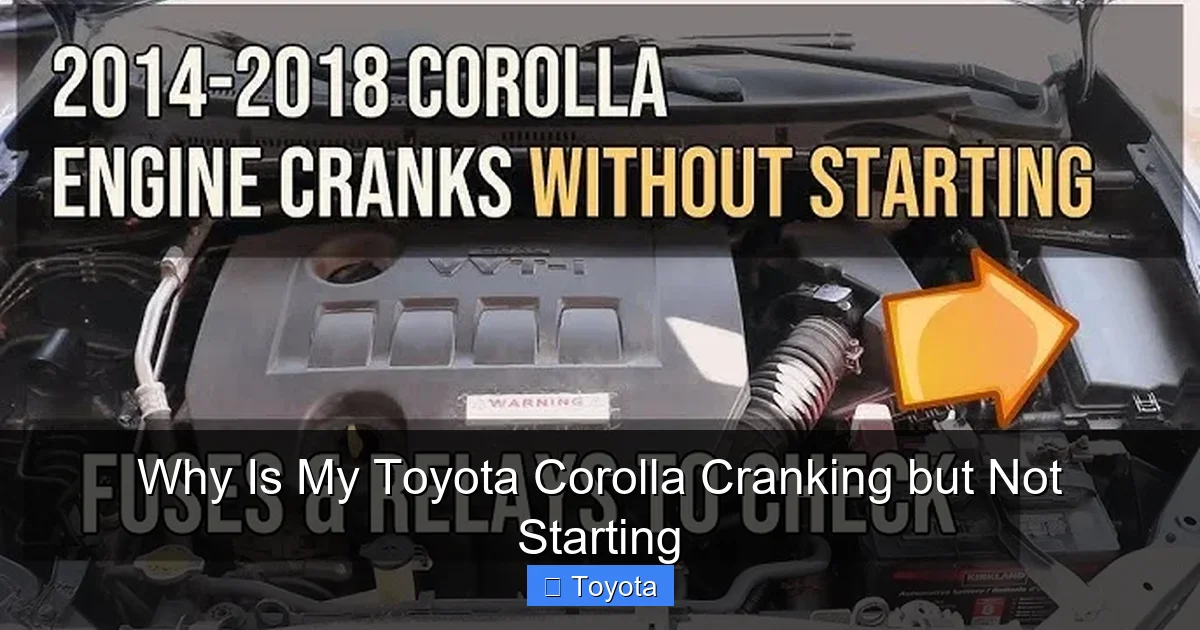
A battery does not have to be totally dead to cause trouble. It may have enough power to crank the engine, but not enough to support the fuel pump, ignition coils, or engine computer. That can lead to a no-start. If the lights are dim or the dashboard acts strange, the battery may be weak.
Visual guide about Why Is My Toyota Corolla Cranking but Not Starting
Image source: automotivian.com
Check the battery terminals
Loose or dirty battery terminals can cause poor power flow. Look for white or green corrosion on the posts. Make sure the clamps are tight. A simple cleaning may solve the problem. This is one of the easiest things to check when asking, why is my Toyota Corolla cranking but not starting.
Do not ignore the starter relay or wiring
Even if the starter turns the engine, bad wiring or a bad relay can still cause problems in the starting circuit. If you hear slow, uneven cranking, or hear clicking, electrical issues may be part of the problem. If the car has power but will not start, a related article like Toyota Camry won’t start but has power causes and solutions can also help you understand similar symptoms.
Fuel Delivery Problems
No fuel means no start
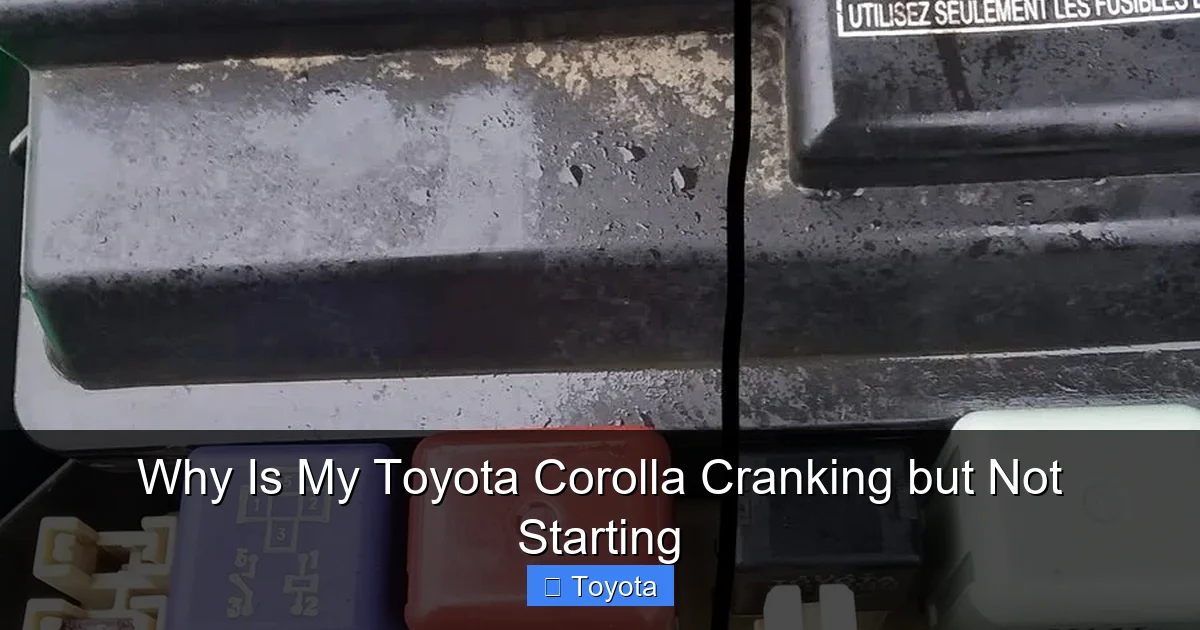
One of the top reasons for why is my Toyota Corolla cranking but not starting is a fuel delivery failure. The engine may be getting air and spark, but if fuel is not reaching the cylinders, it will not run. This can happen for several reasons.
Visual guide about Why Is My Toyota Corolla Cranking but Not Starting
Image source: static.cargurus.com
Bad fuel pump
The fuel pump sends fuel from the tank to the engine. If it fails, the engine may crank but never start. A common clue is the absence of the short buzzing sound from the rear of the car when you turn the key to ON. That sound usually lasts a few seconds. If you do not hear it, the pump may not be working.
Clogged fuel filter or weak fuel pressure
A clogged filter can block fuel flow. A weak pump can also create low pressure, which may not be enough to start the engine. Some cars may start poorly when cold and then run fine later. Others may not start at all. If your Corolla has high mileage, fuel pressure should be checked.
Fuel injectors may be dirty or stuck
Fuel injectors spray fuel into the engine. If they are dirty, clogged, or stuck, the engine may crank but not start. This is more likely if the car has sat for a long time or if poor fuel quality has been used. A fuel system cleaner may help in mild cases, but serious injector problems need repair.
Running out of gas is more common than people think
It sounds obvious, but it happens. A bad fuel gauge or a low fuel warning that was ignored can leave the tank empty. If the engine cranks normally and will not fire, always confirm there is enough fuel in the tank before moving on.
Spark and Ignition Problems
Bad spark plugs can stop the engine from firing
Spark plugs ignite the air-fuel mix. If they are worn, fouled, or damaged, the engine may crank but not start. This is especially true if the plugs are overdue for replacement. If you are not sure what to use, this guide on the best spark plug for Toyota Corolla can help you understand what matters.
Ignition coils can fail
Each coil helps create the spark needed to start the engine. If a coil fails, the engine may misfire or refuse to start. Sometimes the car starts after several tries. Other times it will not start at all. A scan tool may show misfire codes or ignition-related codes.
Crankshaft and camshaft sensors matter
The engine computer needs input from sensors to know when to fire spark and inject fuel. If the crankshaft sensor fails, the engine may crank but not start. This is a classic cause of a no-start condition. A bad cam sensor can also cause hard starts or no starts.
Watch for warning signs
If the check engine light was on before the problem started, that is a useful clue. A stored code can point you toward the real issue. If you want to learn more about code-related issues, see how to reset the check engine light on a Toyota Corolla. Just remember that resetting the light does not fix the cause.
Air Intake, Security System, and Sensor Issues
Airflow problems can affect starting
Your Corolla needs clean air to start and run. A badly blocked air filter or intake issue can make starting harder. It is not the most common cause, but it should still be checked. Make sure the air box is closed well and the filter is not packed with dirt.
The anti-theft system may block the start
Sometimes the problem is not fuel or spark at all. The Corolla’s security system may think someone is trying to steal the car. When that happens, the engine may crank but not start. A key fob issue, damaged transponder key, or anti-theft fault can all cause this.
Try a spare key
If you have a spare key, use it. This is a fast way to rule out a key problem. If the spare works, the original key may be damaged or out of sync. If neither key works, the issue may be with the immobilizer system.
Related Toyota issues can point to the same root cause
Some electrical and security problems show up in different ways across Toyota models. For example, a Corolla owner may see starting trouble, while another driver may deal with warning lights or sensor faults. That is why articles like why is my Toyota Camry check engine light on can be useful for learning how Toyota systems often react to faults.
Simple Checks You Can Do Before Calling a Mechanic
Listen for the fuel pump
Turn the key to ON without cranking. Listen near the back seat or fuel tank area. You should hear a soft buzz for a few seconds. If there is no sound, the pump, relay, fuse, or wiring may be bad.
Check the dashboard lights
Do the dash lights come on normally? Does the security light flash? Do the lights go dim while cranking? These clues can help narrow the problem. A flashing security light may point to the immobilizer system. Very dim lights may point to battery trouble.
Try a jump start
If the battery is weak, a jump start may get the car running. If it starts with a jump, the battery may be the main problem. But if it still cranks and will not start, the issue is likely elsewhere.
Check the fuses
Look at the fuses for the fuel pump, ignition system, and ECU. A blown fuse can stop the engine from starting. Fuse checks are quick and cheap, so they are worth doing early.
Scan for trouble codes
An OBD2 scanner can save a lot of guesswork. Even if the check engine light is off, stored codes may still be there. Codes for the crank sensor, fuel system, or immobilizer can point you in the right direction.
When to Stop Guessing and Get Help
If the problem keeps coming back
If your Corolla starts after a few tries and then fails again later, the issue is likely getting worse. That often means a failing pump, sensor, or ignition part. Do not wait too long. A no-start can become a full breakdown at the worst time.
If you smell fuel
A strong fuel smell can mean the engine is getting too much fuel or there is a leak. In that case, do not keep cranking the car over and over. That can flood the engine or create a safety risk. Get it checked by a professional.
If the engine cranks very fast
Very fast cranking can mean low compression or a timing problem. That is less common, but it is serious. If you suspect this, the car needs proper diagnosis. This is not usually a quick DIY fix.
Use a methodical approach
When people ask, why is my Toyota Corolla cranking but not starting, the answer is often in the order of testing. Start with battery and fuses. Then check fuel. Then spark. Then sensors and security. This simple path saves time and avoids random part swapping.
Conclusion
If you are still wondering why is my Toyota Corolla cranking but not starting, the answer usually comes down to one of five things: weak power, lack of fuel, no spark, sensor trouble, or an anti-theft issue. The engine is turning, so the starter is doing its job. Now you just need to find out what is stopping the engine from firing.
Start with the easy checks. Look at the battery, fuses, fuel level, and key fob. Listen for the fuel pump. Scan for codes if you can. These steps can point you to the real problem fast. And if the car still will not start, do not keep guessing. A proper diagnosis will save time, money, and stress.
For more Corolla help, you may also want to read about can I put premium gas in my Toyota Corolla if you are thinking about fuel quality, or check best fuel injector cleaner for Toyota Corolla if you suspect a dirty fuel system.
Frequently Asked Questions
Why is my Toyota Corolla cranking but not starting after sitting overnight?
This can happen if the battery is weak, fuel pressure drops overnight, or a sensor is failing. Moisture, dirty battery terminals, or a bad fuel pump check valve can also cause this kind of hard start.
Can a bad battery cause a Corolla to crank but not start?
Yes. A battery can have enough power to crank the engine but still not provide enough voltage for the fuel and ignition systems. That is why a weak battery is one of the first things to check.
What if my Corolla cranks but I do not hear the fuel pump?
That often points to a fuel pump, relay, fuse, or wiring problem. It may also mean the pump is failing and not building pressure. A scan tool and fuel pressure test can help confirm the cause.
Can the anti-theft system stop my Toyota Corolla from starting?
Yes, it can. If the system does not recognize the key, it may allow cranking but block fuel or spark. Trying a spare key is a simple way to rule this out.
Should I keep cranking the engine if it will not start?
No, not for long. Repeated cranking can drain the battery and may flood the engine if fuel is already entering the cylinders. Short attempts are fine, but stop and diagnose the issue if it keeps failing.
What is the most common reason a Toyota Corolla cranks but does not start?
The most common reasons are fuel delivery problems, weak battery power, bad spark plugs or coils, and crank sensor failure. In some cases, the anti-theft system is the real cause.


