Pre Delivery Inspection Checklist for New Car
A pre delivery inspection checklist ensures your new car meets all quality standards before leaving the dealership. By systematically checking paint, electronics, paperwork, and mechanical systems, buyers can catch defects early and avoid costly surprises. Follow this step-by-step guide to protect your investment and enjoy a flawless first drive.
Welcome to Your New Car Journey
Stepping into a brand new vehicle is exciting, but it also comes with responsibility. You want to make sure that every scratch, dent, or missing document doesn’t become a problem later. That’s where the pre delivery inspection checkpoint becomes invaluable. Before you sign away your money, taking time to examine the car thoroughly can save you headaches, expensive repairs, and potential buyer’s remorse. In this article, we’ll walk through a comprehensive pre delivery inspection checklist designed to help you confidently assess your new car and guarantee you’re getting great value for your hard-earned cash. Whether you’re shopping at a local dealership or ordering online, this guide will empower you to spot every detail that matters and feel completely prepared when your dream car rolls onto your driveway.
What Exactly is a Pre Delivery Inspection?
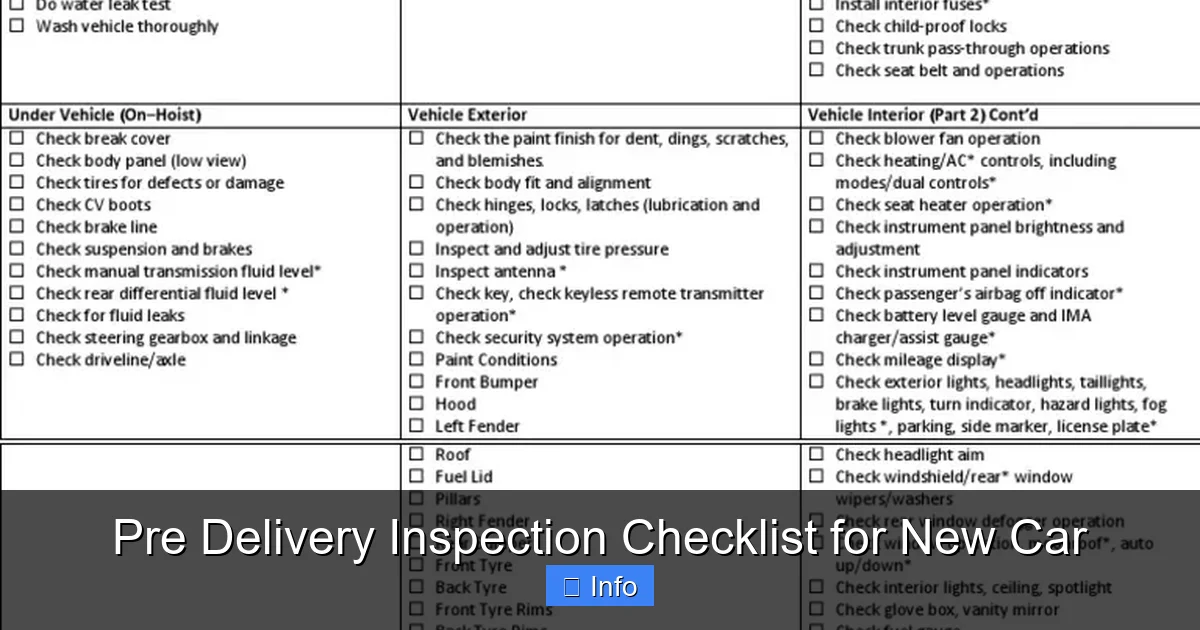
Visual guide about Pre Delivery Inspection Checklist for New Car
Image source: pdffiller.com
The Foundation of Quality Assurance
A pre delivery inspection isn’t just bureaucracy—it’s a quality control process that manufacturers and dealerships perform before handing over a vehicle to its final customer. Think of it as the final health check-up before the car takes its first journey. During this inspection, technicians examine the exterior finish, interior materials, mechanical components, and digital displays. They also verify that all legal and regulatory documents are present and accurate. For many aspiring car owners, understanding what falls under this inspection is crucial because it determines whether the car will meet your expectations and comply with local regulations. If you’re purchasing used vehicles, learning about pre delivery checks is similar—you simply apply those same principles to ensure authenticity and reliability.
When you buy a pre delivery inspection checklist, you’re essentially arming yourself with the knowledge needed to detect problems early. Many buyers assume the manufacturer does everything perfectly, but reality is different. Dealerships may rush the final steps due to inventory turnover, and independent sellers might cut corners on testing. By familiarizing yourself with the standard checklist items, you transform from a passive buyer into an active evaluator. This proactive approach reduces the likelihood of discovering unexpected defects months later, which could otherwise lead to repair costs and frustration. Moreover, a thorough inspection reveals details about maintenance history and service records that aren’t always obvious from the outside.
Core Components to Examine During Inspection
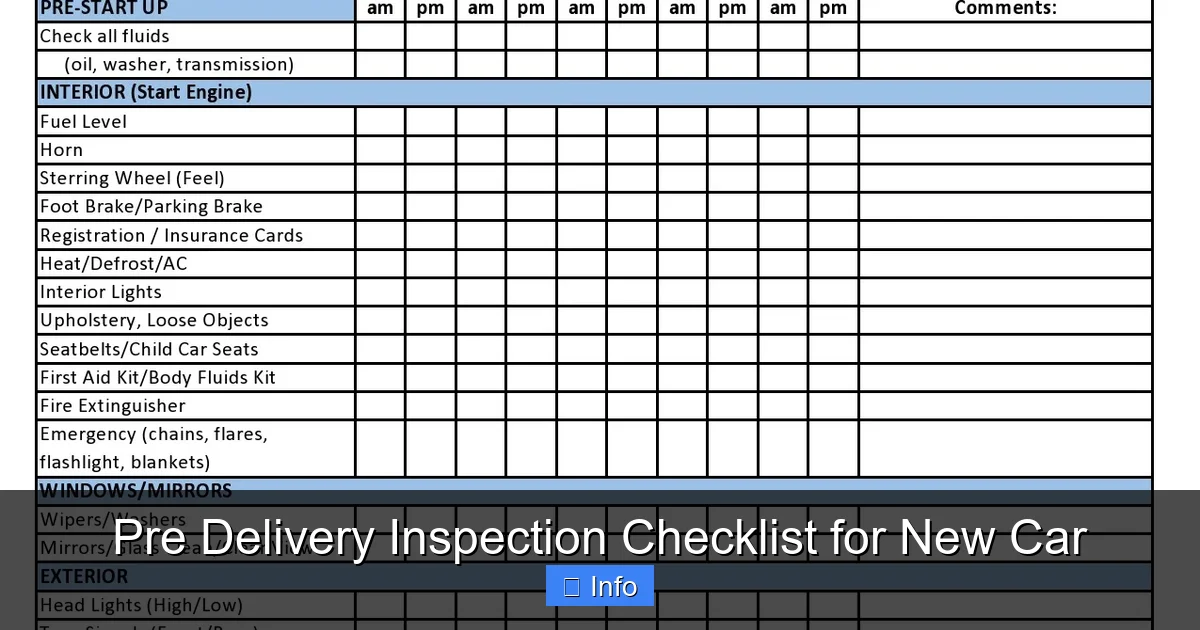
Visual guide about Pre Delivery Inspection Checklist for New Car
Image source: templatelab.com
One of the first things to inspect is the car’s appearance. Walk around the vehicle and look closely at each panel for dents, scratches, or rust spots. Pay special attention to areas where water pools, such as wheel wells, door sills, and underbody regions. The paint color should be consistent across the entire vehicle without fading, bubbling, or peeling. Any chips in the clear coat might indicate poor factory painting or damage from road debris. Remember to check for mismatched panels between the hood, trunk, and doors—these differences often signal rushed assembly processes. If you notice any issues here, take clear photos and note them before proceeding further in your evaluation.
Your new car deserves a comfortable ride inside too. Test all switches, buttons, and controls to ensure they respond smoothly and reliably. The seatbelts should lock securely and adjust properly for height and position. The climate control system must heat and cool without strange noises or erratic behavior. Infotainment screens, navigation systems, and wireless charging pads need to work flawlessly. Inside the cabin, check that all dashboard warnings light up correctly when hazards exist—such as low fuel, oil pressure alerts, or tire pressure warnings. These electronic elements are critical for both convenience and safety, so don’t skip their functionality tests.
Beyond looks and electronics, the engine and drivetrain deserve careful attention. Listen for unusual sounds while starting the engine—nothing should rattle, groan, or squeal. Check oil level and filter condition; fresh fluids are essential for optimal performance. Brakes should engage firmly and stop the car safely when tested from various speeds. Suspension components like shocks and struts must absorb bumps without excessive bounce or leaks. If your car has advanced driver assistance systems, confirm that the camera, lane departure warning, and automatic emergency braking activate properly. These safety-critical features are non-negotiable, and catching problems now means avoiding dangerous repairs later.
Verification of Important Documentation
Visual guide about Pre Delivery Inspection Checklist for New Car
Image source: summitfleet.com
Before finalizing your purchase, gather all required documents and cross-reference them against official lists. You’ll typically need the sales contract, proof of payment, and vehicle identification number verification. Many countries require pollution or environmental compliance certificates for certain model years—especially in cities with strict emission standards. Ensure all paperwork matches the car’s VIN number precisely; any discrepancies could raise red flags with insurance providers or government authorities. Don’t forget to check that the seller has the legal authority to transfer ownership and that no liens or outstanding debts remain attached to the title. Having every document ready prevents last-minute surprises and protects your financial interests.
The title serves as the legal ownership proof of your new car. Verify that it shows the correct name, address, and vehicle year/make/model combination. In some jurisdictions, additional forms like bill of sale or notarial deed may be necessary before registration. Confirm that there are no registered interest claims from previous owners that haven’t been cleared. A clean title means fewer headaches regarding taxes, insurance premiums, or future resale complications. Always request copies of the title and inspect them for authenticity—any signs of tampering or misrepresentation should prompt immediate follow-up.
Common Defects and How to Spot Them
Rust is perhaps the most common issue hidden by protective coatings. Look for orange flaking paint, especially near weld seams or where metal meets plastic trim. Dents that weren’t repaired properly can cause water intrusion and subsequent corrosion. Even minor chips in shiny areas can compromise the car’s resale value significantly. When you find these imperfections, photograph them clearly from multiple angles. Documenting paint damage provides valuable evidence if you ever need to file a claim or negotiate repairs with the manufacturer. Remember that some minor cosmetic flaws are normal wear and tear, but large, deep scratches or structural damage warrant serious discussion.
Modern cars are essentially computers on wheels, packed with complex electronic systems. Test every light—turn on headlights, brake lights, turn signals, and hazard flashers separately. The instrument cluster display must show realistic speed readings and accurately reflect current conditions. Wireless smartphone connection should establish a stable signal without lag or dropouts. If your vehicle has heated seats, blindspotting, or sunroof mechanisms, operate each feature individually to rule out software glitches. Electrical failures can be frustrating enough while driving, but finding them earlier saves you time and stress during your first week behind the wheel.
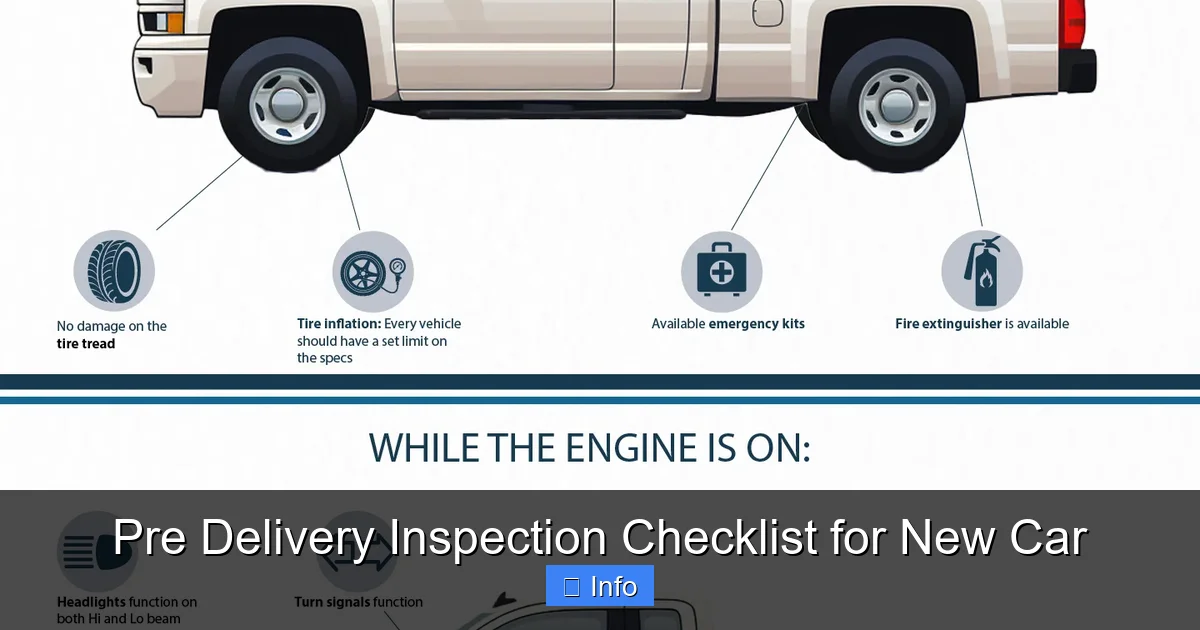
Even well-maintained cars can develop silent mechanical issues. Check the ground clearance by looking underneath—if you see leaves, stones, or debris lodged in wheel arches, remove them before the car leaves the lot. Inspect tire tread depth using the penny test: insert a coin into the tread groove of a new tire; copper should appear above the top of Lincoln’s head. Low tire pressure increases rolling resistance and can affect handling dramatically. Additionally, listen for hissing sounds from the radiator or unusual vibrations when accelerating. These subtle clues often precede major breakdowns, making early detection a game-changer for long-term reliability.
Using Reliable Resources for Your Check
Before you begin your physical inspection, consult reliable online resources tailored to your specific make and model. Official manufacturer websites publish detailed checklists that outline expected performance metrics and acceptable tolerances. Third-party automotive forums and review sites offer real-world experiences from other customers who’ve gone through the same process. Cross-referencing multiple sources helps you understand what constitutes a minor annoyance versus a deal-breaker. The key is consistency—what works for a Toyota Camry won’t necessarily apply to a BMW i series. Adapt general guidance to your particular vehicle’s design and needs.
While self-inspecting proves useful, enlisting professional expertise adds another layer of security. Contact your dealer directly and ask them to perform a thorough pre delivery inspection themselves. Most reputable dealerships maintain standardized checklists and trained personnel skilled in identifying subtle defects. If the dealership cannot commit to a proper inspection, consider seeking a certified independent mechanic for a second opinion. Word-of-mouth recommendations from friends who recently purchased similar models carry significant weight. Their insights about the dealership’s integrity and the quality of the vehicle they delivered can serve as valuable validation.
As you prepare to leave the dealership, compile all findings into a single document. Create checkboxes next to each item in your pre delivery inspection checklist and mark them as passed, pending, or failed. Include timestamps and descriptions for any issues discovered—this creates a paper trail if disputes arise later. Take high-resolution photos of every defect, particularly those affecting safety or value. Having documented proof makes communication with sellers much smoother than relying solely on verbal agreements. The goal is to arrive home with confidence that your new car meets all expectations.
During the final handover, insist on reviewing every aspect of the agreed-upon checklist together. Ask the seller to demonstrate how each functional component operates live rather than accepting explanations alone. This collaborative approach catches oversights and demonstrates good faith. Once all items pass or resolved, execute the signature process methodically. Keep a copy of the signed agreement and all supporting documentation in a secure location. Remember, this moment marks the transition from uncertainty to ownership—a milestone worth celebrating. Enjoy your new car knowing you’ve given it the thorough care it deserves.
Key Takeaways
- Never skip the full visual inspection – check paint, body panels, and interior surfaces thoroughly.
- Verify all paperwork immediately – certificates, registration documents, and compliance papers must match your records.
- Test core electrical systems – lights, infotainment, GPS, and safety features should all function properly.
- Look for hidden defects – test brakes, suspension, and fluid levels even after the initial walk-through.
- Use the right checklist resources – online guides and dealer checklists help ensure nothing is overlooked.
- Document everything – take photos and notes of any issues found before signing off on the purchase.
📑 Table of Contents
Frequently Asked Questions
Question? How can I effectively conduct a pre delivery inspection?
A effective pre delivery inspection involves walking the entire vehicle, examining paint, interior, electronics, and mechanical systems. Start from the front, checking exterior finishes for dents or rust, then move to the interior to test controls and comfort. Perform functional tests on the engine, brakes, and safety features. Finally, verify all paperwork matches your records. Taking photos throughout the process creates a helpful record of your findings and gives the seller clarity about issues. This systematic approach ensures no detail slips through the cracks.
Question? Is it necessary to get an independent mechanic to check my new car?
Yes, an independent mechanic can add valuable peace of mind beyond what a dealer provides. While dealership inspections follow set protocols, a third-party technician brings unbiased expertise and access to diagnostic equipment not always available at car dealerships. An independent shop can identify hidden problems like faulty wiring, compromised engine mounts, or undetected emissions issues that might escape basic visual checks. Before spending too much on the original purchase, scheduling a quick inspection with a trusted mechanic can reveal concerns that would otherwise cause distress once you start driving.
Question? What documents should I verify during the pre delivery inspection checklist?
You should verify the sales contract, proof of payment, and vehicle identification number. In many locations, pollution or environmental compliance certificates are mandatory for registration of newer vehicles. Make sure the title clearly shows the correct owner information and matches the VIN plate on the car. Additional documents like bill of sale, warranty registration, and insurance certificates should also be present and valid. Double-checking these paperwork items protects you from potential legal complications and ensures smooth registration procedures upon arrival home.
Question? How do I handle unexpected defects found during my inspection?
If you discover issues like missing paperwork, paint damage, or malfunctioning systems, document them thoroughly with photos and written notes first. Then contact the seller promptly to discuss resolution options, which may range from repairs to refunds depending on the defect type and terms of your agreement. Some sellers are willing to fix minor problems at no cost, while others might offer store credit or replacement vehicle. Acting quickly maintains trust and prevents misunderstandings. Remember that airtime is tight initially, so initiate discussions while both parties are still motivated to resolve the matter fairly.
Question? Should I prioritize mechanical tests over cosmetic ones?
Both are equally important, though mechanical aspects generally impact driving experience and safety more immediately. Cosmetic issues like unpainted panels or interior stains are disappointing but rarely hazardous. However, problems with brakes, steering response, engine performance, or electrical systems can jeopardize your ability to operate the vehicle safely. Prioritize mechanical functions during your inspection, but don’t neglect the exterior and interior quality either. A pristine-looking car with broken brakes is far worse than a worn one with excellent engineering. Balance your focus on both categories to achieve a holistic assessment of the vehicle’s condition.
Question? What if the dealership refuses to perform a thorough inspection?
This situation warrants careful consideration. Some dealerships treat inspections as optional to move inventory faster, which raises legitimate concerns about transparency. In such cases, request an independent third-party inspection before finalizing your purchase. If the dealership insists on hiding defects, it may indicate deeper problems with their business practices. Protecting your investment requires making informed decisions based on verified information. Never proceed without confirming the vehicle’s true condition, as paying a premium for a poorly inspected car can result in substantial regret.