A Driver of a Car Travelling at 52
Driving at 52 km/h is common in cities and suburbs. This guide explains what a driver of a car travelling at 52 should know about stopping distance, safety, and the law. Use these simple tips to stay safe and legal on every trip.
Imagine you are behind the wheel. The speedometer reads 52. You are moving through a town, past houses, maybe near a school. What does that number really mean for your safety, your wallet, and your license? This article explains everything a driver of a car travelling at 52 needs to know in plain language.
Many drivers see 52 on the dashboard and do not think much about it. But that speed matters. It affects how far your car travels before you hit the brakes. It changes how much fuel you use. It can also decide whether you get a ticket. If you want to drive smarter, start by understanding what happens when a driver of a car travelling at 52 is on the road.
We will look at stopping distance, safety habits, fuel use, and traffic laws. Each section uses short sentences and real examples. By the end, you will feel more confident every time you see 52 on your speedometer.
Key Takeaways
- Speed meaning: 52 km/h is about 32 mph or 14.4 meters every second.
- Stopping distance: Reaction time plus braking distance matters at 52.
- Safe following: Keep a three-second gap behind the car ahead.
- Speed limits: 52 km/h often fits urban and school zone rules.
- Fuel economy: Steady speeds near 52 can save petrol compared to faster driving.
- Speedometer use: Check your speedometer often to hold exactly 52.
- Emergency stops: Wet roads and worn tires increase stopping distance at 52.
📑 Table of Contents
- What Does 52 Mean for a Driver of a Car Travelling at 52?
- How Far Does a Driver of a Car Travelling at 52 Go Each Second?
- Stopping Distance for a Driver of a Car Travelling at 52
- Safety Tips for a Driver of a Car Travelling at 52
- Fuel Efficiency and a Driver of a Car Travelling at 52
- Legal Rules for a Driver of a Car Travelling at 52
- Real-World Examples for a Driver of a Car Travelling at 52
- Conclusion
What Does 52 Mean for a Driver of a Car Travelling at 52?
The number 52 usually stands for kilometers per hour. In miles per hour, it is about 32. That is a moderate speed. It is faster than a walking pace but slower than highway cruising.
Kilometers per Hour vs Miles per Hour
Most countries use kilometers per hour. If you see 52 km/h, you are going 52 kilometers in one hour. That is the same as 52,000 meters in 60 minutes. In miles, 52 km/h is roughly 32 mph. A driver of a car travelling at 52 in a city is moving at a typical urban speed.
Where You Will See This Speed
You will often see 52 in residential areas. Many towns set limits near 50 or 60. School zones sometimes use limits around 40 to 50. A driver of a car travelling at 52 might be on a main road through a suburb. Knowing where this speed fits helps you stay legal.
How Far Does a Driver of a Car Travelling at 52 Go Each Second?
Speed is not just a number. It is distance over time. At 52 km/h, your car moves farther every second than you might think.
Visual guide about A Driver of a Car Travelling at 52
Image source: d1avenlh0i1xmr.cloudfront.net
Converting 52 Kilometers per Hour to Meters per Second
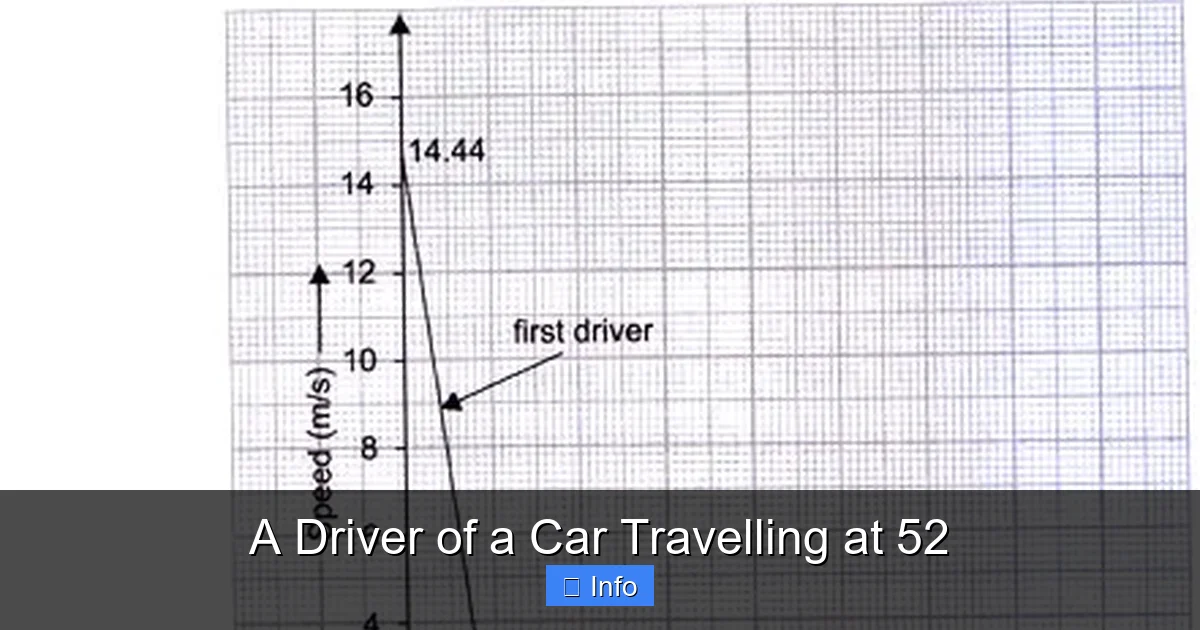
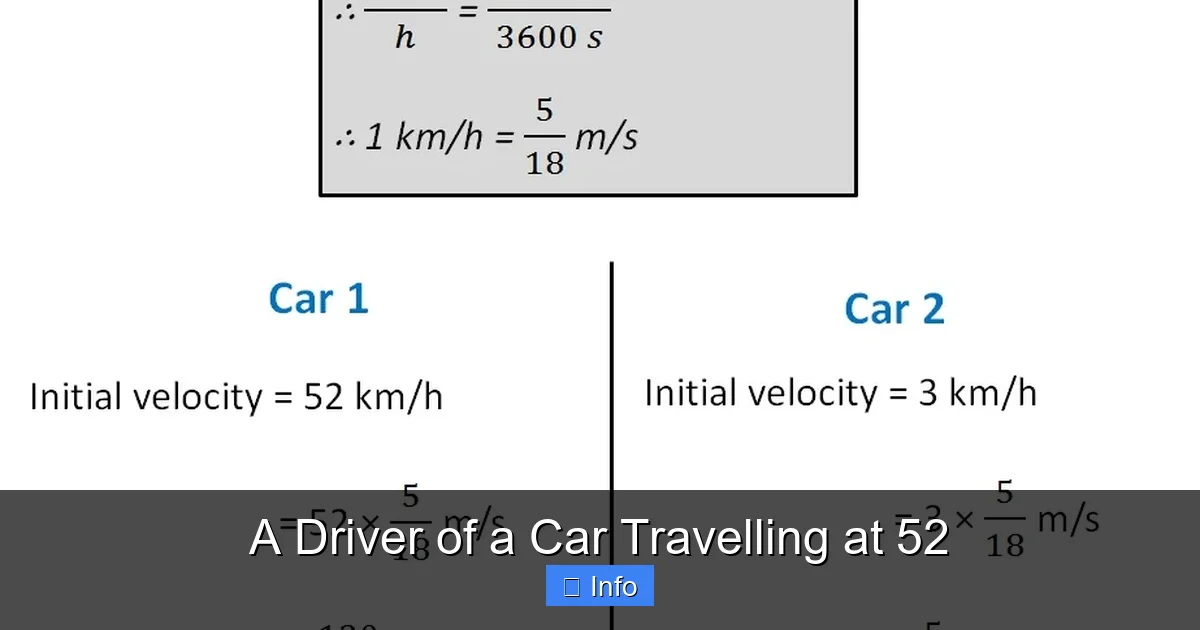
To change km/h to m/s, divide by 3.6. So 52 divided by 3.6 equals about 14.4. That means a driver of a car travelling at 52 covers 14.4 meters every second. In three seconds, the car travels more than 43 meters before the brakes even touch.
Why Every Second Counts
Imagine a ball rolls into the street. You see it. Your brain reacts. Your foot moves. All of that takes time. At 14.4 meters per second, a driver of a car travelling at 52 cannot stop instantly. Understanding this distance helps you keep a safe gap.
Stopping Distance for a Driver of a Car Travelling at 52
Stopping distance has two parts. First is reaction distance. Second is braking distance. Together, they tell you how far your car goes from the moment you see danger to the moment you stop.
Reaction Distance Explained
Reaction time is usually about 1.5 seconds for an alert driver. At 52 km/h, that is about 22 meters. If you are tired or looking at your phone, reaction time grows. A driver of a car travelling at 52 who is distracted might travel 30 meters or more before braking.
Braking Distance Basics
Braking distance depends on your tires, brakes, and road surface. On dry pavement, a car at 52 might need 15 to 20 meters to stop after the brakes are applied. On wet roads, that distance can double. A driver of a car travelling at 52 in the rain needs much more room.
Total Stopping Distance at 52
Add reaction and braking together. On a dry road, total stopping distance at 52 can be around 35 to 45 meters. That is roughly the length of ten cars. A driver of a car travelling at 52 should always leave this much space ahead.
Weather and Road Conditions
Rain, snow, ice, and gravel change everything. Wet roads reduce tire grip. Leaves or oil make surfaces slippery. A driver of a car travelling at 52 must slow down when conditions are poor. Posted limits assume ideal weather.
Safety Tips for a Driver of a Car Travelling at 52
Driving at 52 is safe if you follow good habits. These tips help you protect yourself, your passengers, and other road users.
Use the Three-Second Rule
Pick a fixed object ahead, like a sign or tree. When the car in front passes it, count to three. If you pass the object before you finish counting, you are too close. At 52 km/h, three seconds gives you about 43 meters of gap. A driver of a car travelling at 52 should use this rule every day.
Watch Your Speedometer
It is easy to creep above 52 without noticing. Glance at your speedometer often. If you wonder whether your gauge shows true speed, you can learn more about does a speedometer measure average speed to understand what the needle really means.
Be Extra Careful Near Schools
Children can step into the road without warning. Many areas set low limits near schools. A driver of a car travelling at 52 should slow down even more in these zones. For local rules, check the maximum permissible speed near a school in your region.
Overtaking and Being Overtaken
If a faster car wants to pass, hold your line and speed. Do not accelerate. If you are the one overtaking a car at 52 while you go 60, judge the gap carefully. You can read about passing situations in this guide on a car travelling at 60km h overtakes.
Fuel Efficiency and a Driver of a Car Travelling at 52
Fuel cost matters to most drivers. Speed has a big effect on how much petrol or diesel you burn.
Why Steady Speeds Save Fuel
Rapid acceleration uses more fuel. Hard braking wastes energy. A driver of a car travelling at 52 who keeps a steady pace uses less fuel than one who speeds up and slows down constantly. Use cruise control on long stretches if it is safe.
Compare 52 to Highway Speeds
Highway speeds are often 80 to 100 km/h. At those speeds, wind resistance pushes harder against your car. The engine works harder. A driver of a car travelling at 52 on a suitable road often gets better mileage than at 90 or 100. Just make sure 52 is legal where you are.
Legal Rules for a Driver of a Car Travelling at 52
Speed limits exist for safety. Going over them can mean fines, points on your license, or worse.
Common Speed Limits Around 52
Many urban roads are posted at 50 or 60 km/h. A driver of a car travelling at 52 might be just over a 50 limit. Always check signs. If the sign says 50, then 52 is speeding. If the sign says 60, then 52 is fine.
What Happens If You Go Faster
Even a few km/h over the limit increases stopping distance. It also raises the risk of serious injury in a crash. Police use radar and cameras. A driver of a car travelling at 52 in a 40 zone can expect a ticket. Know the limit before you drive.
Real-World Examples for a Driver of a Car Travelling at 52
Let us look at three everyday situations. These show how the ideas above apply in real life.
Driving Through a Neighborhood
You are on a street with parked cars and houses. The limit is 50. A driver of a car travelling at 52 is slightly over the limit. A ball bounces into the road. Because you are going 52, you need extra meters to stop. Slowing to 40 gives you more time and shorter stopping distance.
Approaching a Red Light
The light turns yellow. You are at 52, about 30 meters away. You can brake smoothly and stop before the line. Or you can speed up and run the red. A safe driver of a car travelling at 52 chooses to stop. Running the light risks a crash and a fine.
When a Child Runs Into the Street
A child chases a toy into the road 25 meters ahead. You are going 52 on a dry road. Your reaction takes about 22 meters. Your brakes need another 15 to 20 meters. You may not stop in time. This is why a driver of a car travelling at 52 must watch for kids near schools and parks.
Conclusion
Driving at 52 is more than watching a number. It means understanding distance, time, and responsibility. A driver of a car travelling at 52 should know stopping distance, keep a safe gap, and respect speed limits. Fuel savings and safety go hand in hand when you drive smoothly.
Next time your speedometer shows 52, take a breath. Look ahead. Leave space. Stay legal. These simple habits make every trip safer for you and everyone else on the road.
Frequently Asked Questions
How fast is 52 km/h in miles per hour?
52 km/h is about 32 miles per hour. It is a common speed for city and suburban roads.
How many meters does a car travel per second at 52 km/h?
A car at 52 km/h travels about 14.4 meters every second. That is why reaction time matters so much.
What is the total stopping distance at 52 km/h?
On dry pavement, total stopping distance is often 35 to 45 meters. Wet roads can make it much longer.
Is 52 km/h legal in a school zone?
It depends on the posted sign. Many school zones have limits below 50, so 52 could be illegal. Always check local signs.
Does driving at 52 save fuel compared to highway speeds?
Yes, steady speeds around 52 often use less fuel than 80 or 100 km/h because wind resistance is lower.
How can I tell if I am really going 52?
Glance at your speedometer often. If you want to know how speedometers work, you can read more about whether they measure average or instant speed.