
8 Best Battery and Alternator Testers for Your Vehicle
Looking for the Best Battery And Alternator Tester to keep your vehicle’s electrical system healthy? A good tester helps you spot weak batteries, dying alternators, and failing connections before they strand you. In this roundup, you’ll find a mix of 6V, 12V, and 24V testers that cover common cars, trucks, and even some commercial setups. This guide breaks down what each model does best, so you can pick the right tool for daily maintenance, DIY diagnostics, or professional servicing.
Quick Product Comparison
Our Top 8 Best Battery And Alternator Tester Reviews – Expert Tested & Recommended
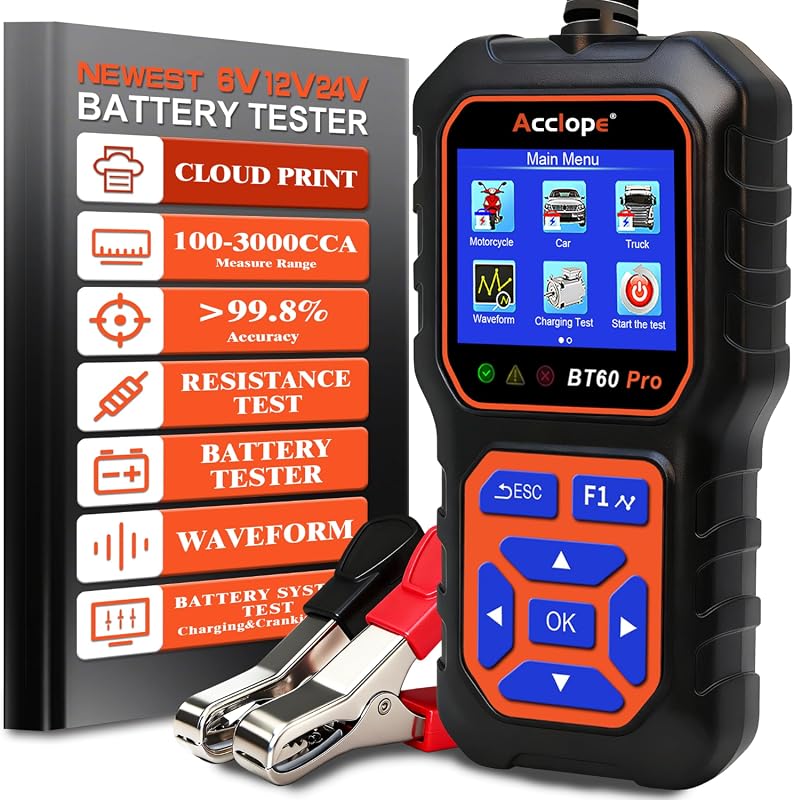
1. BT60 PRO Battery Tester, 2–120Ah capacity, 6V/12V/24V, 100–3000 CCA with QR Report
intro text here (2-3 sentences only)
Key Features That Stand Out
✓ Wide battery compatibility across 6V, 12V, and 24V chemistries.
✓ Advanced conductance testing that covers SOH, SOC, voltage, resistance, and CCA.
✓ QR Report export lets you keep records for service logs.
✓ Durable build designed for daily use in shop or on the road.
Why We Recommend It
This BT60 PRO stands out for its broad voltage range and deep diagnostic capabilities. If you want a single tool that handles multiple chemistries and still provides a clear report, this model is a strong choice. For context, you can compare it with our Best 12 Volt Battery Tester to see how it stacks up against popular alternatives.
Best For
Daily maintenance and shop use where you test a variety of battery types, including lithium options with proper safety considerations.
Pros and Cons
Pros:
- Excellent all-around test capability across 6V/12V/24V.
- Clear QR report that helps with record-keeping.
- Solid durability and reliable readings in real-world use.
- Good value given its feature set.
Cons:
- QR reports require extra steps to export on some devices.
- Manual may be a bit dense for beginners.
Customer Reviews
Customer Review: This tester is intuitive once you spend a minute with it and it reads quickly. Great for my shop and mobile diagnostics.
Customer Review: The QR report feature is helpful for keeping records for customers and maintenance logs.
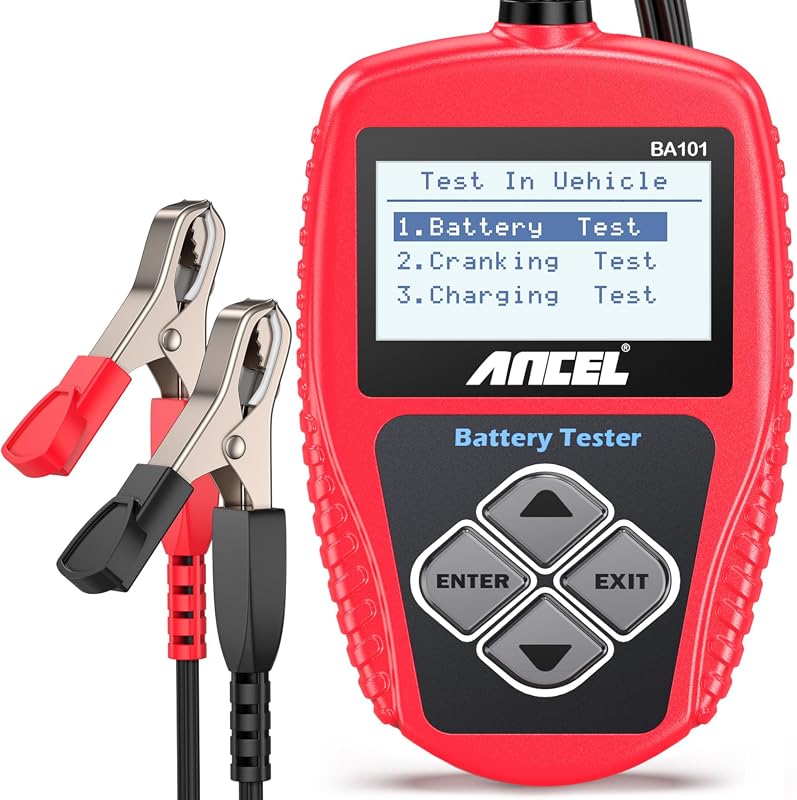
2. ANCEL BA101 Car Battery Tester: 12V Digital Alternator Meter for Charging & Cranking, 100–2000 CCA
intro text here (2-3 sentences only)
Key Features That Stand Out
✓ Solid 12V testing with a simple black-and-white display that’s easy to read in sunlight.
✓ Includes copper crocodile clips and a precision smart circuit for accurate results.
✓ Quick checks for charging health and cranking capability—handy for seasonal maintenance.
Why We Recommend It
The BA101 is a trusted pick for straightforward 12V diagnostics with clear readings. It’s especially good if you want a no-nonsense tool that you can grab before a road trip. If you’re comparing options, see our Best 12 Volt Battery Tester guide for more choices.
Best For
DIYers who want reliable, easy-to-read results without a lot of extra features.
Pros and Cons
Pros:
- Great balance of price and performance for 12V testing.
- Reliable readings with robust build quality.
- Simple interface suitable for beginners.
- Portable and lightweight.
Cons:
- Limited features compared to premium models.
- Screen can be hard to read in bright sun without backlight.
Customer Reviews
Customer Review: Works well for my daily driver. Clear results and quick checks.
Customer Review: The clips feel sturdy and give solid readings even on older batteries.
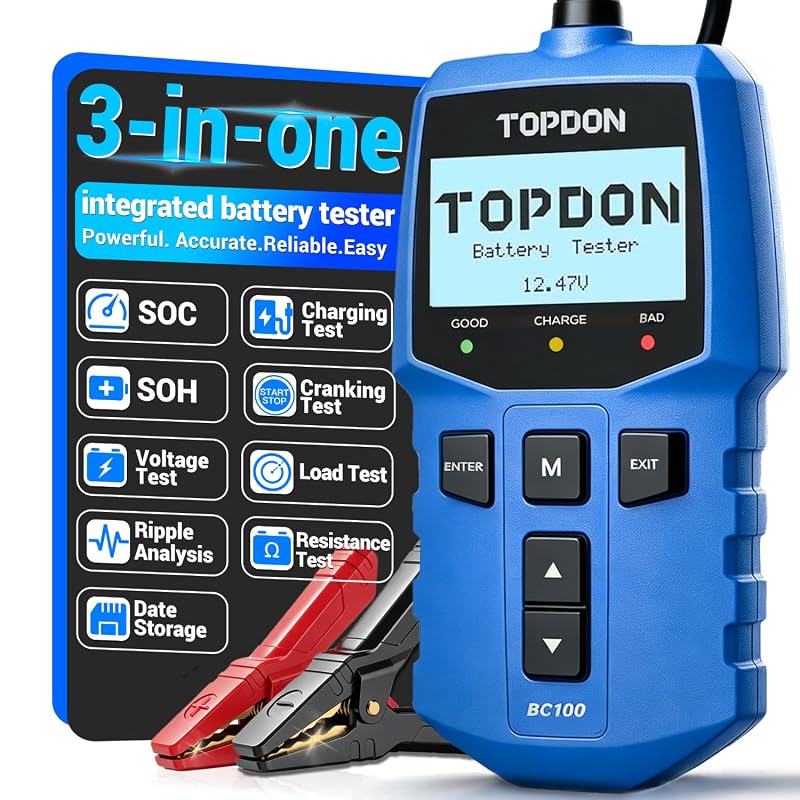
3. TOPDON BC100 12V Car Battery Tester with Automotive Battery Load Testing Capability
intro text here (2-3 sentences only)
Key Features That Stand Out
✓ Universal 12V battery support for multiple lead-acid chemistries.
✓ 3-in-1 checks: battery health, cranking voltage, and alternator/charging status.
✓ Lab-grade accuracy with rapid data playback for diagnostics.
Why We Recommend It
The BC100 offers a solid mix of accuracy and practicality at a budget-friendly price. It’s a sensible choice if you test many 12V batteries and want reliable load testing without breaking the bank. If you want more options at similar price points, check our Best Load Tester For Car Battery guide.
Best For
Small shops or DIYers who need accurate 12V testing without premium features.
Pros and Cons
Pros:
- 3-in-1 testing streamlines diagnostics.
- Strong value for the feature set.
- Compact and portable design.
- Clear results with straightforward interpretation.
Cons:
- Limited to 12V lead-acid batteries; not ideal for other chemistries.
- Display readability can be improved in direct sunlight.
Customer Reviews
Customer Review: The load test data is consistent and easy to read, which helps on busy days.
Customer Review: Works well and is affordable for a small service shop.
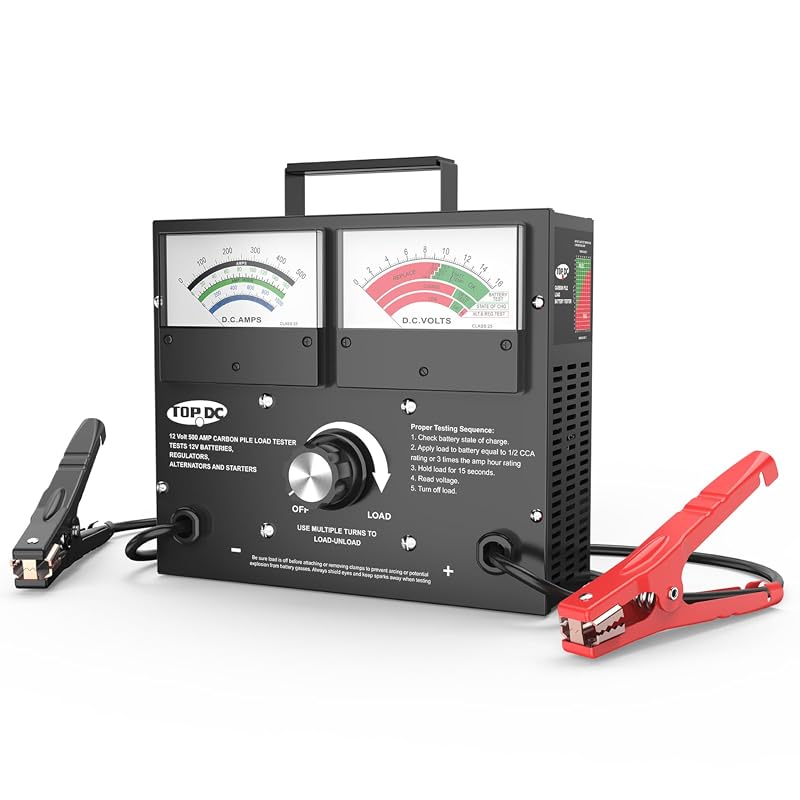
4. 500A Carbon Pile Battery Load Tester for 12V Systems, Up to 1000 CCA
intro text here (2-3 sentences only)
Key Features That Stand Out
✓ Heavy-duty carbon pile testing with up to 500A load.
✓ Broad compatibility for 6V and 12V lead-acid batteries.
✓ Clear diagnostic readouts for quick pass/fail decisions.
Why We Recommend It
When you need robust testing power to simulate real starting conditions, this carbon pile tester shines. It’s a good fit for repair shops handling multiple battery sizes. If you want to explore alternatives with similar ruggedness, browse our Best Load Tester For Car Battery guide.
Best For
Professional use where durability and higher current testing are priorities.
Pros and Cons
Pros:
- High-current capability for decisive testing.
- Strong build quality with reliable clamps.
- Great for performance-focused diagnostics.
- Clear, actionable results.
Cons:
- May be more than needed for casual users.
- Some users might prefer digital readouts on-screen.
Customer Reviews
Customer Review: This tester handles heavy loads without overheating. Great for field use.
Customer Review: Very durable and straightforward to operate.
5. VDIAGTOOL BT300 Car Battery Tester
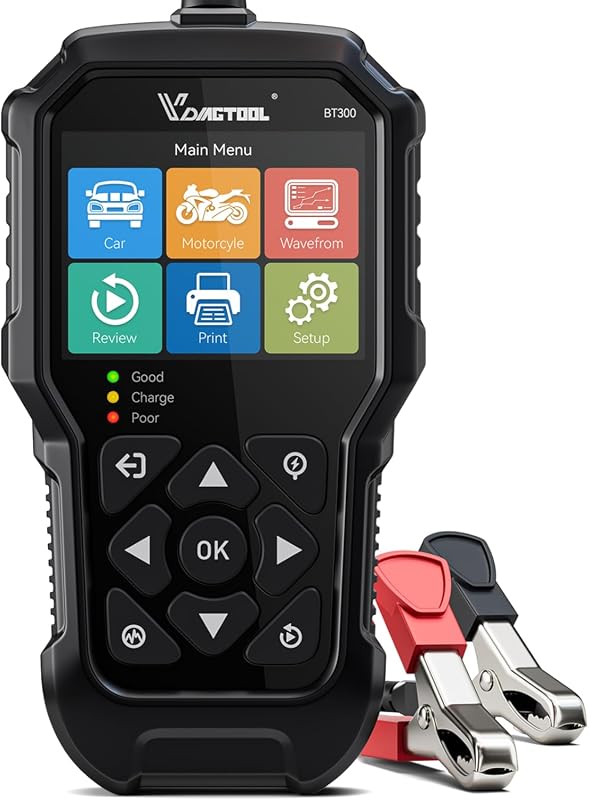
intro text here (2-3 sentences only)
Key Features That Stand Out
✓ Broad 6V/12V compatibility with lead-acid batteries.
✓ Real-time voltage readings and quick test cycles.
✓ Compact design with solid clamps for reliable connections.
Why We Recommend It
BT300 provides dependable performance across a wide range of batteries, making it a versatile choice for home garages and small shops. If you’re curious about other 6V/12V options, our article on the Best 12V Battery Tester can help you compare features.
Best For
Everyday testing tasks for most passenger cars and small commercial vehicles.
Pros and Cons
Pros:
- Good value with solid diagnostic capabilities.
- Simple user interface and quick results.
- Versatile for many small vehicle types.
- Reliable manufacturer support.
Cons:
- Not ideal for heavy-duty fleets requiring advanced data logs.
- Some features are a bit basic compared to premium models.
Customer Reviews
Customer Review: Clear results and easy to use. Perfect for my home garage.
Customer Review: The device feels sturdy and gives trustworthy readings.
6. AstroAI 12V/24V Car Battery Tester
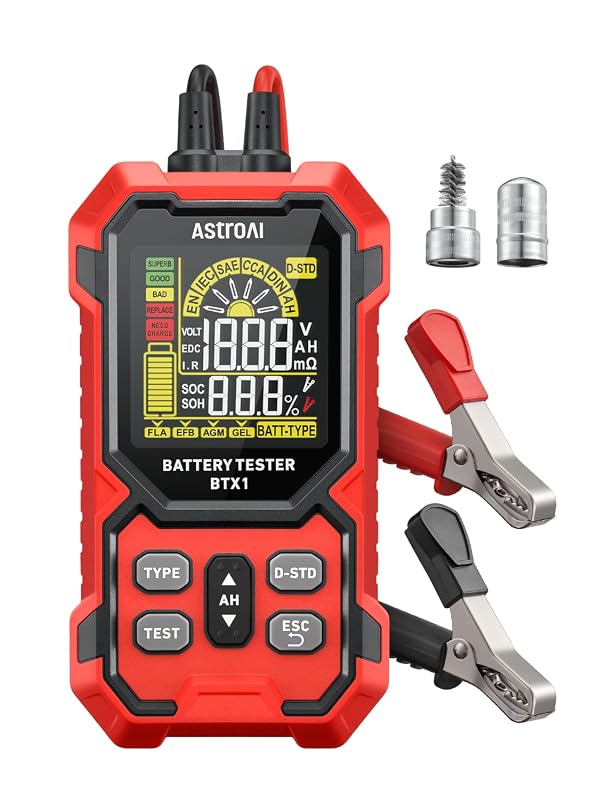
intro text here (2-3 sentences only)
Key Features That Stand Out
✓ 12V/24V testing with integrated alternator check.
✓ Durable clamps designed for a secure grip on corroded terminals.
✓ Clear, easy-to-read display with quick pass/fail indicators.
Why We Recommend It
AstroAI offers reliable performance at a popular price point, with robust build quality and straightforward results. If you want variety in testing approaches, consider pairing it with our guide on the Best Battery Tester For Semi Truck to explore heavier-duty options.
Best For
Home garages and hobbyists who want dependable 12V/24V testing without extra frills.
Pros and Cons
Pros:
- Great value for entry-level testers.
- Solid build and reliable measurements.
- Simple to operate with quick results.
Cons:
- Display size could be larger for some users.
- Limited advanced data logging options.
Customer Reviews
Customer Review: Handy tool for quick checks on family cars. Works as advertised.
Customer Review: Solid performance and sturdy clamps.
7. ANCEL BA101PRO Car Battery Tester for 12V/24V Lead-Acid Batteries
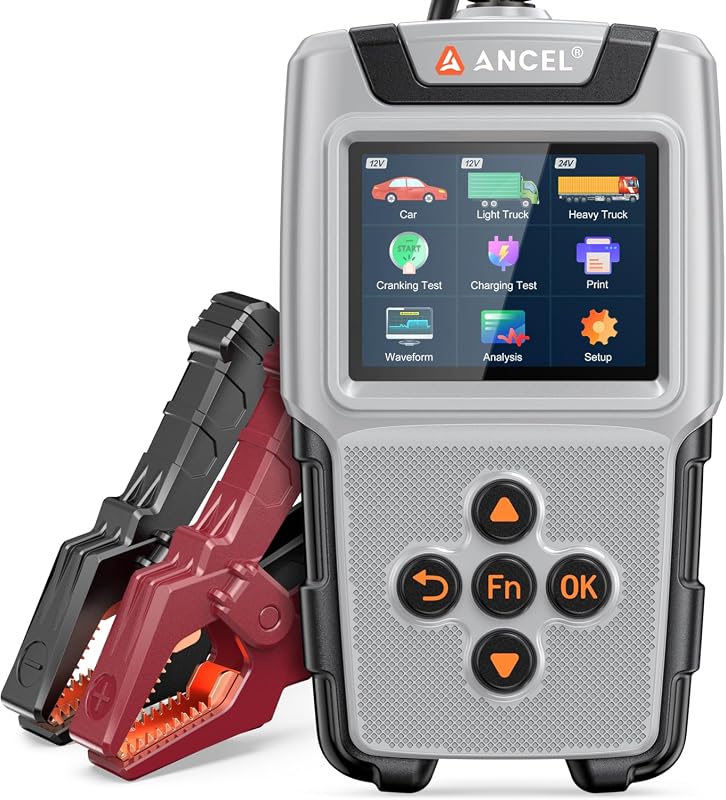
intro text here (2-3 sentences only)
Key Features That Stand Out
✓ Pro-level BA101 Pro supports 12V/24V lead-acid batteries.
✓ Cranking & charging health checks with a 2.8″ color display.
✓ Clear multi-vehicle data for quick comparisons.
Why We Recommend It
The BA101PRO builds on a trusted platform and adds a sharper display and broader testing checks. If you test several vehicles, this model is worth considering. For more high-end options, explore our Best Battery Tester For Semi Truck guide to see heavy-duty testers in action.
Best For
Professional or enthusiast use where precise 12V/24V testing matters.
Pros and Cons
Pros:
- Enhanced display improves readability in the shop.
- Good breadth of testing for two popular voltages.
- Reliable, repeatable measurements.
- Solid build quality.
Cons:
- Higher price than basic models.
- Some advanced features require learning the interface.
Customer Reviews
Customer Review: Excellent test results and clear data. A must for serious testing.
Customer Review: The BA101PRO is precise and dependable for daily work.
8. Clore Automotive Solar 1874 500-Amp Carbon Pile Battery Load Tester
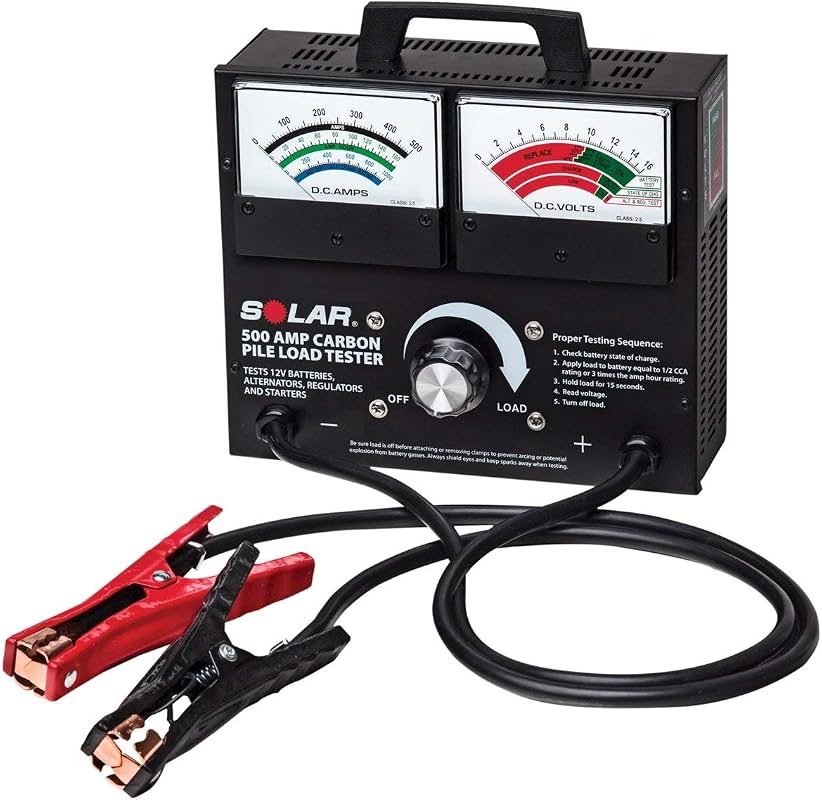
intro text here (2-3 sentences only)
Key Features That Stand Out
✓ 500A carbon pile testing with up to 1000 CCA diagnostics.
✓ Designed to test starter and alternator performance.
✓ Rugged build for heavy-duty field use.
Why We Recommend It
When you need serious load testing power and reliability, this Solar 1874 model delivers. It’s a robust choice for shops that regularly test larger 12V systems. For broader options across different budgets, see our Best Load Tester For Car Battery guide to compare competing options.
Best For
Professional users and fleets requiring high-current tests and durable equipment.
Pros and Cons
Pros:
- High-current capability with clear pass/fail results.
- Durable construction and reliable performance.
- Good for training and demo purposes in shops.
- Accurate battery condition assessment under load.
Cons:
- Bulkier than typical handheld testers.
- May require more space in a small shop.
Customer Reviews
Customer Review: A solid tool for serious battery testing. Reads quickly and repeats well.
Customer Review: Built like a tank; excellent for professional use.
Complete Buying Guide for Best Battery And Alternator Tester
Essential Factors We Consider
When choosing a Best Battery And Alternator Tester, look for voltage range (6V/12V/24V), test modes (battery health, CCA, SOH, alternator), ease of use, and durability. If you regularly work with trucks or boats, prioritize higher current capability and robust clamps. For more context, see our guides on the Best 12 Volt Battery Tester and Best Load Tester For Car Battery to compare features across top models.
Budget Planning
Budget matters, but prioritize essential features. A mid-range tester that provides voltage, CCA, and alternator checks often offers the best value. If you’re a professional shop, you might lean toward higher-current models with data logging, while casual DIYers can opt for simpler, more affordable units.
Final Thoughts
Choosing the right Best Battery And Alternator Tester comes down to your use case. Whether you’re maintaining a single daily driver or a small fleet, there’s a model that fits. Use the Quick Product Comparison above to shortlist, then dive into the detailed reviews for hands-on insights.
Frequently Asked Questions
Q: Do these testers check alternators as well as batteries?
A: Many models include an alternator/charging system test in addition to battery health checks. Always verify the specific features of each model before buying.
Q: Can I test lithium batteries with these testers?
A: Some testers support lithium or LiFePO4 chemistries, but most focus on lead-acid types. Check the product specs to confirm compatibility with lithium batteries.
Q: Do testers need calibration or maintenance?
A: Most consumer testers don’t require routine calibration. Keep clamps clean and replace batteries or clips if signs of wear appear.
Q: Are these testers suitable for semi-trucks or commercial fleets?
A: Some models offer higher current capabilities and more robust features for larger batteries. For semi-truck use, consult dedicated guides like the Best Battery Tester For Semi Truck to pick a model built for heavy-duty workloads.
Q: How do I choose between a carbon pile tester and a conductance tester?
A: Carbon pile testers simulate real load and can be more accurate for diagnosing under-start conditions, while conductance testers are quick and simple for routine checks. Your choice depends on how deeply you want to diagnose battery health and the types of batteries you service.
Ready to pick one? Use the links in each product card to check the latest price on Amazon. If you want more context on related gear, also explore our in-depth guides like the Best Battery Charger And Maintainer and the Best Load Tester For Car Battery.


