How to Jump Start an Automatic Car
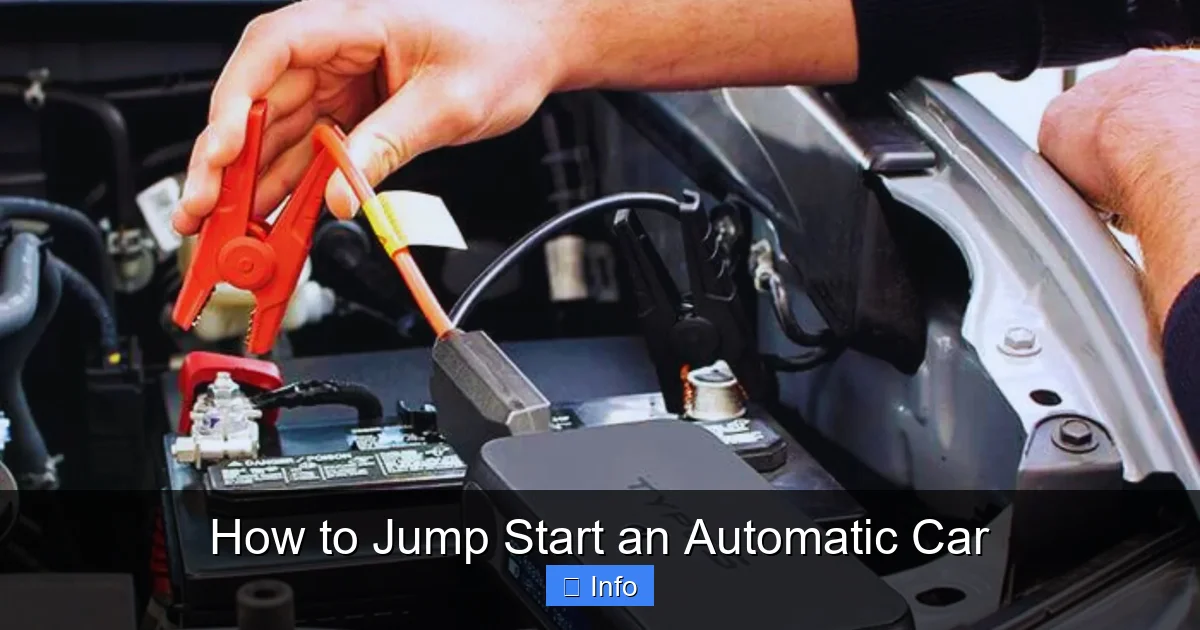
Jump‑starting an automatic car is simpler than you think—just follow the right sequence, use proper tools, and observe safety precautions. This guide walks you through every step, from gathering equipment to verifying a successful start, so you’ll be back on the road fast.
Key Takeaways
- Identify the cause: A dead battery is the most common reason an automatic car won’t start.
- Use the correct cables: Choose heavy‑gauge jumper cables (4‑6 mm) and ensure they’re long enough for comfortable positioning.
- Observe polarity: Connect positive to positive and negative to a grounded metal part, never to the dead battery’s negative terminal.
- Turn off electronics: Switch off lights, radio, and accessories before connecting cables to prevent voltage spikes.
- Start the donor vehicle first: Let the good battery run for a few minutes to build charge before cranking your car.
- Disconnect in reverse order: Remove negative first, then positive, to avoid short circuits.
- Check the alternator: If the battery repeatedly dies, the alternator may be faulty and needs professional inspection.
Key Takeaways
- Understanding how to jump start an automatic car: Provides essential knowledge
📑 Table of Contents
- Why Your Automatic Car Might Refuse to Start
- Gathering the Right Tools and Safety Gear
- Preparing Both Vehicles for a Safe Jump Start
- Step‑by‑Step Procedure to Jump Start an Automatic Car
- After the Jump Start – Verifying Success and Recharging the Battery
- Common Mistakes to Avoid and Troubleshooting Tips
- Additional Resources and Related Articles
- Conclusion
Why Your Automatic Car Might Refuse to Start
When an automatic car won’t crank, the first suspect is usually the battery. Automatic transmissions draw more power than manual ones because the torque converter, fluid pump, and electronic control modules all need a healthy charge. A weak or completely dead battery means the starter motor can’t spin the engine fast enough, leaving you stranded.
Common Causes of a Dead Battery in Automatic Cars
The usual culprits include:
- Leaving interior lights or accessories on for extended periods.
- Short trips that don’t give the alternator enough time to recharge.
- Extreme temperatures – both heat and cold stress the battery’s chemistry.
- Old or worn‑out batteries that can’t hold a charge.
How the Automatic Transmission Affects Jump Starting
Unlike a manual car, an automatic may have additional electronic loads that drain the battery faster. The transmission’s electronic control unit (ECU) and the torque converter clutch solenoid require steady voltage. If the battery is marginal, these systems may prevent the starter from engaging, making the jump‑start process a bit more delicate.
Gathering the Right Tools and Safety Gear
Before you begin, make sure you have everything you need. The right tools reduce the risk of sparks, short circuits, or accidental damage.
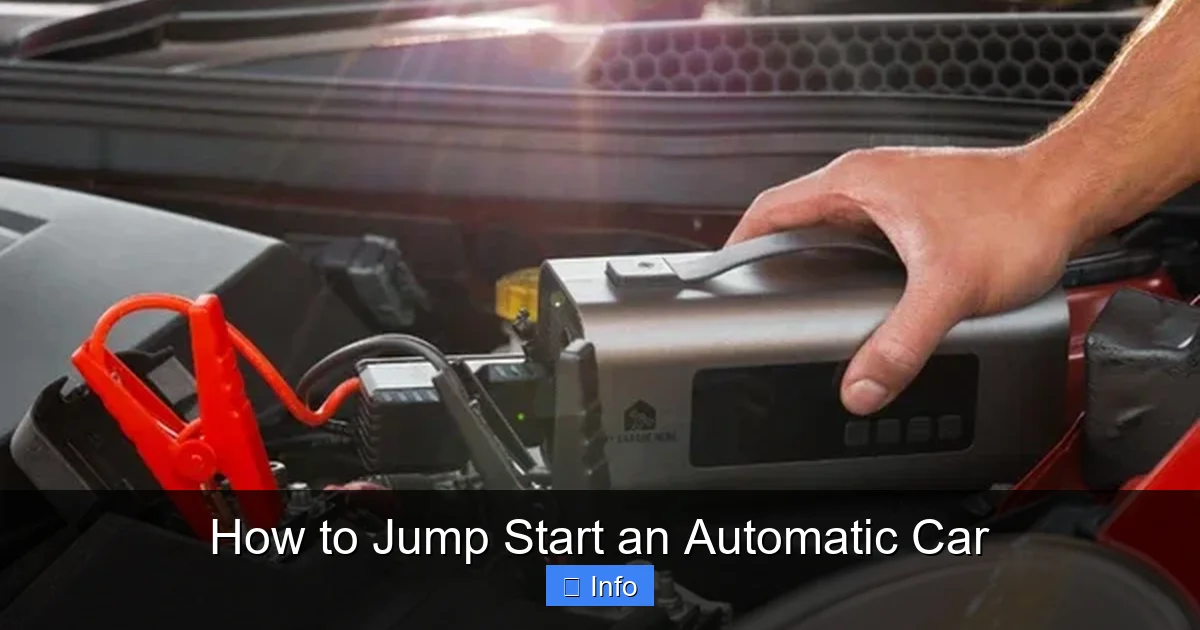
Visual guide about How to Jump Start an Automatic Car
Image source: cdn.shopify.com
Jumper Cables: Choosing the Right Gauge and Length
Select cables with a gauge of at least 4 mm (6 mm is ideal) and a length of 3–4 meters. Thicker cables handle higher current without overheating, and a longer length gives you flexibility in positioning the donor vehicle.
Safety Equipment: Gloves, Goggles, and Why They Matter
Wear insulated gloves and safety goggles. They protect you from accidental sparks, battery acid splashes, and any debris that might fly when a cable is disconnected abruptly.
Preparing Both Vehicles for a Safe Jump Start
Proper preparation is the foundation of a safe jump start. Follow these steps to avoid common mishaps.
Positioning the Cars and Connecting the Cables
Park the donor vehicle close enough for the cables to reach, but far enough that the hoods don’t touch. Turn off both ignitions, set the parking brakes, and shift the automatic transmission to “Park”.
Checking Voltage and Polarity
Verify that both batteries are 12 V systems. Inspect the terminals for corrosion; clean them with a wire brush if needed. Remember the golden rule: positive to positive, negative to ground.
Step‑by‑Step Procedure to Jump Start an Automatic Car
Now that you’re ready, let’s walk through the exact sequence.
Turn Off All Electrical Accessories
Switch off the headlights, interior lights, radio, and any other accessories. This reduces the load on the battery and prevents voltage spikes when the cables are connected.
Connecting the Positive Cables First
Take the red (positive) clamp and attach it to the positive terminal of the donor battery. Then, connect the other end of the same cable to the positive terminal of the dead battery. This establishes a safe potential difference before any current flows.
Connecting the Negative Cables and Grounding
Attach the black (negative) clamp to the negative terminal of the donor battery. Instead of connecting it to the negative terminal of the dead battery, attach it to an unpainted metal part on the engine block or chassis of the car with the dead battery. This minimizes the risk of sparks near the battery where hydrogen gas can accumulate.
Starting the Donor Vehicle and Then Your Car
Start the donor vehicle and let it idle for 2–3 minutes. This allows its alternator to push additional charge into the cables. Then, try to start the car with the dead battery. If it cranks slowly, give the donor vehicle a little more time.
After the Jump Start – Verifying Success and Recharging the Battery
Once the engine starts, keep it running for at least 15–20 minutes to let the alternator restore the battery’s charge. If the car stalls immediately, the battery may be too weak or the alternator could be failing.
Checking the Charging System
Turn on the headlights and other electrical components. If the engine stays running smoothly, the charging system is likely OK. For a deeper check, have a professional test the battery and alternator at a service center.
Driving the Car to Recharge the Battery
Take the car for a short drive, preferably on the highway, to allow the alternator to work at higher RPMs. This is more effective than idling and helps prevent another dead‑battery situation.
Common Mistakes to Avoid and Troubleshooting Tips
Even experienced drivers can slip up. Here are the most frequent errors and how to fix them.
Reversing Polarity
Connecting the negative clamp to the dead battery’s negative terminal can cause a massive spark and damage the car’s electronics. Always attach the negative clamp to a grounded metal part instead.
Forgetting to Disconnect Cables Properly
Remove the cables in the reverse order of connection: first the black (negative) clamp from the grounded metal, then the black clamp from the donor battery, followed by the red (positive) clamps. This prevents a sudden surge of current that could harm the battery or the ECU.
Ignoring a Faulty Alternator
If the battery repeatedly dies shortly after a jump start, the alternator may not be charging the battery correctly. Look for dimming lights, a warning battery icon on the dash, or a clicking noise from the starter. In such cases, replace or repair the alternator before relying on jump starts.
Additional Resources and Related Articles
For more detailed guidance, check out these related guides that complement this how to jump start an automatic car tutorial:
- How To Start An Automatic Car With A Dead Battery – a deep dive into diagnosing battery issues.
- How To Drive An Automatic Car Step By Step – learn the basics of handling an automatic once you’re moving.
- Car Battery Jump Start Service Near Me – find professional help if you prefer not to do it yourself.
- How To Jump Start Acura Mdx – a specific example for a popular luxury model.
- How To Jump Start Hyundai Elantra – another model‑specific walkthrough.
Conclusion
Jump‑starting an automatic car is a straightforward skill that anyone can master with the right preparation and caution. By understanding why the battery dies, using proper tools, following the correct cable‑connection order, and checking the health of your charging system afterward, you’ll keep your vehicle running smoothly and avoid unnecessary roadside hassles. Remember, safety first—always double‑check polarity, keep the area clear of flammable materials, and never rush the process. With these steps in mind, you’ll be confident the next time your automatic car refuses to start.
Frequently Asked Questions
What is how to jump start an automatic car?
how to jump start an automatic car is an important topic with many practical applications.