
Nissan Rogue Humming Noise When Driving
Nissan Rogue humming noise when driving can come from tires, wheel bearings, brakes, or even the CVT. The sound often changes with speed, turning, or braking, which helps narrow down the cause. In this guide, you’ll learn how to spot the source, what you can check at home, and when it’s time to visit a mechanic.
Nissan Rogue Humming Noise When Driving
If you hear a Nissan Rogue humming noise when driving, you are not alone. This is one of those sounds that can start small and then get louder over time. At first, it may seem like a soft drone or low buzz. Later, it can turn into a steady hum that makes every trip feel a little off.
The good news is that a Nissan Rogue humming noise when driving usually gives clues. The sound may change when you speed up, slow down, turn left, turn right, or press the brakes. That makes it easier to track down the source. In many cases, the issue is simple and fixable. In other cases, it is a sign that a part is wearing out and needs attention soon.
This guide walks you through the most common causes, how to check them, and what to do next. If your Rogue is making a hum, this is a great place to start.
Key Takeaways
- Point 1: A Nissan Rogue humming noise when driving is often linked to tires, wheel bearings, brakes, or drivetrain parts.
- Point 2: The way the sound changes with speed, turning, or braking can help you find the problem faster.
- Point 3: Uneven tire wear, bad wheel alignment, and low tire pressure can all create a steady hum.
- Point 4: A worn wheel bearing often makes a louder hum that gets worse as speed rises.
- Point 5: Brake parts, especially pads and rotors, can make noise even when you are not pressing the pedal.
- Point 6: Some CVT and drivetrain issues can also cause a Nissan Rogue humming noise when driving.
- Point 7: Catching the problem early can save money and help keep your Rogue safe on the road.
📑 Table of Contents
What the Humming Noise Usually Means
Start by listening to the pattern
A Nissan Rogue humming noise when driving is often tied to parts that spin or move with the wheels. That includes tires, wheel bearings, brakes, and axle parts. A hum can also come from the transmission or CVT in some cases. The key is to notice when the sound happens.
Ask yourself a few simple questions. Does the noise start at low speed? Does it get louder on the highway? Does it change when you turn? Does it fade when you brake? These clues matter a lot. They can point you to the right part much faster than guessing.
Why the sound may feel hard to place
Car noises can travel through the body of the vehicle. That means a sound from the front can feel like it is coming from the rear. A left-side wheel bearing can also sound like it is on the right. So do not rely on location alone. Focus on how the Nissan Rogue humming noise when driving behaves.
Common Tire Problems That Cause a Humming Noise
Uneven tire wear
Tires are one of the most common reasons for a Nissan Rogue humming noise when driving. If the tread wears unevenly, the tire can make a growl or hum as it rolls. This is especially common if the tires have been rotated late, inflated wrong, or worn down by bad alignment.
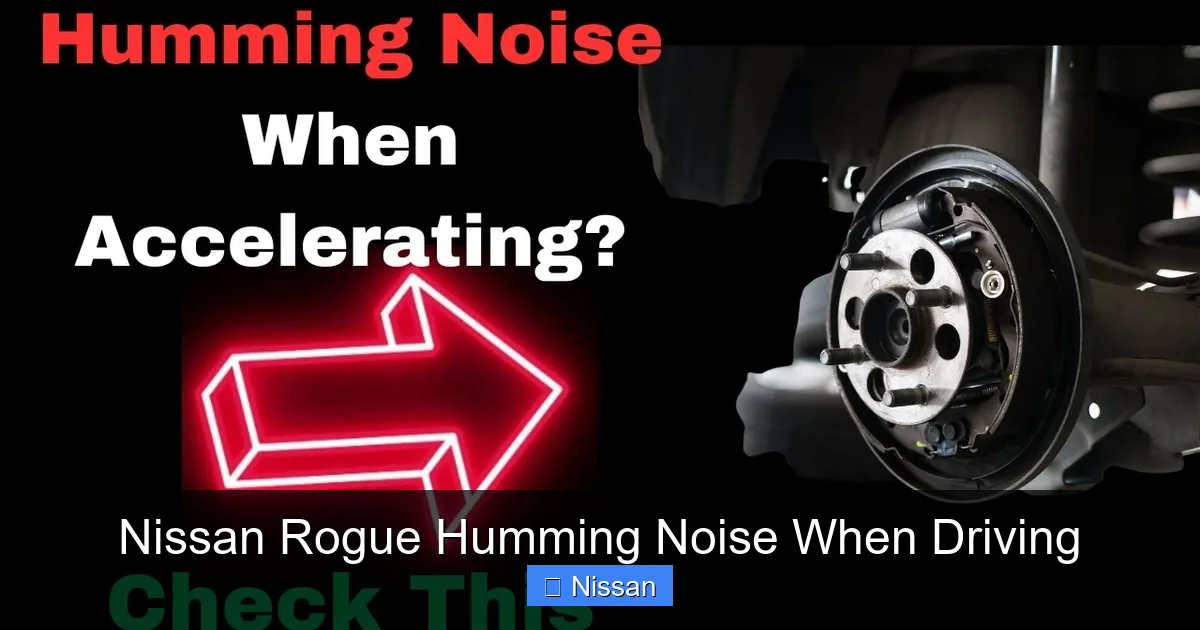
Visual guide about Nissan Rogue Humming Noise When Driving
Image source: i.ytimg.com
You may notice a cupped or scalloped tread pattern. Run your hand across the tire. If it feels choppy in one direction, that is a clue. A tire like that can make a steady sound that gets louder with speed. If you also feel vibration, tires move even higher on the list.
Low tire pressure
Low pressure can also create a humming or droning sound. It changes the shape of the tire and makes it roll unevenly. The fix may be as simple as adding air to the correct level. Still, if one tire keeps losing pressure, check for a slow leak or a nail.
When to think about replacement
If the tires are old, noisy, or worn to the edge, replacement may solve the problem. If you want to compare options, this guide on best all season tires for Nissan Rogue can help you choose a quieter, more comfortable set. Good tires do more than improve grip. They can also reduce road noise a lot.
Wheel Bearings and Hub Issues
A classic cause of humming
A worn wheel bearing is one of the biggest reasons for a Nissan Rogue humming noise when driving. The sound often starts as a low hum and becomes louder as speed rises. It may sound like a distant airplane or a tire roar that never goes away.
Visual guide about Nissan Rogue Humming Noise When Driving
Image source: wikihow.com
Wheel bearing noise often changes when you turn. If the hum gets louder when you turn left, the right bearing may be the problem. If it gets louder when you turn right, the left side may be bad. That happens because turning shifts the load from one side to the other.
Simple signs to watch for
- Noise that gets louder with speed
- Grinding or rumbling feel through the steering wheel
- Play or looseness in the wheel
- Noise that changes while cornering
If you suspect a bearing, do not wait too long. A bad bearing can get worse fast. It can also affect handling and safety. This is one repair that should be checked soon by a trusted mechanic.
Brake Parts Can Make Noise Too
Pads, rotors, and shields
Brake parts can also create a Nissan Rogue humming noise when driving. Worn pads may make a light scrape or hum. Warped rotors can add a pulsing sound or vibration. A bent brake dust shield can rub the rotor and create a constant noise, even when you are not braking.

Visual guide about Nissan Rogue Humming Noise When Driving
Image source: autovfix.com
Sometimes the sound is worse at low speed and easier to hear in a parking lot. Other times, it shows up after a brake job if a shield was bent by accident. That is why it helps to remember when the sound began. If it started soon after brake work, the brakes should be checked first.
What you can inspect
If you can safely look through the wheel, check for obvious rubbing or damage. You may see a shield touching the rotor. You may also notice very thin brake pads or uneven rotor wear. If the noise changes when you lightly press the brake pedal, that is another strong clue.
CVT and Drivetrain Sounds in the Nissan Rogue
How the CVT can sound
The Nissan Rogue uses a CVT in many model years, and the transmission can sometimes make a humming or droning sound. This does not always mean a major failure. Some CVT sounds are normal under load. But a new or louder hum should not be ignored.
A CVT-related Nissan Rogue humming noise when driving may show up during acceleration. It may feel like the engine is holding a steady note while the vehicle speed climbs. If the sound changes with throttle input more than with road speed, the transmission may be involved.
Other drivetrain parts
Axles, CV joints, and differential parts can also make humming or whining noises. A worn axle may add vibration during turns or acceleration. If the noise is most noticeable when you press the gas, the drivetrain deserves a closer look.
For owners who keep up with service, small issues are easier to catch. Regular maintenance helps. If you are doing upkeep on an older model, this 2017 Nissan Rogue oil change guide and the 2016 Nissan Rogue oil change guide can help you stay on schedule. Clean fluids and routine care will not fix every noise, but they do help protect the drivetrain.
How to Diagnose the Noise at Home
Use the speed test
The easiest way to narrow down a Nissan Rogue humming noise when driving is to test it at different speeds. Start on a quiet road. Listen at 20 mph, 40 mph, and highway speed. If the hum rises and falls with speed, tires or bearings are likely suspects.
Try gentle turns
Make slow, safe lane changes or wide turns in an open area. If the sound changes while turning, that often points to a wheel bearing. If it stays the same no matter what, tires may be more likely.
Check tire pressure and tread
Look at all four tires. Make sure they match in pressure and wear. Uneven wear can create a hum, especially on the Rogue. If one tire looks more worn than the others, or if you feel rough spots in the tread, that is worth noting.
Listen for brake changes
Lightly press the brake pedal while driving at low speed, if it is safe to do so. If the noise changes right away, the brakes may be involved. Do not keep driving if you hear grinding, scraping, or metal-on-metal sounds.
Know when to stop testing
If the noise gets loud fast, or if you feel shaking, pulling, or a loose wheel feel, stop driving and get it checked. A Nissan Rogue humming noise when driving can be harmless for a while. But some causes can turn into bigger repairs if ignored.
When to Get Professional Help
Signs you should not ignore
Some noises need expert attention right away. If the hum becomes a grind, if the steering feels shaky, or if the vehicle pulls to one side, book a repair visit. The same goes for any noise that suddenly gets much louder.
A mechanic can lift the vehicle, spin the wheels, and check for play in the bearings, tires, brakes, and drivetrain. That kind of inspection is the fastest way to find the real cause of a Nissan Rogue humming noise when driving.
What a shop may check
- Wheel bearing play
- Tire wear and balance
- Brake pad and rotor condition
- CV axle and joint wear
- Transmission fluid condition
- Suspension and alignment issues
If your Rogue also has rough ride quality, tire noise, or pulling, a shop may recommend alignment or tire replacement. If you are comparing tire options, the best tires for 2016 Nissan Rogue article is a helpful place to start. For older vehicles, the best battery for 2016 Nissan Rogue guide can also help keep the car reliable overall, even though it will not fix a hum by itself.
How to Prevent Humming Noise Problems
Stay on top of tire care
Rotate your tires on time. Keep them inflated to the right pressure. Replace them before they get too worn. These simple steps can prevent many cases of Nissan Rogue humming noise when driving.
Do regular inspections
Take a quick look at the tires, brakes, and undercarriage every so often. Catching wear early is much cheaper than waiting for a part to fail. If you hear a new sound, write down when it happens. That note can help a mechanic a lot.
Keep up with maintenance
Routine service matters. Fluid changes, alignment checks, and brake inspections all help your Rogue stay quiet and smooth. Small issues often show up as small noises before they become big repairs. That is why paying attention early is such a smart move.
In the end, a Nissan Rogue humming noise when driving is usually a clue, not a mystery. Tires, wheel bearings, brakes, and drivetrain parts are the first places to look. With a few simple checks, you can often narrow down the cause before it turns into a bigger problem.
Trust your ears. If the hum changes with speed, turning, or braking, that is useful information. If it gets worse, do not wait. A quick inspection now can save time, money, and stress later. And it can help your Rogue get back to the quiet ride it should have.
Frequently Asked Questions
Is a Nissan Rogue humming noise when driving dangerous?
It can be. Some causes are minor, like tire wear, but others, like a bad wheel bearing, can affect safety. If the sound gets louder or the car starts to shake, get it checked soon.
Why does the humming noise get louder as I speed up?
That usually means the problem is tied to something that spins with the wheels, like tires or bearings. The faster the wheel turns, the louder the sound can become. This is a common pattern with a Nissan Rogue humming noise when driving.
Can bad tires really make a humming sound?
Yes. Uneven wear, low pressure, or old tread can all create a hum or drone. Many drivers think it is a bearing at first, but tires are often the real cause.
How do I know if it is a wheel bearing?
A wheel bearing noise often changes when you turn. It may also sound like a low rumble that gets worse with speed. If you hear that pattern, have the vehicle inspected.
Can brake problems cause humming even when I am not braking?
Yes. A bent dust shield or worn brake parts can rub and make noise while driving. If the sound changes when you press the brake pedal, the brakes should be checked.
Should I keep driving if the hum is still small?
Sometimes you can, but only for a short time while you arrange an inspection. If the noise changes fast, gets louder, or comes with vibration, it is better to stop driving and get help.


