Top 10 Best Orbital Polisher For Boats Trusted By Pros
Choosing the Best Orbital Polisher For Boats can feel overwhelming, but the right tool makes boat care easier and safer. This roundup highlights top orbital polishers that balance power, control, and boat-friendly finishes so you can restore gel coats, remove swirl marks, and protect your hull without frustration.
Quick Product Comparison

Our Top 10 Best Orbital Polisher For Boats Reviews – Expert Tested & Recommended
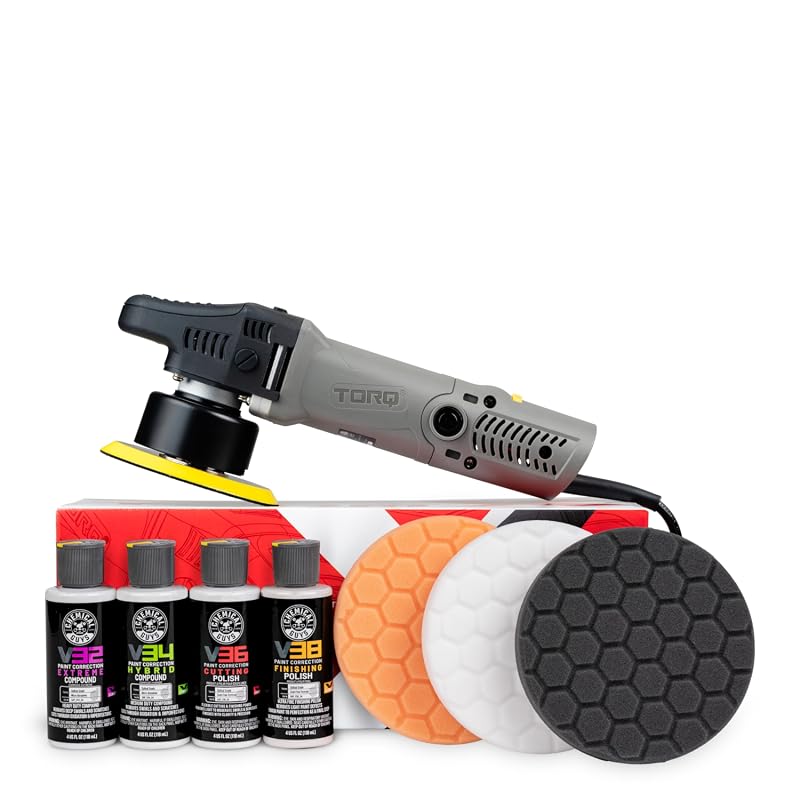
1. Chemical Guys TORQX Random Orbital Polisher Kit
★★★★☆ 4.6/5
In my boat care routine, the TORQX kit shines for daily detailing. The 9-piece setup gives you pads, compounds, and the polisher in one kit, which is great for keeping gel coat looking new. It handles swirl removal with a calm, controlled motion that’s friendly to fiberglass boats.
Key Features That Stand Out
- ✓ 9mm random orbital throw for smooth finishing
- ✓ 800W motor provides solid power without excessive vibration
- ✓ Included polishing pads and compounds for quick starts
Why We Recommend It
This is a versatile, beginner-friendly option that still delivers professional results on boats. It’s reliable for routine maintenance and light correction on gel coat. For more about fiberglass boat care, see our Best Buffer For Fiberglass Boats guide.
Best For
Best for boat owners who want an all-in-one kit that covers polishing, finishing, and light correction without buying multiple accessories.
Pros and Cons
Pros:
- ✓ All-in-one kit reduces extra purchases
- ✓ Gentle enough for boat gel coats
- ✓ Solid build quality and durability
- ✓ User-friendly for beginners
Cons:
- ✗ May be underpowered for heavy oxidation on very old gel coat
- ✗ Pads wear with heavy use; replacement pads add to cost
Customer Reviews
Customer Review: “The TORQX kit makes routine boat detailing simple. I was able to remove light swirls in a weekend, with minimal marring.”
Customer Review: “Great starter kit for fiberglass boats. The polisher runs smoothly and the included pads are decent quality.”
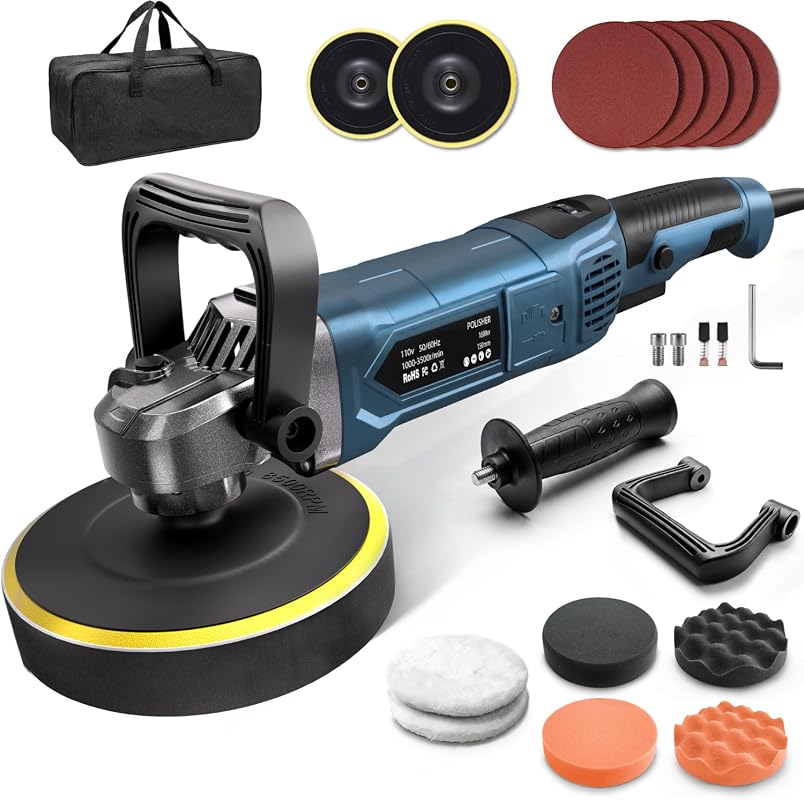
2. Generic 1600W Rotary Buffer Polisher
★★★★☆ 4.4/5
This buffer is a solid blue-collar workhorse for boats, delivering raw power and reliable performance. It’s a good match when you need faster material removal on a fiberglass hull without sacrificing control.
Key Features That Stand Out
- ✓ High torque for tough oxidation
- ✓ 7 adjustable speeds for versatile use
- ✓ Ergonomic grip and balanced design
Why We Recommend It
Simple, effective, and capable of handling a range of boat polishing tasks. If you’re focusing on heavier jobs, this is a reliable option to pair with your next wax or polish. For fiberglass boat care specifics, see our Best Buffer For Fiberglass Boats article.
Best For
Best for boat owners who want a budget-friendly rotary option with strong performance for mid-level jobs.
Pros and Cons
Pros:
- ✓ Good power-to-weight ratio
- ✓ Wide speed range
- ✓ Durable build materials
- ✓ Easy to maneuver for boat tasks
Cons:
- ✗ Heavier than typical orbital models
- ✗ Might require extra cooling during long sessions
Customer Reviews
Customer Review: “This polisher handles heavy oxidation on my boat’s hull and still feels comfortable to use.”
Customer Review: “Solid value, but the weight takes some getting used to on longer sessions.”
3. Generic 1600W Rotary Buffer Polisher

★★★★☆ 4.3/5
This is a practical option when you want straightforward power without extra frills. It’s not the lightest polisher, but it gets the job done on boats with solid reliability.
Key Features That Stand Out
- ✓ 7 speeds for versatile polishing
- ✓ Detachable handle for comfortable grip
- ✓ Reasonable price for a 1600W unit
Why We Recommend It
A good middle-ground choice if you want reliable performance without paying premium for feature sets you won’t use on a boat. For fiberglass boat care specifics, see our Best Buffer For Fiberglass Boats guide.
Best For
Best for budget-minded boat owners who still need dependable polishing power.
Pros and Cons
Pros:
- ✓ Good balance of price and power
- ✓ Flexible speed range
- ✓ Comfortable handling with detachable grip
Cons:
- ✗ Not the lightest model
- ✗ Replacement pads can add up over time
Customer Reviews
Customer Review: “The 7-speed options cover most of my boat polishing needs, and it’s easy to control.”
Customer Review: “Solid budget option, but it’s a bit heavier for long sessions.”
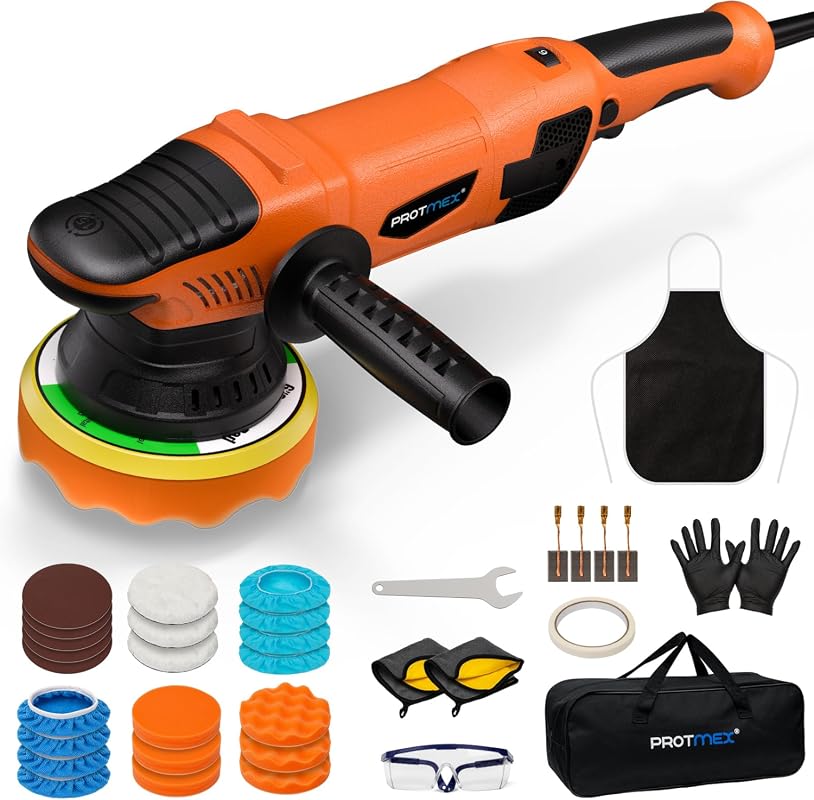
4. SPTA 5-Inch Dual-Action Orbital Polisher Kit

★★★★☆ 4.5/5
It’s a solid choice for boat detailing with a compact footprint. The dual-action design helps reduce paint defects while keeping a comfortable grip for extended polishing sessions.
Key Features That Stand Out
- ✓ Includes 4×5″ and 4×6″ pads
- ✓ Carry bag for easy transport
- ✓ 6-speed control for versatile applications
Why We Recommend It
Great for boaters who want a versatile kit that covers medium-duty jobs without breaking the bank. For fiberglass-specific advice, check our guide on Best Buffer For Fiberglass Boats.
Best For
Best for DIY boat detailers who need a multi-pad setup and a carry bag.
Pros and Cons
Pros:
- ✓ Includes multiple pad sizes
- ✓ Carry bag adds portability
- ✓ Smooth operation
Cons:
- ✗ Might be overkill for a single small area
- ✗ Pad replacements can add up with frequent use
Customer Reviews
Customer Review: “The SPTA kit came with everything I needed and the 6 speeds cover all my boats jobs.”
Customer Review: “Pads wear out after heavy use, but the carry bag keeps everything organized.”
5. DEWALT 20V Cordless Car Polisher Kit

★★★★☆ 4.5/5
This cordless polisher is convenient for boats where cords are a hassle. It’s light and easy to maneuver, though you’ll want to monitor battery life for larger jobs.
Key Features That Stand Out
- ✓ Cordless convenience
- ✓ 6″ pad compatibility for boats
- ✓ Good runtime with compatible batteries
Why We Recommend It
Ideal for on-deck touch-ups or quick shaves without dragging extension cords across the deck. For more boat-focused polishing, see our Best Wax For Fiberglass Boats guide.
Best For
Best for boaters who want portable, battery-powered polishing on small areas.
Pros and Cons
Pros:
- ✓ No cords to manage
- ✓ Compact and easy to control
- ✓ Includes accessories for quick starts
Cons:
- ✗ Battery life may limit longer sessions
- ✗ Might lack raw power for heavy oxidation
Customer Reviews
Customer Review: “Perfect for boat decks and light surfaces; the cordless design is a game changer on small yachts.”
Customer Review: “Battery life could be better for large hull projects, but it’s perfect for quick jobs.”
6. DEWALT 12-Amp Buffer Polisher

★★★★☆ 4.4/5
The DEWALT buffer is a workhorse with robust durability. It’s a solid pick for mid-to-heavy polishing on boats, though it’s larger and heavier than compact orbital models.
Key Features That Stand Out
- ✓ Ball-bearing construction for durability
- ✓ 7-9 inch reach for larger surfaces
- ✓ Variable speed range
Why We Recommend It
Choose this if you want a serious, reliable polisher capable of handling frequent boat detailing. For more on boat-specific polishing tools, see our Best Buffer For Fiberglass Boats guide.
Best For
Best for boat owners who need power and durability for frequent polishing.
Pros and Cons
Pros:
- ✓ Powerful motor and durable build
- ✓ Large working surface helps speed up tasks
- ✓ Solid on/off control with soft-start
Cons:
- ✗ Heavier than compact orbital models
- ✗ No battery version; needs a power source
Customer Reviews
Customer Review: “This polisher handles tougher boatside jobs with ease.”
Customer Review: “Great for fiberglass boats, though I had to manage its size on tight spaces.”
7. AOBEN 5-Inch Dual-Action Orbital Polisher Kit

★★★★☆ 4.4/5
Great value with a decent balance of power and accessibility. It’s a nice option for boats where you don’t want to exhaust yourself with heavy gear.
Key Features That Stand Out
- ✓ 16mm long orbit improves finishing on curved hulls
- ✓ 6 speeds for varied tasks
- ✓ Detachable handle for comfortable control
Why We Recommend It
Solid budget-friendly pick for small-to-medium boat projects. For more on fiberglass-friendly tools, explore our Best Buffer For Fiberglass Boats guide.
Best For
Best for DIY enthusiasts working on fiberglass or painted surfaces with a limited budget.
Pros and Cons
Pros:
- ✓ Lightweight and easy to handle
- ✓ Compact size suits tight spaces
- ✓ Cost-effective option
Cons:
- ✗ Slower than high-end models on heavy oxidation
- ✗ Pad quality may vary over time
Customer Reviews
Customer Review: “Good entry-level polisher. Not the beast, but perfect for small fiberglass touch-ups.”
Customer Review: “Lightweight and easy to use; I wish it included more durable pads.”
8. GEVEELIFE 1600W Rotary Buffer Polisher for Cars and Boats
★★★★☆ 4.4/5
Geared toward boats and cars, this polisher channels solid torque with a compact form factor. It’s a practical choice when you want a balanced tool that isn’t a monster to handle on a deck.
Key Features That Stand Out
- ✓ 7 speeds for polishing variety
- ✓ Detachable handle for flexible use
- ✓ Suitable for boats and cars
Why We Recommend It
Reliable, versatile, and comfortable to work with on a boat. For more on fiberglass surfaces, see our Best Buffer For Fiberglass Boats guide.
Best For
Best for multitaskers who switch between car and boat detailing.
Pros and Cons
Pros:
- ✓ Balanced power and control
- ✓ Comfortable grip and weight
- ✓ Good for on-deck work
Cons:
- ✗ Not the absolute lightest option
- ✗ Requires compatible accessories for best results
Customer Reviews
Customer Review: “Solid performer on fiberglass and paint. Good for weekend projects.”
Customer Review: “I like the compact design; it fits right in my boat storage bin.”
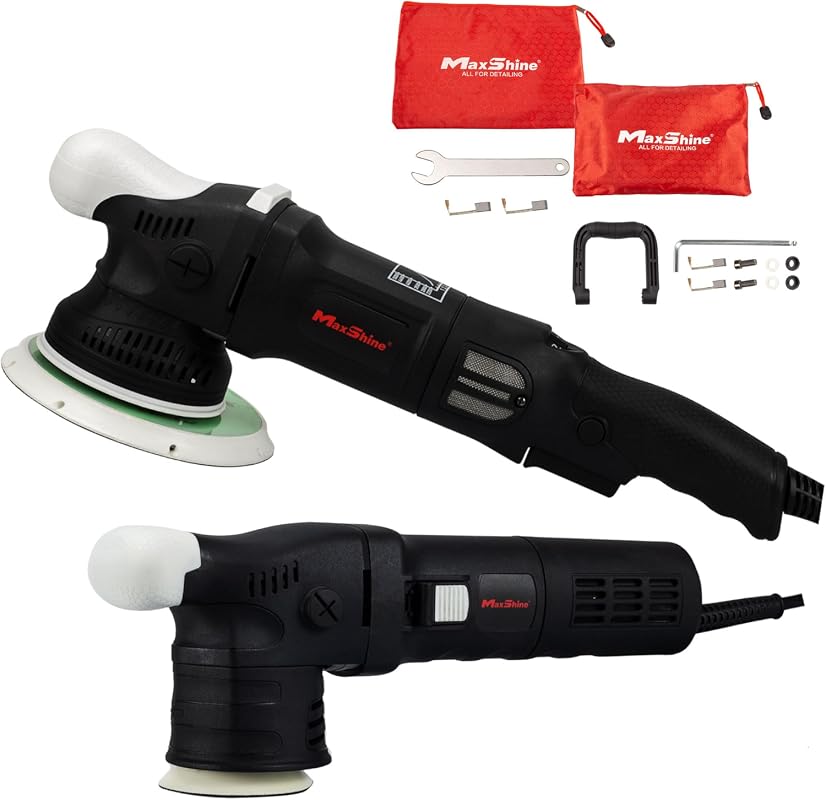
9. Maxshine 6” M21 Pro and 3” M312 Dual-Action Polisher
★★★★☆ 4.6/5
The dual-polisher setup is excellent for heavier finishes on boats and precision work in tight spots. It’s a solid upgrade if you’re already comfortable with polishing gear.
Key Features That Stand Out
- ✓ Includes M21 Pro and M312 units
- ✓ 21mm and 12mm throws for different tasks
- ✓ Robust craftsmanship
Why We Recommend It
Ideal for detailers who want two dedicated polishers in one kit. If you’re targeting fiberglass or painted surfaces, this combo can save time and improve results. For more, read our guide on Best Polish For Fiberglass Boats.
Best For
Best for advanced hobbyists or pros who want two polishers in a compact package.
Pros and Cons
Pros:
- ✓ Dual-unit versatility
- ✓ Strong performance at various speeds
- ✓ Good for finishing and cutting tasks
Cons:
- ✗ Higher price point
- ✗ Requires time to learn two tools effectively
Customer Reviews
Customer Review: “Two machines in one kit made my fiberglass boat project faster.”
Customer Review: “Excellent quality, but the kit is a bit pricey for hobbyists.”
Complete Buying Guide for Best Orbital Polisher For Boats
Essential Factors We Consider
When choosing a boat polisher, look for a safe orbit throw (around 6–9 mm), a comfortable grip, and a motor that won’t overheat during longer sessions. For fiberglass boats, a polisher with a controlled ramp-up and stable speed helps prevent swirl marks and hazing. Learn more in our Best Buffer For Fiberglass Boats guide to pick the right balance of power and control.
Budget Planning
Plan for a polisher kit that includes essential pads and compounds, plus a couple of backup pads. If you’re just starting, a complete kit like the TORQX can save money and headroom for future needs. For more economical options, see our roundup of budget-friendly picks and compare their long-term value.
Final Thoughts
For boat owners, the right orbital polisher is a blend of performance, ease of use, and durability. Pair your polisher with a quality wax or polish for fiberglass boats to maintain a showroom finish longer. Explore related topics like Best Spray Wax For Boats and Best Wax For Fiberglass Boats to round out your care routine.
Frequently Asked Questions
Q: What’s the difference between an orbital and a rotary polisher?
A: An orbital polisher moves the pad in a random orbit, reducing the risk of swirls, while a rotary polisher spins in a fixed circle for faster cutting. For boats, an orbital machine is generally safer on gel coats and fiberglass.
Q: Can I use an orbital polisher on fiberglass boats?
A: Yes. Look for a model with a smooth ramp-up and controllable speeds to protect the gel coat. Our guide to best buffers for fiberglass boats can help you pick the right unit.
Q: Do I need polishing compound with an orbital polisher?
A: Most boat polishes include or pair well with a compound. Start with a mild polish to avoid removing too much material, then move to a finishing polish for gloss.
Q: How should I maintain a gel-coated boat after polishing?
A: Rinse, dry, and apply a marine wax or sealant to protect the shine. Regular maintenance helps prevent oxidation and maintains depth of color.
Q: How long will a boat polishing project take?
A: It depends on the hull size and the condition. A small to mid-size boat with light swirl marks may take a couple of hours; larger jobs can take longer.
Ready to upgrade your boat’s shine? Our top picks above balance power, control, and ease of use to help you achieve a showroom finish with less effort. For ongoing tips and hands-on guidance, explore our internal guides on boat care and fiberglass polishing to keep your vessel looking its best—from hull to deck.
Similar Posts
10 Best Fuel System Cleaner for Gas Engines: Top Picks for Performance
If your engine has started to feel a little sluggish, a good fuel system cleaner for gas engines can make a real difference. The right additive can help remove deposits, smooth out rough idling, improve throttle response, and sometimes even bring back a bit of lost fuel economy. In this roundup, I picked a mix…
Top 8 Best Wax For White Truck That Delivers Superior Shine
If you drive a Best Wax For White Truck, you want a product that beads water, resists yellowing, and lasts through daily driving. This roundup brings eight top picks designed to keep light and metallic finishes looking bright, while helping you avoid dullness and oxidation on white trucks. Quick Product Comparison Product Image Check Price…
1 Expert-Recommended Best Glue For Boat Carpet: Premium Picks
Finding the best glue for boat carpet is all about a strong, durable bond that can handle moisture and movement on the water. You want a product that dries cleanly, resists peeling, and sticks well to boat decks, plywood, and concrete. This roundup features a top-rated option that boat guys and gals trust for long-lasting…
Top 10 Best Car Bed For Toddler Boy – Quality Picks for 2026
Finding the Best Car Bed For Toddler Boy can transform bedtime into an exciting adventure while ensuring your little one gets quality rest. Whether you are planning family road trips, sleepovers at grandma’s house, or simply want to add some fun to your child’s bedroom routine, a car-themed bed brings imagination and comfort together. These…
1 Best Long Handle Car Wash Brush: Expert Picks for Quality Cleaning
Finding the right long handle car wash brush can make weekend washes quicker and safer. The Best Long Handle Car Wash Brush roundup helps you compare top picks, so you can choose a kit that protects your paint while keeping you comfortable during use. Below, you’ll find a detailed look at a standout option that…
Top 10 Best Battery Operated RV Fridge Fan for Cool, Efficient Comfort
Looking for ways to keep your RV refrigerator running efficiently without draining your battery? The best battery operated RV fridge fan can make a world of difference during long trips or off-grid adventures. These compact, energy-efficient fans help circulate cold air evenly throughout your fridge, preventing hot spots and frost buildup while extending food freshness….